

Landlord Tax Return: A Practical UK Filing Guide for 2026

January has a way of turning sensible people into wrecks. You've got rent coming in, a pile of bank statements, one login you can't find, and a nagging thought that maybe this year's landlord tax return should have been done months ago. In practice, that panic causes more mistakes than the tax rules themselves, so let's strip this back and deal with the return the way a working accountant does it, one decision at a time.
The first thing to get straight is whether you're even in Self Assessment territory. HMRC's latest property rental income statistics show 2.86 million unincorporated landlords declared rental income in 2023 to 2024, up from 2.81 million in 2019 to 2020. Over the same period, total UK property income rose to £55.53 billion, an increase of 17%, and HMRC says 99% of that income came from individual landlords, which is why the Self Assessment route matters for almost everyone reading this. For accidental landlords, the practical trigger still matters too, because guidance says you may need to file if net property profit is over £2,500 or gross profit is over £10,000.
If you only own one flat or a single house, don't assume the return is simple. Landlord returns go wrong because people treat them like a normal personal tax form, then bolt the property figures on at the end. HMRC doesn't work that way, and the SA105 property pages are designed to keep rental income separate for a reason. Get the sequence wrong and you end up fixing the wrong problem.
Where Most UK Landlords Get Stuck Before They Even Start
The average landlord doesn't sit down in January with a clean spreadsheet and a neat plan. They sit down with half a memory of last spring's repairs, a rent transfer from November they can't match to the bank feed, and a vague worry that the mortgage interest box might be the place for everything. That's exactly how returns get delayed, then rushed, then filed badly.
Know whether you actually need Self Assessment
If you've never filed before, the common mistake is waiting for HMRC to chase you. That's not how it works. The filing obligation can exist even when HMRC hasn't contacted you, and that's why accidental landlords often leave it too late.
The property pages are there because rental income is a separate reporting stream, not just another line in your personal finances. HMRC's own statistics show how central individual landlords are to the system, which is why the self-assessment process is built around property as a distinct category rather than a casual add-on. If you've sold the “I'll deal with it later” story to yourself, stop. Later turns into penalty letters.
Practical rule: if the rent has been flowing in and you've never checked the filing threshold, you need to check it now, not after HMRC writes.
Registering and Gathering the Right Records
The first job is registration, not calculation. If you're not already in Self Assessment, you need the right HMRC setup before you can submit anything properly, and if you are already registered, you still need the right papers in the right order or you'll waste hours rechecking every figure. Paper filing exists, online filing is usually the better route, and the method matters less than whether your inputs are complete and reconcilable.

Build the record pack before you touch the return
The sensible order is boring, but it works. Start with tenancy agreements, rent schedules, agent statements, mortgage statements, insurance schedules, repair invoices, bank statements, and any legal or professional bills tied to the property. Then reconcile rent received to the bank statements before you decide what type of income or expense anything is.
If you classify first and reconcile later, you'll miss things. If you reconcile first, the rest becomes mechanical. That's the difference between a return that can survive a query and a return that depends on your memory being perfect.
A tidy folder structure helps more than people admit. Use one folder for each tax year, then separate property income, expenses, mortgage and finance costs, and capital items. Keep a separate section for disposal records too, because when a property is eventually sold, missing cost basis evidence becomes a much bigger issue than the annual return ever was.
For record-keeping discipline, this practical guide on what to keep for Self Assessment is worth a read before you start loading figures into software.
Don't forget the future sale file
Leasehold flats often trip people up because service charges and annual reconciliations are messy. If the managing agent's statement doesn't match the bank trail neatly, note the difference and keep the explanation. The same goes for anything capital, because improvements belong with future sale records, not with routine property expenses.
One thing I see repeatedly is a landlord who has every receipt except the one that proves a major improvement wasn't just a repair. That's avoidable. Save the invoice, the quote, the before-and-after photo if you've got it, and the payment record. You won't remember the detail in five years.
The SA105 Box Flow and Why It Matters
The SA105 isn't just a form, it's a sequence. HMRC has designed it so that gross property income, finance costs, and ordinary expenses land in different places, and that structure tells you how the tax calculation has to work. If you dump mortgage interest into the same column as repairs and agent fees in your own spreadsheet, you're already off track before the return starts.

Start with gross income, not expenses
Box 20 on the SA105 picks up gross UK property income. The 2025/26 notes also make clear that this isn't just straightforward monthly rent. They include items such as lease premiums, reverse premiums, retained deposits used for unpaid rent or damage, and lodger income above the Rent a Room exemption, with box 20.2 flagging when traditional accruals accounting is used instead of cash basis. That means the first question is often “what counts as income at all”, not “what can I deduct?”.
Take a straightforward example. Say a landlord receives regular rent, has a deposit kept against damage, and also pays a letting agent. The rent and deposit treatment are income questions. The agent fee is an expense question. If you don't separate those at the start, the final figure can look neat and still be wrong.
Keep finance costs out of ordinary expenses
Box 21 is for finance costs, and that's where residential mortgage interest belongs under the post-Section 24 rules. HMRC doesn't let you deduct that as a normal expense in full. Instead, the 20% tax reducer applies to the finance cost figure, which is a different tax result entirely. The SA105 layout itself is the clue, because it forces you to treat finance costs differently from repairs, insurance, and agent fees.
Here's the blunt point. If your spreadsheet has one total column for “all outgoings”, it's structurally wrong for landlord tax. Split the ledger, or you'll misstate the liability.
Practical rule: if an item changes the tax computation at the box level, it does not belong in the same bucket as day-to-day expenses.
Use the form as a checklist, not a memory test
Once gross income and finance costs are separated, the remaining expense boxes become much easier to populate. Repairs, insurance, agent fees, and legal or professional costs belong with the ordinary revenue items, while oddball receipts and mixed-use items deserve a second look before submission. That is the part many landlords skip because it feels tedious, and that's exactly why HMRC sees so many avoidable errors.
For a visual walkthrough of the property page structure, the embedded guidance here is useful, but don't let a form screenshot replace your own reconciliation. The form is the map. Your bank statements are the ground truth.
Allowable Expenses and the Mortgage Interest Reducer
The conversation often overlooks the core issue. The common query is whether an expense is “deductible,” but the more critical question is whether it qualifies as a revenue expense, a capital item, or a finance cost. These three categories have distinct tax treatments, and confusing them leads to financial errors.
Draw the line between revenue and capital
Repairs, insurance, agent fees, legal and professional costs, and similar running expenses usually sit against rental income. Capital improvements don't. A new kitchen where the old one was merely worn out points one way, a structural upgrade that increases the asset's value points another. If you treat the wrong item as an annual expense, you distort both this year's profit and the future cost basis.
The same logic applies to ground rent and some property-specific charges, but don't start guessing at edge cases. Classify them properly against the property records and keep the note with the invoice. A file full of annotated documents is much more useful than a neat summary with no audit trail.
Treat mortgage interest as a tax reducer, not an expense deduction
The old instinct is to treat mortgage interest like any other business cost. That instinct is outdated for residential property. Under the current rules, the relief is restricted and the 20% reducer is the practical outcome, not a full deduction. That changes the result for landlords with higher-rate exposure, and it is exactly why so many do-it-yourself returns overstate or understate the final bill.
For a landlord with £10,000 of finance costs and £20,000 of other profit, the calculation does not behave like a simple “profit minus interest” exercise. The profit still has to be worked through in the normal way, and the finance costs are handled through the reducer route rather than as a full expense line. That's the policy reality, and it can produce a very different liability from the pre-2017 style many landlords still think in.
For a practical overview of the mortgage-interest treatment in UK landlord work, this explanation of landlord mortgage interest relief is the right reference point.
Compare the common categories before you file
| Expense | Allowable against rental income | Notes |
|---|---|---|
| Repairs | Yes | Keep invoices and explain if the work was substantial |
| Insurance | Yes | Landlord policies belong here, not with finance costs |
| Agent fees | Yes | Letting and management fees are ordinary property expenses |
| Legal and professional costs | Usually yes | Tie the fee to the rental business |
| Mortgage interest | Not as a normal expense | Goes through the residential finance cost route |
| Capital improvements | No | Keep for future disposal records and cost basis |
The cash basis versus accruals choice doesn't change the basic treatment of mortgage interest. It changes timing and reporting style, not the underlying rule that interest sits in a separate lane. If you're trying to force everything into one accounting method because it feels easier, you're likely making the return harder, not simpler.
Filing Online, Deadlines and Penalty Tiers
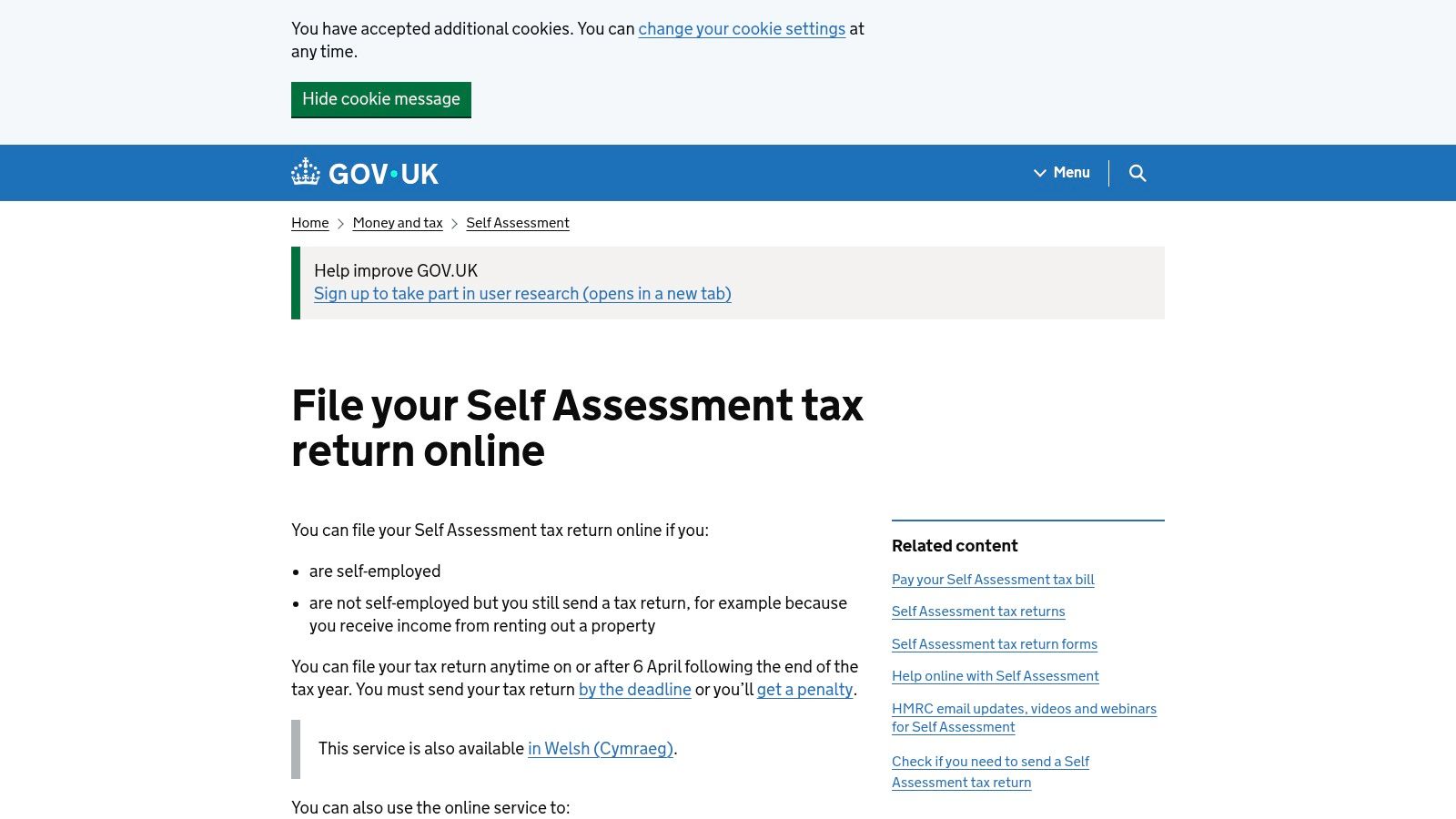
The filing process itself is straightforward if you stop making it emotional. Log in to GOV.UK, open the SA100 main return, complete the SA105 pages, check the payment screen, and submit once the figures reconcile. The trap isn't the technology, it's the sequence, because people jump between pages without checking that the property figures agree with the records they already gathered.
File in the right order and watch the common errors
Start with your Government Gateway sign-in, then open the Self Assessment return, then complete the property pages. If you use an agent, make sure authorisation is already in place before the filing deadline, because a missing authorisation is one of the laziest reasons to miss a return. UTR mismatches are another classic failure, usually caused by copying the wrong taxpayer reference or using an old login.
If you want a plain-English walk through of the wider Self Assessment mechanics, this self assessment tax return guide is a useful companion before you submit. It won't replace your landlord-specific numbers, but it will help if you've not filed online before.
When payment on account is shown, don't ignore it. Many landlords are happy to submit the return and then act surprised by the amount due. That's not a filing problem, that's a planning problem.
Know the deadline bands before you miss one
The key dates are simple. 5 October matters for paper filing, 31 January is the online filing deadline, and 31 July is the second payment on account date. Miss the online filing deadline and HMRC applies the immediate £100 penalty the next day. After that, late filing can move into further penalty bands at three months, six months, and 12 months, and late payment interest starts to bite as well.
For landlords who are being nudged by the new digital direction, these upcoming HMRC MTD Income Tax changes from April 2026 are worth watching, because the compliance habits you build now will matter later.
File early if you can. A return submitted on 30 January is still a rushed return, and rushed returns are where the numbers break.
Amending a Return or Disclosing Past Errors
If you've already filed and you think something's wrong, don't sit on it. Landlords make mistakes in three places most often, they leave out income, they put mortgage interest in the wrong box, or they understate an expense because the paperwork was messy. HMRC gives you routes to fix all three, but the route depends on timing and on how far back the issue goes.
Use the right correction route
If the return is still within the amendment window, amend the current year's SA100. If the error sits in an earlier year, use the formal amendment process for that return. If you've got undeclared rental income or gains and HMRC hasn't contacted you yet, the Let Property Campaign is the proper disclosure route.
That last point matters more than landlords think. HMRC says the Let Property Campaign is for people who haven't declared all their rental income or gains, and it offers reduced penalties for unprompted disclosure. Waiting for a letter is the expensive option.
Don't confuse “small” with “safe”
A lot of owners tell themselves a small underreport is harmless. That's wishful thinking. HMRC's filing thresholds don't depend on whether you've had a reminder through the post, and once you know there's an error, the sensible response is to correct it promptly. Early action is materially different from a late correction after HMRC has already started asking questions.
Blunt advice: if the figures are wrong and you know it, fix them. Hoping the issue disappears is not a strategy.
The practical decision tree is simple. Wrong current-year return, amend it. Wrong earlier-year return, amend that year. Several years of omitted rental income, use the disclosure route. If the return touches mixed-use property, old records, or an inherited letting arrangement, get help before you click submit, not after.
When to DIY and When to Hand the Landlord Tax Return to an Accountant
A clean one-property return with tidy bank records and no strange transactions can usually be done with decent software. That's the honest answer. If the work is one straightforward SA105, no joint ownership headaches, no non-resident angle, no mixed-use mess, and no past errors to disclose, DIY is reasonable.
Use a simple rule of thumb
Once you've got multiple properties, a property partnership, furnished holiday let complications, non-resident landlord issues, or a need to make a Let Property Campaign disclosure, the return stops being a simple annual admin job. At that point, a chartered accountant earns the fee by stopping structural mistakes, not by typing faster. That's where professional review pays for itself, because the cost is not just the filing, it's the reduction in avoidable corrections later.
Stewart Accounting Services, based in Central Scotland and working remotely across the UK, handles Self Assessment and property returns using cloud software such as Xero where it fits the bookkeeping. That sort of setup is useful if you want the records kept tidy all year instead of trying to rebuild them in January.
Red flags that should push you to professional help
- Multiple income sources: If rent is only one part of your tax position, the return needs joined-up review.
- Joint ownership or unusual ownership shares: These almost always create allocation mistakes.
- Old omissions: Past underreporting needs the right correction route, not a guess.
- Leasehold complexity: Service charges, reserves, and reconciliations can be messy.
- Future sale plans: If you care about cost basis and disposal records, the annual file needs to be built properly now.
Get the paperwork sorted before the next 31 January. Reconcile the bank, separate finance costs from ordinary expenses, keep capital items out of the revenue pile, and decide early whether you're filing yourself or handing it over. If you want the job done without the January scramble, gather the records now and book a review before the deadline pressure starts.
Recent Posts
06 Oct, 2026
04 Oct, 2026