

Why Double Entry Bookkeeping Important
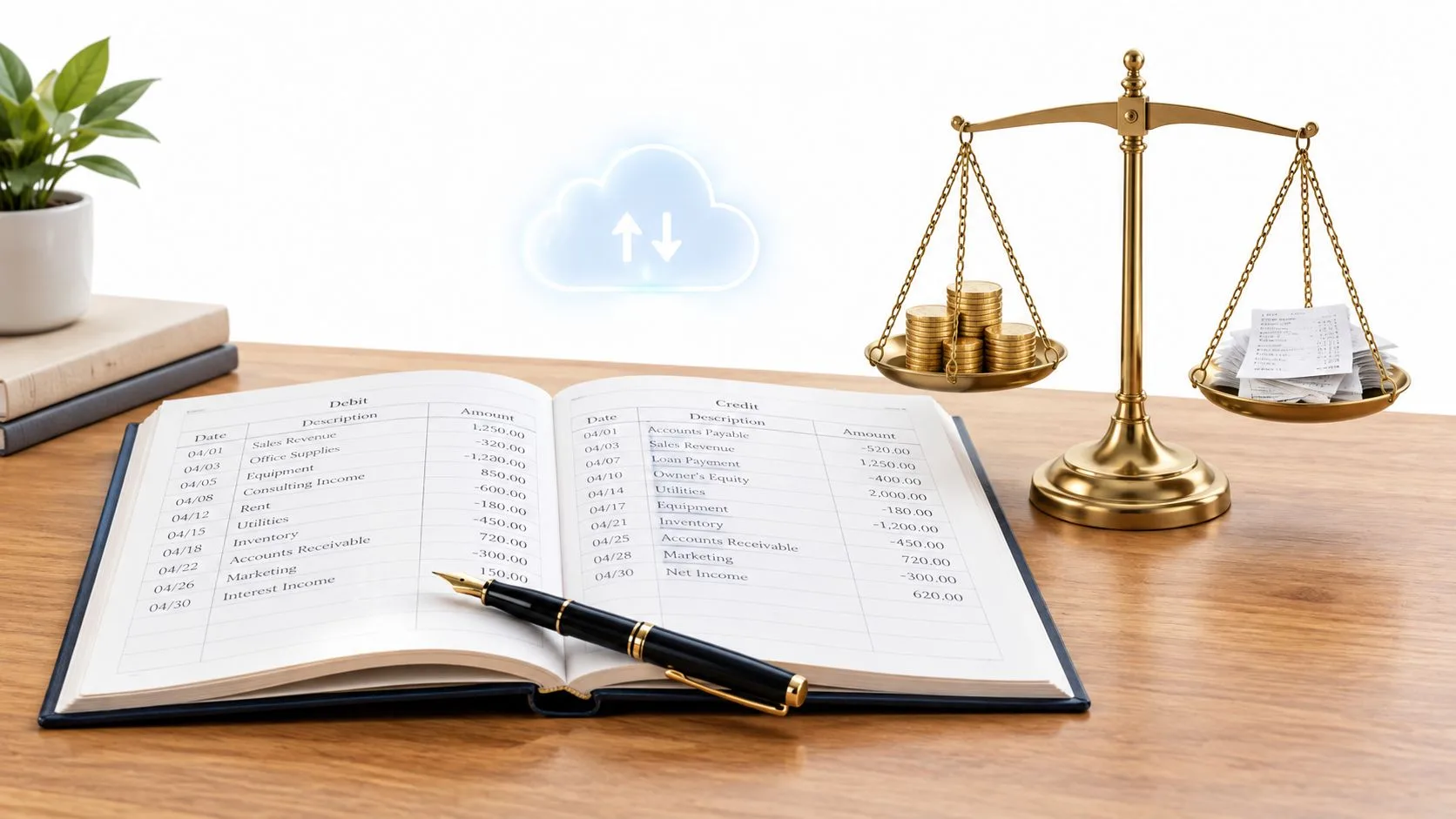
Most advice on bookkeeping gets the priority wrong. It treats the books as a tax chore first, then maybe a management tool later. For a UK business owner, that's backwards. Your bookkeeping system is the control layer under your cash decisions, VAT process, statutory accounts, and the story you tell lenders, investors, and directors.
That's why the question isn't just why double entry bookkeeping important. The better question is why a business would run without a structure that links every transaction to its consequence. If your software posts bank feeds automatically, that structure still matters. Automation can speed up entry, but it can't tell you whether a payment was rent, a capital asset, a director's loan, or a personal withdrawal.
Why This Old Idea Still Runs Modern Businesses
A lot of owners hear double-entry bookkeeping and think of dusty ledgers, not a live business tool. That misses the point. The method became established in Italian commerce around 1300, and Luca Pacioli's 1494 Summa de Arithmetica gave the first widely known printed explanation, using a memorandum, journal, and ledger with each transaction entered twice in the ledger, a structure the BBC says still underpins the modern system.

It's old, but it solves a current problem
The enduring value of double entry isn't nostalgia. It's the fact that one linked system can turn scattered transactions into profit and loss, a balance sheet, and a reliable record of assets, liabilities, and capital from the same underlying entries, which is exactly why it still matters in modern company accounting according to the BBC overview of Pacioli's system.
For a growing SME, that means you're not keeping books just to satisfy HMRC at year end. You're building a record that supports daily judgement. Can the company afford a hire? Is cash tight because margins are weak, or because debtors are slow? Has the business earned distributable profit, or are you looking at bank balance and guessing?
Double entry lasts because it answers two questions at once, where value came from and where it went.
Why software hasn't replaced the logic
Cloud software has hidden much of the mechanics, which is helpful, but it's also made some owners think the underlying method no longer matters. It does. Software can automate posting. It can't supply commercial judgement.
A balanced system matters because businesses still need accounts that stand up to scrutiny. If you borrow, seek investment, file statutory accounts, or review management performance, you need linked records rather than isolated cash movements. That's the bridge between old theory and modern pressure. Double entry isn't a museum piece. It's the accounting logic behind today's decisions.
How Double-Entry Bookkeeping Actually Works
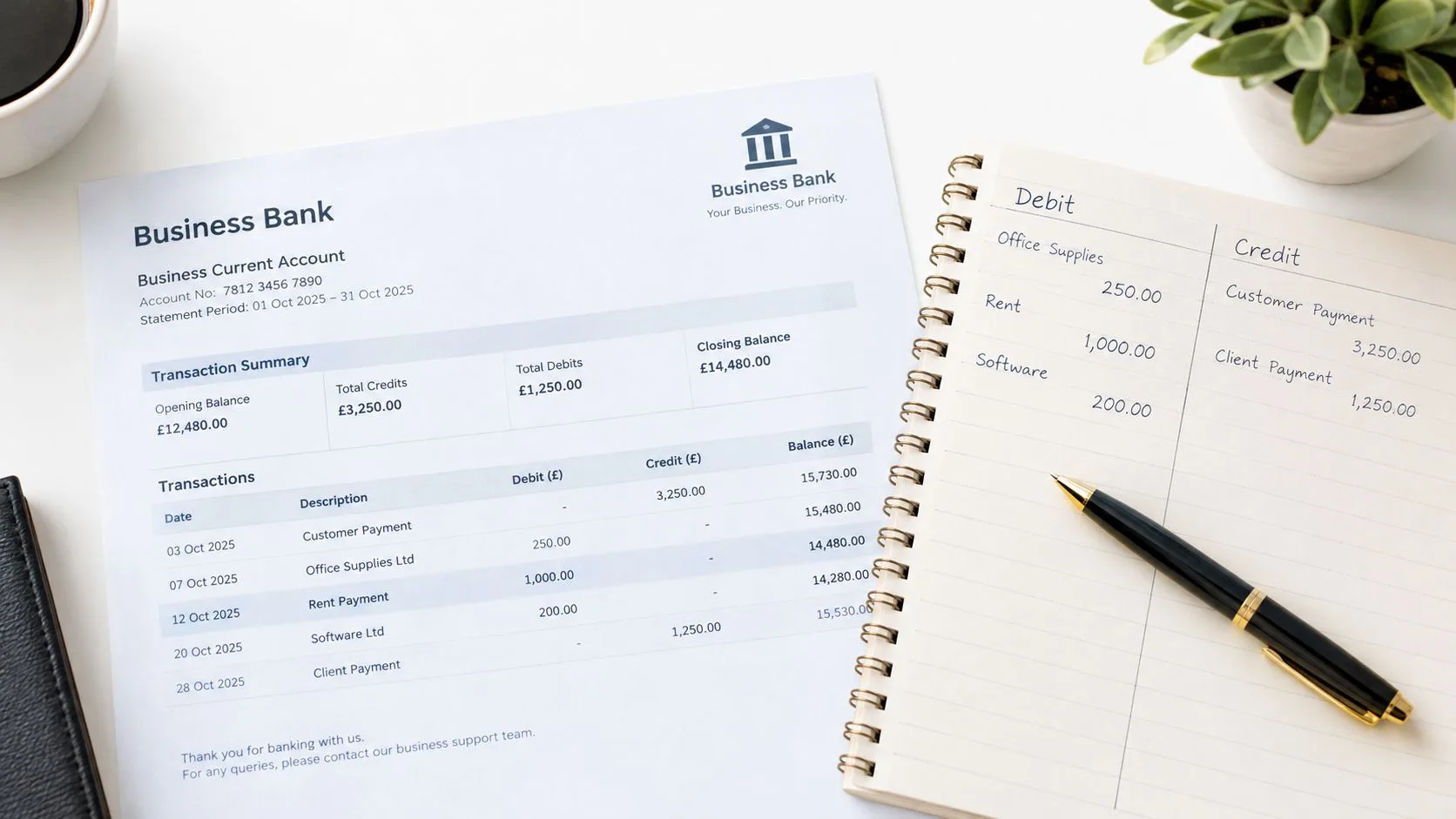
The easiest way to understand double entry is to ignore jargon for a moment and look at one ordinary transaction. Your company pays £1,000 of monthly rent from its business bank account. One thing has happened commercially, but two things have happened in the accounts. The business has incurred an expense, and its bank asset has reduced.
Start with the two effects
In plain English, the rent payment does this:
- Rent expense increases by £1,000
- Bank decreases by £1,000
That's the whole idea. Every transaction affects at least two linked accounts. In ledger terms, the rent expense is recorded on one side and the bank reduction on the other, so the books stay in balance.
The five account families are the ones you'll see in any proper ledger:
- Assets, such as bank, debtors, stock, equipment
- Liabilities, such as loans, VAT owed, trade creditors
- Income, such as sales or service fees
- Expenses, such as rent, wages, software subscriptions
- Equity, meaning the owner's or shareholders' interest
If you want a straightforward companion explanation of the mechanics, the Jumpstart Partners founder guide gives a useful business-owner view, and this double entry system example explained article shows how the postings flow through real accounts.
Why debits and credits aren't the hard part
People often get stuck on the words debit and credit because they sound like bank card language. In bookkeeping, they're just labels for the two sides of an entry. The important thing is not memorising terminology first. It's seeing that every business event has a pair.
Here's the practical consequence of that pair:
| Account affected | What happened | Amount |
|---|---|---|
| Rent expense | Increased | £1,000 |
| Bank | Decreased | £1,000 |
When you post all transactions this way, the ledger can produce a trial balance. That's a quick integrity check showing whether total debits equal total credits. It won't catch every possible problem, but it will expose a lot of basic mistakes early, which is exactly why accountants trust the method.
A short visual walkthrough helps if you prefer to see journals and ledgers in action:
What the balance is really telling you
A balanced entry doesn't mean the transaction was wise. It means the records reflect what happened in a structured way. That's the difference between bookkeeping and judgement. The bookkeeping answers, “What changed?” Your management decision answers, “Was it the right move?”
Once owners grasp that, double entry becomes far less intimidating. It's not accounting theatre. It's a disciplined way to record cause and effect.
Single-Entry Versus Double-Entry in Plain English
Take a small shop with a busy week. Three things happen. A supplier sends a refund. One purchase invoice hasn't been entered yet. The owner takes money out of the business for personal use.
If the owner keeps a simple cashbook, only the bank movements are obvious. The refund appears as money in. The owner's withdrawal appears as money out. The missing purchase invoice may not appear at all if it hasn't been paid yet. That cashbook tells you what moved through the bank, but not necessarily what the movement means.
Where single entry goes quiet
Now look at the same week through a double-entry ledger.
The supplier refund doesn't just increase bank. It should also reduce the related cost or creditor position. The owner's withdrawal shouldn't sit as a vague expense. It needs to be posted to the owner's capital or loan account, depending on the structure. The unpaid supplier invoice creates a liability even before cash leaves the bank. That matters if you're trying to judge profitability or short-term obligations.
Practical rule: If a record only tells you cash moved, it won't always tell you what the business now owns, owes, earned, or spent.
Single-Entry vs Double-Entry at a Glance
| Dimension | Single-Entry Cashbook | Double-Entry Ledger |
|---|---|---|
| What it mainly shows | Money in and money out | Full effect of each transaction |
| Supplier refund | Seen as cash received | Linked to bank and cost or creditor account |
| Missing unpaid invoice | Often invisible until payment | Recorded when the liability arises |
| Owner withdrawal | Easy to misclassify as expense | Posted to the correct capital or loan account |
| Balance sheet view | Weak or incomplete | Built into the records |
| Error spotting | Limited | Stronger internal cross-check |
Why the second side matters
The hidden danger with single entry isn't just untidy records. It's false confidence. The bank balance might look healthy while creditors are building, costs are misstated, or drawings are mixed into business expenses.
Double entry won't stop every error on its own. It does something more useful. It makes more errors visible. That's why an accountant can investigate movements in debtors, creditors, VAT, wages, or directors' balances with much more confidence when the second side of each transaction exists.
For a business that wants proper accounts rather than a notebook of cash movements, that second side is the difference between observation and control.
What UK Law Actually Requires From Your Records
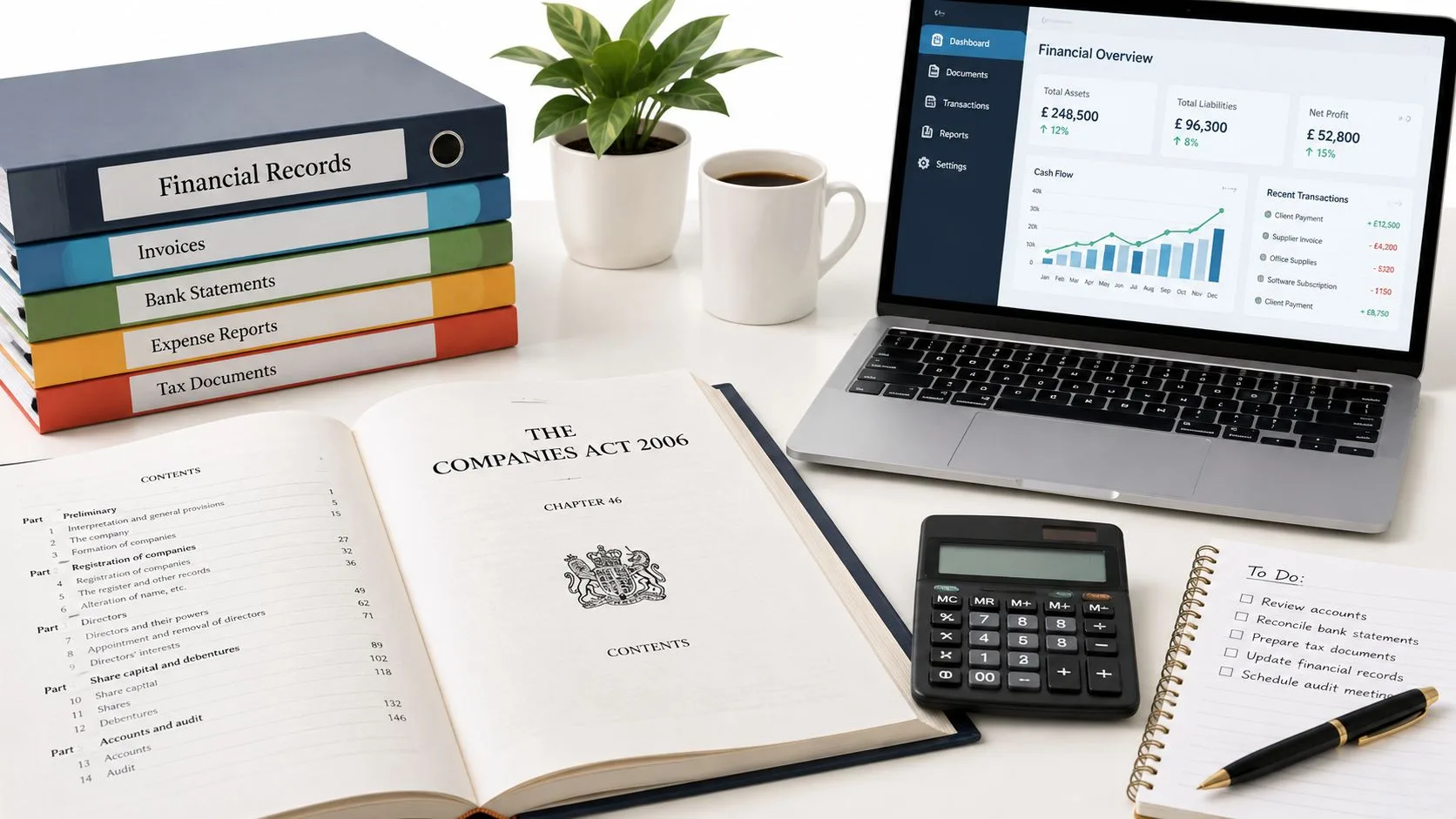
For UK limited companies, proper bookkeeping isn't optional. Under section 386 of the Companies Act 2006, every company must keep adequate accounting records that are sufficient to show and explain transactions, disclose the company's financial position with reasonable accuracy at any time, and enable directors to prepare compliant accounts. The law also requires day-to-day entries of money received and spent, plus records of assets and liabilities, with extra requirements where the business deals in goods, including stock statements and records of purchases and sales, as set out in section 386 of the Companies Act 2006.
Why double entry fits the legal standard
The Act doesn't say, “You must use double-entry bookkeeping.” But in practice, double entry is a very natural way to meet that legal standard because it links transactions to the accounts they affect and leaves an audit trail behind them. If directors need accounts that can be prepared accurately and supported later, linked entries are far more dependable than informal notes or a bank-only record.
The retention rules matter too. The same legal framework requires records to be preserved for three years for private companies and six years for public companies under the Companies Act requirement for record preservation. That alone tells you the law expects a maintained system, not scattered paperwork.
Regulators are paying attention to data quality
This isn't just technical wording sitting in legislation. Companies House reported that between 1 April 2024 and 31 March 2025 it queried or removed inaccurate, false or misleading register information relating to 106,300 companies, and its annual report identified revenue recognition, unusual journal entries, complex transactions, and management-estimate bias as significant fraud-risk areas in the Companies House annual report and accounts 2024 to 2025.
That should sharpen the issue for any director. Bookkeeping quality affects governance, filings, and the credibility of your records. If your company accounts rely on a weak bookkeeping process, the legal problem isn't abstract. It sits right inside your day-to-day data.
How Cloud Software Like Xero Puts Double Entry on Autopilot
Cloud software has made bookkeeping faster, but it hasn't changed the accounting logic underneath. Platforms such as Xero still rely on double entry. The difference is that the software posts the pair for you once the transaction has been classified.

What the software is doing behind the screen
A bank feed pulls in a payment. You code it to rent. Xero then posts the accounting entry across the relevant accounts. Raise a sales invoice and the system records income plus the customer balance. Publish a journal and it updates each side together.
That's why software feels simpler than manual books. The platform handles the mechanics, chart of accounts structure, and running balances in the background. If you're comparing setups, this cloud accounting guide from Everglow Prosperity gives a useful overview of how cloud workflows reduce manual admin while keeping records accessible.
Where owners still need to think
The risk is assuming “automated” means “correct.” It doesn't. Software can't reliably determine the commercial meaning of every item without review. A payment might be a repair, a capital purchase, a director's loan movement, or something with a VAT complication. The system only knows what it has been told.
That's why setup and review matter so much:
- Chart of accounts design affects reporting quality
- Bank rules speed coding, but can repeat mistakes quickly
- Control account reconciliations catch posting issues
- Source documents still need to be retained and attached where possible
If you're implementing or cleaning up a system, this guide on correctly handling Xero setup for a small business is useful because it focuses on the decisions that sit behind the software, not just the buttons.
Automation changes the task, not the need for judgement
The practical benefit for SMEs is obvious. A lean team can process more transactions with fewer manual steps. An outsourced bookkeeper can work in real time. An accountant can review live data rather than waiting for boxes of paperwork.
But the owner still needs someone to challenge miscoded items, review reconciliations, and interpret the numbers. Stewart Accounting Services is one example of a firm that supports SMEs with bookkeeping and Xero-based workflows while handling the accounting review separately from the software process. That distinction matters. Good software speeds bookkeeping. Good judgement keeps the books economically true.
Connecting Double Entry to Making Tax Digital and VAT
A VAT return often reveals whether the books are under control. Plenty of ledgers look tidy until quarter end, then the figures in the return do not tie back cleanly to sales, purchases, credit notes, or adjustments. Under Making Tax Digital for VAT, HMRC requires businesses within scope to keep specified digital records, preserve them in compatible software, and prepare returns from those records. HMRC also describes the VAT account as the link between the primary records and the VAT return in VAT Notice 700/22 on Making Tax Digital for VAT.
Why the VAT control account matters
That is where double entry stops being theory from an old bookkeeping textbook and becomes a working control. Each transaction should carry the net amount, the VAT element, the tax treatment, and the movement through the relevant control account. If those parts have been posted properly, you can trace the return back to the ledger and recompute the VAT position from the records themselves.
That matters because compliance is not just about pressing submit in software. HMRC's rules require digital records for VAT on supplies made and received, the time and value of supplies, adjustments, and reverse-charge transactions. VAT records generally need to be kept for at least six years. If a business uses more than one system, the digital links between them need to hold together. Manual copy and paste breaks that chain.
The useful comparison is simple. Making Tax Digital is the filing framework. Double entry is the accounting control underneath it. One tells you how records must be kept and submitted. The other helps you prove the figures make sense.
A workable quarterly habit
For many SMEs, one quarterly habit makes a real difference. Reconcile the VAT account to the draft return before submission.
That review can expose:
- Wrong tax codes
- Late invoices
- Duplicate entries
- Credit notes not processed properly
- Reverse-charge items posted on only one side
Reconcile the ledger first, then submit the return. Don't use the return to discover what the ledger should have said.
If you want a practical summary of the UK rules and process, this Making Tax Digital VAT guide is a useful reference.
One final point often causes confusion. Digital record keeping and double entry are related, but they are not the same thing. HMRC's broader Making Tax Digital for Income Tax rollout is currently scheduled to apply from April 2026 for individuals with annual business or property income above £50,000, extending to income above £30,000 from April 2027 and above £20,000 from April 2028, subject to the current rollout timetable, according to the Making Tax Digital guide. Software can file digitally. The bookkeeping still needs to be right.
How Double Entry Protects Your Decisions and Your Business
Double entry protects a business long before year end. Its real value is control. Every transaction leaves a trail that connects one part of the accounts to another, so a sale should lead somewhere sensible in cash, debtors, VAT, stock, or profit. When those links do not line up, the ledger gives you a place to investigate instead of a spreadsheet full of unexplained totals.
That matters because many poor decisions start with tidy looking management accounts.
A profit figure can appear credible while the bookkeeping underneath is weak. Timing can be off. Costs can sit in the wrong month. A director loan balance can drift. Stock can be carried at a value no longer supported by reality. The books may still balance, but balance alone does not make the numbers dependable. As noted earlier, Companies House highlights areas such as revenue recognition, unusual journal entries, complex transactions, and management-estimate bias as fraud-risk concerns.
This is the part owners often miss. Double entry does not stop someone from posting a bad journal. It does make that journal easier to challenge when you compare ledgers, reconcile control accounts, and ask the basic question, “What is the other side of this entry, and does it make commercial sense?”
In practice, that protects decisions like these:
- Dividend decisions rely on profit and reserves being real, not just reported
- Borrowing discussions go better when figures can be traced back to records and reconciliations
- Investor confidence improves when movements are explainable and the audit trail is clear
- Director oversight is stronger when odd balances and unexpected swings are visible early
A clean dashboard can still sit on top of weak bookkeeping.
Cloud software makes posting faster, but speed can create false comfort. Bank feeds import. Rules post. Reports appear. The danger is assuming automation has checked the judgement behind the entry. It has not. Someone still needs to review control accounts, look at margin movements, question old debtor balances, and clear unusual journals.
That is why double entry still matters in a modern UK business. It sits underneath tax filings, statutory accounts, and Companies House reporting as the discipline that helps you test whether the story in the numbers is believable. When pay, tax, borrowing, or strategy depends on those numbers, that discipline protects both the decision and the business.
A Simple Monthly Rhythm for UK SME Owners
Most bookkeeping stress doesn't come from complexity. It comes from drift. Small issues get left alone, then month end becomes quarter end, then VAT or year end arrives and everyone is trying to decode old transactions from memory.
A better approach is a short monthly rhythm that keeps the ledger honest.
A practical checklist you can actually keep
- Reconcile the bank early: Don't wait until filing season. Match the ledger to the bank and investigate anything old or unexplained. If you want a plain-language refresher on the purpose of reconciliation, this reconciliation guide from OrderOut is a useful primer.
- Review control accounts: Look at VAT, trade debtors, trade creditors, and any director or loan balances. These accounts often reveal mispostings faster than the profit and loss does.
- Clear suspense and query items: If the software has parked transactions in a holding code, resolve them while the paperwork and memory are still fresh.
- Save source evidence: Keep invoices, receipts, credit notes, and supporting documents in the system or in an organised archive.
- Snapshot the month: Review a handful of KPIs and compare them with the prior month or your expectation. If the gross picture feels wrong, dig before moving on.
Keep the routine small, but non-negotiable
You don't need a large finance department to do this well. You need consistency. The owner may review, a bookkeeper may process, and the accountant may handle adjustments and oversight. The important point is that someone owns the rhythm.
For many SMEs, the best next step is not another app. It's a cleaner process. Put a monthly bookkeeping review in the diary, assign responsibility for reconciliations, and decide who signs off unusual items. If you want that rhythm in place without building an in-house accounts team, speak to an accountant who works with UK SMEs on bookkeeping, VAT, and cloud systems, and ask for a monthly review process, not just year-end accounts.
If your books feel busy but not reliable, Stewart Accounting can help you put a proper monthly control routine behind your bookkeeping, VAT, and reporting. If you're based in Alloa, Stirling, Falkirk, or working remotely elsewhere in the UK, contact the team through Stewart Accounting and ask for support setting up a bookkeeping process that gives you clearer numbers before the next VAT quarter or year end.
Recent Posts
15 Oct, 2026
14 Oct, 2026