

Company Formation Help in Denny

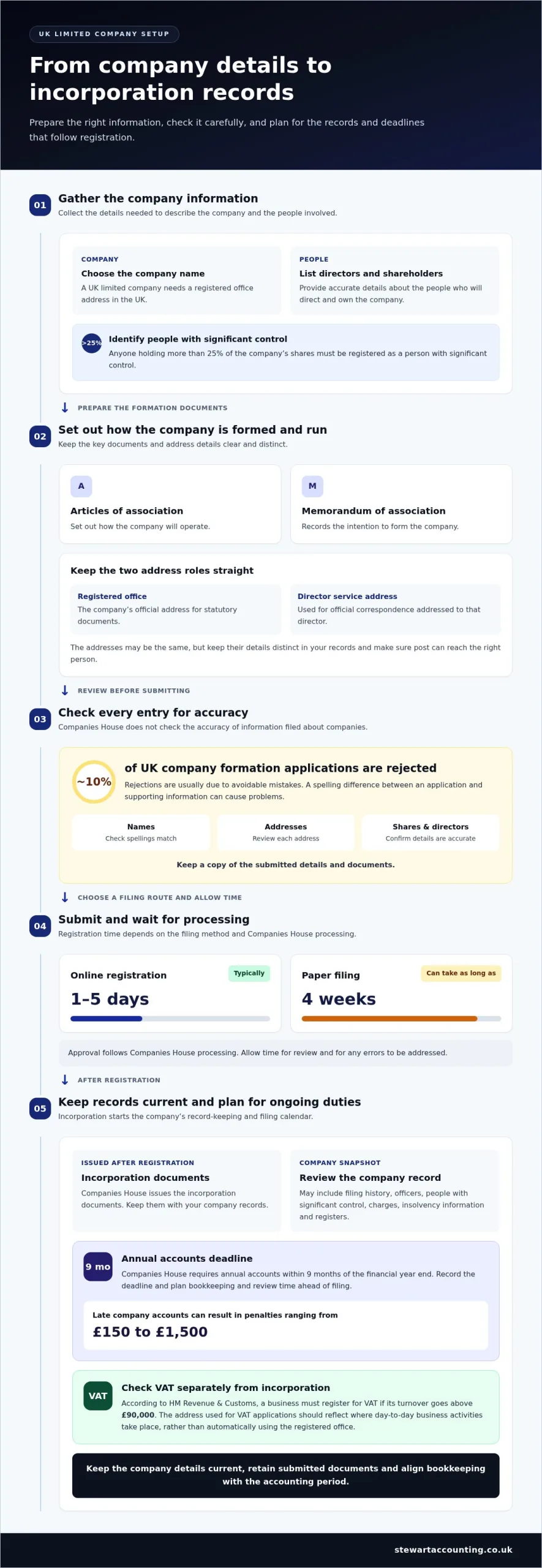
A UK limited company needs a registered office address in the UK, along with incorporation details and documents such as its memorandum and articles of association. Anyone holding more than 25% of its shares must be registered as a person with significant control. With company formation help from Stewart Accounting Services in Alloa, Stirling, and Falkirk, you can prepare the required information carefully before filing.
It’s sensible to understand the process before you begin. Forming a company involves choosing a suitable structure and providing accurate details about the people involved, ownership and how the company will operate.
This guide explains the information and documents needed to incorporate a UK company, outlines the main structures available and shows how company formation help can make the steps easier to manage.
Key Takeaways
- Gather your registered office address and the details of the people who will direct, own and control the company before you start an application.
- Understand how a private limited company differs from other business structures, including the effect of limited liability and the responsibilities attached to company roles.
- Check whether anyone holding more than 25% of the shares needs to be recorded as a person with significant control.
- Know which formation documents describe the company’s creation and how it will operate, so you can review them with confidence.
- Plan for ongoing company records and accounts as part of setting up, rather than treating incorporation as the final step.
Do I need to supply any documents for a UK limited company?
Yes. You need to provide company details and information about its directors, shareholders and people with significant control. A UK limited company must have a registered office address in the UK. You’ll also choose the company name and provide its articles of association, which set out how it will operate. The memorandum of association records the intention to form the company. Companies House issues the incorporation documents after registration.
Take care when preparing the registered office and director service addresses. The registered office is the company’s official address for statutory documents. A director service address is used for official correspondence addressed to that director. Keep the details distinct in your records, even if they use the same address, and make sure post can be received and passed to the right person.
Companies House does not check the accuracy of information filed about companies. Review every entry before submission, especially names, addresses, share details and director information. Around 10% of UK company formation applications are rejected, usually because of avoidable mistakes. For example, a spelling difference between an application and its supporting information can cause problems. Keep a copy of the submitted details and documents for your records.
Registration times depend on the filing method and Companies House processing. Online company registration typically takes 1 to 5 days. A claim that an agent can always register a company within 24 hours is not reliable. Paper filing can take as long as four weeks. Approval follows Companies House processing, so allow time for the application to be reviewed and any errors to be addressed.
Your incorporation records show how the company is set up. The Companies House company snapshot can include filing history, officers, people with significant control, charges, insolvency information and registers. Keep the issued documents with your company records and ensure the information stays current. In Scotland, company numbers start with “SC”, identifying a Scottish-registered company.
Plan for related tax obligations as well as incorporation. According to HM Revenue & Customs, a business must register for VAT if its turnover goes above £90,000. This is separate from forming a company, so consider VAT registration when reviewing expected turnover. The address used for VAT applications should reflect where day-to-day business activities take place, rather than automatically using the registered office.
Using an agent can save you from managing each filing step alone, but errors or unclear service terms can create delays. Before appointing one, review the written scope and charges, and verify any claimed professional credentials with the relevant body. For a local route through the process, the company formation support information outlines assistance with setting up a limited company.
Specialist and accountant-led formation services
Company formation support can cover more than submitting an application. An accountant-led service can link registration with bookkeeping, tax returns and future accounts, helping you plan how to keep records before trading begins. For a Denny business, Stewart Accounting Services can provide support remotely, so you can discuss documents and filing without relying on an office visit.
Before you begin, clarify what the service covers: who prepares the filing, what information you need to provide and how you’ll receive the finished records. Make sure the scope distinguishes formation work from ongoing accounting. Companies House issues incorporation documents; a certified copy of a document from the company’s filing history can be requested separately through its service.
After incorporation, the filing calendar becomes part of running the company. Companies House requires annual accounts within 9 months of the financial year end. A UK company must file its accounts with Companies House within 9 months of its financial year end; this is an annual requirement, not a 1 day period. Companies House says late company accounts can result in penalties ranging from £150 to £1,500. Record each deadline against the company’s accounting period, then plan bookkeeping and review time ahead of filing.
Keep orderly records when making changes, too. If you plan to change the company name, note which records, invoices and customer documents will need updating. If you’re considering a different accounting period, discuss the intended dates with your accountant before changing your bookkeeping timetable. Align the accounting period, bank records and year-end paperwork so the figures prepared for the accounts cover the right period.
Ongoing accounting support may include regular bookkeeping, year-end accounts and tax return preparation. If you use Xero, agree who enters transactions, reviews categories and organises supporting records. A Self Assessment Tax Return may also apply to you personally, depending on your circumstances. Clarify how work is divided, which records you need to provide and how questions will be handled throughout the year.
Company formation help for a Denny business can bring registration guidance together with a plan for accounts and tax records. Choose support that explains its filing role clearly and helps you understand the accounting tasks that follow registration. Incorporation is the start of organised business record-keeping, not the end of setting up.
Company structures and director or shareholder limits
Your business structure affects ownership, decision-making and how you manage business finances. A sole trader and a limited company are different legal arrangements. A sole trader is personally liable for business losses. A limited company is a separate legal entity, and limited liability generally restricts a shareholder’s responsibility for company debts to their investment.
A UK limited company must have at least one director aged 16 or over. It must also have at least one shareholder holding a minimum of one share. One person can hold both roles, so a single founder can set up a company. A shareholder who holds more than 25% of the shares must be registered as a person with significant control. Record who owns the shares and who makes key decisions.
Founders may consider a private limited company when they want a distinct structure for trading and ownership. A public limited company has different requirements, including at least two shareholders. Choose a structure that fits your plans for ownership, investment and control. For example, a sole founder may prioritise straightforward ownership, while co-founders should agree how shares and decisions will be divided.
Limited liability can help separate personal and company finances, but it doesn’t remove a director’s responsibility to manage the company properly. Directors oversee company decisions and records. Shareholders own shares and may have voting rights under the company’s rules. Before registration, decide who will be a director, who will own shares and what proportion each shareholder will hold.
Formation services vary in scope. Compare the registration filing, preparation of incorporation documents and any additional support, rather than relying on the word “package” alone. Costs depend on what the service includes, such as filing support, document preparation or ongoing accounting. Stewart Accounting Services agrees fixed fees in advance and never undertakes work without agreeing the fee in advance.
When comparing a sole trader and a limited company in Scotland, consider personal liability, administration and how you’ll use business profits. Tax and reporting treatment differ by structure, so consider expected profit and how you plan to take money from the business before deciding. A limited company may suit a business seeking separate ownership and finances, while a sole trader structure may suit someone who prioritises simpler administration.
Choose a structure that reflects your plans beyond the first stages of trading. If you expect to add shareholders, seek investment or change how the business operates, agree ownership and decision-making arrangements early. A clear structure helps everyone understand their role before registration.
A limited company may involve registration and incorporation costs, depending on the support included. A sole trader structure may suit someone who prioritises simpler administration. Tax and reporting treatment differ, so compare expected profit and how you plan to take money from the business when weighing the options.
What is Company Formation?
Company formation is the process of registering a new limited company with Companies House. Registration creates a separate legal entity that can operate, hold assets and enter into business arrangements. The application records the company’s owners and directors. In Scotland, the company number starts with “SC”, identifying a Scottish-registered company.
To begin, choose a company name and prepare the required details about its directors, shareholders and shares. You’ll also need a registered office address and the company’s constitutional documents. The memorandum records the intention to form the company, while its articles describe how it will operate. Companies House registers the company under the Companies Act 2006.
According to Companies House, the company formation fee is £100. This is the Companies House filing fee, not an accountant’s fee or the price of extra support. A formation service package may cover other tasks, so compare its stated work with the government filing charge. Keep a record of each charge and what it covers before authorising payment.
Companies House typically incorporates a UK company within 3 to 6 working hours after submission, subject to processing. This is a processing estimate, not a promise that every application will be approved within that period. Errors or missing details may affect progress. After approval, Companies House issues the incorporation documents and a unique company registration number. Save these documents securely, since banks and business partners may ask for company details when setting up an account.
Identity verification is also part of the current formation landscape. The Economic Crime and Corporate Transparency Act 2023 introduced identity verification requirements for company formations. Prepare to verify the identity details of the people involved, and ensure the information entered in the application matches their documents. Accurate records help prevent avoidable inconsistencies between the application and the company’s official record.
Registration is only the first administrative step. A UK company must register for Corporation Tax within 3 months of starting to trade. If your business hires staff or pays a salary, check which payroll registrations apply. Keep the start-of-trading date, company number and tax records together, so you can complete the relevant HMRC steps when they apply.
After registration, decide how the company will manage banking, bookkeeping and tax records. Open a business bank account to keep company transactions separate from personal spending. Record income, costs and supporting documents from the start. If you plan to use Xero, set up the accounting records around the company’s activities and keep access details secure. These steps give the owners a clear record of how the business operates after incorporation.
Information and documents required for incorporation
Before completing an application, agree practical details that could otherwise delay progress. Write down the intended trading name, who will handle correspondence and who will coordinate the submission. If several people are involved, nominate one person to collect feedback and maintain the working version. This avoids founders editing separate drafts or sending conflicting instructions.
Keep a simple record of decisions that need agreement. Note the preferred company name and alternatives, the planned start of trading and who will manage administrative tasks. Mark decisions as agreed before including them in the application. This gives founders a shared reference and helps them identify changes that could affect launch preparations.
Set up a secure working folder for drafts and business records. Use clear file names, such as “company details” or “founder decisions”, and make the latest version easy to identify. Limit access to people involved in setting up the business. Avoid sending sensitive personal information through informal group chats, where files can be hard to track or remove.
Plan the handover from setup to day-to-day operations. Decide who will monitor official correspondence, pass messages to the right person and organise company records. If a founder is unavailable, agree who will cover those tasks. Company formation help in Denny can help you organise the process and understand the steps involved, rather than leaving decisions scattered across emails.
Build a launch checklist around your business activity. A consultant, tradesperson and online seller may each need different practical arrangements before taking on customers. List the people who need the company’s correct details, such as prospective clients, suppliers and service providers. Prepare consistent business details for forms and correspondence, and update them when your plans change.
After submission, keep a record of what was sent and note any follow-up messages that need attention. Assign responsibility for reading correspondence and sharing relevant updates with the founders. This routine helps you respond promptly and keep everyone aligned. It also provides a clear starting point for organising the company’s ongoing administration.
Company formation help in Denny may be useful if you want support turning your agreed plans into a well-organised setup process. Prepare your decisions and working records before seeking guidance, so you can focus the discussion on the areas where you need help. If you’d like to discuss your next steps, get in touch about your company formation needs.
Stewart Accounting Services: Year End Accounts Preparation
Stewart Accounting Services can help you move from incorporation to organised financial reporting with Year-End Accounts. Use this support as your company’s accounting period approaches its end, or when you need help preparing records for your accounts.
Clear bookkeeping throughout the year makes it easier to track income and costs and prepare information for year-end accounts. Stewart Accounting Services also provides Bookkeeping, Payroll, VAT Returns and Self-Assessment Tax Returns to suit your business needs. These services can take routine financial tasks off your hands, giving you more time to focus on running the company. Client communications, including calls, emails and queries, are handled promptly.
To discuss Year End Accounts Preparation or related accounting support, contact Stewart Accounting Services or visit stewartaccounting.co.uk.
Set your new company up for the next step
As your business takes shape, turn your plans into clear working habits. Decide how you’ll review money coming in and going out, track important commitments and share decisions with anyone involved in running the company. Regular reviews can help you identify questions early and make considered choices as circumstances change.
If you need company formation help in Denny, use your next conversation with an adviser to discuss the priorities and practical arrangements that matter to your business. Clear goals can make it easier to decide what support you need as the company develops.
Taking the next step at your own pace can help you focus on building the business with more time, more money, more mind. Contact Stewart Accounting Services to discuss your plans. Your new venture can grow from a clear, considered start.
Frequently Asked Questions
How long does it take to register a new company?
Registration can take several working days, depending on the filing route and Companies House processing. Avoid setting firm customer start dates or payroll arrangements around an assumed approval day. Build flexibility into launch plans, then arrange banking and other practical tasks once registration is confirmed. This separates the registration stage from the work needed to begin trading smoothly, while Stewart Accounting Services can guide you through preparing your business finances.
Do I have to live in the UK to form a company?
No, you don’t have to live in the UK to form a UK company. If you’ll manage it from abroad, plan how you’ll receive company correspondence and keep business records accessible to the people responsible for them. Clear arrangements for handling messages and sharing decisions can help remote founders stay involved without relying on scattered updates.
What type of company should I choose?
Choose a structure based on how you expect the business to develop, not only on its launch. Consider whether you may bring in investors, share control with co-founders or keep ownership within a small group. Write down your priorities and discuss any differences before choosing. This gives you a practical basis for comparing structures and agreeing how the business should be governed with support from Stewart Accounting Services.
Can a non-UK resident start a company in the UK?
Yes, a non-UK resident can start a UK company. Remote founders should plan who will handle routine correspondence and how important business records will be shared. Agree where the latest working documents will be stored and who will notify the others about new messages. A simple communication routine helps keep company administration organised across locations.
How to register a limited company in the UK with Companies House
Submit the proposed company details and incorporation information through the Companies House application process. Before filing, have the founders agree the business name, ownership arrangements and who will coordinate the application. After registration, make sure those managing the business can access the official company record. You can then organise next steps, such as setting up internal record-keeping and agreeing who handles incoming company correspondence.
Companies House company registration fee and processing time 2026
For 2026, the Companies House fee depends on whether you file online or by paper. Processing also depends on the filing route and Companies House handling. Keep the government filing fee separate from any formation agent’s service charge when planning your budget. If your launch date matters, avoid treating a processing estimate as a confirmed approval date, and leave room for administrative setup afterwards.
What information and documents are needed to form a UK company?
Prepare the proposed company details and formation documents, then agree a final version with everyone involved. Keep a decision record showing which version the founders approved and who can make changes. Store supporting files in a secure folder with clear names. This helps prevent confusion between drafts and gives those coordinating the application a reliable reference.
UK company director and shareholder requirements
A director runs the company’s business and makes decisions, while a shareholder owns shares in it. One person may hold both roles, but their responsibilities remain distinct. Before registration, founders can record who will manage daily decisions and how ownership will be shared. Clear expectations can help prevent disagreements later, particularly when a shareholder isn’t involved in day-to-day operations.
Limited company vs sole trader in Scotland: costs and tax differences
A sole trader is personally liable for business losses, while a limited company is a separate legal entity with shareholder liability generally limited to their investment. Formation package costs depend on the services included. Tax and reporting treatment differ; standard tax guidelines apply a 19% Corporation Tax rate on company profits, alongside distinct regulations for sole traders.
How to register for Corporation Tax and VAT after forming a company
Register for Corporation Tax within 3 months of starting to trade. Register for VAT if turnover goes above £90,000, using the address where day-to-day business activities take place rather than the registered office. Stewart Accounting Services can assist you with meeting these post-incorporation tax deadlines accurately.