

Payroll services for pubs in Dunblane and staff pay

A new starter or leaver can change payroll even when your pub’s usual pay date stays the same. With Stewart Accounting Services, staff changes need to be reflected in pay records and payslips; whether they carry a separate charge depends on the pricing arrangement. Any fee depends on factors such as staff numbers, pay frequency and the processing required, and is set after a quote request.
It’s understandable to want clear costs and confidence that each pay run reflects changes in your team. Pub payroll can involve weekly or monthly processing, payslips, staff joining or leaving, and statutory pay. Knowing how these fit together helps you plan and avoid last-minute confusion.
This article explains what payroll processing involves, how weekly and monthly schedules differ, and what to consider when staff details change. You’ll also learn how payroll support can take routine administration off your hands, giving you more time, more money and more peace of mind to focus on running your pub.
Key Takeaways
- Know what to review on each electronic payslip so staff can understand their pay and deductions.
- Keep a clear process for recording starters and leavers, including the payroll details needed when someone joins or leaves.
- Understand which employee and pay information affects statutory sick and parental pay calculations.
- Choose a weekly or monthly payroll rhythm that fits your pub’s pay arrangements and staff changes.
- See how outsourced payroll can support data collection and help take routine pay administration off your hands.
Electronic payslips and payment amounts
For a pub team with changing shifts, a digital payslip gives each worker a record of that pay period. Review the hours, rates, additions and deductions used to reach the take-home amount. If you’re comparing payroll services for pubs in Dunblane, consider whether staff can access their payslips securely and retrieve earlier records when needed.
Digital Payslips and Payroll Reports
A payslip lets an employee compare the amount paid with the hours and pay details recorded for that period. For example, a bar worker can check whether a late shift or overtime appears in the calculation. A payroll report gives the pub a broader view, such as a list of staff payments and deductions. Compare the report with approved hours before making payment.
Electronic delivery can make payslips easier to access than paper copies, but security matters. Use individual accounts, strong passwords and limited access for staff handling payroll. Before choosing a format, establish how employees can retrieve old payslips and what happens if they lose account access. Keep payroll files off shared staff devices and review who can view employee records.
How do you choose and switch payroll providers for a pub in Dunblane? Compare pay schedules, payslip formats, support processes, and how starters and leavers are handled. For a switch, prepare current employee details, recent payroll records and the next pay date, then agree who will submit the first pay run. A written handover list can help prevent gaps between providers.
Which payroll providers integrate with pub accounting, rota or EPOS software? Compatibility depends on the systems and the information they can exchange. List your accounting, rota and EPOS software by name, then establish whether hours, tips or payment totals transfer directly or need manual entry. This comparison can show where you may need a separate review step.
Variable Hours and Pay Calculations
For variable hours, overtime, hourly pay and zero-hours contracts, calculations start with accurate, approved hours and the relevant pay rate. Keep rota changes, clock records and manager approvals together for each pay period. Check that overtime is identified separately and that any change to a worker’s rate has an effective date recorded.
How do payroll services manage these changes? They use the hours and pay information supplied for each run, applying the recorded rates and agreed additions. For example, compare the rota with clocked hours and resolve differences before processing, rather than carrying an unapproved estimate into payroll. When assessing payroll services for pubs in Dunblane, look for a clear way to submit and correct this information.
What should Dunblane pubs check about security, support and HMRC deadlines? Ask how payroll data is protected, who can access it, how errors are handled, and how filing responsibilities fit the pub’s payroll calendar. Keep records of deadlines, submitted information and HMRC acknowledgements. Clear responsibilities help prevent tasks being missed.
Before deciding, map one complete pay run, from approved hours to employee payslips and payroll reports. This reveals where manual checks are needed and whether the process suits your pub. You can also review the payroll processing service details when considering support for these tasks.
Frequent staff turnover and new-starter administration
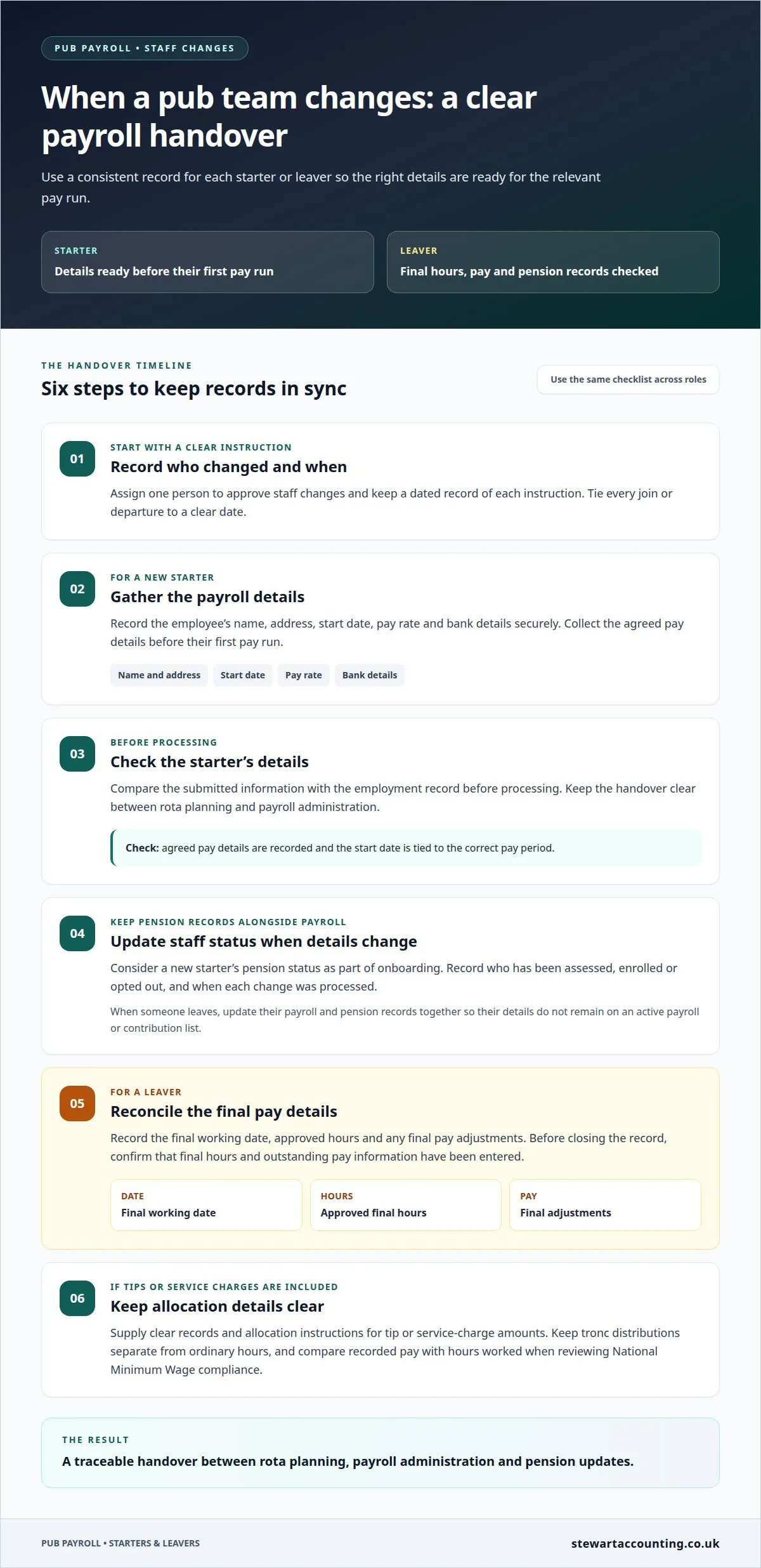
In a pub, staff may join or leave between payroll runs, so tie each change to a clear date. Record a new starter’s name, address, start date, pay rate and bank details securely. For a departure, record the final working date, approved hours and any final pay adjustments. These details help ensure the right person appears in the correct pay period.
Hotels and restaurants face similar administration: teams may include bar staff, kitchen workers, cleaners and seasonal employees, all with different hours. Use a consistent starter and leaver checklist across roles. Before processing a new employee, compare their submitted details with the employment record. Before closing a leaver’s record, confirm that their final hours and outstanding pay information have been entered.
Automatic enrolment pensions also form part of staff administration. The policy was phased in across the UK from 2012, requiring employers to enrol eligible workers and contribute unless an employee opts out. Keep pension details alongside payroll records, and record relevant staff changes promptly. A new starter’s pension status should be considered as part of the onboarding workflow, not left until a later review.
Setting up pension information for payroll involves recording the scheme details and maintaining contribution records as staff details change. Keep a clear record of who has been assessed, enrolled or opted out, and when each change was processed. If an employee leaves, update their payroll and pension records together. This helps prevent a leaver remaining on an active payroll or contribution list.
Can payroll providers handle tips, tronc schemes, service charges and National Minimum Wage rules? Payroll processing can include tip or service-charge amounts when the pub supplies clear records and allocation instructions. Keep tronc distributions separate from ordinary hours, and compare recorded pay with hours worked when reviewing National Minimum Wage compliance.
For each starter, collect the agreed pay details and information needed for payroll before their first pay run. For each leaver, reconcile final hours, pay and pension records before closing the record. These steps create a traceable handover between rota planning, payroll administration and pension updates.
To make turnover easier to manage, assign one person to approve staff changes and keep a dated record of each instruction. A consistent handover reduces duplicate entries and helps resolve questions about a particular pay period. If you want to discuss how to organise payroll administration for your pub, get in touch about your payroll needs.
Statutory sick and parental pay calculations
Statutory pay calculations depend on the employee’s circumstances and the relevant pay period. For a pub, start by recording the absence or expected leave, the employee’s usual pay details and the dates involved. Identify the statutory pay category before entering figures. This helps ensure sick leave and parental leave are not treated as ordinary hours or mistakenly grouped together.
For Statutory Sick Pay, record the first day of sickness and the employee’s absence dates. Keep the employee’s notification and any supporting records with the payroll information. The calculation uses the applicable eligibility rules and the employee’s pay details. For example, if a bar worker reports an absence after a rota has been approved, compare the dates with the rota before processing.
Statutory Maternity Pay needs its own record and calculation. Note the expected leave dates and the employee’s pay information for the relevant assessment period. Use these details to determine whether the employee qualifies and how payments should be processed. Keeping the dates and calculation together makes it easier to explain a payslip if the employee asks how the amount was worked out.
Parental pay can involve different statutory categories, so record the type of leave rather than using a general “absence” label. For example, log a request connected with a new child under its relevant category and dates. Check the employee’s information against the applicable rules, then record the calculation and pay period used. Clear labels help prevent one type of leave being processed as another.
Before each payroll run, compare absence records with approved rota information. Check that sickness dates, parental leave dates and any return-to-work date are recorded correctly. If a staff member’s hours changed before leave began, retain the pay records used for the calculation. A dated note of each input makes later corrections easier to trace.
Keep statutory pay calculations separate from tips, overtime and ordinary shift pay in your working records. For example, a kitchen employee’s payslip may include normal hours for part of a pay period and a statutory payment for another part. Review each component against its supporting record before finalising the amount, so the employee can see how the total was calculated.
When an absence spans multiple pay periods, carry forward the dates and calculation details rather than starting with a blank record. Check the previous period’s end date against the new period’s start date. Record any change that affects the employee’s status or pay inputs. This creates a consistent history and helps explain adjustments without relying on memory.
For Dunblane pubs, a practical review sequence is to record the leave category, confirm dates, gather pay inputs, apply the relevant statutory calculation and retain the working record. This supports accurate processing and gives managers a clear way to pass absence details to whoever prepares payroll.
Weekly and monthly payroll processing
A weekly cycle records and processes pay each week, while a monthly cycle groups pay into one regular monthly run. For a Dunblane pub, choose a cycle that matches staff agreements and gives managers time to approve hours before payroll closes.
With weekly processing, set a consistent cut-off for approved shifts, overtime and other pay adjustments. For example, a manager can review the previous week’s rota against clock records before submitting approved hours. A clear cut-off helps prevent late changes from being mixed into the wrong run. Keep a record of corrections for the next period.
A monthly cycle follows the same basic checks but gathers information over a longer period. You might collect rota updates throughout the month, then check the full period’s hours before processing. This can make it easier to review one consolidated payroll summary. However, record changes promptly, especially when an employee joins, leaves or changes their pay details.
Choose between weekly and monthly processing by considering staff pay arrangements, how often hours change and the time available for checks. A pub with frequent shift adjustments needs a reliable way to capture changes between pay runs. A pub with steadier hours may find a monthly review easier to organise. Either way, set clear responsibilities for submitting and approving payroll information.
A weekly payroll summary can help managers compare one pay period with the previous one. A monthly summary gives a broader view of pay across the month. Review employee totals, additions, deductions and changes before payment. For example, a noticeable difference in a team member’s recorded hours should prompt a comparison with approved rota records, not an assumption about the cause.
Keep real-time information (RTI) in mind when planning the cycle. HMRC uses RTI to receive payroll information each time employees are paid, keeping tax records up to date. Build the information submission into the pay-run process rather than leaving it as a separate task after payments. Retain a record of the figures submitted and the payroll period they cover.
Use this repeatable sequence for either cycle:
- Set the pay-period dates and the cut-off for approved hours.
- Collect changes to staff details, hours and pay adjustments.
- Review the payroll summary against rota and payment records.
- Process payment and submit the required payroll information to HMRC.
- Store the summary and records under the relevant pay period.
A consistent calendar helps staff know which hours belong to each run and helps managers plan their checks. If a bank holiday or rota change affects the usual workflow, clearly record the revised internal cut-off. The pay cycle should remain understandable to employees and manageable for the person approving each run.
Outsourced payroll for hospitality and leisure businesses
Outsourcing can move payroll preparation from a pub manager’s desk to a specialist process. The pub still supplies accurate staff and pay information, which the payroll provider uses to prepare the pay run and related records.
Which payroll providers serve pubs in Dunblane and nearby areas? Pubs can consider providers serving businesses locally or remotely across the UK. Compare the support process, data collection, pay-cycle options and handling of hospitality-specific information.
Hospitality payroll can involve employees with different roles, working patterns and pay arrangements. A pub may have bar staff, kitchen staff and managers whose hours are submitted by different supervisors. An outsourced process can help organise the information needed for processing. Agree who gathers and approves each team’s details.
Before the first outsourced pay run, map how information moves from your pub to the payroll preparer. Decide who submits approved hours, reports starters and leavers, and confirms changes to pay details. Set a clear cut-off and agree how to send late corrections. This creates a defined handover instead of relying on scattered messages.
Outsourcing does not remove the need for clear records. Your team knows which shifts were worked and which changes managers approved. The preparer needs those records in a usable format, with relevant notes attached. If a rota change affects a submitted figure, send the correction with the employee and pay period identified. This reduces ambiguity and makes queries easier to resolve.
Also agree how to raise exceptions. A missing timesheet, an amended bank detail or an employee’s unexpected absence may need attention before processing. Name someone at the pub who can respond, and keep supporting information with the relevant pay period. A short handover checklist can help managers cover the process when the usual contact is away.
To assess whether outsourcing suits your pub, review a full pay cycle, from collecting information to completing payroll records. Note the manual steps, recurring delays and questions that need manager input. Then compare the proposed process with your actual rota and staff changes. This practical test helps show which tasks could be delegated and which decisions remain with your team.
If payroll administration is taking time away from managing service, discuss your pub’s needs and pay process through this payroll support enquiry.
Pubs in Dunblane can consider payroll providers serving local businesses or firms that work remotely with clients across the UK.
Stewart Accounting Services: Year End Accounts Preparation
Stewart Accounting Services provides Payroll Services to help Dunblane pub owners organise payroll records and prepare for year-end. Bookkeeping Services help keep the financial records used to review business activity in order.
Turn to Year-End Accounts when you need your business records brought together for the accounting year-end. Organised payroll and bookkeeping records make it easier to review staff costs alongside other business figures. Self-Assessment Tax Returns are also available for sole traders who need help with their personal tax return.
Talk with Stewart Accounting Services about the support that fits your pub, or visit stewartaccounting.co.uk.
Make payroll support fit your next stage
As your pub changes, payroll should remain part of a workable plan for running the business. A growing team, new roles or a different approach to administration can all prompt a fresh look at who handles payroll tasks. The question is not only whether the next pay run can be completed, but whether the process leaves you enough time for customers, staff and day-to-day decisions.
Choosing payroll services for pubs in Dunblane can help you decide which tasks to delegate and what information your team still needs to provide. Set out your priorities before discussing support, such as reducing administration or creating a clearer link between payroll and your wider records. This gives the conversation a practical starting point and helps you work with less stress.
When you’re ready to discuss a suitable next step, contact Stewart Accounting Services. A clearer approach can help you spend more time on the parts of pub life that need you most.
Frequently Asked Questions
Do You Charge For New And Leaving Employees?
There isn’t a universal separate charge for processing a starter or leaver; fees depend on the agreed payroll scope. Stewart Accounting Services agrees fixed fees in advance and never undertakes work without agreeing the fee in advance, so you know how staff changes fit within the work. Send the employee’s start or leaving date and relevant pay details promptly so the change can be handled in the correct payroll period.
What Does A Fully Managed Payroll Service Include?
A fully managed payroll service can cover pay calculations, payslip preparation and sending payroll information to HMRC through real-time information (RTI). You still need to provide reliable details, such as approved hours, pay changes and staff records. For example, if a worker changes roles, provide the effective date and updated pay details before the relevant run. Agree responsibilities for approvals and corrections at the outset.
What Is The Benefit Of Having Your Accountant Do Your Payroll?
An accountant handling payroll gives you one place to discuss employee pay records alongside other business records. For example, if a payroll total needs explaining during a bookkeeping review, you can raise both matters through the same working relationship. This can reduce separate handovers and help keep payroll information organised for year-end, supporting clearer administration without replacing the need for accurate staff information.
What payroll services do Dunblane pubs need, including PAYE, pensions and payslips?
Most pubs should identify which payroll tasks their team needs covered: calculating pay, issuing payslips, handling PAYE information and keeping relevant pension records. The right scope depends on staff arrangements and how much administration you want to delegate. For example, a pub with changing shifts may need a clear way to submit approved hours, while another may prioritise consistent payroll records for its accountant.
Which payroll providers specialise in pubs, hospitality or shift-based staff?
Look for a provider that understands hospitality payroll and can work with changing shifts, staff turnover and variable hours. Stewart Accounting Services works with hospitality businesses and provides payroll support, making it a relevant option for pub owners seeking help with staff pay administration. Before choosing a process, consider how your team will pass on approved hours, staff changes and corrections for each pay period.
What pension auto-enrolment duties apply to pubs and how can a payroll provider handle them?
Automatic enrolment was phased in across the UK from 2012. Employers must enrol eligible workers and contribute unless an employee opts out. A payroll provider can work with the staff and pay information you supply to help record pension-related details and process relevant payroll information. Keep employee changes up to date, and make clear who within the pub supplies and approves those records.