

How to Gather the Documents Your New Accountant Needs

What documents does my new accountant need from me, and what can be handled in the handover? Start with your previous tax returns, income records, business bank statements, invoices and expense receipts. You’ll also need to share details of your work, business and other income, along with tax information such as a P60 or P45 if it applies. Your new accountant may be able to arrange the transfer of records from your previous accountant, so you may not need to gather everything yourself.
It’s understandable to want a clear list before you begin. The records you need depend on whether you’re employed, self-employed, a landlord or running a limited company, but gathering the essentials makes the handover easier. This guide explains what to prepare for your tax return, which income and tax details to include, and how to organise a smooth transition, leaving you with more time, more money and less stress.
Key Takeaways
- Gather income records, bank statements, invoices and expense receipts for the period your accountant is preparing.
- Separate documents by income type, including employment, self-employment, property and investments.
- Have your personal and business tax details ready, along with relevant company registration information.
- Include payroll, finance, asset and VAT records where they apply to your circumstances.
- Your accountant may be able to arrange a records handover, so you can focus on supplying the information specific to you.
What records does my accountant need?
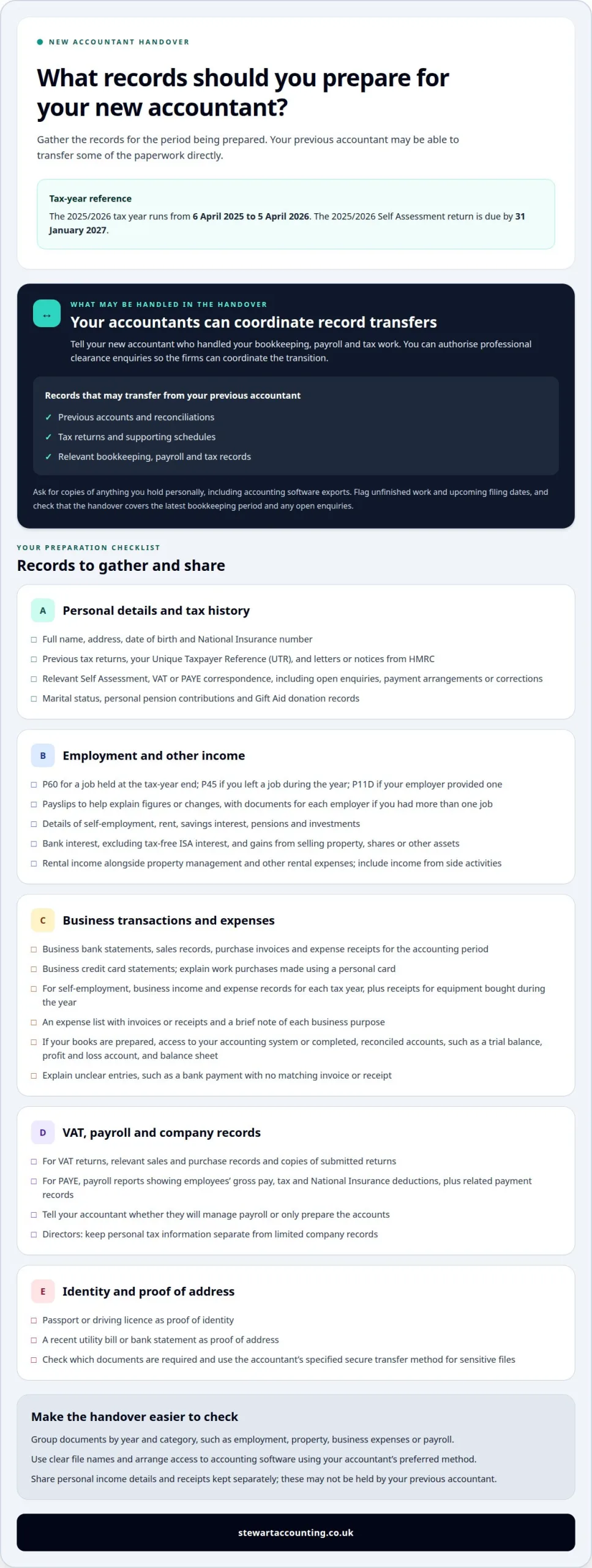
Start by gathering the records for the period being prepared and noting what remains with your previous accountant. HM Revenue & Customs states that the 2025/2026 tax year runs from 6th April 2025 to 5th April 2026, and the 2025/2026 self-assessment tax return is due to be filed by 31st January 2027.
-
How your new accountant can request records from your previous accountant
Tell your new accountant who handled your bookkeeping, payroll and tax work, then authorise them to make professional clearance enquiries. Your old and new firms can coordinate the transition and transfer relevant records, such as previous accounts, reconciliations, tax returns and supporting schedules. Ask for copies of anything you hold personally, including accounting software exports, and flag unfinished work or upcoming filing dates.
You’ll still need to provide records the previous firm doesn’t hold, such as personal income details or receipts kept separately. Check that the handover covers the latest bookkeeping period and any outstanding enquiries. A sole trader may also need business income and expense records for each tax year, even if earlier accounts have been transferred.
-
Tax records and HMRC correspondence your accountant may need
Gather previous tax returns, your Unique Taxpayer Reference (UTR), and letters or notices from HMRC. Include relevant correspondence about Self Assessment, VAT or PAYE, along with details of open enquiries, payment arrangements or corrections. These records help your accountant understand earlier submissions and identify follow-up work, rather than treating the new return as a standalone task.
If you’re a self-employed sole trader, provide sales records, business expenses, invoices and receipts, along with previous accounts and tax calculations. Share any personal details or income information your accountant asks for, where relevant. File letters by tax year or subject so dates, figures and HMRC responses can be matched accurately.
-
Transaction records and supporting documents your accountant may need
Provide business bank statements, purchase invoices, expense receipts and sales records for the accounting period. Include business credit card statements, and explain any work purchases made with a personal card. For VAT returns, supply the relevant sales and purchase records and copies of submitted returns. If your accounting software stores these records, arrange access using the accountant’s preferred method.
For PAYE, provide payroll reports showing employees’ gross pay, tax and National Insurance deductions, along with the related payment records. Tell your accountant whether they’ll manage payroll or only prepare the accounts. You’re still responsible for supplying complete transaction records and explaining unclear entries, such as a bank payment with no matching invoice or receipt.
-
Identity and address documents your accountant may request
Have a passport or driving licence ready as proof of identity, and a recent utility bill or bank statement as proof of address. Your accountant will explain which documents are required and how to send them. These records help distinguish your personal details from business records, particularly if a company director, sole trader and personal tax client share an address.
Ask which secure transfer method to use before sending identity documents, bank statements or tax records. Use the accountant’s specified channel rather than sending sensitive files in an unprotected email. Organise original files by year and category. Clear file names, such as “bank statements” or “payroll reports”, make follow-up questions easier to answer.
Documents and information needed to prepare a tax return
- Provide your personal details for the assessment: full name, address, date of birth and National Insurance number. Add your marital status and details of any personal pension contributions. This helps your accountant consider relevant tax relief and Marriage Allowance eligibility. Include Gift Aid donations and records of the amounts given. Keep your details current, especially if your address or circumstances changed during the tax year.
- Gather evidence of employment income. A P60 records pay and tax for a job you held at the tax year-end; a P45 records details when you left a job during the year. Include a P11D if your employer provided one. Payslips can help explain figures or changes during the year. If you had more than one employer, provide documents for each role so income and tax paid can be considered together.
- List all other income sources, including self-employment, rent, savings interest, pensions and investments. Tell your accountant about bank interest, excluding tax-free ISA interest, and gains from selling property, shares or other assets. Landlords should organise rental income alongside property management and other rental expenses. Include income from side activities, even if it’s separate from your main job.
- For self-employment, provide records of business income and expenses, plus receipts for equipment bought during the year. Keep an expense list with invoices or receipts and a brief note of each business purpose. If you’ve prepared your books, provide access to your accounting system or completed, reconciled accounts. These may include a trial balance, profit and loss account, and balance sheet. Directors should keep personal tax information separate from limited company records.
- Share details of any income or circumstances that could affect the return, rather than relying only on standard forms. For example, tell your accountant if you changed jobs, received rental income, paid into a pension or sold an asset. Put documents into clear groups, such as employment, property and business expenses, so missing information is easier to spot. If you want support preparing your Self Assessment, talk through your tax return documents.
Company tax and registration details
For a UK limited company, give your accountant its tax references, registration details and records showing company activity. Keep company information separate from your personal Self Assessment documents, even if you own and direct the business.
-
Company tax details your accountant may need
Provide the company’s Unique Taxpayer Reference (UTR), recent Corporation Tax returns and calculations, and relevant HMRC letters. Include the accounting period covered by each return and details of any open enquiries or corrections. Match the tax records to the company accounts so your accountant can see which figures relate to each period.
Provide evidence for items affecting taxable profit, such as business expenses, loan interest and equipment purchases. Share details of dividends paid to shareholders, and explain any amounts recorded as directors’ loans. These records help distinguish company transactions from personal spending and support accurate tax reporting.
-
Company registration details your accountant may need
Send the company’s registered business address and Companies House company number. Confirm the legal company name shown on its registration records, particularly if it differs from the trading name. Include the names of the directors and owners who will provide information or approve the accounts.
Give your accountant the company’s accounting reference date and the dates covered by the latest accounts. This helps identify the relevant reporting period and organise records consistently. If the company has changed address or ownership, provide the updated details and the date of the change.
- Gather records that explain the company’s trading activity. Include sales and purchase invoices, bank and credit card statements, and a summary of unpaid customer invoices or supplier bills at the period end. If the company holds stock, provide its year-end valuation. For assets, list equipment bought and items sold, scrapped or otherwise disposed of.
Your accountant may ask for relevant VAT or payroll records, depending on the services they provide. If a finance agreement began during the period, provide the agreement and loan statements. Your accountant can use these records to match transactions against the accounts and identify gaps or unclear entries.
- Keep company documents separate from each director’s personal records. For example, company sales invoices belong with the company accounts, while a director’s employment income or personal pension details relate to their own tax position. A company owner may also need to report dividends through Self Assessment, so keep dividend records separate from personal tax information.
Use clear folders labelled with the company name and accounting period. If the company’s books are already maintained in accounting software, arrange access to the relevant records. This gives your accountant a clearer starting point for preparing accounts, while limited company accounting support can help organise the information around your business.
Employment, self-employment and other income
- Group employment income by employer and tax year. Include the relevant P60, P45 or P11D, and any payslips that explain changes in pay or deductions. If you changed jobs, keep documents from both employers together, so your accountant can account for each period. Add pension income statements where applicable. These records help compare reported income with tax already paid and identify missing details before filing.
- For self-employment, organise sales and expenses by business activity. Include invoices issued, records of payments received, supplier bills and receipts for business costs. A separate business bank account can make transactions easier to identify, but also include work expenses paid personally. If you use accounting software, provide the relevant reports or access through the agreed method. Explain unusual entries, such as a refund or a customer payment covering several invoices.
- Record personal income alongside business figures. Self-employed people should include income such as employment pay, pensions or savings interest, rather than supplying business accounts alone. Tell your accountant about bank interest, excluding tax-free ISA interest. For a partnership, identify your share of income and provide the records used to calculate it. Keeping each source separate helps your accountant prepare an accurate assessment.
- If you receive rental income, prepare a property-by-property summary of rent, management charges, repairs and other rental expenses. Include statements from letting agents if they collect rent or pay costs for you. For investments, provide statements showing income and details of asset sales or other gains. If you sold shares or property, include the transaction documents and any purchase information you have.
- Match each income source to its supporting evidence before sending your records. Compare totals in your accounting software with invoices, bank entries and statements, then flag any differences for your accountant to review. For example, note if an invoice was raised in one period but paid later. Label each summary with the tax year and income source, and keep original receipts with the related expense. If you’re self-employed, sole trader accounting support can help bring business records and personal income information together for filing.
Include other potentially taxable income or gains outside your main job or business, such as side-hustle income or gains from selling property, shares or other assets. Personal tax information can include savings income, capital gains, rental income and expenses, pension income and a P11D. If you left a job during the tax year, provide a P45; if you remained employed, provide a P60. A payslip or P60 can evidence tax and National Insurance paid. Clear business income and expense details allow profit calculation.
What documents should I give a new accountant in the UK?
- Provide the information needed to open your account, including your name, address, contact details and business structure. A new UK accountant must check a client’s identity under the Money Laundering Regulations 2017, according to The National Archives. Be ready to provide an identity document, such as a passport or driving licence, and proof of address, such as a utility bill or bank statement. Send these using the accountant’s stated method.
If you’re acting for a company, explain your role and identify the directors and owners involved. This helps your accountant understand who will supply information and who may need to approve accounts or tax submissions.
- Give your accountant access to records that show how the business operates. If you issue sales invoices through software, arrange access or provide copies of paper invoices. Include records for the relevant period so sales can be matched to receipts and unpaid customer balances identified.
For cash transactions, provide a record of cash expenses and the petty cash balance at year-end. Label entries with their purpose, such as travel or small office purchases. A brief explanation beside an unusual payment can help resolve questions without searching through unrelated files.
- List business assets and equipment bought during the accounting period, with purchase details and supporting documents. Also record assets sold, scrapped or otherwise disposed of. For example, note whether a computer is still in use or has been replaced. These details help your accountant distinguish business assets from ordinary expenses.
Collect new finance agreements and loan details, including the stated interest rates and duration. Provide loan statements and details of interest charged. If you used personal funds for a business expense, identify the transaction and its business purpose rather than leaving it mixed in with personal spending.
- Gather the tax and staff records relevant to your business. Provide copies of VAT returns submitted during the year, plus information from your payroll system about wages and tax deductions. If your accountant doesn’t handle payroll, supply a report or digital record for each pay run showing gross pay, tax and National Insurance.
Include mileage records for business journeys made in your own car. For a limited company, provide records of dividends paid to shareholders; for a sole trader, include details of drawings. These records explain how money moved between the business and its owners.
- Arrange the documents by type and accounting period before transferring them. Use clear file names, such as “VAT returns” or “finance agreements”, and keep related invoices beside their supporting records. Tell your accountant about missing documents, unusual transactions or unanswered enquiries, rather than silently leaving gaps. If you’re ready to organise your accountant handover, contact the accounting team.
Stewart Accounting Services
Stewart Accounting Services can make the move to a new accountant clearer, from organising your records to preparing accounts and tax returns. If your paperwork spans bookkeeping, payroll and personal income, the team can help bring the relevant information together and identify what’s needed for the work ahead.
Turn to the team for Year End Accounts Preparation, Self Assessment Tax Returns, Bookkeeping Services or Payroll Services. In a free initial consultation, you can discuss which records relate to your circumstances and where professional support can take paperwork off your hands, giving you more time, more money and less stress.
Contact Stewart Accounting Services to talk about your accountant handover.
Make your next step a clear handover
Changing accountants is a good opportunity to agree how you’ll work together. Decide what you want help with first, how you prefer to share updates, and which questions need early attention. A clear starting point helps you and your accountant focus on the right priorities as the working relationship begins.
Understanding what documents your new accountant needs from you can make the first conversation more useful. Bring forward any concerns about the handover, explain what you want to achieve, and discuss how accounting support could take tasks off your hands. That can give you more time, more money, more mind.
Contact Stewart Accounting Services to discuss your next step. A thoughtful start can help you move forward with greater clarity and confidence.
Frequently Asked Questions
What tax records should I provide to a new accountant?
Provide records supporting the figures on your return, and flag any amount you can’t match to evidence. If a document shows a different figure from your summary, keep both and add a short note explaining the difference. For example, say whether a total includes a refund or a late customer payment. This helps your accountant investigate the discrepancy rather than assume either figure is correct.
What documents should I give my accountant when switching from another accountant?
Agree in writing who is responsible for the next tax return, VAT return or payroll run, especially if a deadline is approaching. This avoids both firms assuming the other is handling a submission, or both starting the same task. Keep the written agreement with your handover emails. Also clarify which accounting period the new firm will handle, so the transition has a clear starting point.
How many years of tax, bank and bookkeeping records should I provide to a UK accountant?
The period depends on the work being prepared and the type of record. For limited companies, accounting records are generally kept for six years from the end of the financial year they relate to, according to Companies House; longer periods can apply in some circumstances. For a new engagement, organise records by year and provide the period your accountant requests, including older documents relevant to unresolved matters.
Do I need to provide bank statements, receipts and invoices to my accountant?
Yes, provide them when they support figures in your accounts or tax return. For a bank statement, include the full statement period, even if some pages show no transactions, so account activity can be traced from start to finish. If one payment covers several invoices, show how the amount is divided between them. This makes transactions easier to understand and reduces uncertainty about totals.
Recent Posts
21 Nov, 2026