

Accounting services for garages in Falkirk with fixed fees
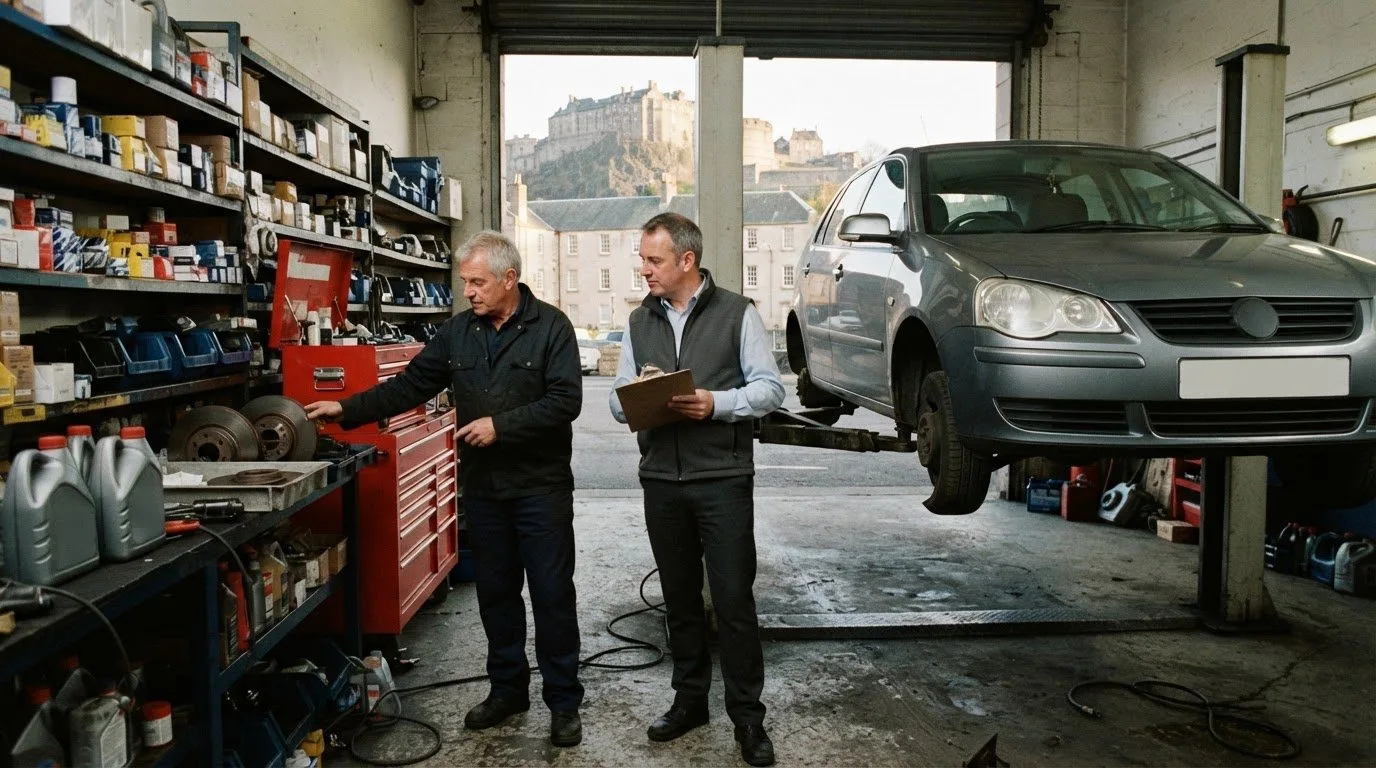
A company accounts deadline approaching doesn’t have to leave you guessing. Accounting services for garages in Falkirk can bring bookkeeping, year-end accounts preparation, tax returns, payroll and VAT return support into a clearer process. Keeping records organised can also make it easier to see what needs attention before filing dates arrive.
Running a garage means balancing customer work, staff and day-to-day costs, so it’s understandable if financial admin slips down the list. Fixed-fee accounting services for garages in Falkirk make the agreed scope clearer, while regular bookkeeping helps keep your figures organised.
This article explains the accounting, bookkeeping and tax services garages can use, what an agreed fixed fee may cover, and how support with year-end accounts works. You’ll also learn what affects the scope of the work and how to delegate financial admin, helping you make more time, more money and more mind.
Key Takeaways
- Identify the accounting, payroll and tax support that can help keep your garage’s financial records and responsibilities organised.
- Understand what to clarify in a fixed-fee package, including which tasks are covered and how the work is scoped.
- See how regular bookkeeping and year-end accounts preparation can help you keep company records ready for filing deadlines.
- Use practical criteria to assess whether an accountant’s services suit your garage’s structure, workload and motor trade needs.
What Services does a Chartered Accountant Falkirk offer?
For garages and motor traders, accounting support can cover bookkeeping, year-end accounts, tax returns, payroll and VAT returns. The right combination depends on your business structure, staff, sales and reporting responsibilities.
Accountants can help garages in Falkirk organise income and costs, prepare year-end accounts, manage tax affairs and keep payroll records in order. Separating parts sales, labour income and workshop expenses, for example, makes it easier to review how each area contributes to the business.
For tax reliefs and allowances in Scotland, garages can review eligible business costs and equipment purchases with their accountant, based on their circumstances. HM Revenue & Customs states that the trading allowance rises from £1,000 to £3,000, and the correct treatment depends on the business and income involved.
Business Accounting in Falkirk and Stirling
Accounting services for businesses in Falkirk and Stirling can bring routine record-keeping and year-end reporting into a clear process. Start by identifying whether you operate as a sole trader, partnership or limited company. Then gather sales invoices, supplier bills, bank records and payroll information to give your accountant a practical overview of the business and the records needed to prepare its accounts.
Bookkeeping can also help you spot missing invoices or costs recorded against the wrong part of the business. If you want support with day-to-day records, bookkeeping services can help keep transactions organised for accounts preparation.
Profitability and Business Support
Business advice can help you examine where money enters and leaves your garage. Compare parts costs, labour income, rent, utilities and payroll, then identify figures that need attention. For example, rising supplier bills may affect margins even when workshop sales remain steady. Reviewing these figures gives you a grounded starting point for decisions.
Accounting support can also cover systems and reporting. Check whether your current process clearly shows unpaid customer invoices, upcoming supplier payments and workshop costs. A useful system should make it easier to review cash flow and prepare accurate records, not add unnecessary administration.
Payroll planning matters when staffing costs affect your operating decisions. The UK Government states that the National Living Wage rises to £13.21 an hour. An accountant can help you organise payroll information and assess how staffing costs fit your forecasts.
Tax affairs can extend beyond the garage. Eligible UK residential property sales with Capital Gains Tax due may need to be reported within 60 days of completion, according to HM Revenue & Customs. Include property disposals in your financial records so relevant tax matters are considered alongside business accounts.
The page states the Small Business Rates Relief threshold for retail, leisure and hospitality rises from £12,000 to £18,000 from April 2027. It also states the British Business Bank doubles funding for female-led businesses to £200m.
It is worth checking whether an accountant follows relevant professional and ethical standards. Stewart Accounting Services Limited says its owner had 15 years of practical work experience before starting the business. The listed business news reports that John Healey delivered his first speech as Chancellor of the Exchequer at the Labour Party Conference on 28 September 2026.
Fixed-fee accounts and tax return packages
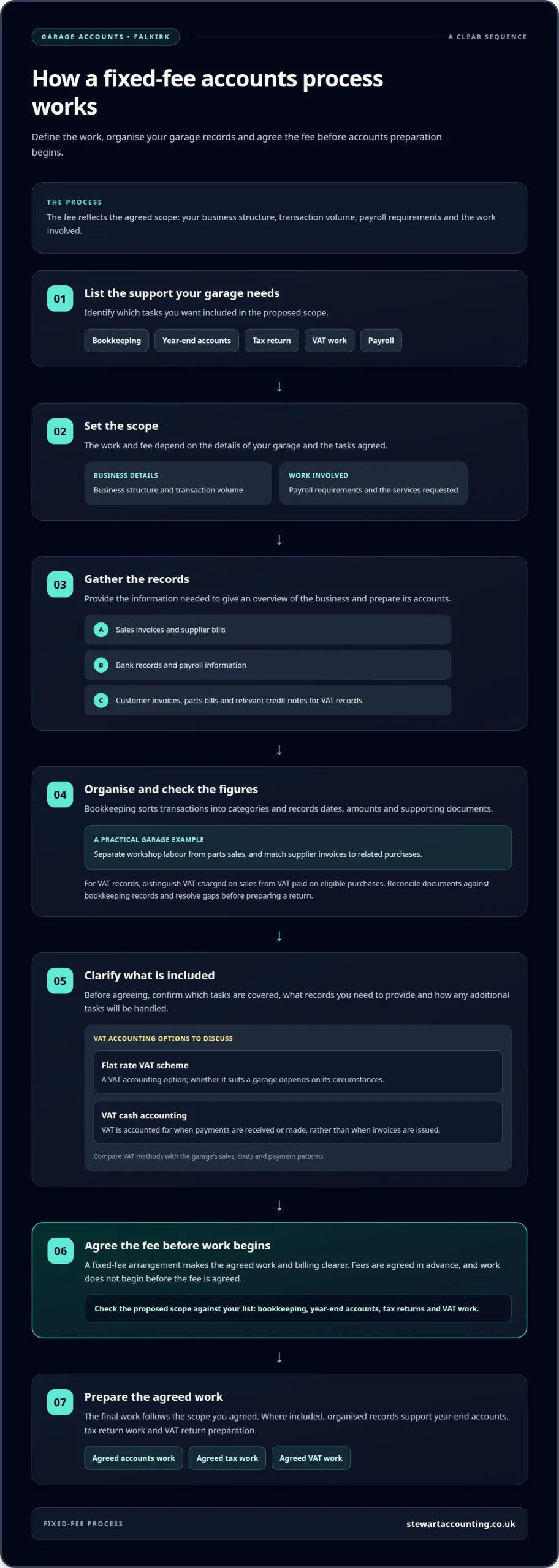
A fixed-fee arrangement makes the agreed work and billing clearer before accounts are prepared. For a garage, the scope might cover year-end accounts, a tax return or specified bookkeeping tasks. Confirm what records you need to provide, what work is included and how any additional tasks will be handled. Fees are agreed in advance, and work does not begin before the fee is agreed.
Which Falkirk accountants handle VAT and Making Tax Digital for garages? Look for support that connects digital bookkeeping records with VAT calculations and return preparation. A clear process explains how sales, supplier invoices, parts purchases and labour income are recorded and reviewed before returns are submitted.
The fee reflects the agreed scope, including your business structure, transaction volume, payroll requirements and the work involved. To compare services fairly, list what your garage needs and check whether bookkeeping, year-end accounts, tax returns and VAT work are included in the proposed scope. Stewart Accounting Services agrees fixed fees in advance and does not undertake work before agreeing the fee.
VAT records need to distinguish VAT charged on sales from VAT paid on eligible purchases. Keep customer invoices, parts supplier bills and relevant credit notes together, then reconcile them against your bookkeeping records. This helps identify missing documents before the figures are used to prepare a return.
Bookkeeping supports VAT returns by organising transactions into categories and recording dates, amounts and supporting documents. A garage might separate workshop labour from parts sales, then match supplier invoices to the related purchases. If figures are incomplete, resolving the gaps before preparing the return can make the process clearer.
VAT schemes affect how a business calculates and accounts for VAT. The flat rate VAT scheme is one VAT accounting option, and its suitability depends on a garage’s circumstances. VAT cash accounting records VAT when payments are received or made, rather than when invoices are issued. Compare each method with your garage’s sales, costs and payment patterns.
Self Assessment tax returns may apply to individual business owners, depending on their circumstances and income. Keep personal income details and records of relevant business income and expenses in a separate, organised file. If you also take drawings from a sole-trader business, label them clearly so they are not confused with garage costs.
Which payroll and bookkeeping services are available for garages in Falkirk? Garages can arrange bookkeeping for daily transactions and payroll support for employee pay records. Before agreeing the scope, identify how often payroll information will be supplied and who will prepare the figures needed for each pay run.
If you need to discuss which records or tasks your package should cover, talk through your accounting requirements as a practical next step.
Bookkeeping and accounts preparation
Accurate bookkeeping gives a garage a clear record of sales, costs, stock movements and customer payments. Keeping records up to date also helps ensure year-end accounts reflect transactions recorded throughout the business year.
How should garages account for parts, labour, stock and work in progress? Record parts sales and labour charges separately, log stock purchases and usage, and track open jobs with their related costs. For example, a repair order can show parts fitted, labour completed and work still outstanding.
Start with a consistent transaction routine. Record each customer invoice, supplier bill, card receipt and bank payment against the correct date and category. Keep job cards with invoices so parts purchases can be matched to vehicle repairs. This creates a trail from each transaction to the garage’s sales and expense records.
Separate labour income from parts income in your records to see whether workshop work or parts sales are driving turnover. Record subcontractor charges and customer refunds in their own categories. If a customer pays a deposit before a repair, link the receipt to the job rather than treating it as an unrelated payment.
Stock records should show parts bought, fitted, returned to suppliers and held for future work. Regular stock checks let you compare physical items with bookkeeping records. For example, if a replacement component appears on a supplier bill but not in the stock list, trace it to a job card or return note. Clear records help explain differences during accounts preparation.
Work in progress means jobs that have started but are not yet complete or invoiced. Keep a record for each open repair, including parts used, labour carried out and the stage reached. A vehicle awaiting a component, for example, should remain identifiable as an unfinished job. These details help the accounts preparer understand work underway at year-end.
Before accounts are prepared, gather bank statements, sales invoices, supplier bills, payroll records and stock information. Match bank entries to recorded transactions, then flag missing paperwork or unexplained payments. Reviewing open customer balances can also identify unpaid invoices. These steps make the source records easier to follow.
Use the finished accounts to compare business activity across reporting periods. Review parts costs, labour income, overheads and outstanding customer payments together, rather than relying on turnover alone. If workshop supplies rise while labour income stays steady, investigate the change in your next bookkeeping review.
Accounting and taxation services
Tax work for a garage starts with records showing how the business earns and spends money. Organise sales, parts costs, staff pay, equipment purchases and business expenses by category. This gives you a clearer basis for reviewing taxable profit and preparing information for tax returns. Keeping personal income in a separate record also helps distinguish business transactions from your own affairs.
Tax records for a sole trader may differ from those for a limited company. Identify your business structure first, then organise the relevant income and expense records. For example, keep invoices for workshop repairs alongside supplier bills for parts. A clear trail helps explain how each figure relates to the garage when accounts and tax calculations are prepared.
HM Revenue & Customs states that the trading allowance rises from £1,000 to £3,000. Whether it is relevant depends on the income and circumstances involved. Keep records of any trading income and related expenses, then consider the allowance alongside the wider tax position rather than treating it as a substitute for organised bookkeeping.
Tax planning can also matter when business ownership or assets change. HM Revenue & Customs states that the Business Asset Disposal Relief lifetime limit is cut from £1m to £500,000. If you are considering selling or transferring a business, gather ownership and transaction records early. Those details help an accountant review how the proposed change may affect your tax affairs.
If your garage has employees, keep payroll information separate from supplier and customer transactions. Record wages and related payroll costs consistently, then reconcile them with the business records used for accounts. If staffing changes, such as hiring a technician, update the records promptly so reporting reflects the garage’s current position.
Tax questions can involve several parts of the business at once. A new diagnostic machine, for example, may affect expense records, cash planning and the accounts for the relevant period. Keep the purchase invoice, payment record and details of business use together so your accountant has the information needed to consider the transaction accurately.
Review your tax records before preparing returns. Match income entries to invoices and payment records, check that expenses have supporting documents, and note unusual transactions for discussion. You can also compare current figures with earlier accounts to spot changes in parts costs, wages or workshop income that need explaining.
Well-organised accounting and tax records make it easier to understand the figures behind business decisions. Keep evidence together as transactions happen, record changes to business assets, and raise questions when a sale, purchase or staffing change affects the accounts. This routine supports clearer reporting and more informed tax discussions.
Garage and Motor Trade Accountants in Falkirk
Which accountants in Falkirk specialise in garage and motor trade businesses? The directory lists 20 firms serving the wider Falkirk region. To find a suitable match, ask how their accounting work can address garage records, parts purchases, workshop income, stock and open repair jobs. Those details matter more than a general claim of serving local businesses.
Start by describing how your garage trades. A service workshop, MOT centre and used-car dealer can have different income streams and records. Explain whether you sell parts separately, employ technicians, buy vehicles for resale or have customer jobs still underway. For garages offering performance upgrades or remaps using tuning file providers such as stagex-performance.com, it is equally important to specify how software purchases and tuning labour are categorised. Your accountant’s approach should show how these activities will be reflected in your accounts.
Ask what information your accountant needs and how it will be used. A garage might provide bank records, sales invoices, supplier bills, payroll information and job records. A clear workflow explains who organises transactions, who follows up missing paperwork and how the final accounts are prepared. This helps you understand your role before work begins.
Check that the support matches your legal structure and reporting needs. A sole trader and a limited company do not prepare identical records. Explain how your business is set up, whether it has employees and which tax or VAT tasks you need help with. The agreed scope should reflect those details, rather than assume every motor trader works alike.
Discuss the figures you want to understand, not only the documents you need filed. You may want to compare labour income, parts costs, overheads and unpaid invoices. Ask how management accounts could present those figures and help you review performance. Separating workshop labour from parts sales, for instance, can make changes easier to investigate.
Clarify how ongoing communication will work. Agree who supplies records, how transaction questions are handled and how you’ll receive completed accounts. If a supplier bill is missing, knowing who follows it up can help prevent an unresolved item from delaying the accounts process. Clear responsibilities also help you keep your records in order.
Before choosing support, write down your main priorities: accurate records, year-end accounts, tax work, payroll or advice on business decisions. Compare the proposed services with those needs. Examples involving parts returns or unfinished repairs can help you judge whether an accountant’s approach fits your garage.
Prepare a short summary of your business structure, trading activities and current accounting tasks before discussing support. That gives the conversation a practical starting point. If you’re ready to discuss accounting needs for your garage, contact Stewart Accounting Services to take the next step.
Stewart Accounting Services: Year End Accounts Preparation
Stewart Accounting Services prepares year-end accounts for garages, bringing business records together for review. If your accounts deadline is approaching or you need a clearer process for organising records, this support can be a practical next step.
Bookkeeping Services help keep transactions organised as work continues. Where your circumstances require personal tax reporting, Self Assessment Tax Returns can address that part of your affairs. Payroll Services also support the handling of employee pay records. Discuss the work that fits your garage and the records needed to get started.
To discuss year-end accounts preparation or related accounting support, contact Stewart Accounting Services or visit stewartaccounting.co.uk.
Set up your next step with confidence
Good financial routines start with a clear view of what your garage needs next. Before speaking with an accountant, note your business structure, the records you keep and any accounts deadline you’re working towards. This gives the conversation a practical focus and helps you explain where support would make a difference.
Stewart Accounting Services offers Year-End Accounts, Self Assessment Tax Returns and Bookkeeping Services. Discuss which services fit your needs, whether you’re organising records or planning for year-end. The right support can take financial admin off your hands, giving you more time to focus on your garage.
If you’re considering accounting services for garages in Falkirk, take the next step and contact Stewart Accounting Services to discuss your requirements. A clear starting point can help you move forward with more time, more money, more mind.
Frequently Asked Questions
How much do accounting services for garages in Falkirk cost?
The fee reflects your garage’s circumstances and the agreed scope. Fixed fees are agreed in advance, so you know what work is covered before it begins, and no work starts before the fee is agreed. The scope may reflect your business structure, record-keeping needs, transaction volume and whether you need support with accounts, tax returns or payroll. Share these details to help define the work.
How can a garage compare local accountants by motor trade experience, fees and reviews?
Compare how clearly each accountant explains their approach to garage work, rather than relying on a general claim about the motor trade. Consider whether their examples show an understanding of vehicle sales, repairs or parts trading, as relevant to your business. Review the proposed work and fee terms, including what is agreed in advance. Reviews can offer useful detail about communication and follow-through, beyond star ratings.
What should a Falkirk garage consider when choosing or switching accountants?
Choose support that fits your business structure, current records and upcoming accounts work. If you’re changing accountants, prepare your latest accounts, bookkeeping files, tax records and any ongoing queries, then agree how those records will be handed over. Clarify who will handle each task and when the next work is due. A written outline of responsibilities can help prevent missed information during the changeover.
Which Falkirk accountants handle VAT and Making Tax Digital for garages?
Look for accounting support that connects digital bookkeeping records with VAT calculations and return preparation. The process should explain how sales, supplier invoices, parts purchases and labour income are recorded and reviewed before returns are submitted.
Recent Posts
02 Nov, 2026
01 Nov, 2026