

Choosing an Accountant in Stirling for Your Needs

A useful first meeting with an accountant starts with explaining what you need, not with knowing every accounting term. Choosing an accountant in Stirling begins with gathering relevant financial records and deciding what support you’re looking for.
It’s understandable to want a qualified, dependable accountant, especially when accounts, tax or payroll are adding to your workload. Bring recent accounts and tax returns, bookkeeping records, and any relevant VAT or payroll information. Be ready to describe your business, how it operates and where you need help. This gives the accountant a clearer picture of your needs and helps you assess whether their advice and working arrangements are right for you.
This guide explains what to prepare for a first meeting and how to assess local firms, qualifications, client feedback, communication and ongoing support. You’ll also learn what to discuss about fees and how to find an accountant whose services suit your situation. The right support can take financial tasks off your hands, giving you more time, more money and more peace of mind.
Key Takeaways
- Bring records that help an accountant understand your business and its current accounts, tax and payroll needs.
- Assess whether a firm’s location, communication style and working arrangements suit the support you want.
- Look at the team’s qualifications and relevant experience, then consider how these match your accounting needs.
- Use testimonials and customer feedback to understand clients’ experiences, paying attention to specific details about communication and support.
- If your business exceeds the VAT threshold, it must register within 30 days of the end of the month when it went over the threshold, according to UK Government.
Accountancy firms serving Stirling and surrounding areas
Accountants serving Stirling may work from nearby towns, meet clients locally or provide support remotely. Dunblane is listed 5.0 mi from Stirling, while Falkirk is 10.1 mi away, so firms outside the city may still be practical choices. Compare the service you need, how you’ll communicate and whether the firm understands your type of work, rather than choosing on location alone.
Remote accountancy can suit Stirling clients who prefer sharing records digitally and discussing matters online or by phone. Before choosing, ask how documents are transferred, how questions are handled and who manages your account. A sole trader needing regular bookkeeping, for example, may need a different contact schedule from a limited company preparing year-end accounts. Clear arrangements help you understand what information to provide and when.
What HMRC and Companies House deadlines should a Stirling accountant help me meet? They should identify the relevant filing and payment dates for your tax affairs and company responsibilities, then agree how records and reminders will be handled. A business that exceeds the VAT threshold must register within 30 days of the end of the month when it went over the threshold, according to UK Government.
What services do accountants in Stirling offer for individuals, sole traders and limited companies? Individuals may need Self Assessment tax returns; sole traders commonly need bookkeeping and tax support; limited companies may need year-end accounts, payroll and VAT returns. Ask which tasks the accountant will handle and what information you must supply. This makes the scope of the work clear before it begins.
“Accounting, audit and tax services” can describe a broad range of work, but firms differ in what they provide. If you need an audit, ask whether the firm offers that service and whether it suits your organisation’s circumstances. For tax planning, explain your income sources, business structure and upcoming decisions so the accountant can focus advice on your situation rather than offering generic suggestions.
Use your first meeting to connect your needs with the firm’s expertise and working methods. Bring recent accounts, tax returns, bookkeeping records and relevant correspondence from HMRC or Companies House. Then discuss:
- Whether the firm advises individuals, sole traders or limited companies like yours.
- How it handles bookkeeping, payroll, VAT and year-end work.
- How you’ll share records and receive updates, remotely or in person.
- Who will answer questions and explain the next steps.
These details help you decide whether local access matters or remote support is a better fit. They also show whether the firm can take the right accounting tasks off your hands, giving you clearer records and more time to focus on work.
Questions to ask about accountant support and working arrangements
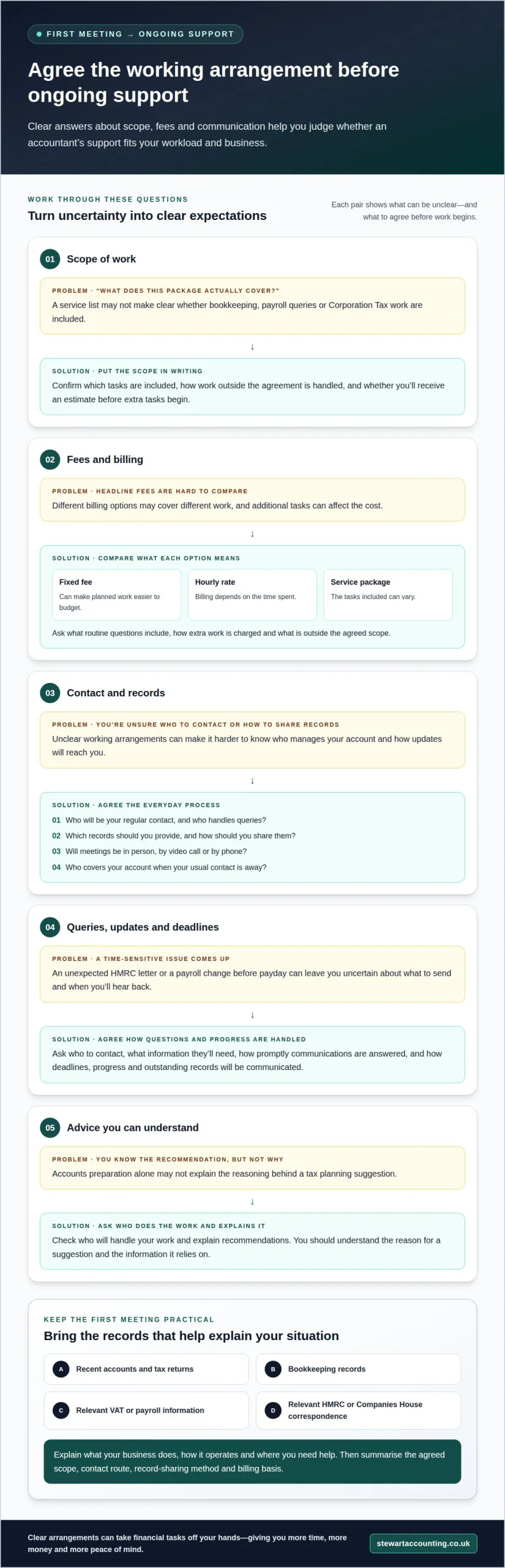
Ask how the firm will work with you before agreeing to ongoing support. A growing business may need regular contact, while a sole trader may prefer help at key points. Clear answers help you judge whether the arrangement suits your workload, records and business decisions.
How do I compare fixed fees, hourly rates and service packages from Stirling accountants? Compare what each option covers, how additional work is charged and whether routine questions are included. A fixed fee can make planned work easier to budget; hourly billing depends on time spent, while packages vary in the tasks they include.
Ask for the scope in writing. If a package covers year-end accounts, for example, find out whether bookkeeping, payroll queries or Corporation Tax work are separate. Ask how the accountant handles work outside the agreed scope and whether you’ll receive an estimate before extra tasks begin. This helps you compare like with like rather than choosing by the headline fee.
Working arrangements matter as much as the service list. Ask whether meetings take place in person, by video call or by phone, and how you’ll send records. If you run a growing company in Scotland, remote support may suit you, provided you know who to contact and how documents are shared.
Use practical examples to understand the support available. If you receive an unexpected HMRC letter, who should you contact and what information will they need? If payroll figures change before payday, how should you share the update? Ask how queries are handled, how promptly communications are answered and who covers your account when your usual contact is away.
For a limited company, ask how the accountant coordinates recurring work across accounts, payroll and tax. Agree when records should be submitted and how missing information will be raised. If you’re considering forming a company or changing your business structure, ask whether the accountant can explain the accounting implications in plain English.
- Who will be your regular contact, and who handles queries?
- Which records should you provide, and how should you share them?
- What work is included, and how are additional tasks priced?
- How will deadlines, progress and outstanding information be communicated?
Also ask how advice is delivered, not just how accounts are prepared. A chartered accountant may be relevant if you want a qualified professional, but ask who will do the work and explain recommendations. For example, you should understand the reason behind a tax planning suggestion and what information it relies on.
Before you decide, summarise the agreed scope, contact route, record-sharing method and billing basis. If you want to discuss an arrangement around your business needs, talk through your accounting support requirements.
Accountant team qualifications
A qualification is one useful measure of an accountant’s training, but it doesn’t show the whole picture. Ask who will handle your accounts, what experience they have with businesses like yours and how they explain financial decisions. A limited company with payroll needs, for example, may require different practical expertise from an individual seeking help with personal finances.
How can I check an accountant’s credentials and disciplinary history in the UK? Ask which professional body they belong to, then use that body’s member directory and disciplinary information to check their status. Confirm that the person responsible for your work holds the qualification they describe, rather than relying only on general claims about the firm.
Membership of the Institute of Certified Bookkeepers (ICB) can indicate bookkeeping training and professional membership. Ask what work the individual’s qualification covers and whether their experience matches your needs. If you need year-end financial accounts, clarify who prepares them and who reviews the figures before submission.
Qualifications are only part of the decision. Ask about experience with your business structure, accounting software and financial tasks. A growing business might need clearer monthly reporting, while a sole trader may value help organising income and expenses. Knowing how to choose an accountant in Stirling also means finding out how a firm would approach your situation, using plain language and clear steps.
What are the risks of choosing an unqualified or unsuitable accountant, and how can I avoid them? Inaccurate records, missed responsibilities and unclear payment handling can create extra work and make decisions harder. Reduce these risks by checking credentials, agreeing responsibilities in writing and asking who reviews the work before it is completed.
Use the first meeting to understand the team structure. Ask whether a qualified accountant will oversee your account, which tasks other team members complete and how questions reach the person with the right expertise. If the firm proposes a software change, ask what it means for your records, access and reporting. A practical answer should explain the impact on your day-to-day work, not just name a product.
Good professional support also means explaining choices before you act. If an accountant recommends a payment or a change to your process, ask what information supports the advice and what action is expected from you. Knowing how to choose an accountant in Stirling includes assessing whether you can follow the reasoning without needing specialist terms explained later.
- Confirm the named professional’s qualification and relevant membership.
- Ask who prepares, reviews and explains your financial work.
- Discuss experience with your structure, software and practical needs.
- Agree responsibilities and payment arrangements in writing.
These checks help you assess both formal training and everyday working standards. Look for answers specific to your situation, such as how the team would support a growing company or organise records for a sole trader.
Client testimonials
A testimonial is most useful when it describes a specific experience, rather than simply calling an accountant “excellent”. Look for details about the work, such as payroll processing, tax returns or clearer reporting. A business owner might explain, for example, how regular updates helped them understand their figures. Specific examples give you more to assess than broad praise.
Read each account in context. A sole trader’s experience with an annual tax return may not reflect the support a limited company needs for payroll and year-end reporting. Look for testimonials from clients with a similar business structure or challenge. If a review describes help during a business change, consider whether that advice matches your needs.
Pay attention to the practical details clients mention. Were explanations clear? Were questions answered in language they could understand? Were responsibilities made clear before returns were submitted? A testimonial describing these steps can help you picture the working relationship, rather than focusing only on a general positive rating.
- Relevant work: Does the review mention payroll, accounts, tax returns or another service you need?
- Communication: Does the client describe clear updates and useful explanations?
- Continuity: Does the account explain how support worked over time, rather than after one interaction?
- Specific outcome: Does it explain what became easier or clearer for the client?
Look for recurring themes across several testimonials. If multiple clients mention clear explanations, that pattern may help you judge how the firm communicates. If one review describes a delay, read the details rather than treating a single comment as proof of a consistent problem. Compare examples, dates and the type of service involved to build a balanced view.
Testimonials can’t tell you everything about a firm’s current approach. Use them to prepare focused questions for your meeting. If a client praises payroll support, ask how queries are handled during a busy pay period. If a review mentions improved reporting, ask what information the accountant supplied and how often it was shared.
Notice whether a testimonial explains the client’s starting point and what work followed. A company might describe moving from scattered records to a regular reporting process, for example. That is more useful than a claim of “great results” because it shows the support involved and helps you decide whether the experience is relevant to your circumstances.
Finally, treat testimonials as one part of your decision, alongside qualifications, agreed services and working arrangements. A positive account can suggest what clients value, but your own priorities still matter. Use the strongest, most relevant examples to guide a conversation about communication, returns and the support you expect.
Customer feedback
Customer feedback can reveal how an accountant handles everyday work after the first meeting. Look for comments about bookkeeping accuracy, communication, deadlines and explanations. A review describing how a query was resolved, for example, tells you more about support than a short rating alone.
Read feedback from more than one public review source, where available. Compare comments about similar services, such as bookkeeping or business advice, rather than treating every review as directly relevant. A sole trader’s experience with record keeping may differ from a limited company’s experience of financial reporting.
Look for repeated themes, not just isolated praise or criticism. If several reviewers mention clear explanations, that may indicate the communication they value. If comments refer to delayed replies, note the context and whether other feedback describes the same issue. This helps you prepare measured questions instead of drawing conclusions from one account.
- Specificity: Does the reviewer describe the task, such as bookkeeping or tax support?
- Communication: Do they explain how questions and updates were handled?
- Relevance: Does their business situation resemble yours?
- Context: Does the comment explain what happened, rather than only giving a rating?
Check when a review was written and which service it describes. Feedback about an older working arrangement may not reflect the team or process you would encounter now. A recent comment about a meeting, for example, can help you understand how advice is explained. Ask how that approach would apply to your questions.
Notice how the firm responds to public criticism. A calm, specific reply may show that concerns are taken seriously, while a defensive response can raise questions about communication. Don’t expect a public reply to reveal private client details. Instead, use it to prepare a direct question about how concerns are handled.
Use feedback to test the claims that matter to you. If a reviewer says bookkeeping became easier, ask what changed in the process for sharing records. If someone praises business advice, ask how recommendations related to their figures and goals. These examples can turn general impressions into a useful discussion about your requirements.
Customer comments are one part of your decision, alongside qualifications, agreed responsibilities and how you’ll work together. They can help you identify what to explore, but they can’t explain every detail of your situation. In a meeting, ask direct questions about the service you need and how progress will be communicated.
If you’re ready to discuss your accounting needs, get in touch to talk through your requirements.
Stewart Accounting Services
Stewart Accounting Services can help you turn your shortlist criteria into a clear plan for accounting support. If you need help with personal tax, business records or payroll, its services include Self Assessment Tax Returns, Bookkeeping Services, Payroll Services and Year End Accounts Preparation. Discuss your circumstances and priorities to understand which support fits your needs and what information to provide.
Choosing an accountant is also about finding a working relationship that makes financial responsibilities easier to manage. Talk through the work you want to delegate, the questions you need answered and the records involved. The aim is practical support that can take accounting tasks off your hands and give you more time, more money and more peace of mind.
Contact Stewart Accounting Services to discuss your accounting needs.
Move forward with a clearer plan
Knowing how to choose an accountant in Stirling gives you a starting point for building a working relationship that suits your goals. Next, explain what you want to manage more confidently, whether that’s clearer business records, help with personal tax or a better understanding of your accounts.
Stewart Accounting Services offers Year End Accounts Preparation, Self Assessment Tax Returns and Bookkeeping Services. Discuss your circumstances to clarify what support suits your needs and whether you’d like us to take it off your hands. You don’t need every detail worked out before starting a conversation.
Contact Stewart Accounting Services to talk through your accounting needs and possible next steps. A clear conversation can help you move forward with greater confidence and make space for more time, more money, more mind.
Frequently Asked Questions
What information should I bring to my first meeting?
Bring a short outline of your situation and the decisions you need help with. Note whether you’re starting a business, changing structure, taking on staff or managing rental income. Include questions about software, reporting or communication preferences. If another accountant has handled your affairs, explain what you want to continue, change or clarify. This helps keep the discussion focused on practical next steps.
Who will I be working with?
Find out who manages your work and who steps in when they’re unavailable. Ask how the team divides preparation, review and advice, and who explains completed work to you. If a bookkeeper enters transactions, for example, clarify who checks the records and discusses unusual items. Agreeing these roles early helps you know where to direct questions and who is responsible for each part of the service.
Will I have a dedicated accountant?
A firm may assign you a regular contact, a shared team or a combination of both. Ask which arrangement applies to your account, how handovers are managed and whether you’ll be told about changes. A named contact can make routine communication more familiar, while team support can provide continuity when someone is away. The important thing is knowing who handles each task and how your questions reach the right person.
What qualifications and professional body memberships should an accountant in Stirling have?
Look for qualifications relevant to the work you need, and confirm membership claims through the relevant professional body’s directory. Chartered Accountant status is a recognised professional qualification; bookkeeping work may also involve membership of the Institute of Certified Bookkeepers. Ask who holds the qualification and who will do your work. The person discussing your needs may not prepare or review every record.
What questions should I ask when interviewing an accountant in Stirling?
Ask how the firm will divide the work, communicate progress and explain recommendations. Clarify which records it needs, how you’ll share them and what happens if information is missing. If you need help with a specific task, such as payroll or rental income accounting, ask who handles it and how it fits the agreed scope. These questions help you judge whether the working relationship suits your business and preferred level of involvement.
How can I find local accountants in Stirling and compare reviews and recommendations?
Start with firms serving Stirling, then compare their services, qualifications and working arrangements with your needs. Read reviews for specific examples, such as how a firm explained a tax issue or handled a query. Recommendations can help you identify firms to consider, but ask what work the person recommending them received. A review about personal tax may not reflect the experience of a limited company using payroll support.
Should I choose a local Stirling accountant or an online UK accounting firm?
Choose an arrangement that suits how you prefer to share information and discuss decisions. A local firm can offer in-person meetings; online support may suit you if you’re comfortable communicating remotely. Stewart Accounting Services is based nearby in Alloa and proudly supports clients throughout Stirling and across the UK. Consider how records are shared, how questions are handled and whether you value face-to-face discussions.
Recent Posts
16 Nov, 2026
16 Nov, 2026