

What a Good Accountant-Client Relationship Includes and How Fees Work

What does a good accountant-client relationship look like when you need clear answers, not more financial stress? It’s a partnership built on trust, open communication and a shared understanding of who is responsible for each task. Clear fees matter too: you should know what a service covers, when payment is due and why.
You should expect more than completed forms and year-end figures. A productive relationship means you can raise questions, share changes in your finances and get explanations you understand. Your accountant should listen to your needs, while you provide information promptly and speak up if anything is unclear.
This article explains how to agree communication methods, responsibilities and service scope, and how to discuss fees and feedback. You will also learn what to look for in an ongoing working relationship, so accounting tasks take less time and worry off your hands. The aim is more time, more money and more mind, with practical support that fits your circumstances.
Key Takeaways
- Agree how and when you’ll communicate, so important updates and questions have a clear route.
- Build trust by sharing relevant information openly and following through on agreed responsibilities.
- Set out the work covered, timelines and each person’s responsibilities before work begins.
- Ask for fees to be explained in plain English, including what they cover and when payment is due.
- Share feedback regularly and use it to improve how you work together.
1. How can accountants improve communication with clients?
Trust grows when an accountant explains financial issues clearly, shares updates promptly and follows through on agreed actions. For example, if a cash-flow forecast shows a possible shortfall, the accountant should explain what the figures show and discuss practical next steps. You can help by sharing relevant changes, such as a new loan or a large purchase. Open, consistent interactions help both sides develop realistic expectations and keep you informed.
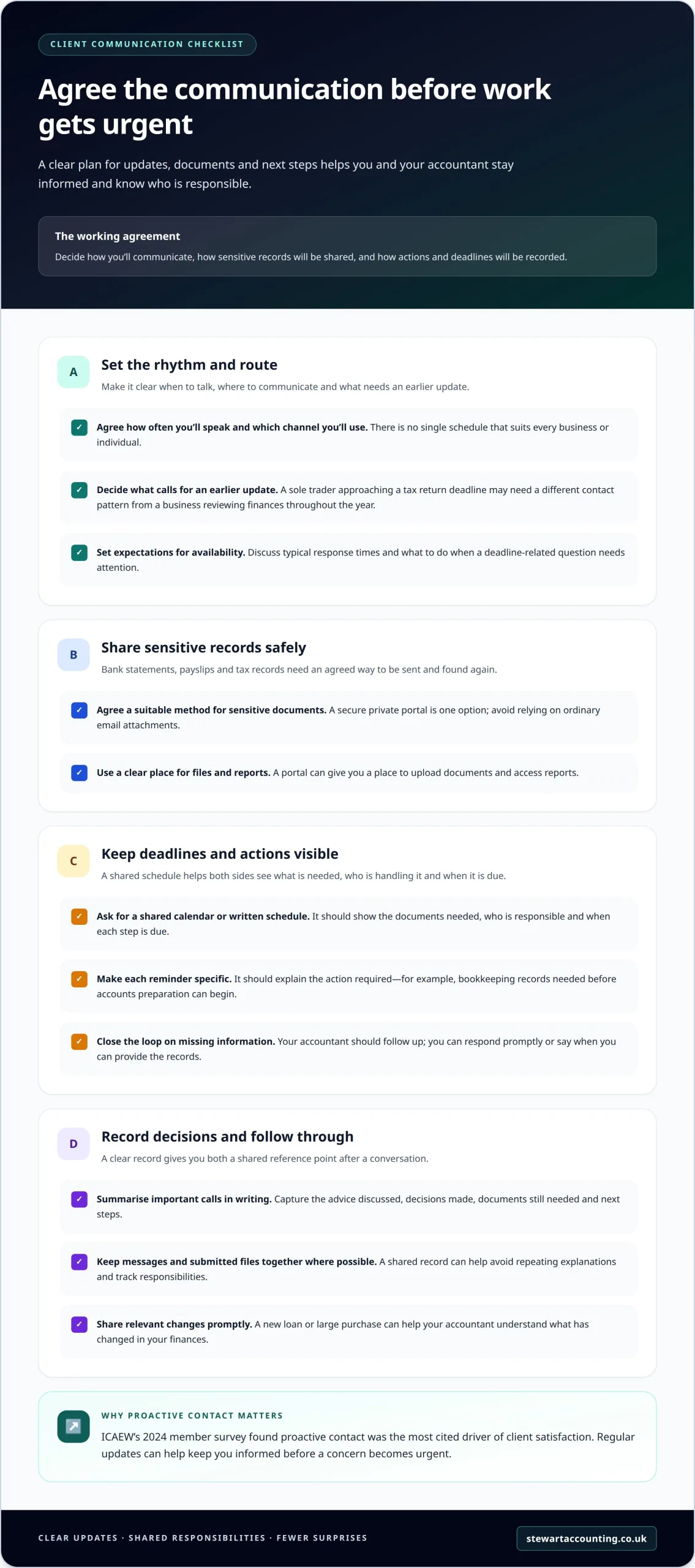
There’s no single communication schedule that suits every UK business or individual. Agree how often you’ll speak, which channel you’ll use and what calls for an earlier update. A sole trader approaching a tax return deadline may need different contact from a business reviewing its finances throughout the year. ICAEW’s 2024 member survey found proactive contact was the most cited driver of client satisfaction, underlining the value of updates before a concern becomes urgent.
Secure handling matters when you share bank statements, payslips or tax records. Agree a suitable way to send sensitive documents, such as a secure private portal, rather than relying on ordinary email attachments. A portal can also provide a clear place to upload files and access reports. Set expectations for availability at the start: discuss typical response times and what to do if a deadline-related question needs attention.
Clear communication means making deadlines visible. Ask for a shared calendar or written schedule showing the documents needed, who is responsible and when each step is due. For example, a reminder can explain that bookkeeping records are needed before accounts preparation can begin. Your accountant should specify the action required and follow up on missing information. Respond promptly, or say when you can provide it.
Agree how to record decisions and important conversations. An email summary after a call can capture the advice discussed, decisions made, documents still needed and next steps. Keep messages and submitted files together where possible. This record helps both sides refer to the same information, avoid repeating explanations and track responsibilities.
What services should a UK accountant provide to small businesses and individuals? The right scope depends on your circumstances and the work you agree. A small business might need bookkeeping, payroll or VAT return support, while an individual may need help with a Self Assessment tax return. Set out which services are included and who handles each task.
To check a UK accountant’s qualifications and professional body membership, ask what qualifications and memberships they hold, then verify those details with the named awarding or professional body. For example, check a claimed ICAEW or ICB membership through that organisation’s verification route. This gives you a clear basis for understanding their professional background before agreeing an engagement.
2. What is a good client relationship?
A good relationship is a working partnership built on shared goals, mutual respect and clear responsibilities. Both sides need to act in good faith; the accountant cannot carry every responsibility alone. Your accountant brings financial knowledge, while you provide accurate information about your income, spending and plans. Together, you can make decisions with a fuller picture. So, what does a good accountant-client relationship look like? Both sides understand their roles and can discuss decisions openly.
Trust grows when both sides follow through. If your accountant agrees to explain a report, you should receive a clear explanation in plain English. If you agree to provide records, send them promptly or explain what is causing a delay. For example, telling your accountant about a new loan helps them understand a change in your finances. Leaving out relevant information can lead to advice or filings based on an incomplete picture.
Personalised service means advice reflects your circumstances, not a standard answer. A sole trader planning to hire a first employee has different questions from a landlord reviewing rental income. Active listening helps an accountant understand your priorities before offering advice. They can ask what you want to achieve, clarify details and check that you understand the options. You should also feel able to say when a recommendation does not fit your plans.
Technology can support trust when it makes records easier to access and decisions easier to trace. For example, cloud accounting software such as Xero can help you and your accountant work from the same financial records. Agree who enters transactions and who reviews them. Attach supporting documents to relevant entries where the system allows. This creates a clearer record of how figures were prepared and gives both sides a shared reference point.
An accountant becomes a trusted adviser by connecting financial information to decisions you need to make. A cash-flow forecast, for instance, can help you consider whether expected income will cover planned spending. Your accountant should explain the assumptions behind the forecast, such as expected payment dates, instead of presenting a figure without context. This makes the advice useful while leaving business decisions with you, and gives you a practical way to discuss progress against your goals.
Relationships also benefit from continuity. Having a named member of the accounting team who understands your history can reduce the need to explain the same circumstances repeatedly. When your situation changes, share the update and ask how it affects the work already underway. If you’re looking for a more collaborative approach, talk through the working relationship you need. Clear expectations and reliable follow-through can make retaining trust easier as your needs develop.
3. Agreeing scope, timelines and responsibilities
Start an accounting engagement by recording the work, deadlines and responsibilities in writing. An engagement letter should explain which services the firm will provide, what falls outside the agreed scope, how additional work is handled and when fees are payable. It should also identify the information you must supply and how the firm will communicate changes. For example, if bookkeeping is included but payroll is separate, make that distinction clear.
Turn the letter into a practical schedule. For each task, record the document needed, who provides it, the agreed deadline and what happens next. If year-end accounts depend on complete bank records, show when those records are due and who will review them. This makes it easier to see how a late item could affect the next stage, rather than treating every request separately.
Responsiveness works both ways. If your accountant requests an invoice or explanation, reply promptly or give a realistic date for sending it. If a request is unclear, ask which period or transaction it concerns. For example, a query about a supplier payment is easier to resolve when you provide the invoice and explain its business purpose. Timely replies can prevent avoidable delays.
Your accountant should also respond to changing needs. Tell them when circumstances shift, such as taking on staff, changing trading arrangements or planning a major purchase. These changes may raise new accounting questions or opportunities beyond the original work. The firm can then explain whether the agreed scope still fits or whether you should discuss updating the engagement.
Set a simple process for tracking requests. A shared task list can show each open item, its owner and its due date. After a meeting, an email summary can record decisions and outstanding actions. If a deadline is at risk, both sides should raise it early and agree the next step. This record supports continuity if another team member takes over a query.
Unclear responsibilities can lead to missing documents, duplicated work, delayed submissions or unexpected charges for tasks outside the agreed scope. For example, you might assume the accountant is submitting a return while the accountant is waiting for your approval. A written schedule and clear approval step can prevent that misunderstanding and support client retention through dependable service.
Review the arrangement when your needs change, not just at year end. A growing business may need different reporting or more frequent support than it did at the start. A short scope review lets you discuss workload, deadlines and whether the current service still fits. To discuss how clear responsibilities could work for your circumstances, talk through your accounting requirements.
4. Feedback and transparent fees
Clear fees and useful feedback make an accounting relationship easier to manage. Before work begins, ask for an explanation of what the agreed fee covers, when payment is due and what could create an extra charge. For accounting services, the price depends on the case and is given after a quote request; cost factors include the work’s scope, records, complexity and timing. If a new task arises, the accountant should explain its effect on the fee before proceeding.
A fee should relate to identifiable work, not arrive as an unexplained figure. For example, an invoice might separate an agreed recurring service from additional work requested during the period. If the scope or fee needs to change, the firm should explain the change in advance. That gives you an opportunity to discuss it before work proceeds.
Feedback should be specific enough to act on. You might say that a report helped you plan spending, but its explanation arrived too late for a decision. Your accountant can respond by adjusting the timing or format of future reports. Positive feedback also identifies what works, such as a clear summary after a meeting. Regular, proactive conversations can stop small concerns from affecting the relationship or your business growth.
Use a practical feedback routine: raise an issue when it happens, explain its effect and agree the next step. For example, if a response leaves you unsure which records to send, ask for a short list of the required documents. Your accountant can check that the revised explanation is clear. At your next discussion, you can say whether the change improved the experience.
Transparency about artificial intelligence (AI) matters when an accounting firm uses it in client work. You should be able to understand where a tool is used, what information it handles and how a person reviews its output. Ask for a plain explanation if an AI-assisted draft, summary or analysis is part of a service. Your accountant should distinguish automated suggestions from professional judgement and explain how to raise errors or concerns.
Openness is especially relevant as AI becomes part of professional services: 89% of clients want some transparency about where, when and how accounting firms use AI. Yet only 21% of accounting firms have an AI strategy or policy explaining how that use is communicated to clients. These figures underline a practical point: discuss the firm’s approach directly and agree what information you expect before AI tools are used in your work.
Good feedback works both ways. Your accountant may explain that missing records delayed a report, while you can say whether the request was clear and manageable. Agree on an improvement, such as a document checklist for the next reporting period, then review whether it helped. This makes feedback part of the working relationship, not just a reaction when something goes wrong.
5. Collecting and acting on client feedback
Useful feedback gives an accounting practice a clear view of what helps and where service falls short. Raise concerns soon after they arise, while details are fresh. For example, if a year-end report arrives too late for a planning meeting, explain which decision was affected. Specific examples make it easier to discuss a practical change instead of trading general impressions.
Choose a regular time to review the working relationship, such as a scheduled check-in after a reporting period. Discuss what is working, what is causing friction and what should change next. If you prefer written feedback, send a short email before the meeting. This gives both sides time to consider the issues and prepare useful questions.
Make feedback actionable by describing the situation, its effect and the change you want. “The payroll query was unclear” gives less direction than “Please identify the employee and pay period in future queries.” The second example points to a specific adjustment. You can also mention a positive interaction, such as a clear explanation that helped you make a decision.
Acting on feedback means agreeing who is responsible and what happens next. If a report needs a clearer summary, your accountant can revise its format for the next reporting period. If you need to send records differently, agree on the process together. At the next check-in, review whether the change helped. Following up after a concern shows whether the adjustment is working as intended.
What should you do if communication or service from your accountant is poor? Put your concerns in writing, give specific examples and explain the outcome you need. Ask the accounting practice to respond through its complaints process, then review whether the agreed action resolves the problem.
Keep feedback balanced and focused on the work. Distinguish a one-off delay from a repeated issue, for example, and explain how each affected your plans. If you value prompt replies but need more explanation in reports, say both. This helps your accountant prioritise changes without overlooking parts of the service that are already working well.
Review the results against practical expectations, such as whether agreed reports arrive in time for decisions or queries are easier to understand. Record the action and revisit it at your next discussion. If the same concern continues, explain what remains unresolved and agree on another step. Clear, respectful feedback helps both sides improve the relationship and maintain confidence in the work.
If you’d like to discuss the service and communication you need, share your requirements with the team.
Stewart Accounting Services
Stewart Accounting Services can help build a clear working relationship around agreed accounting tasks and regular communication. Bookkeeping Services can help keep your day-to-day financial information organised. Year End Accounts Preparation, Self Assessment Tax Returns and Payroll Services can support specific responsibilities as your needs arise.
Discuss the work you need, the information you’ll provide and how you prefer to communicate. Clear expectations from the start can help you understand what happens next and take it off your hands, giving you more time, more money, more mind.
Contact Stewart Accounting Services to discuss your accounting needs.
Set the tone for your next accounting conversation
If you are considering what a good accountant-client relationship looks like, focus on whether you can discuss your priorities openly and understand the support being offered. A useful next step is to identify what you need from the relationship now and what may change as your business or personal finances develop.
Before speaking with an accountant, note the main issue you want to resolve, the decisions you face and how you prefer to receive updates. You can then use the conversation to agree on a practical starting point, clarify uncertainties and decide what a productive working relationship should help you achieve. You do not need every detail settled before you begin; a clear first discussion can help shape the right approach.
Accounting support should make it easier to give attention to the work and plans that matter to you. Take the next step at your pace and start a conversation about the support you need. Contact Stewart Accounting Services to discuss your requirements.
Frequently Asked Questions
What is a good client relationship?
A good client relationship is a professional partnership where you can make informed decisions together. In practice, what does a good accountant-client relationship look like? You can explain your aims, understand your accountant’s advice and agree what happens next. For example, if you are considering a change to your business, your accountant can help you consider relevant financial information while you decide whether it fits your plans.
Why is it important to manage client expectations?
Managing expectations helps prevent misunderstandings about the purpose and limits of a task. If you ask for a cash-flow review, clarify whether you need an overview of upcoming payments or help assessing a planned investment. That distinction helps your accountant focus the work and explain what the results can show. It also gives you a clearer basis for deciding whether another analysis or discussion would be useful.
How can accountants improve communication with clients?
Accountants can make complex information easier to act on by explaining the main point, its context and the decision it affects. For example, rather than sending a report without comment, your accountant can highlight a change in spending and explain which figures contributed to it. You can help by saying whether you prefer a written summary or a conversation, especially when the information will guide an important business choice.
How can advisers become trusted advisers rather than service providers?
Advisers build trust by understanding your goals and applying their knowledge to the choices you face. If you are planning to invest in equipment, for instance, an adviser can help you consider how the purchase may affect cash flow and other plans. They should explain their reasoning and make clear which points depend on information you provide. You remain responsible for choosing the course that fits your circumstances.
How do you set realistic expectations with accounting clients?
Set realistic expectations by agreeing on the task’s purpose, required information and intended output before work starts. For a spending review, specify which records and period your accountant should use. If your records are incomplete, discuss how that affects the work and what information would improve the analysis. This gives both sides a shared understanding of what the findings can tell you.
What role does client experience play in retention?
A positive client experience can encourage you to continue working with an accountant when the service remains useful and understandable. For example, a new business owner may value explanations that help them feel more confident reviewing figures independently. A regular review of the working relationship can show whether the support still matches your needs. If it does not, discussing the gap can help identify a practical change.
What are the signs of a good accountant-client relationship?
Look for clear reasoning, constructive discussions and a shared understanding of decisions. Ask yourself: what does a good accountant-client relationship look like in your day-to-day work? You should be able to explain your priorities, understand your accountant’s perspective and discuss differences respectfully. A useful sign is that financial conversations help you make considered choices, rather than leave you unsure about what the information means.
How should a UK accountant explain fees, advice, and tax risks?
Your accountant should explain fees in plain English, linking them to the agreed work and clarifying how additional tasks are handled. Advice should set out its reasoning and the information it relies on. For a tax risk, your accountant should explain which facts may affect the position and what records are relevant. Ask for unfamiliar terms to be clarified so you can understand the issue and consider your options.