

Accounts Preparation: The Ultimate Checklist for a Smooth Year End

Does the thought of your business year-end fill you with a familiar sense of dread? For many business owners, the scramble for documents, the nagging worry of forgetting something crucial, and the stress of potential delays can feel overwhelming. But what if you could trade that anxiety for confidence? A smooth, efficient process is entirely achievable, and the key is excellent accounts preparation. By knowing exactly what your accountant needs ahead of time, you can transform a stressful task into a straightforward one, helping to prevent delays and even reduce your final bill.
We want to help you feel organised, in control, and ready for a seamless handover. That’s why we’ve created the ultimate checklist. In this guide, we’ll walk you through every document and piece of information required, taking all the guesswork out of the process. Follow our simple steps to gather everything your accountant needs, minimise your fees, and gain complete peace of mind knowing you’re perfectly prepared for a stress-free year-end.
Why Good Preparation is the Key to a Stress-Free Year End
For many business owners, the thought of year-end accounts brings a familiar sense of dread. But it doesn’t have to be a complicated or stressful time. At its core, accounts preparation is simply the process of gathering, organising, and summarising your financial records from the past year. Think of it as building the foundation for your annual accounts; the stronger and more organised the foundation, the more accurate and reliable the final structure will be.
Getting this stage right is the single most effective way to ensure a smooth, efficient process. Good preparation not only saves you time and reduces accountancy fees but also helps you avoid unnecessary stress. It transforms a compliance task into a valuable opportunity to get a clear, accurate picture of your business performance. This guide provides a simple checklist to take the worry out of your accounts preparation and set you up for success.
Saving Time and Money
An organised set of records is a direct route to saving both time and money. When your accountant has everything they need in a clear format, they can work more efficiently. This leads to tangible benefits:
- Lower Professional Fees: Fewer queries and less time spent chasing missing documents directly translate to a smaller bill from your accountant.
- No Late Filing Penalties: A smooth process ensures you meet your deadlines with Companies House and HMRC, avoiding costly fines that start from £150 and increase sharply.
Reducing Stress and Gaining Clarity
The biggest benefit of being prepared is the peace of mind it brings. You can eliminate the last-minute panic of searching for receipts and invoices, confident that your figures are accurate and your accounts will be filed on time. More than just a box-ticking exercise, this process is a chance to review your business’s financial health. A key part of this review is understanding financial statements and what they reveal about your profitability and cash flow over the last 12 months.
The Core Financial Records Checklist
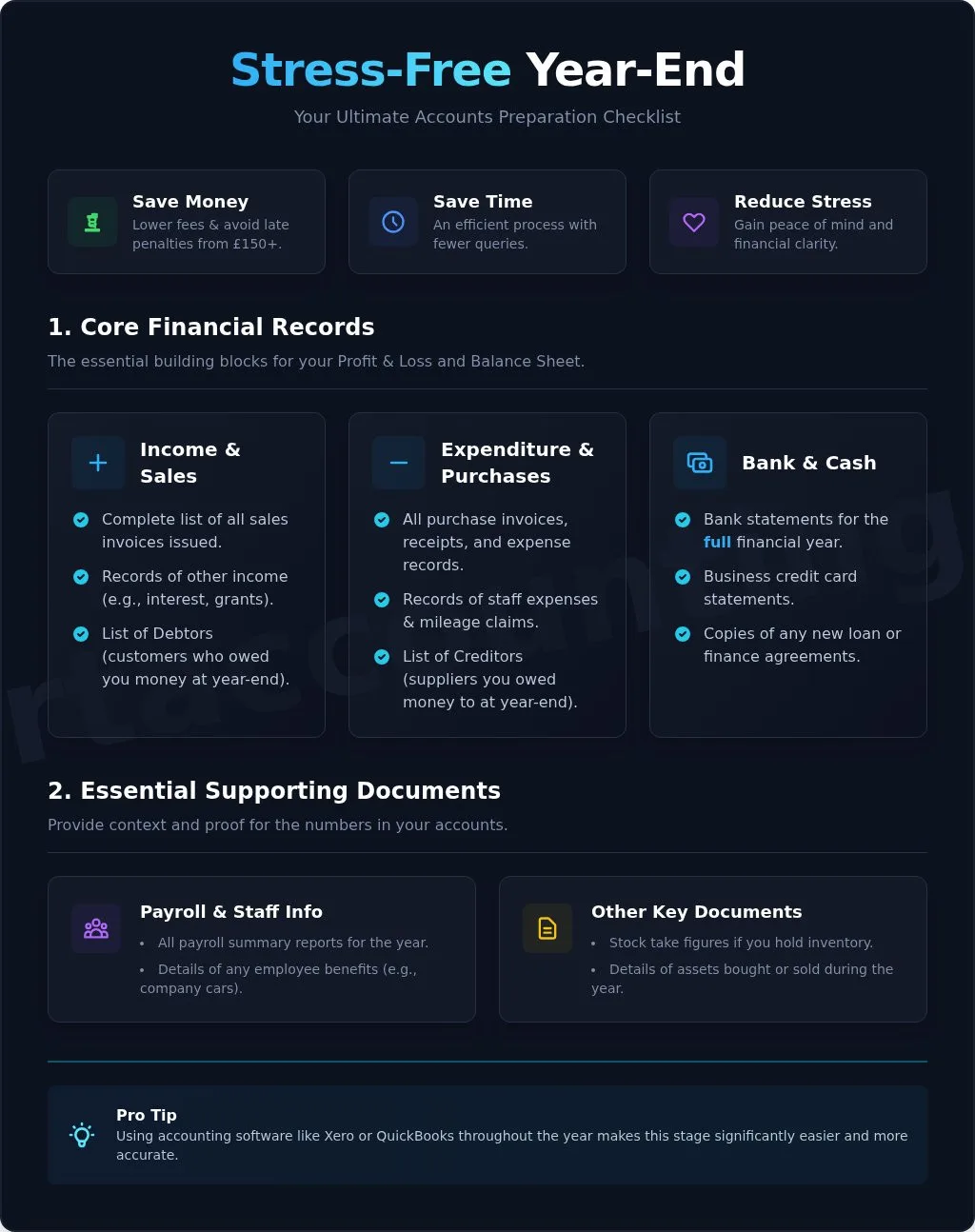
This is the heart of your year-end preparation. The financial records you gather here are the essential building blocks for your Profit & Loss Statement and Balance Sheet. Getting this data organised is the single most important step for a smooth accounts preparation process. These records provide a complete, evidence-based story of your business’s financial activity over the last 12 months.
Using accounting software like Xero or QuickBooks throughout the year makes this stage significantly easier, as most of this information will already be in one place. Your goal is to ensure every transaction is accounted for. This data feeds directly into the formal process of creating your financial statements, a key part of the overall process detailed in this excellent guide to the accounting cycle. Let’s break down exactly what you need.
Income and Sales Records
A clear picture of all the money your business has earned is fundamental. We need a complete and accurate list of every source of income to ensure your revenue is correctly reported. Don’t forget to include income from sources other than your main trading activity.
- A complete list of all sales invoices you issued during the financial year.
- Records of any other business income, such as interest received, grants, or money from selling an asset.
- A list of your debtors – the total amount owed to you by customers at your year-end date.
Expenditure and Purchase Records
Equally important is a complete record of every penny your business has spent. These records are vital for claiming all allowable expenses, which helps to reduce your tax liability. Meticulous records prevent you from missing out on potential tax savings.
- All purchase invoices and receipts for business expenses, from stock and materials to software and stationery.
- Records of all staff expenses and mileage claims submitted and paid.
- Details of any payments you made using cash.
- A list of your creditors – the total amount you owed to suppliers at your year-end date.
Bank and Cash Records
Finally, we need to see the complete flow of money in and out of your business bank accounts. These statements act as the ultimate cross-reference, allowing us to verify the income and expenditure records you’ve provided and ensure nothing has been missed from your accounts preparation.
- Bank statements for all business accounts, covering the full financial year.
- Credit card statements for any business credit cards used.
- Copies of any new loan, HP, or finance agreements taken out during the year.
- A record of your petty cash transactions and the closing balance, if you operate a petty cash system.
Essential Supporting Documents Checklist
Once your core financial records are in order, the next step is to gather the supporting documents. These files provide the essential proof and context behind the figures in your accounts, turning abstract numbers into a verifiable financial story. Having these ready before we begin is the single best way to ensure a smooth, efficient accounts preparation process, preventing delays and saving you from a flurry of follow-up questions.
Strong financial organisation is a cornerstone of a healthy business. While we handle the complexities for you, understanding the basics can be empowering. For a good overview of foundational principles, this SBA guide to managing business finances is a useful resource. We recommend creating a dedicated digital or physical folder for your year-end documents, making everything easy to find. Remember, not every item on this list will apply to your business, but it’s a comprehensive starting point.
Payroll and Staff Information
If you employ staff, your payroll records are a critical component. This information ensures all staff costs, taxes, and benefits are accounted for correctly. Please have the following available:
- Copies of all payroll summary reports for the financial year.
- Details of any employee benefits provided, such as company cars or private medical insurance.
- Information on all employer and employee pension contributions made during the year.
Asset and Stock Information
Tracking your business assets is vital for calculating depreciation and understanding your company’s value. Likewise, if you sell goods, your stock levels directly impact your profit. We will need:
- A list of any new assets purchased (e.g., equipment, vehicles, computers), along with their purchase invoices.
- Details of any assets sold or disposed of, including the date and the sale price received.
- Your final stock valuation figure if you hold stock at the year-end.
VAT and Tax Records
Staying on top of your tax obligations is non-negotiable, and these documents provide the necessary evidence of your compliance. This part of the accounts preparation checklist helps us verify the figures submitted to HMRC.
- Copies of all VAT returns submitted during the accounting period.
- Any relevant correspondence you have received from HMRC.
- Details of any other taxes paid, such as payments made under the Construction Industry Scheme (CIS).
Key Information Your Accountant Will Ask For
While gathering documents is crucial, your year-end accounts are more than just numbers on a page. To ensure they represent a true and fair view of your business, your accountant needs context. Providing this qualitative information isn’t just a formality; it helps us offer tailored advice, identify potential opportunities, and ensure your accounts preparation is as accurate and efficient as possible.
Being ready with these answers also demonstrates strong business management and helps us become a more effective partner in your financial journey. Think of it as telling the story behind the figures.
Changes in Your Business
Your business is constantly evolving, and your accounts need to reflect that. Let us know about any significant operational changes during the year, as these can impact everything from your tax position to your statutory filings. Key updates to share include:
- Have you changed your registered business address or legal structure (e.g., moving from a sole trader to a limited company)?
- Are there any new directors or shareholders, or has anyone left the business?
- Have you launched a new product line, started offering a new service, or expanded into a new market?
Personal Financial Interactions
For limited companies, it’s vital to distinguish between your finances and the business’s. A clear record of money moving between you and the company is essential for compliance and accurate reporting. Be prepared to discuss:
- Details of any money you have personally put into the business as a director’s loan.
- Records of salary, dividends, or other funds you have taken out.
- Information on any personal expenses inadvertently paid for using business funds, or vice-versa.
Future Plans and Concerns
Your year-end accounts are not just a historical record; they are a foundation for the year ahead. Sharing your plans and worries allows us to provide proactive, strategic advice. Consider what’s on the horizon for your business:
- Are you planning any major investments, such as purchasing new equipment or property?
- Do you have any concerns about the business’s financial future, such as cash flow, securing new contracts, or rising costs?
Discussing these points helps us ensure your financial strategy aligns with your goals. Need help understanding what’s relevant for your accounts? Our experts are here to help.
How We Take the Burden of Accounts Preparation Off Your Hands
Following a checklist can certainly bring order to your year-end, but the reality is that the process often remains complex, time-consuming, and a significant source of stress for many business owners. Juggling compliance deadlines with the daily demands of running your business is a difficult balancing act. This is where we step in. At Stewart Accounting Services, we don’t just assist with your accounts preparation; we are dedicated to taking the entire burden completely off your hands.
Our Streamlined, Proactive Process
Our approach is built on clarity and proactivity. We replace generic templates with simple, tailored checklists designed specifically for your business operations. By integrating with modern accounting software like Xero and QuickBooks, we streamline data collection and ensure your records are always up-to-date. More importantly, our friendly team is always available. We encourage you to ask questions throughout the year, allowing us to provide guidance and resolve small issues before they can escalate into year-end problems.
More Than Just Compliance: Achieving Your ‘Three Freedoms’
For us, year-end accounts are about much more than just satisfying HMRC and Companies House. We see it as a vital opportunity to help you achieve what we call your ‘Three Freedoms’-the core benefits that come from partnering with a dedicated, expert team for your accounts preparation.
- More Time: We handle the meticulous detail, the paperwork, and the deadlines. This frees you up to focus your valuable time on strategy, sales, and doing the work you are passionate about.
- More Money: Our expert review by qualified Chartered Accountants ensures 100% accuracy, helping you avoid costly errors or penalties. We also proactively identify opportunities for tax savings, ensuring you only pay what you legally owe.
- More Mind: Perhaps the greatest benefit of all. Enjoy the peace of mind that comes from knowing your accounts are accurate, compliant, and filed on time by professionals. No more year-end worry.
Stop letting compliance deadlines dictate your schedule and your stress levels. If you are a business owner in Central Scotland and are ready to experience a truly effortless year-end, we invite you to get in touch. Contact our team in Alloa, Stirling, or Falkirk today and let’s discuss how we can support you.
Make Your Next Year End Your Easiest Yet
As we’ve seen, a smooth year-end isn’t about luck; it’s the direct result of methodical preparation. By following our checklist and having your core financial records, bank statements, and essential supporting documents organised ahead of time, you can transform a typically stressful period into a straightforward, manageable process. This proactive approach to accounts preparation not only saves you valuable time but also empowers your accountant to work efficiently and accurately on your behalf.
But you don’t have to navigate this process alone. At Stewart Accounting Services, our team of Fully Qualified Chartered Accountants are the local experts for businesses across Alloa, Stirling, and Falkirk. We are dedicated to delivering our ‘three freedoms’: giving you back more time, more money, and complete peace of mind. We can take the entire burden off your shoulders, ensuring your year-end is handled with precision and expert care.
Ready for a stress-free year end? Let us take accounts preparation off your hands.
Frequently Asked Questions About Accounts Preparation
What happens if I’m missing some receipts or invoices?
It’s a common worry, but don’t panic. First, try to get copies from your suppliers or use bank statements as proof of purchase. For small, un-receipted expenses, a detailed log may be acceptable. We can help you reconstruct these records and advise on what HMRC will accept. The key is to address it proactively rather than ignoring it, ensuring your accounts are as accurate as possible. We’re here to help you navigate these issues and reduce the stress.
Can I prepare my own limited company accounts without an accountant?
While it is legally possible, preparing limited company accounts is a complex and time-consuming process. They must meet specific legal formats for filing with Companies House and HMRC, and mistakes can lead to penalties. Using a qualified chartered accountant not only ensures compliance and accuracy but also frees up your time and gives you peace of mind. We can take this complicated task completely off your hands, allowing you to focus on your business.
How far back do I legally need to keep my financial records in the UK?
In the UK, the rules depend on your business structure. Limited companies must keep records for 6 years from the end of the last financial year they relate to. For sole traders and partners, you need to keep records for at least 5 years after the 31 January submission deadline of the relevant tax year. Keeping organised records is a crucial step for a smooth and stress-free year-end process and is something we can assist you with.
What are the deadlines for filing annual accounts with Companies House and HMRC?
The deadlines are strict, and missing them results in automatic penalties. For Companies House, you must file your annual accounts 9 months after your company’s financial year end ends. For HMRC, your Company Tax Return is due 12 months after your accounting period ends, but your Corporation Tax payment is usually due earlier-9 months and one day after your accounting period ends. We help our clients in Alloa, Stirling, and Falkirk manage these dates to avoid any fines.
How much does it cost to have an accountant prepare my year-end accounts?
The cost for year-end accounts preparation varies based on your business size, the volume of transactions, and the quality of your bookkeeping. A small business with well-kept records might expect to pay from a few hundred pounds. We provide tailored, fixed-fee quotes so you know the exact cost upfront with no surprises. Our goal is to offer excellent value that saves you time, money, and stress in the long run.
My bookkeeping is a mess. Can you still help me?
Absolutely. Please don’t worry-this is a very common situation for busy business owners. We specialise in helping clients tidy up their financial records, getting everything organised, compliant, and up-to-date. This is the first step to ensuring your year-end accounts are accurate and filed on time. Let us take the stress of messy books off your hands so you can focus on what you do best: running your business.
Recent Posts
22 Oct, 2026