

Do You Need a Part-Time Finance Director in Scotland?

What if clearer financial decisions don’t require a full-time finance director? If reports arrive too late, cash flow is difficult to predict or growth plans feel hard to judge, routine accounting alone may not give you the forward-looking insight you need. A senior finance hire may also be more than your business needs right now. If you’re looking for business advisory services Stirling businesses can access, Stewart Accounting Services can help you connect financial information with the decisions ahead.
This guide explains what a part-time finance director does, how strategic financial guidance differs from routine accounting support, and when your business may benefit. You’ll also learn how management accounts, cashflow forecasts and business plans can support decisions, and what information to prepare for advisory discussions. Stewart Accounting Services has an office in Stirling and supports businesses across Central Scotland and remotely throughout the UK. The aim is to make financial tasks easier to manage, giving you more time, more money, more mind.
Key Takeaways
- A part-time finance director helps turn financial information into forward-looking business decisions, beyond routine bookkeeping and accounts preparation.
- Consider the support you need when growth, changing cash flow or new plans make financial decisions harder to manage alone.
- List the recurring decisions where timely figures or structured planning would help you assess whether advisory support fits your priorities.
- Gather your existing financial records, current priorities and business plans to make advisory discussions more focused.
- Business advisory support can connect management accounts, cashflow forecasts and business plans to clearer decisions for your Stirling business.
What Does a Part-Time Finance Director Do for a Scottish Business?
A part-time finance director provides strategic financial guidance on a flexible basis, helping you use financial information to plan ahead and make business decisions. The focus is not just on recording what has happened. It is on understanding what the figures could mean for your next steps, whether you’re considering growth, managing cash flow or weighing up an investment.
Financial leadership turns historic reporting into insight for future business decisions. The role can include financial planning and assessing the business’s financial position. Its scope depends on your needs, so there is no single arrangement that suits every organisation. To hear a general explanation of business advisory services, watch this short Q&A:
How does a part-time finance director differ from an accountant?
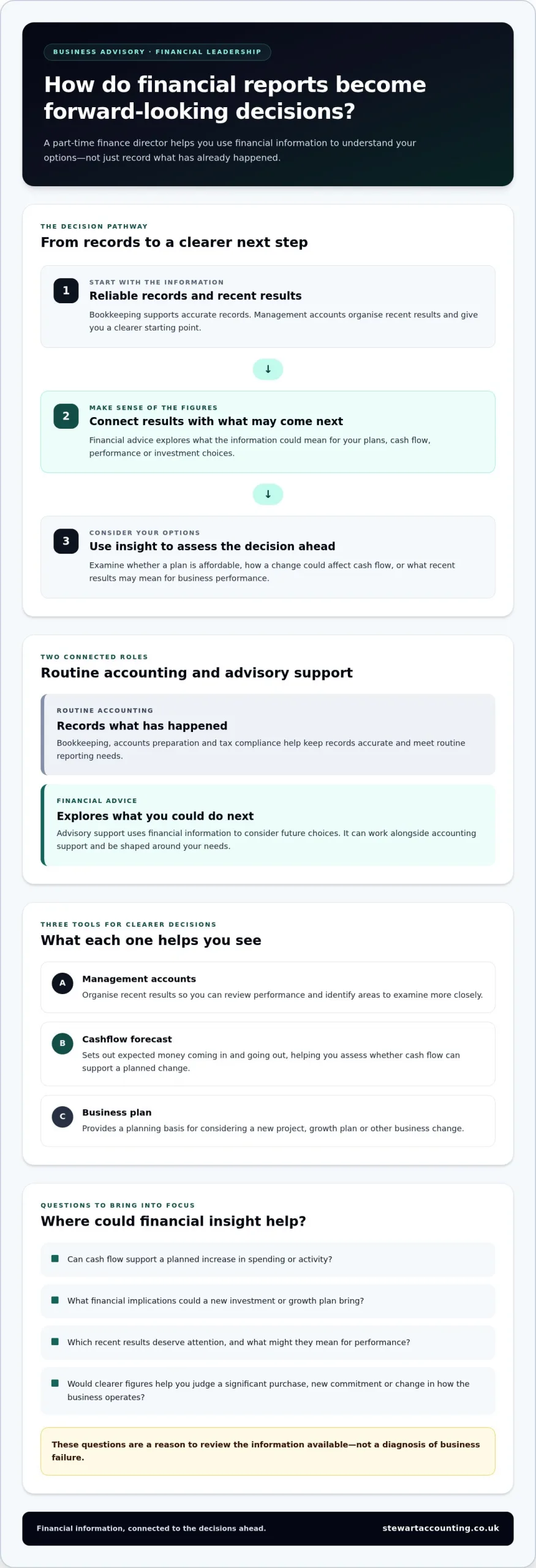
Bookkeeping, accounts preparation and tax compliance help keep records accurate and meet routine reporting needs. They show what has happened in the business. Financial advice uses that information to explore what you could do next, such as whether a plan is affordable or how a change might affect cash flow.
These functions work well together, and do not always need to sit with separate appointments. A combination of accounting and advisory support can be shaped around the decisions you face and the financial information available.
What decisions can financial leadership help you examine?
Advisory discussions can help you assess questions such as:
- Can cash flow support a planned increase in spending or activity?
- What financial implications could a new investment or growth plan bring?
- Which recent results deserve attention, and what might they mean for performance?
Management accounts organise recent results and give you a clearer starting point for these discussions. Reliable bookkeeping supports useful reporting, and bookkeeping services can help keep financial records in order. Stewart Accounting Services’ business advisory support connects records and reports to forward-looking decisions, so you can make better use of the figures rather than struggle to interpret them.
When Could a Part-Time Finance Director Help a Business in Stirling or Scotland?
A part-time finance director may be useful when you have important decisions to make and want clearer financial insight before committing to a course of action. This need can arise during growth, a change in cash flow or the development of a new plan. It does not automatically mean your business has a problem. You may simply benefit from a clearer view of your financial options.
If you’re relying on outdated figures or instinct to judge cash flow, performance or growth plans, it may be time to seek more forward-looking financial insight. The aim is to understand what your information is telling you and use it to make considered decisions, without adding unnecessary complexity.
What signs suggest your business needs more financial insight?
Look at the decisions you face regularly. Are you unsure how a change in income or costs could affect cash flow? Is it difficult to judge whether performance is on track or a growth plan is financially manageable? Perhaps you’re weighing up a significant purchase, taking on new commitments or changing how the business operates.
These questions are a reason to review the information available, not a diagnosis of failure. A cashflow forecast can set out expected money coming in and going out. Management accounts can help you review performance and identify areas to examine more closely. Together, these tools give you a more informed basis for decisions.
Does a small or growing business need a full-time finance director?
Not necessarily. The right level of support depends on your priorities, how often complex financial decisions arise and the resources you have available. A full-time senior appointment may not suit your current needs, while occasional accounting support alone may not answer forward-looking questions. No single turnover, team size or growth rate determines what is right for every business.
Start by writing down the decisions you need help with. You might want to understand whether cash flow can support expansion, plan for a new project or interpret recent results for the months ahead. This gives an adviser a practical starting point and helps shape support around your business, rather than a standard arrangement.
Stewart Accounting Services has an office in Stirling, supports businesses across Central Scotland and also works remotely with clients throughout the UK. The Scottish Government outlines business support and advice available to organisations in Scotland. For business advisory services in Stirling, Stewart Accounting Services can help you focus on the financial decisions you want to address and take some of the workload off your hands.
How to Assess Part-Time Finance Director Support Before You Choose
Begin with the decisions you need to make, the financial information available and the outcomes you want from advisory support. This helps you focus on what would be useful instead of choosing an arrangement that may not fit your business.
Use these questions to frame the discussion:
- Priorities: Which decisions keep coming up, and where would clearer figures help?
- Financial visibility: Can you access information that helps you understand cash flow, recent performance and future plans?
- Desired outcomes: Do you want to plan growth, assess spending, understand results or feel more prepared to act?
Clear responsibilities, regular communication and useful reporting help keep the work focused. Agree which questions the support should address, what information you’ll provide and how you’ll discuss the findings. The detail can be tailored to your needs, including the timing and format of reporting.
Which financial information should guide the decision?
Gather the records that show what is happening in the business, then consider what you need to understand next. Management accounts help you review recent results. A cashflow forecast looks ahead at expected money in and out. A business plan sets out your aims and the assumptions behind them. The records supporting these documents matter too, because clear underlying information makes discussion more useful.
Online accounting can make financial information accessible digitally. Stewart Accounting Services provides online accounting services to support access to business records. The Scottish Government also outlines business advisory services and guidance available in Scotland.
How can you define the scope of advisory support?
Write down your main financial questions and the decisions attached to them. You may want to assess whether a new project fits your plans, understand a change in performance or plan for growth. This list helps Stewart Accounting Services focus discussions on where guidance could be most useful and what information will help.
If you need to set out your goals and the steps towards them, business planning support can give those discussions structure. A clear starting brief helps Stewart Accounting Services shape business advisory support around your priorities and keep it practical. It can also help take financial tasks off your hands, giving you more time, more money, more mind.
What Financial Information Should You Prepare for Advisory Support in Scotland?
You don’t need a perfect set of accounts before discussing your business finances. Start with the information you have, the decisions on your mind and any plans you’re considering. Bringing records together can make the conversation more focused, but gaps and questions can be part of the discussion too.
Which records and forecasts are useful to gather?
Start with the records that explain your recent trading and what may lie ahead. Depending on what you have, gather:
- Recent bookkeeping information, such as records of income and business spending.
- Management accounts that summarise recent financial performance.
- A cashflow forecast, if you have one, showing expected money coming in and going out.
- Any business plan that sets out your aims, planned activity or assumptions.
These documents don’t need to tell the whole story on their own. Note anything that needs context, such as a one-off cost, a change in sales or an upcoming commitment. Stewart Accounting Services’ bookkeeping services can help keep records organised, supporting clearer reporting and more useful financial discussions.
It can also help to note a few questions: What commitments are approaching? What growth aims are you working towards? Where are you uncertain about cash flow or performance? These notes connect the figures to the choices you need to make.
How can you make the first advisory conversation productive?
Be clear about what you want to understand or decide. You might be weighing up a new project, planning a change in the business or trying to make sense of recent results. Describe a useful outcome, such as a clearer view of affordability or knowing which figures to monitor as you put a plan into action.
You can then agree which financial information to review and how it will inform the discussion. This keeps attention on your priorities rather than gathering paperwork for its own sake. If your records aren’t fully organised, share what you have and explain what’s missing. Advisory support can start with your business as it is, helping you identify practical next steps and take financial work off your hands where appropriate.
Preparing these details gives business advisory support a practical starting point, whether you’re based in Stirling or elsewhere in Scotland. Your priorities and the information you already have can guide the discussion.
How Can Stewart Accounting Services Support Your Stirling Business?
Stewart Accounting Services is a Chartered Accountancy firm with an office in Stirling, supporting SMEs across Central Scotland and remotely throughout the UK. Its business advisory services help you use relevant figures and plans to inform business decisions.
The value comes from connecting financial information with the questions you need to answer. Looking at records alongside performance, future cash needs and your plans can give you a clearer picture of the financial implications of your next move.
What related support can help inform business decisions?
Management accounts help you understand reported business performance and compare results with your expectations. A cashflow forecast sets out expected money coming in and going out, giving you information to discuss upcoming costs or plans. Together, these services can help you consider your options without having to interpret every figure alone.
Bookkeeping maintains the records behind useful reporting. Business plans give structure to your goals and the financial assumptions behind them. Considered together, these services help you discuss how current performance relates to where you want the business to go. The right combination depends on your goals and the questions you need answered.
Stewart Accounting Services provides business advisory support, management accounts, cashflow forecasts and business plans. Bringing these services together can take some financial work off your hands, leaving you more time to focus on running your business and clearer information to support decisions. The aim is more time, more money, more mind, with practical financial insight rather than promises of a particular result.
What is a practical next step for a Stirling business owner?
Begin with a short description of your business, the financial questions you’re facing and the goals you’re considering. You don’t need every answer or a perfect set of records. A clear starting point helps Stewart Accounting Services understand your circumstances and focus on the decisions that matter to you.
Share your business advisory needs with Stewart Accounting Services to discuss the priorities and financial questions you want to address.
Make Your Next Business Decision with Greater Clarity
A part-time finance director can help turn financial information into forward-looking decisions, without assuming your business needs a full-time senior hire. The right support starts with the questions you need answered, whether they relate to performance, cash flow or growth plans. Organised records and clear priorities can make discussions more focused, but you don’t need perfect accounts before taking the first step.
Stewart Accounting Services is a Chartered Accountancy practice with an office in Stirling, supporting businesses across Central Scotland and remotely throughout the UK. Its business advisory services, management accounts, cashflow forecasts and business plans can help you understand your figures and consider your options. Support can be shaped around your circumstances and the decisions ahead.
With financial tasks taken off your hands, you can make more time, more money, more mind. Discuss your business advisory needs with Stewart Accounting Services.
Frequently Asked Questions
What does a part-time finance director do?
A part-time finance director helps you use financial information to guide future business decisions. This can include reviewing performance, considering cash flow, assessing investment choices and supporting growth planning. The role focuses on what the figures mean for your next steps, rather than only reporting past activity. The specific areas of support depend on your business priorities and the decisions you need to make.
Can a small business in Scotland benefit from a part-time finance director?
Yes, a small business in Scotland may benefit if it needs clearer financial insight but doesn’t need a full-time senior finance appointment. You might want help assessing whether cash flow can support a new project, understanding recent results or planning for growth. Start by listing the decisions you’re facing. That helps show whether strategic guidance, routine accounting support or a combination would be most useful.
Is a part-time finance director the same as an accountant?
No, the focus is different, though the work can complement each other. Accountants may handle bookkeeping, accounts preparation and tax compliance, creating reliable records and reporting on past transactions. A finance director uses financial information to help you consider future decisions, such as spending, cash needs or growth plans. One business may get both types of support through a coordinated relationship rather than separate appointments.
How do I know if my business needs a finance director?
Consider whether you can make recurring decisions confidently with the financial information you have. You may benefit from more insight if figures arrive too late, cash flow is hard to anticipate or you’re unsure how a new commitment could affect your plans. These aren’t proof that anything is wrong. They’re reasons to identify the questions you need answered and consider what guidance could help.
What information should I prepare before seeking business advisory support?
Gather what you already have, such as bookkeeping records, management accounts, cashflow forecasts and relevant business plans. Note upcoming commitments, growth aims and areas where you’re uncertain about performance or finances. You don’t need perfect accounts before starting a discussion. Sharing your priorities and the decisions you’re facing can keep the conversation focused, even if some records still need organising.
Can a part-time finance director help with cash flow and business planning?
Yes, financial guidance can help you consider future cash needs and test the assumptions behind a business plan. A cashflow forecast sets out expected money coming in and going out, while a plan can clarify goals and intended actions. Together, these can give you a clearer basis for discussing options. Stewart Accounting Services offers cashflow forecasts and business plans to support those conversations.
Does Stewart Accounting Services offer business advisory support in Stirling?
Yes, Stewart Accounting Services provides business advisory support and has an office in Stirling, serving businesses across Central Scotland and remotely throughout the UK. Related services include management accounts, cashflow forecasts and business plans, which can help inform decisions about performance, cash needs and growth.
Recent Posts
06 Oct, 2026
04 Oct, 2026
04 Oct, 2026