

Bookkeeping support in Tillicoultry: costs and services

Bookkeeping costs depend on the work your records need, not simply on your location. For bookkeeping support in Tillicoultry, the scope can vary according to the volume and condition of your records, how often they need attention, and whether you also need regular reviews or management information.
It’s reasonable to want a clear idea of the cost before handing over your finances. The right support should leave you with accurate, useful records without adding unnecessary work to your day.
This article explains what can affect bookkeeping costs, where the work can be carried out, and how regular reviews and record keeping are supported. You’ll also learn what to consider when choosing a service, so you can find practical support that fits your business and helps give you more time, more money and more peace of mind.
Key Takeaways
- Bookkeeping work can be carried out at your business premises or at the accountant’s office, depending on what suits the work and your business.
- The cost depends on the bookkeeping support you need, including the records to process and the level of ongoing help.
- Monthly support can include 1.5 hours per month for reviewing accounting entries and reconciliations, plus 1.5 hours per month of bookkeeping advice.
- According to HM Revenue & Customs, sole traders need records sufficient to complete their Self Assessment tax return each year.
- Find out how bookkeeping can connect with VAT returns, payroll and regular financial reviews to make record keeping easier to manage.
Bookkeeping at the business premises or the accountant’s office
Bookkeeping support in Tillicoultry can be arranged at your business premises or at an accountant’s office. The right setting depends on the records involved, how they are stored and whether staff need to explain particular transactions. For example, reviewing paper invoices alongside your filing system may suit an on-site visit. If your records are organised for digital processing, office-based work may be more practical. Agreeing the location also clarifies access, document handover and follow-up questions.
A freelance bookkeeper may suit a defined task, such as entering purchase invoices or reconciling a bank account. An accountancy firm near Tillicoultry may be a better fit if you need bookkeeping alongside accounts preparation, management information or tax work. Compare the scope of support, communication arrangements and how the work connects to your reporting needs, rather than choosing on location alone.
Ask about relevant training and professional memberships, such as membership of the Institute of Certified Bookkeepers (ICB), and whether the person is a Certified Public Accountant (CPA), a professional accounting qualification. These can help you understand someone’s professional background; also consider their experience with records like yours. In the UK, the title “accountant” is not protected, so the title alone does not establish a person’s education or training.
Businesses and individuals use accounting services for different purposes. A sole trader may need clear records for a Self Assessment tax return, while a limited company may need bookkeeping to support its annual accounts. Limited companies submit a balance sheet and profit and loss account as part of their annual accounts. Individuals may need help organising income and expenses, while businesses may also need regular figures to inform operational decisions.
Charities have distinct reporting needs. Bookkeeping organises income, grants, donations and payments, while an independent examination is a separate review of a charity’s accounts. Keeping supporting documents together makes it easier to trace an entry to its source. The appropriate accounting work depends on the charity’s records and reporting needs.
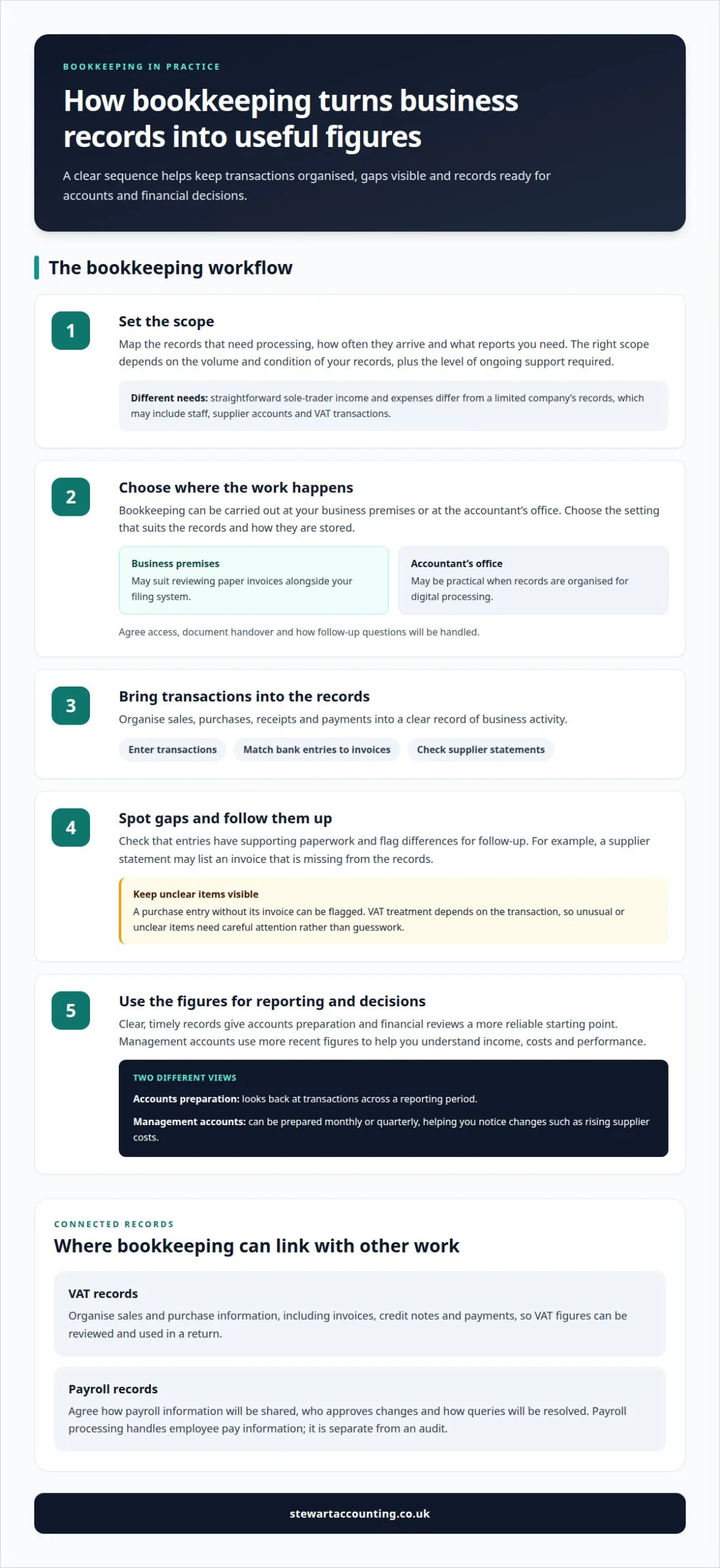
Accounts preparation looks back at transactions across a reporting period. Management accounts turn more recent figures into information that helps owners understand income, costs and performance. They can be prepared regularly, for example monthly or quarterly. A business might use monthly figures to spot rising supplier costs before they affect wider financial plans.
Account analysis puts the numbers in context. A bookkeeper or accountant can compare recorded income and spending, investigate unusual changes and flag incomplete records. This information supports financial management, such as planning supplier payments or reviewing whether a service remains profitable. Late or inaccurate bookkeeping can leave you making decisions from incomplete figures and increase the risk of errors flowing into accounts or tax reporting.
For sole traders, HM Revenue & Customs says records must be sufficient to complete a Self Assessment tax return each year. Timely, well-organised records also give an accountant clearer information for accounts preparation and financial reviews. Whether work happens on-site or at an accountant’s office, a consistent process for sharing records and resolving questions helps keep the figures useful.
Bookkeeping services in Tillicoultry
Bookkeeping brings sales, purchases, receipts and payments into an organised record of business activity. A service may include entering transactions, matching bank entries to invoices, checking supplier statements and flagging missing paperwork. For example, if a supplier statement lists an invoice that is absent from the records, the bookkeeper can identify the difference for follow-up. Clear records provide a more reliable starting point for accounts and financial decisions.
The scope should reflect how your business operates. A sole trader with straightforward income and expenses has different records from a limited company with staff, regular supplier accounts and VAT transactions. Start by mapping which records need processing, how often they arrive and what reports you need. This helps define the ongoing work and avoid unclear responsibilities.
Outsourced payroll can sit alongside bookkeeping when a business needs support processing pay information and maintaining payroll records. Depending on the arrangement and the business’s needs, a provider may handle the full payroll process or specific tasks. Before work begins, agree how payroll information will be shared, who approves changes and how queries will be resolved. For example, a change to an employee’s pay should be recorded and communicated through the agreed process.
Payroll records and audit work serve different purposes. Payroll processing handles employee pay information, while an audit is a separate examination of financial records and accounts. Bookkeeping can help keep supporting transactions organised, but it does not replace an auditor’s independent work. If an audit forms part of your reporting needs, clear records make it easier to trace an amount from an account entry to its supporting document.
VAT bookkeeping involves organising sales and purchase information so VAT figures can be reviewed and used in a return. Invoices, credit notes and payments all affect the records, so consistent categorisation matters. A bookkeeper can flag gaps, such as a purchase entry without its invoice, before figures are prepared for review. VAT treatment depends on the transaction, so unusual or unclear items need careful attention rather than guesswork.
The price depends on the records, transaction volume, frequency of processing and the tasks included, and is given after a quote request. A business with organised digital records may need a different level of work from one with backlogged paperwork or payroll support. To discuss the records and support your business needs, get in touch.
Practical knowledge matters because bookkeeping is more than data entry. A consistent process can connect invoices, bank activity and payroll records, while clear communication helps resolve missing details promptly. Ask how the work will be reviewed, how queries will be handled and what information you need to provide. These answers clarify the service’s scope and how it will fit your business routine.
Monthly bookkeeping reviews and advice
A monthly review helps you spot bookkeeping issues before they carry into later periods. The service includes 1.5 hours per month for reviewing accounting entries and reconciliations. That time can be used to examine recorded transactions, compare reconciliations with the underlying records and identify items needing clarification. For example, a bank entry without a matching record can be flagged for follow-up instead of remaining unexplained in the month’s figures.
Reconciliations connect recorded transactions with supporting information, such as bank activity or supplier records. A review can identify differences between those records and the bookkeeping entries. The reviewer can then note what needs investigation, such as a payment recorded against the wrong supplier or an invoice entered twice. Resolving these differences gives you a clearer view of what the records show for the period.
The service also includes 1.5 hours per month of bookkeeping advice. This gives you time to discuss questions arising from your records, such as how to organise recurring transactions or what information is needed to explain an unusual entry. In Scotland, a business might use that discussion to understand why a cost has changed between reporting periods. Advice can make bookkeeping information easier to use in day-to-day decisions.
A useful regular review follows a clear sequence. First, the reviewer considers the accounting entries and reconciliations for the period. Next, they identify differences or missing explanations. Then, time can be set aside to address the resulting bookkeeping questions. For example, if a customer payment does not match an invoice, the review flags the mismatch and the discussion can clarify what supporting detail is needed.
Regular attention can also create a consistent record of questions and follow-up. If the same type of transaction causes confusion across several periods, the pattern becomes easier to discuss and address. Each review can clarify how recurring entries should be recorded, rather than treating every period as a separate puzzle. An agreed approach supports clearer bookkeeping as transactions continue.
Reviews and advice serve different but connected purposes. Reviewing entries and reconciliations focuses on whether the records agree; advice helps you understand and manage the bookkeeping questions those checks uncover. The monthly allocation is 1.5 hours per month for review and 1.5 hours per month for advice. Clear records and specific questions help keep those two parts focused on the business’s actual transactions.
For a business in Tillicoultry, regular checks create an opportunity to clarify the figures. A review can bring an unexplained payment, duplicate entry or reconciliation difference to light. The follow-up discussion helps make the next bookkeeping step clear. This steady process supports informed financial management without letting questions build up across reporting periods.
Bookkeeping and record keeping
Give your bookkeeper the records that explain business income and spending. This usually means sales and purchase invoices, bank statements, receipts, credit notes and details of payments. For example, a receipt for a business purchase helps connect the bank transaction to its purpose. The exact documents depend on your business activity and the entries being recorded.
Useful records can include:
- Sales invoices and credit notes, showing amounts charged and adjustments.
- Purchase invoices and receipts, supporting recorded business costs.
- Bank statements and payment records, for matching money in and out.
- Supplier statements, which can help identify missing or unpaid invoices.
- Details of cash transactions, where the business receives or spends cash.
- Payroll information, if staff wages form part of the business records.
Keep each document linked to the transaction it supports. For example, if a bank statement shows a payment to a supplier, the matching invoice explains what it covered. If the amount differs, a credit note or payment detail may explain why. These links help the bookkeeper record transactions accurately and follow up on gaps.
According to HM Revenue & Customs, sole traders need records sufficient to complete their Self Assessment tax return each year. A sole trader should provide income and expense information that supports the figures in the return. Notes about unusual transactions, such as a customer refund, can also help ensure the entry is not mistaken for ordinary spending.
For a small business, a practical handover groups records by type and accounting period. The bookkeeper can then match each invoice or receipt with the relevant bank activity and identify missing supporting documents. For example, a purchase in the bank records without a receipt can be flagged for clarification. Clear labels for suppliers, customers and transaction dates also make follow-up questions easier to answer.
Paper and digital records can both form part of a handover. If you send scanned invoices, use readable files showing the supplier, date, amount and description. If you provide paper receipts, keep them in an order that follows the bank statement or transaction date. A consistent approach helps prevent duplicate entries, such as recording the same invoice from both an email and a paper copy.
Tell the bookkeeper about changes that affect your records, such as a new business bank account or a different way of collecting customer payments. A note explaining the change helps distinguish new transactions from errors. For a business in Tillicoultry, a complete handover gives the bookkeeper the evidence needed to record activity and identify questions while the details are easy to trace.
Can a local bookkeeper help with VAT returns, payroll, and making tax digital (MTD) for income tax?
Yes. A bookkeeper can organise transaction records and support VAT returns, payroll information and digital tax records. The support depends on your business’s needs. For example, sales invoices and purchase receipts help explain the figures used to prepare VAT information. A bookkeeper can also flag missing documents or entries that need clarification before records are used for reporting.
For VAT, the work can include recording sales and purchases, checking transaction details and organising information for a return. An invoice recorded without its supporting document may need follow-up before the figures are ready. Clear records also help distinguish a credit note from a new sale. Bookkeeping supports accurate reporting, while VAT treatment depends on the transaction and its circumstances.
Payroll support can help organise pay information and maintain records for each pay period. Under real-time information (RTI), UK employers generally need to report payroll information to HMRC on or before the date employees are paid. For example, if staff are paid on a set date, payroll information needs to be reported by that date. A bookkeeper can help process the information and keep related records organised.
making tax digital (MTD) for income tax involves digital records and quarterly updates for self-employed individuals and landlords with qualifying income over a threshold. A bookkeeper can help maintain digital records and organise income and expense entries for those updates. For example, recording a business expense with its supporting receipt helps keep the entry traceable. The records must still reflect the actual transaction.
These tasks are connected, but they are not interchangeable. Bookkeeping records the underlying transactions; a VAT return reports relevant VAT figures, while payroll reporting covers employee pay information. Digital income tax records serve a separate reporting process. Keeping these workstreams distinct helps prevent a supplier invoice, employee payment or customer sale from being treated as the wrong type of transaction.
When arranging support, agree which records will be processed and how information will be shared. A useful handover includes invoices, receipts, bank activity and the payroll details relevant to the work. If a record is missing, the bookkeeper can flag the gap for explanation. This makes it easier to address questions before figures are used for a return or report.
For bookkeeping support in Tillicoultry, bringing VAT, payroll and digital records into an organised process can reduce the administrative load. The appropriate tasks depend on your records and reporting needs, so define what you want help with first. If you need support with VAT reporting, discuss VAT return support and how it fits alongside your bookkeeping.
Stewart Accounting Services: Bookkeeping Services
Stewart Accounting Services can help when bookkeeping is taking time away from running your business. Its support can take routine record keeping off your hands and give you a clearer basis for financial decisions. You can also discuss Year-End Accounts or Self-Assessment Tax Returns if they fit your needs.
If you’re unsure where to start, consider which tasks take up the most time and what information you need from your records. This gives you a practical starting point for discussing the right level of support.
Contact Stewart Accounting Services to discuss bookkeeping support for your business.
Make your next bookkeeping decision with confidence
Before arranging bookkeeping support in Tillicoultry, decide which tasks you want to take off your hands and what information you need for business decisions. You might want regular transaction processing, help preparing for year end, or support organising your tax records. A clear picture of your priorities makes it easier to discuss a suitable scope of work and how you’ll share information.
Stewart Accounting Services offers Bookkeeping, Year-End Accounts and Self-Assessment Tax Returns. These services can support you at different points in your business’s financial year, from keeping records organised to preparing annual accounts and tax returns. Focus the conversation on the tasks that currently take up your time and the financial information you need to make confident decisions.
Good bookkeeping should support more than tidy records. It should help you make informed decisions and create more time, more money, more mind. Contact Stewart Accounting Services to discuss the support that would help you move forward.
Frequently Asked Questions
What does this cost?
Fees are fixed, agreed in advance and based on the work included in your arrangement. Before proceeding, clarify which tasks the fee covers, how additional work would be handled and what information the bookkeeper needs from you. Stewart Accounting Services never undertakes work without agreeing the fee in advance. This helps you understand the scope before work starts, with support shaped around your business and its records.
What does this involve?
The process can begin with a review of your current records and accounting setup. Stewart Accounting Services works with existing cloud accounting software and provides Xero implementation, training and support. For example, if you already use Xero, support can focus on helping you use the system effectively rather than starting from scratch. The agreed approach depends on your setup and the work you need covered.
Who is this for?
This support suits people who want help keeping business finances organised, including sole traders, partnerships, limited companies, landlords, contractors, freelancers and charities. A contractor might need records arranged around project income, while a landlord may want rental activity kept distinct. Start by identifying how your income is earned and which financial records you need to manage.
What bookkeeping support is available for businesses in Tillicoultry?
Support can be tailored to your records and accounting systems. Xero implementation and training can help you establish a workable digital process, while Dext integration supports receipt capture and invoice processing. Stewart Accounting Services also works with systems such as Excel and Sage. The right setup depends on how your transactions arrive and how you prefer to manage records.
Which bookkeepers serve Tillicoultry and nearby areas?
Stewart Accounting Services serves businesses across Central Scotland, including clients in Tillicoultry. Operating from offices in Alloa, Stirling and Falkirk, the firm also supports clients remotely across the UK. You can discuss bookkeeping locally by visiting an office or arrange support remotely, depending on what suits your business and how you prefer to share information.
Do bookkeepers serving Tillicoultry offer in-person, remote, or hybrid support?
Support can be arranged in person or remotely, or through a combination of both. Stewart Accounting Services offers a free initial consultation, either in person at an office in Alloa, Stirling or Falkirk, or remotely via email or video call. For example, you could begin with a remote discussion and arrange an office meeting if a face-to-face conversation better suits your needs.
How often should a small business use bookkeeping support?
Choose a routine that matches how often your business handles transactions and when you need information for decisions. A business with changing project activity may need more frequent attention than one with steady, predictable income. Review the arrangement when your operations change, such as taking on a new contract or adding a sales channel, so the support remains useful.
Recent Posts
18 Nov, 2026
18 Nov, 2026