

How Do You Verify Your Identity for Companies House?

Did you know that Companies House estimates between six and seven million individuals are now required to complete a formal identity check? If you’re a director or a Person with Significant Control (PSC), the clock is already ticking on these new regulations. It’s completely natural to feel a sense of anxiety about the GOV.UK One Login system or the pressure of managing yet another compliance task. You’ve likely spent years building your business, and the last thing you need is the threat of a £10,000 penalty or a public note of non-compliance on your record.
The good news is that while the process is mandatory, it doesn’t have to be a source of constant stress. To verify your identity for companies house, you can use several straightforward routes, including the free digital app or working with a professional partner. This guide explains the entire verification process in clear, actionable steps, ensuring your company remains fully compliant throughout 2026. We’ll look at the transition deadlines for existing directors, the specific documents you’ll need, and how you can delegate these administrative burdens to regain your professional liberty.
Key Takeaways
- Understand why the Economic Crime and Corporate Transparency Act now makes identity verification mandatory for every UK director and Person with Significant Control.
- Discover the step-by-step process to verify your identity for companies house using either the GOV.UK One Login digital route or an Authorised Corporate Service Provider.
- Learn about the critical 12-month transition period for existing directors and how to align your verification with your next confirmation statement deadline.
- Identify the serious legal and financial risks of non-compliance, including potential criminal prosecution and significant financial penalties.
- Explore how delegating the verification process to a professional firm can remove administrative burdens and ensure your business remains in good standing.
What is the New Companies House Identity Verification Requirement?
The landscape of UK business compliance has shifted significantly. Following the introduction of the Economic Crime and Corporate Transparency Act (ECCTA), Companies House has introduced a mandatory identity verification (IDV) process. This isn’t just another administrative hurdle; it’s a fundamental change designed to ensure that everyone setting up or running a UK company is exactly who they claim to be. Identity verification is a digital or professional check against official government records to verify a person’s identity. If you’re a director, a Person with Significant Control (PSC), or someone who files on behalf of a company, you’ll need to verify your identity for companies house to remain compliant.
This requirement applies to both new and existing appointments. For those managing limited companies, this means integrating verification into your standard corporate governance. While it might feel like an added burden, the goal is to create a more secure environment for legitimate business owners across Scotland and the wider UK.
Why the Law Changed in 2026
The transition to a fully verified register in 2026 is the result of a long-term strategy to modernise the UK’s corporate framework. The government’s primary objective is to improve the accuracy of the public register to prevent fraud and identity theft. By moving away from outdated paper-based filings and embracing a secure, ‘digital-first’ approach, the authorities can flag suspicious activity much faster. For businesses in local communities like Alloa, Stirling, and Falkirk, this means a more transparent business environment where you can be certain about the identity of your competitors, suppliers, and partners.
The Core Benefits of a Verified Register
Although the change is mandatory, it brings several practical benefits that can actually reduce your long-term professional anxiety. When you verify your identity for companies house, you’re investing in the integrity of your own professional record. Key benefits include:
- Enhanced Personal Protection: It becomes much harder for criminals to hijack your identity or appoint you as a director of a fraudulent company without your knowledge.
- Increased Stakeholder Trust: Lenders, suppliers, and customers will have greater confidence when viewing your company filings, knowing they’ve been verified against government records.
- Address Security: There’s a significant reduction in the misuse of registered office addresses, protecting your business’s physical and digital reputation.
By framing these changes as part of a wider health check for your year end accounts and corporate secretarial duties, you can ensure your business remains a dependable entity in the eyes of the law.
Who is Required to Verify Their Identity Under the New Law?
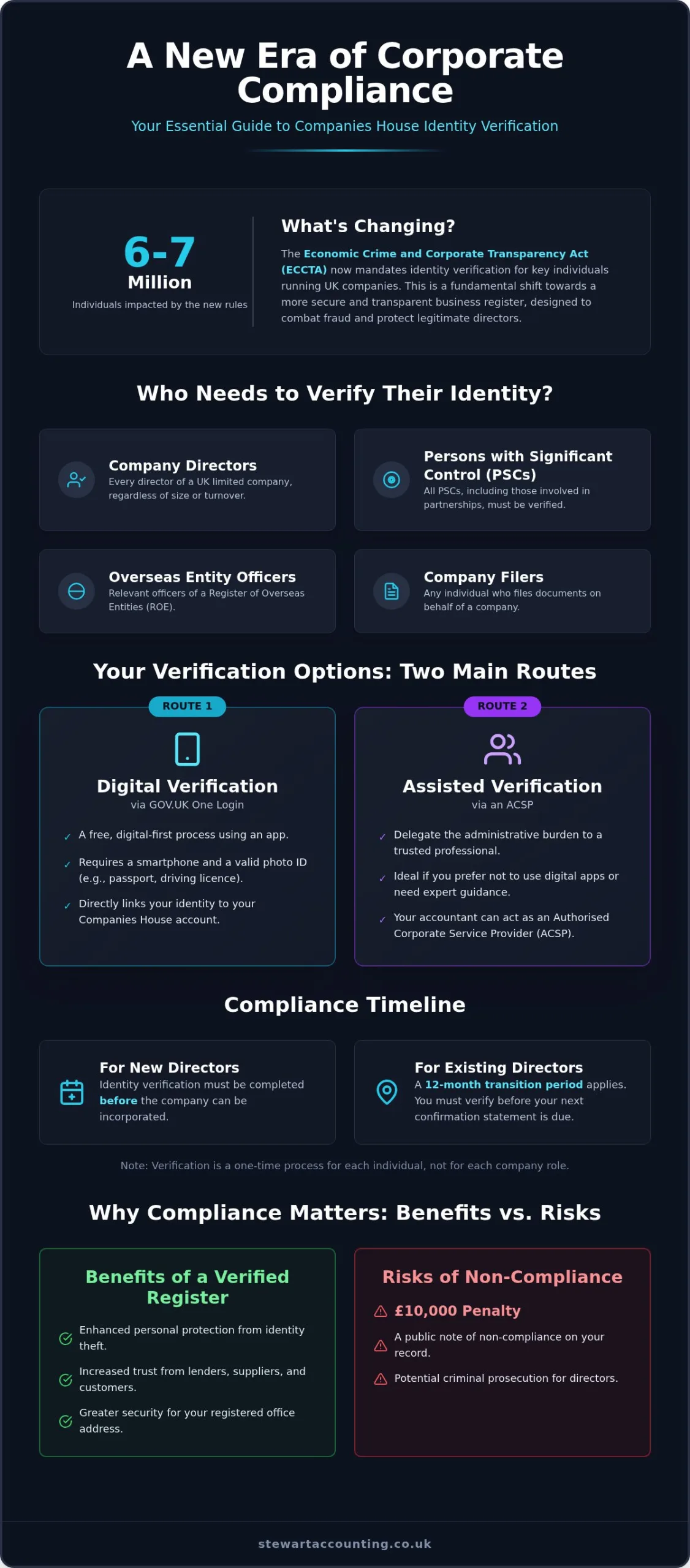
The scope of the new legislation is broad, touching almost every level of corporate structure. According to the official government guidance, the requirement to verify your identity for companies house applies to several key groups of individuals. It’s estimated that 6 to 7 million people will be affected by these changes. Whether you’re a local business owner in Stirling or a director of a larger firm in Falkirk, understanding your specific role is the first step toward compliance.
This mandate includes:
- Every director of a UK limited company, regardless of the size or turnover of the business.
- All People with Significant Control (PSCs), including those involved in partnerships.
- Relevant officers of a Register of Overseas Entities.
- Any individual who intends to file documents with Companies House on behalf of a company, such as an agent or employee.
Requirements for New vs. Existing Directors
The timing of your verification depends on your current status. If you’re starting a new venture, new directors must verify their identity before the company can be incorporated. For existing directors appointed before November 18, 2025, there’s a 12-month transition period. You’ll need to complete the process before your company’s next confirmation statement is filed. One reassuring aspect is that this is a one-time process. Once your identity is verified, the status attaches to you as an individual. You won’t need to repeat the check for every company you direct; your unique Companies House personal code will follow you throughout your professional career.
How it Affects People with Significant Control (PSCs)
PSCs face their own set of strict deadlines. Generally, a PSC must verify within 14 days of being registered. For those already in place, the requirement aligns with the company’s first confirmation statement following the law change. Failing to meet these requirements is a criminal offence. It can lead to financial penalties, with potential fines reaching £10,000, or even criminal prosecution. Managing these obligations alongside limited company accounting services can feel overwhelming. If you’re concerned about missing a deadline, speaking with a professional advisor can help you navigate these changes smoothly and avoid unnecessary penalties.
How to Complete Your Identity Verification via GOV.UK One Login
For most business owners, the GOV.UK One Login system is the primary gateway to meeting these new legal requirements. It’s a secure, centralised digital service designed to streamline how you interact with government departments. Digital-first verification is the standard route for most UK residents. While you might already have a personal tax account for self-assessment, it’s important to understand that a GOV.UK One Login is a separate account entirely. This distinction ensures your corporate identity is managed through a dedicated, secure channel.
The system is remarkably efficient, often taking only a few minutes to complete if you have the right tools to hand. By using this method to verify your identity for companies house, you’re choosing a route that’s available 24/7, allowing you to manage your compliance at a time that suits your schedule. If you’re unsure about the technical side, the official government guidance provides a comprehensive overview of the digital infrastructure supporting this change.
The Step-by-Step Digital Process
To begin, you’ll need a smartphone with a working camera and a stable internet connection. Follow these steps to ensure a smooth experience:
- Download the App: Search for the “GOV.UK ID Check” app on your smartphone’s app store. This is the tool that handles the biometric scanning.
- Scan Your ID: Use the app to take a clear photo of your identification document. The app will guide you on how to capture the image correctly to avoid glare or blur.
- Liveness Check: You’ll be asked to complete a face scan. This “liveness” check ensures you’re a real person and matches your face to the photo on your ID.
- Final Link: Once the app confirms your identity, you’ll need to link this verified status to your Companies House account to generate your unique personal code.
What Documents Are Accepted?
The success of your verification depends on having the correct documentation ready. The system currently accepts a range of biometric and non-biometric IDs to ensure accessibility for as many people as possible. When you verify your identity for companies house, you can use:
- Biometric Passports: Both UK and international passports with the biometric symbol are the most common choice.
- UK Photo Driving Licences: A valid provisional or full photocard licence issued in the UK.
- Biometric Residence Permits (BRP): Essential for non-UK nationals residing in the country.
If you don’t have access to a smartphone or a biometric document, don’t let that cause you stress. Alternative routes are available, including in-person checks at local Post Offices. This flexibility ensures that every director, regardless of their technical setup, can remain compliant with the law.
How an Accountant Can Verify Your Identity as an ACSP
While the digital app is a convenient tool for many, it isn’t the only way to meet your legal obligations. An Authorised Corporate Service Provider (ACSP) is a professional body, such as a firm of Chartered Accountants, that is registered with Companies House to perform these checks on your behalf. Stewart Accounting Services is a fully registered ACSP. This means we have the authority to facilitate your identity verification directly, bypassing the need for you to navigate government software alone. This professional route is often preferred by directors who value the reassurance of a face-to-face check or those who have more complex verification needs that don’t fit the standard digital mould.
Choosing an accountant to manage this process ensures that your compliance is handled with the highest level of expertise. It’s a pragmatic solution for busy business owners who want to get things right the first time. By allowing us to verify your identity for companies house, you’re not just completing a task; you’re ensuring your professional standing is protected by experts who understand the full scope of the Economic Crime and Corporate Transparency Act.
The Benefits of Delegating Verification
Delegating this task is about more than just administrative ease. It’s a way of restoring your mental well-being by removing a technical burden from your daily to-do list. When we handle your company formation and secretarial services, we ensure that your verification is correctly linked to all your directorships at once. This prevents the confusion of managing multiple personal codes or disparate filings across different entities. Many of our clients choose to combine IDV with their year end accounts preparation for a completely seamless experience. This integrated approach ensures your business remains in good standing without you having to worry about missing a deadline.
How Stewart Accounting Services Helps
As your dependable regional expert with offices in Alloa, Stirling, and Falkirk, we understand the specific challenges faced by Scottish SMEs. We don’t just provide a service; we act as a reliable partner to ensure your long-term objectives are met without unnecessary administrative stress. We can verify your identity for companies house as part of our initial onboarding process or during your annual compliance review. This approach is designed to save you time and provide total peace of mind. If you’re ready to hand over the responsibility of these new regulations to a trusted professional, please reach out via our dedicated support page to get started.
The Risks of Non-Compliance and How to Protect Your Company
Ignoring the requirement to verify your identity for companies house isn’t just a minor administrative oversight; it carries heavy legal weight. Under the Economic Crime and Corporate Transparency Act, failing to complete this process is a criminal offence. This can lead to personal prosecution or significant financial penalties, with fines potentially reaching £10,000. For many directors, the most immediate threat is the disruption to their company’s ability to operate. If you aren’t verified, Companies House can reject your filings, including your annual confirmation statement. This often triggers a chain reaction that can lead to your company being struck off the register entirely.
There’s also a matter of public reputation. Companies House now has the power to mark an individual’s status as ‘unverified’ on the public register. This tag is visible to anyone searching for your business, including competitors, investors, and clients. Maintaining your professional standing is vital, much like ensuring you have robust self-assessment tax return support to keep your personal affairs in order. A transparent record builds trust, while a non-compliant one can cause lasting damage to your professional liberty.
Impact on Business Operations
The consequences of non-compliance extend far beyond the courtroom. Modern banks are increasingly strict about their Know Your Customer (KYC) protocols. If the public register shows you haven’t verified your identity, you may face extreme difficulty opening or maintaining business bank accounts. Lenders and suppliers also use this data to assess risk. An unverified status can negatively impact your business credit score, making it nearly impossible to secure funding or favourable credit terms. In severe cases of persistent non-compliance, the Insolvency Service has the power to seek director disqualification. With the average ban length currently sitting at eight years, the risk to your career is substantial.
Your 2026 Compliance Checklist
To protect your business and restore your peace of mind, follow these straightforward steps to ensure you meet the 2026 deadlines:
- Check Your Status: Log in to the Companies House portal to see if your current directorships or PSC roles are flagged for verification.
- Review the Fees: Be aware that digital filing fees increased on February 1, 2026, with the confirmation statement now costing £50.
- Gather Documentation: Ensure your biometric passport or UK driving licence is valid and ready for scanning.
- Verify Early: Don’t wait for your next filing deadline. To verify your identity for companies house now removes the time pressure and prevents last-minute technical hurdles.
If the digital process feels daunting or you’re managing multiple entities, our team is here to help. You can book a consultation with our Scottish team to delegate your compliance tasks and ensure your business remains fully protected throughout 2026.
Secure Your Professional Future in 2026
The shift toward a verified register is a significant step in modernising UK business. By now, you should have a clearer understanding of the mandatory deadlines and the specific steps required to verify your identity for companies house. Whether you’re a new director navigating your first incorporation or an existing PSC approaching a confirmation statement deadline, acting early is the best way to avoid the stress of potential penalties or operational disruptions.
As Chartered Accountants based in Alloa, Stirling, and Falkirk, we’ve spent years helping Scottish SMEs stay ahead of complex regulatory changes. Our status as an Authorised Corporate Service Provider (ACSP) allows us to take the entire burden of identity verification off your shoulders, integrating it into your wider annual compliance strategy. We’re here to help you regain your professional liberty by managing these administrative hurdles with precision and care. Secure your company’s compliance; contact Stewart Accounting Services today to ensure your business remains in good standing. You’ve built a great company, and we’re here to help you protect it.
Frequently Asked Questions
Is identity verification for Companies House mandatory?
Yes, identity verification is now a mandatory legal requirement for all directors, Persons with Significant Control (PSCs), and anyone filing on behalf of a company. This regulation was introduced by the Economic Crime and Corporate Transparency Act 2023 to combat fraud and economic crime. Failing to comply is a criminal offence. New directors must verify before appointment, while existing directors have a 12-month transition period from November 18, 2025.
What documents do I need to verify my identity?
To verify your identity for companies house, you’ll primarily need a valid form of photo identification. The most common documents accepted include biometric passports (UK or international), UK photo driving licences, and Biometric Residence Permits (BRP). If you’re using the GOV.UK ID Check app, ensure your document has the biometric symbol. For those without these documents, alternative routes such as in-person checks at a Post Office or using an ACSP are available.
Can my accountant verify my identity for me?
Yes, your accountant can facilitate this process if they’re registered as an Authorised Corporate Service Provider (ACSP). Stewart Accounting Services is a registered ACSP and can verify identities for our clients directly. This is often a more reassuring route for directors who prefer professional guidance or face-to-face verification. We can integrate this check into your annual compliance or year-end accounts preparation, removing the need for you to navigate the digital app alone.
How long does the identity verification process take?
The digital verification process via the GOV.UK ID Check app is designed to be completed in just a few minutes. Once you have your documents ready, the app guides you through scanning your ID and performing a liveness face scan. If you choose to use an ACSP like Stewart Accounting Services, the timeframe depends on the appointment, but the actual check is equally swift. Once verified, your status is updated almost immediately on the register.
What happens if I don’t verify my identity by the deadline?
Failing to meet the verification deadline carries serious consequences. It’s a criminal offence that can result in prosecution or financial penalties of up to £10,000. Additionally, Companies House will reject your filings, such as the confirmation statement, and add a public note of non-compliance to your company record. In severe cases, directors risk disqualification or having their company struck off the register. Acting early ensures your business operations remain smooth and protected.
Do I need to verify my identity every time I start a new company?
No, identity verification is a one-time process for each individual. Once you’ve successfully verified your identity, the status attaches to you personally rather than to a specific company. You’ll receive a unique Companies House personal code that you’ll use for all current and future roles across different entities. This system is designed to simplify long-term compliance, ensuring you don’t have to repeat the same administrative tasks for every new business venture.
Is there a fee for verifying my identity with Companies House?
Verifying your identity directly through the GOV.UK One Login service is free of charge. However, if you choose to use an Authorised Corporate Service Provider (ACSP) to manage the process for you, they’ll charge a professional fee for their services. It’s also important to remember that Companies House increased their general filing fees on February 1, 2026. For example, the digital confirmation statement fee rose to £50 and incorporation to £100.
What if I don’t have a smartphone or biometric ID?
You can still comply even if you don’t have a smartphone or a biometric document. Companies House provides alternative routes to ensure accessibility for everyone. You can choose to have your identity checked in person at a local Post Office or use a professional service like an ACSP. Stewart Accounting Services can assist directors in these situations, providing a pragmatic and supportive way to verify your identity for companies house without relying on the digital app.