

Accountant for Self Assessment: Complete UK Guide 2026
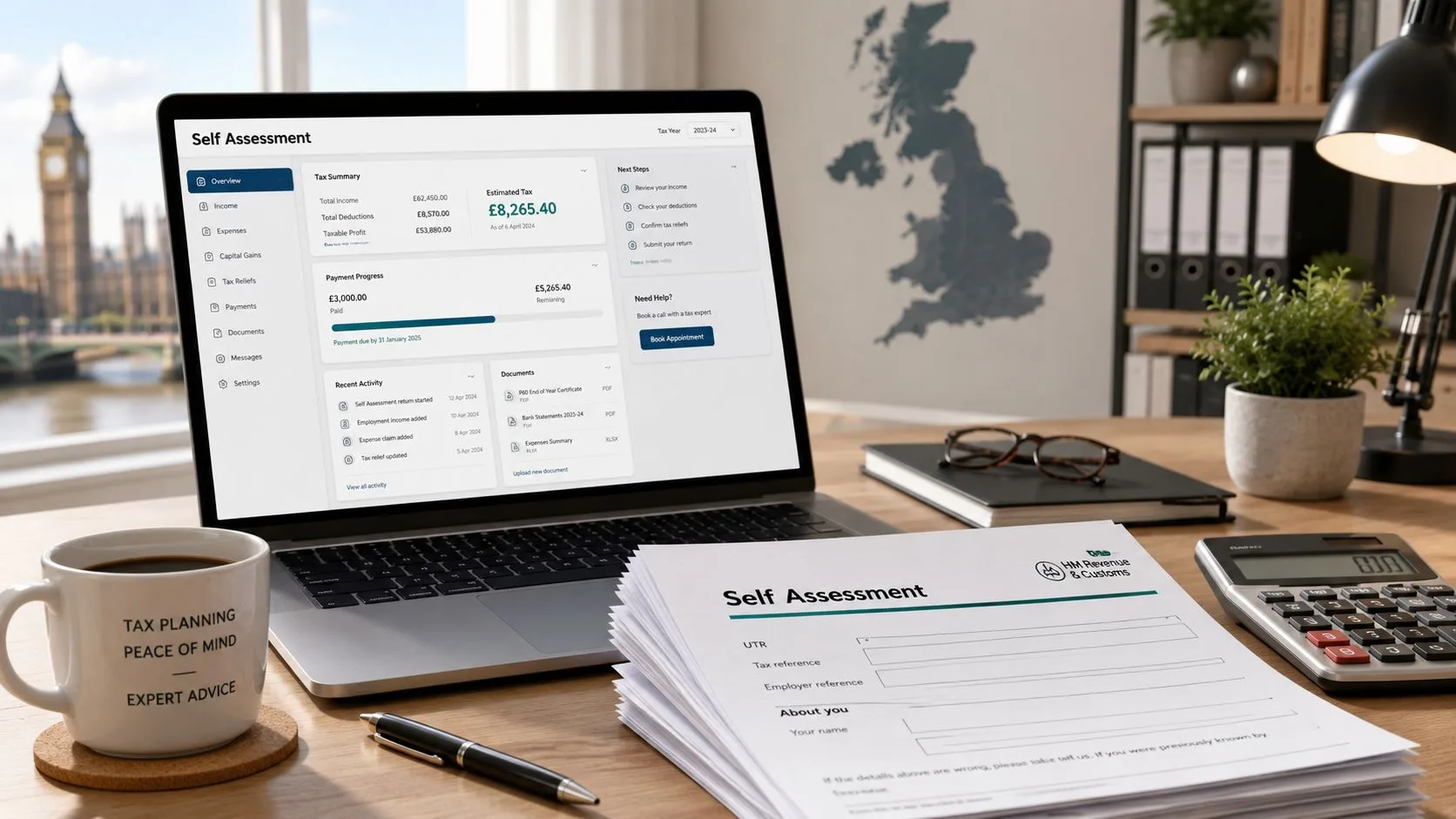
HMRC expected 12,029,168 Self Assessment returns for the 2026 filing cycle, but only 11,489,825 had arrived by 31 January 2026. Of those, 11,173,825 were filed online, representing 97.25%, while around 316,000 were paper returns, according to HMRC's filing update. Self Assessment isn't a minor annual form. It's a large, digital, deadline-controlled compliance system.
That's why the right accountant for Self Assessment does more than type figures into an online return. They control deadlines, test the evidence behind your numbers, identify relevant reliefs, plan the payment, and help you move from annual filing to the year-round record keeping required by Making Tax Digital for Income Tax.
Why Self Assessment Demands Professional Attention
Self Assessment operates as a large, digital, deadline-controlled compliance system. In the 2026 cycle, HMRC reported that roughly one million customers missed the deadline, even though the overwhelming majority filed digitally, according to its Self Assessment deadline announcement. That scale creates practical risk for taxpayers managing trading income, property, employment, or family responsibilities alongside their records.
The dates are fixed. Paper returns are due by 31 October, while online returns and the tax usually due with them must be dealt with by 31 January, under HMRC's Self Assessment guidance. Missing the online deadline can trigger an immediate cost, even if the return is only slightly late.
The penalty structure is designed to escalate
Late filing starts with an immediate £100 penalty. After three months, daily penalties of £10 can apply for up to £900, followed by further charges of 5% of tax due at six and twelve months. Late-payment penalties and interest may apply separately. The full rules are set out in the Self Assessment tax penalties guidance.
Practical rule: Treat 31 January as the final safety point, not as the date you start gathering records.
Accuracy carries its own risk. HMRC estimates that the Self Assessment tax gap was 12.5% of theoretical liability, worth £8.7 billion in 2023/24, as recorded in its tax gap summary. The figure does not mean every incorrect return is deliberate. It does show how easily taxpayers omit income, misclassify expenses, or apply tax rules incorrectly.
An accountant manages that exposure by creating an evidence trail, challenging unclear figures, and checking that the return matches the underlying activity. You are paying for controlled compliance and informed decisions, rather than simple form completion.
That distinction matters more as Making Tax Digital for Income Tax shifts Self Assessment towards year-round record keeping. Taxpayers who struggle with deadlines, have several income sources, or cannot maintain accurate records should get help before the system demands more frequent attention.
What an Accountant Actually Does for Your Self Assessment
A competent accountant starts before the tax return opens. They establish what income you received, which records support it, and which parts of your financial life need to be reported. That initial classification prevents the common mistake of treating every receipt, bank transaction, or expense as if it belonged in the same box.

The workflow behind a reliable return
For a sole trader with consultancy fees, employment income, and occasional investment income, the accountant separates each source, reconciles sales to bank records, reviews business costs, and checks whether personal receipts have been mixed into the trading account. They'll also ask questions that a basic filing service may never raise, such as whether equipment was bought for business use or whether a payment relates to a previous accounting period.
For a landlord, the work involves more than adding up rent. The accountant reviews property income and expenditure by property, distinguishes repairs from improvements, checks finance costs under the relevant rules, and keeps supporting paperwork organised. Multiple properties make this process more valuable because a mistake repeated across several records can distort the whole return.
A contractor may need advice on the relationship between personal income, a limited company, dividends, and employment status. Where IR35 is relevant, the accountant should understand the engagement structure and coordinate the Self Assessment position with the company's payroll and accounts. They shouldn't promise an outcome without reviewing the contracts and working arrangements.
What you're really buying
A full service normally includes:
- Record review: Checking income statements, invoices, bank transactions, rental schedules, pension information, and prior returns.
- Expense analysis: Separating allowable business costs from private or capital items, then retaining evidence for the treatment taken.
- Tax computation: Preparing the return, calculating the liability, and identifying whether payments on account affect cashflow.
- Submission control: Filing through HMRC-approved software and keeping confirmation of submission.
- Payment planning: Explaining what's due, when it's due, and how much cash you should reserve.
- HMRC support: Helping respond to questions, correction requests, or enquiries using the records behind the filing.
The difference between cheap form-filling and professional advice becomes obvious when your circumstances change. A good accountant asks what happened during the year, not only what numbers you've typed into a spreadsheet.
Who Needs an Accountant and Who Can Manage Alone
A landlord with two properties, one refinancing arrangement, and improvement work faces a different decision from a landlord with one property and a simple rent schedule. Both may be able to complete a tax return, but the first must decide how to classify finance costs, property expenditure, ownership changes, and supporting records. Hiring an accountant is sensible when the cost of an error or an incomplete process outweighs the fee.
A sole trader with one business activity, one bank account, and organised receipts may handle the annual return without ongoing support. That approach works only if the records clearly separate business and private spending, every expense has evidence, and the trader understands what must be reported. An annual review can provide a useful middle ground where full bookkeeping support is unnecessary.
Professional help becomes the better choice when any of these apply:
- You combine self-employment with employment, pensions, investments, or other untaxed income.
- Your business has several activities, mixed transactions, or records spread across personal and business accounts.
- You own multiple rental properties, have refinanced, completed improvements, or changed ownership arrangements.
- You are a company director reporting dividends, benefits, or changing remuneration alongside personal income.
- You have IR35 questions, several concurrent engagements, a capital gains event, or a complex partnership allocation.
- You cannot confidently explain the figures in the return or produce the records supporting them.
These cases involve more than entering figures into an online form. The treatment of one item can affect other parts of the return, the tax calculation, and the records you need to retain. Use an accountant who understands the relevant area, especially for property, contracting, company director income, or partnership matters.
DIY filing remains reasonable for a taxpayer with one straightforward income source and clear records. Check the reporting requirements before choosing that route, then keep invoices, statements, rental information, and other evidence in an accessible system. An online return may feel simple while the underlying tax treatment is not.
MTD for Income Tax makes this decision more immediate. Digital records, regular categorisation, compatible software, and recurring reporting will require attention throughout the year. Someone who already struggles to reconcile transactions should arrange support before mandatory reporting begins, rather than waiting for the new process to expose weak records.
A landlord with one property can still choose an accountant for system setup and periodic checks. A disciplined sole trader may need only an annual review. The right question is whether you can maintain accurate records continuously and defend each figure, not whether you can press submit on the return.
How Making Tax Digital Changes Everything in 2026
Self Assessment is shifting from an annual filing exercise to a year-round compliance process under MTD rules. HMRC's MTD eligibility guidance states that the first mandatory wave begins on 6 April 2026 for qualifying income above £50,000, followed by 6 April 2027 for qualifying income above £30,000. The rules affect sole traders and landlords registered for Self Assessment.
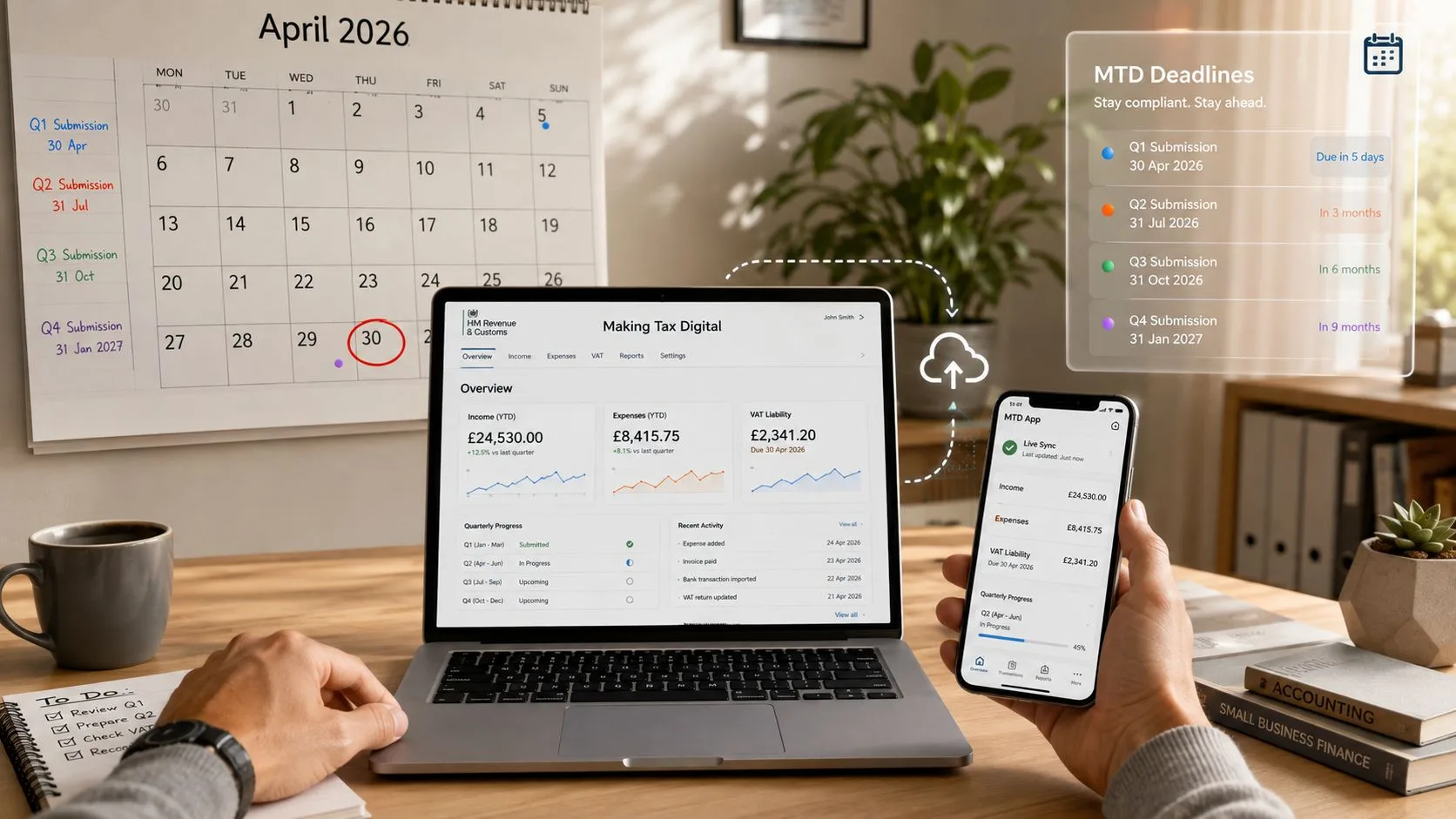
You will need compatible software, digital records, regular transaction categorisation, and recurring submissions during the year. The annual tax return remains, but it will no longer be the only point at which your figures receive attention. Your records must stay accurate throughout the year.
Your accountant becomes a systems adviser
For a sole trader, support may include connecting a business bank account to Xero, reviewing the bank feed, attaching receipts, and reconciling transactions promptly. For a landlord, it may involve separate digital records for rental activities, a consistent method for recording property costs, and a timetable for checking income before reporting dates.
Your accountant should help you decide:
- Which software fits: It must support the required digital records and submissions.
- Who maintains the records: You may enter transactions while the accountant reviews and reconciles them.
- How often reviews happen: Regular checks identify missing records before year-end.
- How forecasts are updated: Current figures should guide tax reserves and cashflow decisions.
HMRC's MTD framework uses penalty points for late submissions. A £200 penalty applies only after the relevant points threshold is reached. The government's MTD penalty reform guidance also describes percentage-based late-payment charges that escalate by stage and can accrue daily from day 31.
The readiness issue is practical. Many taxpayers will need help selecting software, establishing routines, and checking records, not merely calculating tax.
For a concise rollout explanation, read this guide to the HMRC MTD Income Tax changes starting in April 2026.
This video provides another visual introduction before you speak to an adviser:
Understanding Self Assessment Accountant Pricing
Accountants usually price Self Assessment work in one of three ways. A fixed fee covers an agreed return and defined scope. An hourly arrangement charges for time spent, which may suit irregular advisory work but gives you less certainty. An annual package combines bookkeeping, tax preparation, software support, and review meetings.
The cheapest quote only makes sense if the scope matches your needs. A return prepared from a clean spreadsheet costs less to handle than one requiring bank reconstruction, missing receipts, property schedules, or several years of corrections. The number and type of income sources also matter.
What changes the fee
A basic employee-plus-side-income return may require limited preparation. A sole trader with sales records, expense evidence, and one clear activity needs more work. A landlord with several properties, finance costs, ownership questions, or transactions requiring specialist treatment needs a broader engagement.
Ask whether the fee includes:
- A records checklist: You should know what the accountant needs and when.
- Expense and relief review: Confirm that the service includes questions about relevant claims, not just data entry.
- Payment-on-account discussion: The accountant should explain the amount due and the timing.
- HMRC communication: Clarify whether correspondence and enquiries are included or billed separately.
- MTD preparation: If you're likely to fall within the rollout, ask whether software setup and regular reviews are available.
Market pricing varies significantly, so don't rely on a single advertised figure. Request a written quote based on your actual circumstances, and ask what would trigger an extra charge.
The cost-benefit calculation isn't limited to tax saved. A professional may identify legitimate reliefs, prevent an avoidable penalty, reduce time spent reconstructing records, and help you reserve cash for the liability. They can't guarantee a tax reduction, and no reputable accountant should sell you one. They should be able to explain the work, the assumptions, and the risks the fee addresses.
Choosing the Right Accountant for Your Tax Return
Start with competence, not proximity. Look for a qualified professional with experience in your taxpayer category, whether that's sole-trader accounts, property income, partnerships, contractors, or director tax returns. Membership of a recognised body such as ICAEW, ACCA, or AAT gives you a useful starting point, although you should still check the firm's relevant experience and engagement terms.
Use this selection checklist
-
Describe your circumstances before requesting a quote. State your income sources, property position, bookkeeping quality, previous filing history, and any HMRC correspondence. A firm that asks good questions before pricing is more likely to understand the work.
-
Test the technology. Ask whether the firm supports Xero or another suitable cloud platform, how documents are shared, and whether you'll have access to records throughout the year. Software should reduce duplication, not create another administrative burden.
-
Clarify communication. Find out who handles routine questions, how urgent issues are escalated, and when the accountant begins preparing the return. “We'll contact you near the deadline” isn't a compliance process.
-
Confirm the boundaries. The engagement letter should explain what the fee covers, how amendments are charged, and whether HMRC enquiries, bookkeeping, MTD submissions, and tax planning sit inside the package.
-
Choose the relationship you'll use. Central Scotland clients may value face-to-face meetings in Alloa, Stirling, or Falkirk. Others may prefer a fully remote firm with secure portals and video calls. Neither model is automatically better. Responsiveness and technical fit matter more than the office address.
For firms improving their online presence while assessing accountancy providers, this guide by DigiVisi Ltd offers useful context on how accounting practices communicate their services digitally.
You can also use this practical guide on how to choose an accountant to structure your questions.
Stewart Accounting Services is one option for sole traders, partnerships, contractors, landlords, and SMEs. Its services include Self Assessment support, cloud-based tools such as Xero, bookkeeping, tax, and deadline management, with remote and face-to-face support available across Central Scotland and the wider UK.
Walk away from any firm that gives a vague price, can't explain its process, avoids questions about MTD, or takes days to answer a basic pre-engagement query. Poor communication before appointment rarely improves after it.
Your Next Steps Before the Deadline
Prepare before contacting an accountant. Gather your income records, business bank information, expense receipts, property schedules, pension details, previous returns, and any HMRC letters. Write down the questions you're worried about, especially if you have mixed income, several properties, dividends, or possible capital gains.
If you're considering filing alone, ask yourself whether you can identify every income source, support every expense, meet the filing date, and maintain digital records as MTD develops. If any answer is uncertain, book a review rather than waiting until the deadline is close.
Paper returns are due by 31 October, online returns by 31 January, and tax is usually payable by 31 January, according to HMRC's penalties information. MTD's first mandatory wave begins on 6 April 2026 for qualifying income above £50,000, with the next threshold applying from 6 April 2027, according to HMRC's MTD guidance.
Self Assessment is becoming a year-round control process. Contact a qualified accountant now, share your records, ask for a written scope and fee, and agree how your digital bookkeeping and future submissions will be managed before the next deadline arrives.
If you're a sole trader, landlord, contractor, partner, or company director in Central Scotland or elsewhere in the UK, contact Stewart Accounting Services to discuss your Self Assessment position, MTD readiness, records, and filing requirements. Bring your latest income and expense information, and ask for a clear plan before you commit to a service.
Recent Posts
04 Oct, 2026
04 Oct, 2026
04 Oct, 2026
04 Oct, 2026