

What Is Self Assessment Tax Return UK: A Practical Guide
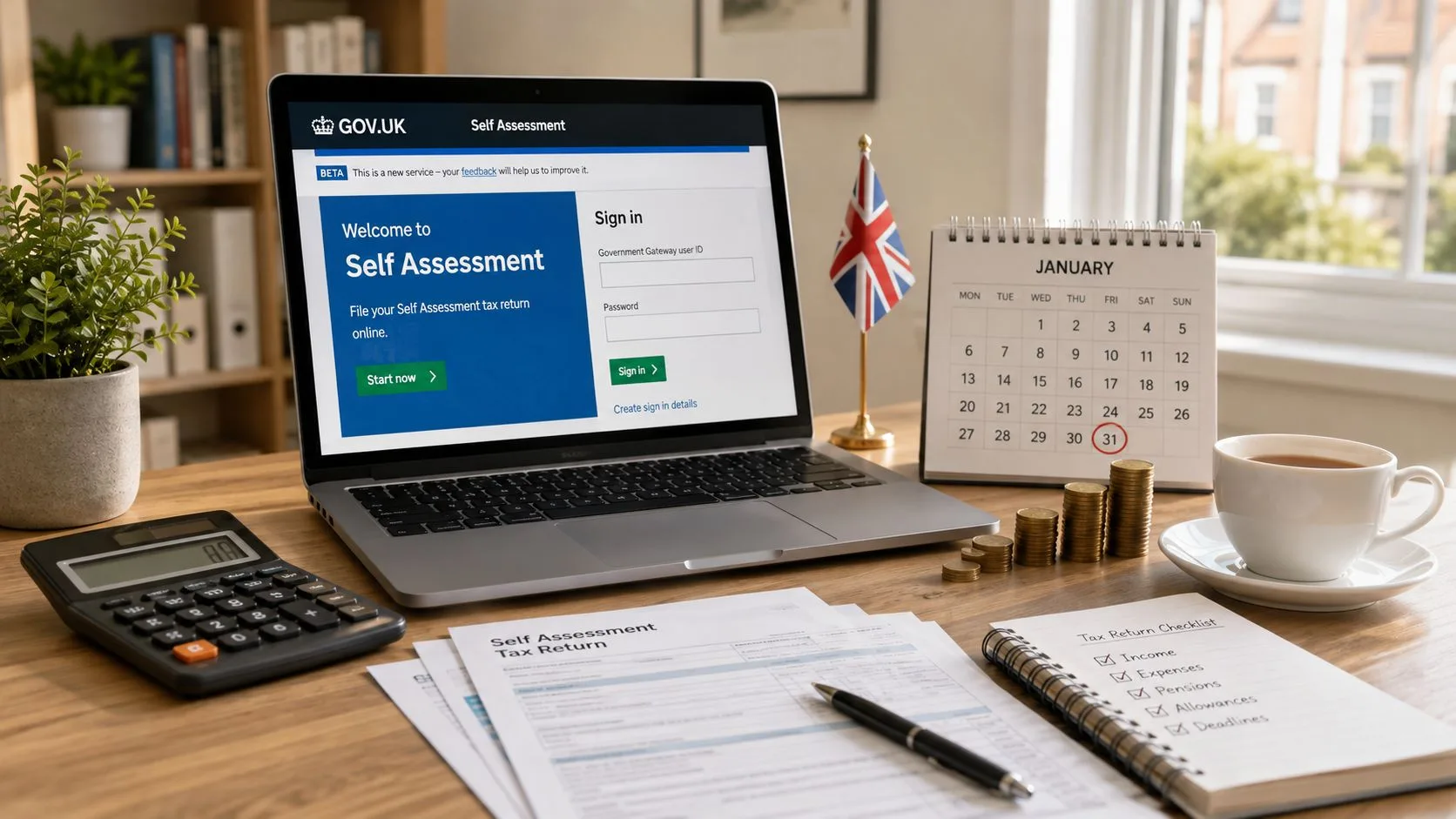
Self Assessment is HMRC's system for reporting income that PAYE doesn't already cover, with UK taxpayers filing online from 6 April after the tax year ends on 5 April and paying by 31 January. You may need to file if you're self-employed, a landlord, a company director, a partner, or you receive other untaxed income or gains.
You may have arrived here after starting a side business, renting out a spare property, receiving dividends, or discovering that your employer's PAYE code doesn't cover everything you earn. The confusing part isn't usually the form itself. It's knowing whether you need to register, which deadline applies, and why submitting a return and paying the bill are separate jobs.
The UK tax year runs from 6 April to 5 April, not from January to December. That single difference causes many first-time filers to look at the wrong period or assume that the January deadline relates to the calendar year. The safest approach is to identify the income that PAYE hasn't dealt with, register at the right time, keep supporting records, and build the filing and payment dates into your routine.
What Self Assessment Actually Means
Self Assessment is HMRC's system for individuals to report income and gains that haven't been taxed automatically, then calculate and settle the Income Tax due. PAYE normally deals with tax deducted from employment income, but it doesn't automatically collect every type of income a person may receive during the tax year. Self Assessment fills that reporting gap.
A return brings together the relevant figures for the tax year, such as business income, rental income, dividends, savings income, foreign income, or chargeable gains. You then claim relevant allowances and reliefs, declare tax already deducted, and arrive at the amount payable. The calculation is based on what you report, so accurate records matter as much as pressing the final submission button.
Self Assessment and PAYE are different
PAYE is a deduction system operated through an employer or pension provider. Self Assessment is a declaration and calculation system operated by the individual, although an accountant or authorised agent can prepare and submit the return.
A limited company's Corporation Tax return is separate from its director's personal Self Assessment return. A director may therefore deal with PAYE through salary, company-level Corporation Tax through the business, and Self Assessment for personal income that isn't fully dealt with elsewhere.
Practical rule: Filing the return and paying the resulting tax are separate responsibilities. A submitted return doesn't settle the bill automatically.
The practical questions are straightforward once separated: Do you need to file? When must you register? Which filing deadline applies? How much tax is due? What records support the figures? The rest of the process follows from those answers.
Who Has to File a Self Assessment Return
The need to file depends on the income or gains you receive, not only on whether you call yourself self-employed. HMRC's Self Assessment registration guidance says new people who need to file for the 2025 to 2026 tax year must register by 5 October 2026 if they haven't filed before, or didn't need to file for the previous tax year.
Use this comparison to see where you may fit:
| Category | Trigger condition | Example |
|---|---|---|
| Sole trader | Trading income above the £1,000 trading allowance threshold | A plumber starts working independently in June and receives more than the threshold from customers during the tax year. |
| Landlord | Rental income over £1,000 a year, subject to the applicable rules | A flat-share landlord takes rent from two tenants and needs to report the relevant rental figures. |
| Partnership member | You receive a share of partnership profits | A junior partner receives a profit share from the firm and must report the personal amount. |
| Company director | Non-PAYE income, dividends, or benefits create a personal reporting obligation | A director receives salary through PAYE but also has dividends or other income to declare. |
| Employee with extra income | Untaxed tips, a second job, or income above the relevant reporting point | An employee receives tips directly and earns additional income from weekend work. |
| Investor or asset owner | Chargeable capital gains, foreign income, or other untaxed receipts | Someone sells an asset at a gain or receives income from outside the UK. |
A sole trader earning within the trading allowance may not need to register solely because they traded, but other income can change the answer. A landlord also needs to consider whether the £1,000 property income allowance applies or whether actual expenses and the specific property rules produce a different result.
Some higher earners receive a notice from HMRC because their income or savings interest requires reporting. Others need to use HMRC's eligibility checker and register proactively. If you're uncertain, review this practical guide to registering for Self Assessment before waiting for a notice to file.
Key UK Self Assessment Deadlines to Know
Self Assessment uses a deadline cascade, not one universal date. HMRC separates registration, filing, and payment, so treating “the tax return” as a single January task can leave an important obligation unfinished. HMRC's official deadline guidance sets out the main control points.
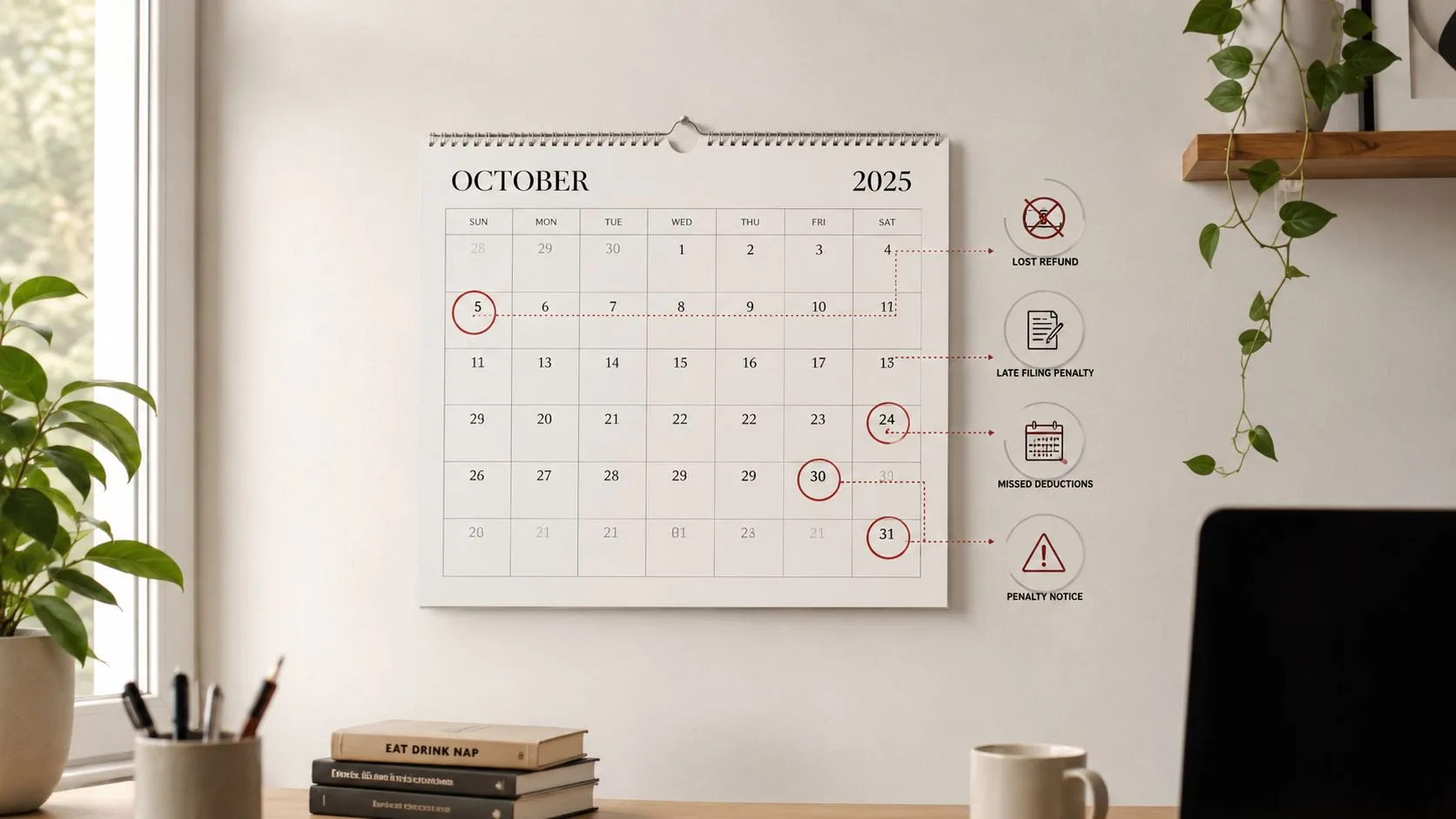
The four dates to put in your diary
- 5 October: Register if you need to file for the previous tax year and haven't already registered. For the 2025 to 2026 tax year, HMRC says the registration date is 5 October 2026 in the circumstances described above.
- 31 October: Submit a paper return. For the 2024 to 2025 tax year, HMRC stated that the paper deadline was 31 October 2025.
- 31 January: Submit the online return and pay the tax due for that tax year. For the 2024 to 2025 tax year, HMRC stated that the online deadline was 31 January 2026.
- 31 July: Make the second payment on account where HMRC requires payments on account for the following year.
The registration date is a gateway. If you miss it, you may not have the UTR and online access you need when the filing date approaches. The paper date is earlier because HMRC needs time to process postal returns. The online date is later, but it's also the key payment date.
Some taxpayers want HMRC to collect the liability through their PAYE tax code. HMRC's published rules say the return must be submitted by 30 December before the online deadline year for that calculation route to apply.
The filing deadline and payment deadline coincide on 31 January, but they remain distinct. You can file on time and still pay late, or pay an estimated amount and fail to submit the return. Keep both actions visible on your checklist.
A short visual explanation can help if you're new to the sequence:
How HMRC Penalties Add Up Over Time
Late filing isn't charged as one flat amount. HMRC's Self Assessment penalty rules create a time-linked structure, which means the cost can rise sharply as the delay continues.
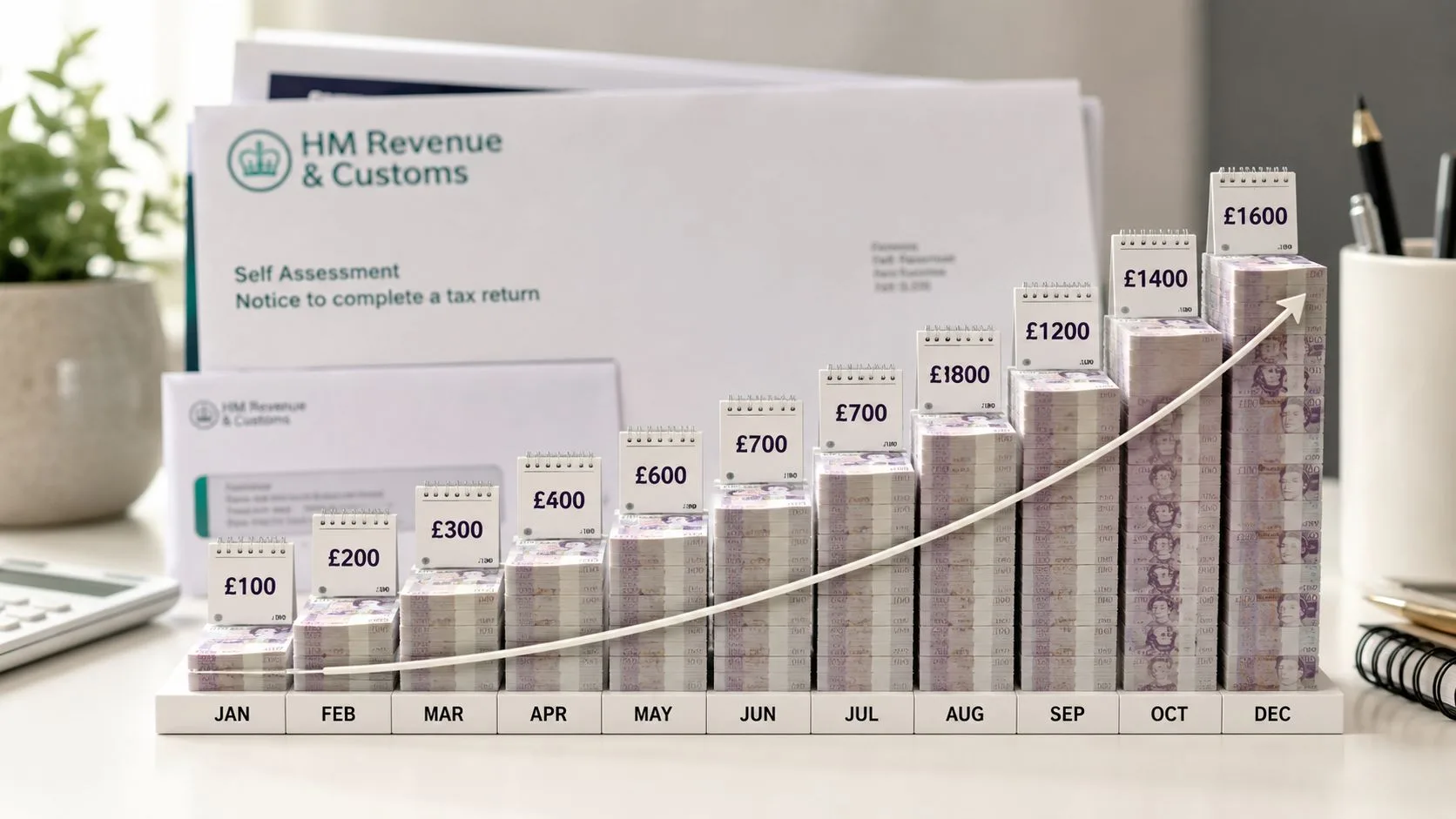
The initial late-filing penalty is an automatic £100. After 3 months, HMRC adds £10 per day for up to 90 days, with that daily stage capped at £900. At 6 months, the penalty is 5% of the tax due or £300, whichever is higher. At 12 months, another 5% of the tax due or £300 is added, again using the higher amount.
| Filing position | Late-filing consequence |
|---|---|
| On time | No late-filing penalty |
| Late, up to 3 months | £100 fixed penalty |
| More than 3 months late | Daily £10 charges, up to 90 days, capped at £900 |
| More than 6 months late | 5% of tax due or £300, whichever is higher |
| More than 12 months late | A further 5% of tax due or £300, whichever is higher |
For example, someone with a £3,000 tax liability who files on time avoids a late-filing penalty. Filing one month late brings the automatic £100 charge, even if the person pays the £3,000 immediately. Reaching the six-month point adds the higher of £300 or 5% of £3,000, which is £300, on top of the earlier penalty stages. The example shows why paying the tax doesn't erase a late-submission penalty.
Late payment creates a separate exposure. HMRC charges interest on unpaid tax from the payment deadline, so a return can be filed correctly while interest continues because the bill remains outstanding. If your circumstances involve property income from outside the UK, specialist background on non resident landlord tax UK may help you identify issues before filing.
Reasonable excuses can support an appeal, but HMRC expects the return to be submitted as soon as possible. If you can't pay, contact HMRC promptly and ask about available payment arrangements. For a focused explanation of the escalation, see Self Assessment tax penalties.
What to Include and How to File
Start with a complete income list, then match each source to the relevant part of the return. A sole trader may use SA103S for self-employment income, a landlord may use SA105 for property income, and a partner may need SA104 for partnership figures. Employment income still belongs in the return when it affects the calculation, even if PAYE has already deducted tax from the salary.
The return may also include savings interest, dividends, pension income, foreign income, and chargeable gains. Allowable expenses reduce the relevant taxable profit when the rules permit them, but personal spending isn't automatically a business expense. Keep the calculation and evidence behind every figure rather than relying on memory.
Allowances and reliefs
The Personal Allowance can taper for people with income above £100,000, so higher earners need to check the calculation rather than assume the standard allowance applies in full. The Marriage Allowance can allow an eligible spouse or civil partner to transfer part of their allowance. Blind Person's Allowance is a separate relief for eligible taxpayers.
The online service guides you through relevant supplementary pages and performs checks as you enter information. That doesn't replace your responsibility to review the figures, but it can identify omissions or inconsistencies that a paper form won't flag immediately.
| Feature | Online | Paper |
|---|---|---|
| Filing deadline | 31 January | 31 October |
| Calculation | HMRC provides an immediate calculation after submission | You'll need to work through the calculation and await processing |
| Error prompts | Built-in checks can flag missing or inconsistent entries | No equivalent instant prompts |
| Best suited to | Most individuals, including people with several income sources | People with simple affairs or circumstances requiring paper filing |
| PAYE code collection | Return must be submitted by 30 December before the relevant online deadline year | Not the standard route for online processing |
The 31 January payment is usually the balancing payment for the tax year. Some taxpayers also make payments on account towards the following year, with the second instalment due by 31 July. HMRC's calculation will show whether those advance payments apply.
Record Keeping That Protects You Later
Good records turn a stressful January exercise into a controlled calculation. They also give you evidence if HMRC asks how you arrived at a figure. You don't normally send every receipt with the return, but you need to retain the underlying material and make it accessible.
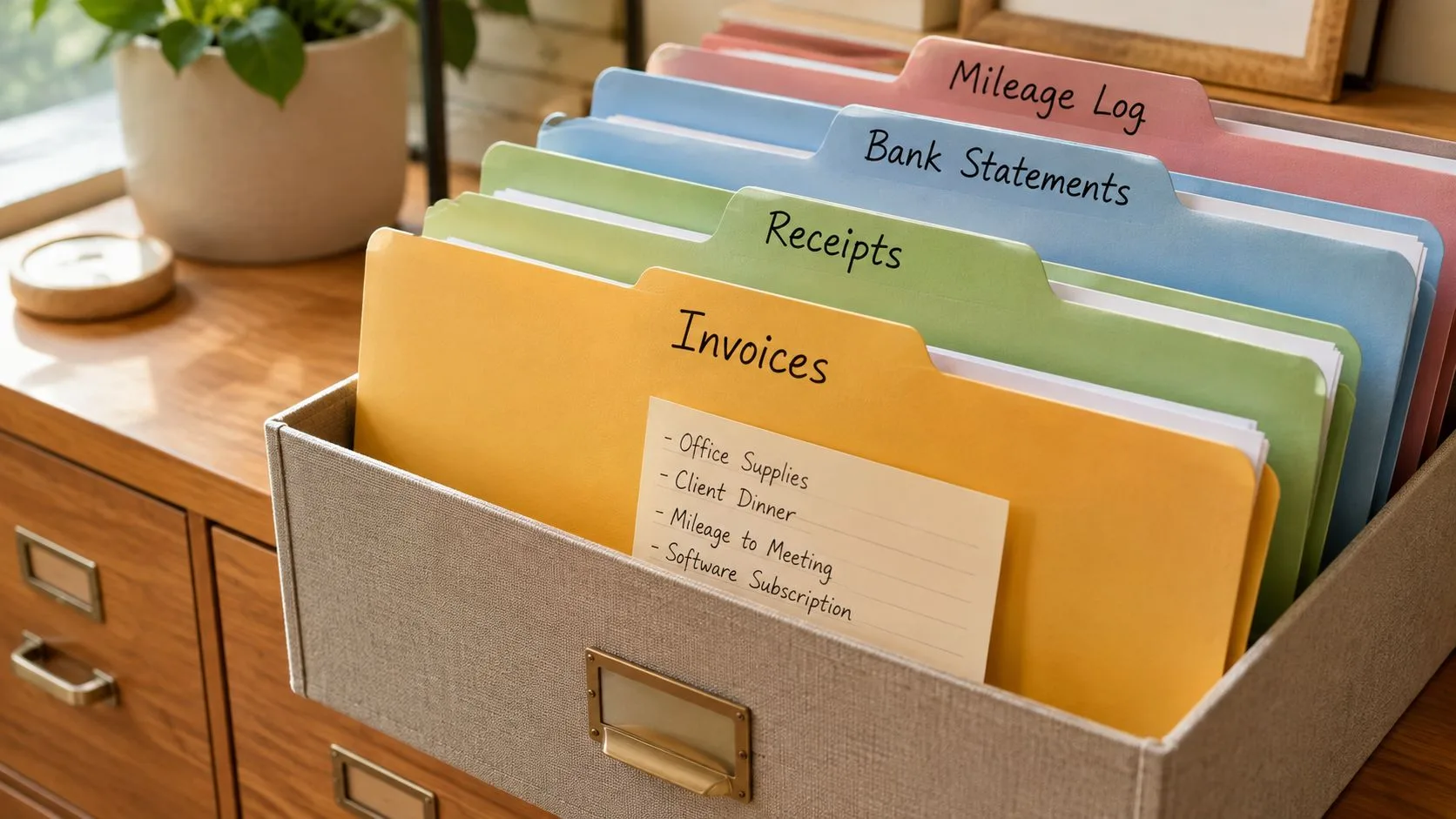
Useful records can include:
- Bank statements: Separate business and personal activity where practical, then reconcile the transactions.
- Invoices and receipts: Keep supplier evidence for claimed expenses and sales invoices for income.
- Mileage logs: Record business journeys, dates, destinations, and the reason for travel.
- Dividend vouchers: Retain documentation supporting dividend income and the date received.
- Rental schedules: Track rent, property costs, dates, and the property each transaction relates to.
Build a routine instead of a January rescue
A digital bookkeeping tool can reduce manual entry, but software doesn't decide whether a cost is allowable. Bank feeds are helpful only when you review and reconcile them, because a duplicated transaction or mislabelled personal payment can flow into the year-end figures unnoticed.
HMRC's record-keeping expectations vary by circumstance, so keep records for the period required for the relevant tax year and preserve them longer if an enquiry, amendment, or dispute requires it. Paper records can be scanned, provided the digital copies remain clear, complete, and accessible.
For a practical filing system, how to organize receipts can help you separate income evidence from expense evidence and avoid a single, unsearchable inbox. Stewart's guide to records to keep for Self Assessment offers another useful checklist.
A workable rhythm is simple:
- Weekly: Spend 15 minutes matching recent transactions to invoices, receipts, or explanations.
- Monthly: Review the receipts folder and resolve uncategorised bank-feed items.
- Quarterly: Produce a profit snapshot so unusual costs, missing sales, or cash pressure appear before the filing deadline.
When an Accountant Becomes Worth It
You don't need an accountant merely because you've received a Self Assessment notice. A straightforward return with one source of self-employment income, well-organised records, and no unusual reliefs may be manageable through HMRC's online service. The decision changes when the return becomes difficult to review confidently.
Three warning signs matter most:
- Income complexity: Multiple businesses, overseas income, dividends, property, or capital gains create more opportunities for omission and incorrect treatment.
- Time exposure: If preparing the return repeatedly takes more than a weekend of concentrated work, the opportunity cost deserves attention.
- Risk exposure: Partnership income, prior HMRC enquiries, or a growing business can justify a second pair of eyes, especially when the figures affect future payments on account.
An accountant doesn't just type numbers into SA100. They can chase missing records, reconcile income, review legitimate expenses, discuss the appropriate treatment of business activity, and explain the tax calculation before submission. Where HMRC opens a check, an authorised accountant can help organise the response and communicate with HMRC.
The right question isn't “Can I technically file this myself?” It's “Can I support every figure and understand the consequences of getting it wrong?”
For sole traders, landlords, and partnerships, Stewart Accounting Services provides Self Assessment support that includes return preparation and online filing using HMRC-approved software. The firm also describes fixed-fee submission, pre-year-end planning, bookkeeping support, and handling HMRC correspondence as part of its wider service offering.
The fee can be viewed as protection against several avoidable costs: late-filing penalties, missed legitimate deductions, time spent reconstructing records, and decisions made without seeing the full tax position. It won't remove your responsibility to provide accurate information, but it can make the process more organised and easier to review.
Your Next Steps and Quick Checklist
Use three time horizons to turn the information into action.
In the next 30 days
- Confirm your category: Check whether you're self-employed, a landlord, a partner, a director with extra income, or someone with untaxed gains or foreign income.
- Find your UTR: Check your HMRC online account and letters. If you're new, start the registration process rather than waiting for a notice.
- Gather evidence: Collect P60s, dividend vouchers, bank statements, rental schedules, invoices, and expense receipts.
- Review expenses: Use this resource to find tips for deductible expenses, then check each item against the rules for your type of income.
In the next 90 days
- Fix registration gaps: For the 2025 to 2026 tax year, HMRC's stated registration deadline is 5 October 2026 for new filers in the relevant circumstances.
- Choose your route: Online filing is generally the practical option, while paper filing has the earlier 31 October deadline.
- Book support early: If your income includes property, partnerships, overseas sources, or gains, speak to an accountant before the filing rush.
Across the next 365 days
- Reconcile regularly: Keep bank feeds, receipts, invoices, and rental records aligned.
- Set calendar reminders: Add 5 April, 31 January, and 31 July where payments on account apply.
- Review quarterly: Look for missing income, unusual expenses, and cash needed for the eventual payment.
Save this checklist, copy it into your calendar, or hand it to a new accountant at your first meeting. If you're unsure whether you must register or want help preparing an accurate return, contact Stewart Accounting Services with your income sources, filing history, and key deadlines so the next step can be agreed before a penalty date arrives.
Ready to file or still unsure whether Self Assessment applies to you? Contact Stewart Accounting Services today for practical support with registration, records, tax calculations, and online submission.
Recent Posts
04 Oct, 2026
04 Oct, 2026
04 Oct, 2026