

Accountant for tradesmen in Tillicoultry for VAT and tax
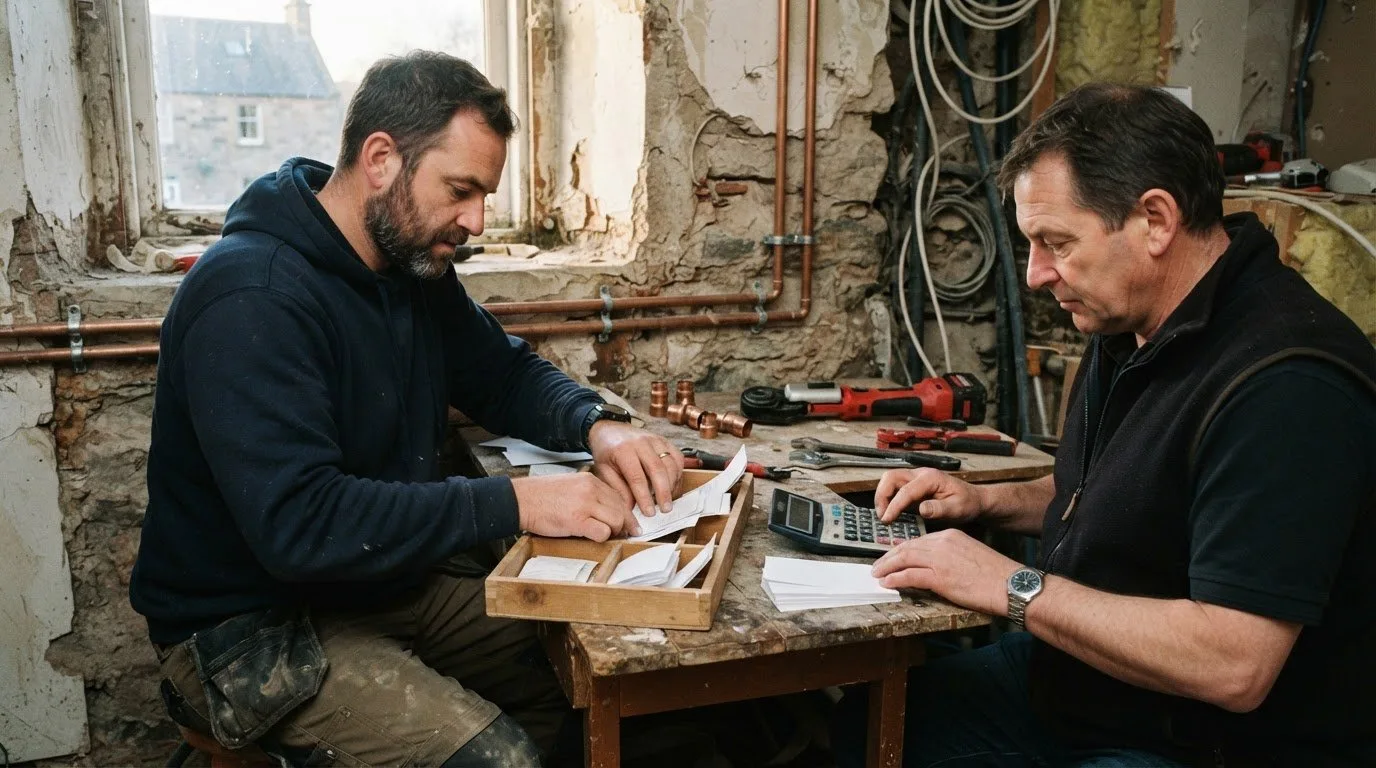
An accountant for tradesmen in Tillicoultry can help organise bookkeeping, prepare VAT and Self Assessment returns, and keep the records behind them in order. The support you need depends on how you operate, whether as a sole trader or limited company, and whether you employ staff or are VAT-registered.
Keeping up with paperwork alongside jobs, customers and cash flow can be a strain. Clear records and accurately prepared returns help you understand what your business earns and spends, without letting administration take over your working day.
This guide explains what accounting support can cover, how VAT and Self Assessment fit into a tradesperson’s finances, and what to consider when choosing an accountant. It also covers bookkeeping, payroll and business advice, so you can decide which tasks to delegate and where support could help you gain more time, more money and more peace of mind.
Key Takeaways
- Compare accountants by their understanding of trade businesses, accessibility and clarity about the work they handle.
- According to HM Revenue & Customs, Scotland’s income tax rates include a 21% intermediate rate and a 48% top rate, making tax planning relevant to your personal circumstances.
- When reviewing accounting packages, look at what is included and how the scope fits your business’s records, VAT needs and payroll.
- Learn how to organise expense records and plan ahead so business decisions are based on a clearer picture of your finances.
- Use local knowledge, relevant experience and the range of support offered to decide what kind of accountant may suit your trades or construction business.
Comparing accountants by location and reviews
For tradespeople in Tillicoultry, an accountant’s location matters most if you prefer to meet face to face. Stewart Accounting Services operates from offices in Alloa, Falkirk and Stirling, serving the surrounding areas and supporting clients remotely across the UK. Consider how you prefer to share records and discuss changes, then choose the contact arrangement that fits your working day.
Reviews can offer insight into how an accountant communicates, explains costs and handles deadlines. Look for examples relevant to your circumstances, such as sole-trader returns, limited company accounts or payroll. A detailed account of a specific service is more useful than a general rating. Use reviews as one point of comparison, alongside the written scope and a direct discussion about your needs.
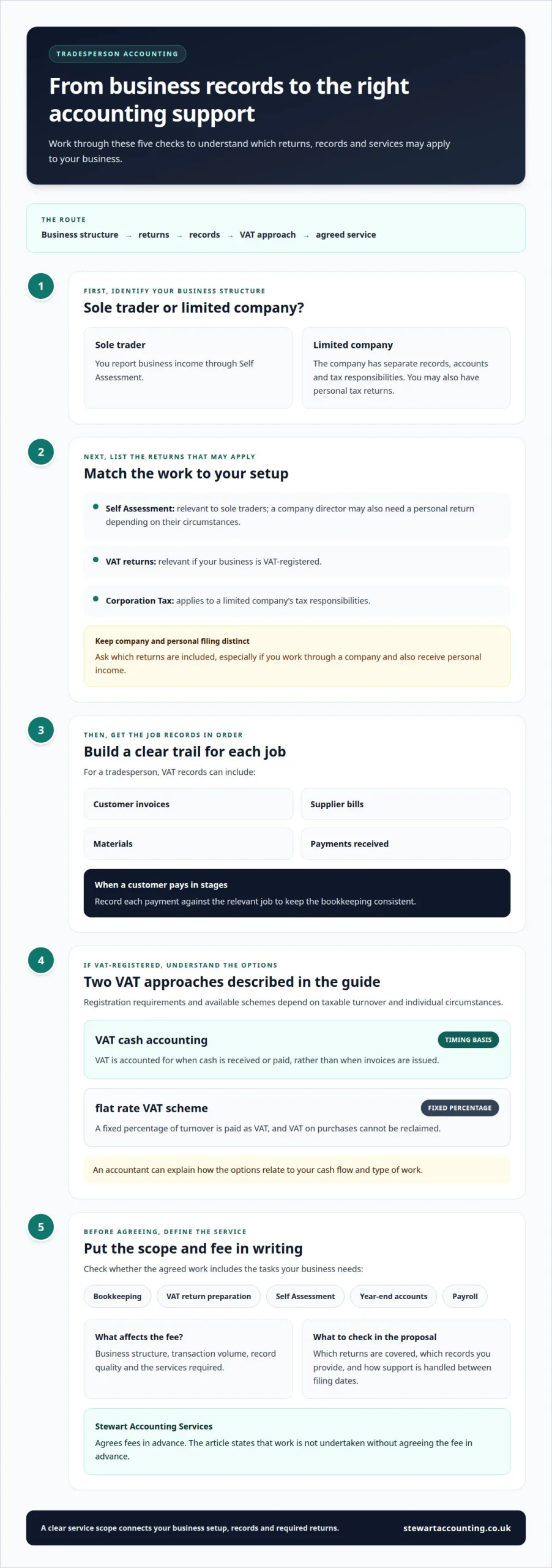
Your business structure changes the accounts and tax work involved. As a sole trader, you report business income through Self Assessment. A limited company has separate company records and accounts, while you may also have personal tax returns. In Scotland, HM Revenue & Customs identifies a 21% intermediate income tax rate and a 48% top income tax rate. The applicable rate depends on your taxable income.
Clarify what the accountant’s service covers. For a limited company, ask whether it includes preparing annual accounts, filing them with Companies House and handling the company’s tax obligations. If you employ staff, check whether payroll processing and HMRC submissions are included. A clear written scope should set out responsibilities, deadlines and the records you need to provide.
Filing dates deserve specific attention. HM Revenue & Customs says it must receive a paper tax return for the 2025 to 2026 tax year by 11:59pm on 31 October 2026, or you’ll get a late filing penalty. Ask how the accountant manages deadlines and what happens if records arrive late. Agreeing who supplies information and who files each return helps prevent confusion.
For a limited company, establish who prepares the accounts and submits them to Companies House, and how the filing timetable is managed. Ask how any late filing penalties that may apply are explained. For payroll, discuss the employees covered, pay frequency, payslips and support with payroll queries. These details help you judge whether the service fits your workforce.
Compare fees by matching the same work across written proposals. One may cover bookkeeping and returns, while another may include payroll or year-end accounts. The scope depends on your business structure, transaction volume, record quality and required services. Stewart Accounting Services agrees fixed fees in advance, so you can compare what each proposed service includes rather than focusing on a headline fee.
Which accountants serving the Tillicoultry area provide Making Tax Digital support and cloud accounting? Look for firms operating nearby that offer cloud-based bookkeeping and practical help using compatible accounting software. Ask how records are shared, how often transactions are reviewed, and whether support includes resolving common software issues. Those answers help you judge whether the service matches the way you manage jobs and finances.
Can a contractor accountant file my VAT returns and Self Assessment?
Yes. Stewart Accounting Services prepares and files VAT returns and Self Assessment tax returns. Contractors may need Self Assessment, VAT returns if registered, and Corporation Tax if they trade through a limited company. The right combination depends on your business structure and the records you keep.
VAT registration requirements and available schemes depend on taxable turnover and individual circumstances. Options include VAT cash accounting, where VAT is accounted for when cash is received or paid, and the flat rate VAT scheme, where a fixed percentage of turnover is paid as VAT and VAT on purchases cannot be reclaimed. An accountant can explain how the options relate to your cash flow and type of work.
For a tradesperson, VAT records can include customer invoices, supplier bills, materials and payments received. Clear records make it easier to identify the figures for a return and trace a transaction if a question arises. If a customer pays in stages, record each payment against the relevant job to keep the bookkeeping consistent.
Self Assessment is separate from a company’s Corporation Tax return. A sole trader reports business income through a personal tax return, while a limited company has its own accounting and tax responsibilities. If you work through a company and also receive personal income, make sure the agreed accounting service identifies which returns it covers. Payroll may also be relevant if the company pays you or employs staff.
Fixed-fee accounting can make budgeting easier when the scope is clear. Check whether the agreed work covers bookkeeping, VAT return preparation, Self Assessment, year-end accounts and payroll, or only selected tasks. Discuss how the service will handle additional work, such as correcting incomplete records or dealing with an unusual transaction. Stewart Accounting Services agrees fees in advance and does not undertake work without agreeing the fee in advance.
Accounting fees depend on your business structure, transaction volume, record quality and the services required. The price depends on your case and is given after a quote request. Before agreeing, ask for a written breakdown showing the returns covered, the records you need to provide, and how support is handled between filing dates. This helps you compare packages on the work delivered, not just their labels.
Accounting support can be useful beyond filing returns. Reviewing income and costs, for example, can help you plan for a large materials purchase or consider the effect of taking on a new contract. If you want support with VAT, tax returns or bookkeeping, explain your business structure and current record-keeping so the agreed scope reflects your needs.
Accounting services for small businesses
Tillicoultry accountants can support tradespeople with bookkeeping, payroll, VAT returns and tax returns. The right mix depends on whether you trade as a sole trader or through a limited company, and which tasks you want handled.
Bookkeeping and payroll
Bookkeeping records money coming into your business and costs going out. You can organise supplier bills, customer invoices and bank transactions by job, giving your accountant records to prepare accounts and identify missing entries. If you employ staff, payroll support can manage pay, payslips and the required HMRC submissions.
Agree how records will reach your accountant before work begins. You can share digital invoices and bank information through cloud accounting software, while keeping paper receipts for materials bought on site. Use consistent descriptions, such as a project or customer name, to make transactions easier to review. Clarify who will reconcile the records and how questions will be handled.
Payroll relies on accurate information about each employee’s hours, pay and agreed deductions. If a worker’s hours vary between jobs, provide the approved hours for each pay period before payroll is prepared. Clarify whether the service covers payslips, HMRC submissions and help correcting errors. This makes responsibilities clear for you and your accountant.
Tax return services
Tax return support can include gathering income and expense records, preparing the relevant return and filing it with HMRC. A sole trader reports business income through Self Assessment. A limited company has separate company accounts and tax responsibilities, while its director may also need a personal return. Confirm which returns are covered by the agreed service.
Useful records for a tradesperson can include invoices for completed jobs, receipts for materials and details of payments received. An accountant preparing a tax return may ask about transactions without a clear description. For example, record a tool purchase with its invoice and business purpose instead of grouping it vaguely with general spending.
VAT records should match the figures used for each return. An accountant can organise sales and purchase information, review transaction coding and prepare a return from those records. Share details of unusual customer arrangements, such as deposits or staged payments, so the bookkeeping reflects how the work was billed and paid.
Year-end accounts show how a business performed over its accounting period and draw on records such as bookkeeping, outstanding customer invoices and supplier bills. For a limited company, clarify whether the service includes preparing company accounts and submitting them to Companies House. For a sole trader, check how the year-end figures feed into Self Assessment.
Management information can help you make practical decisions during the year. A job-by-job view, for example, can show how labour, materials and subcontractor costs affect the amount left from a contract. Ask what reports are available, how often you will receive them and which records they rely on. This helps ensure accounting support reflects your work, not just annual filing.
Allowable expenses and tax planning
Tax planning starts with clear records of business income and spending. Record the business purpose of a materials invoice, fuel receipt or tool purchase. Bookkeeping organises transactions and provides a consistent basis for preparing returns. Keep business and personal spending separate so each transaction can be understood when the accounts are prepared.
What records and receipts should tradesmen keep for tax and VAT returns? Keep sales invoices, supplier bills, receipts, bank statements and details of payments received. For VAT, retain supporting documents for sales and purchases so the figures in each return can be traced to the original transaction.
Use a regular process to capture paperwork before it becomes difficult to sort:
- Save a supplier receipt with the date, item and job it relates to.
- Record customer invoices and payments against the relevant project.
- Keep bank statements alongside bookkeeping entries for reconciliation.
- Note whether a purchase was wholly for business or had personal use.
- Store digital copies with consistent names, such as supplier and job reference.
A receipt alone may not explain why a purchase was made. Link a tool invoice to the work it supports and record its business use. If an item is used for both personal and business purposes, record that clearly rather than treating the whole cost as a business expense. This gives your accountant useful context when reviewing its tax treatment.
Reviewing figures during the year, rather than only before submission, can make tax planning more useful. A regular check of sales, supplier costs and unpaid invoices can highlight changes in cash flow. For example, a large materials order may fall due before the customer pays. Knowing those dates can help you plan payments using a current view of your finances.
Keep VAT paperwork aligned with the bookkeeping entries used to prepare each return. Record the invoice date, customer or supplier, amount and VAT details shown on the document. If an invoice is corrected or credited, keep the related paperwork together. This makes the transaction history easier to follow and helps explain differences between the original bill and the final amount recorded.
Discuss unusual transactions early. A van used for both business and private journeys, for example, needs clear records of its use. The same applies to equipment bought for a specific contract or materials returned to a supplier. A tax planning discussion can consider the business purpose, supporting evidence and timing before a return is prepared. Good records make the discussion more precise and help support each submission with source documents.
Tillicoultry Accountants for Trades and Construction
For a trades business in Tillicoultry, choose an accountant who understands how jobs, materials and customer payments appear in your records. A general business background is useful, but practical experience with construction workflows helps explain what information to organise and how reports can support decisions.
Ask how the accountant would record a typical job from quotation to final payment. A kitchen installation, for example, may involve a deposit, materials bought at different times and a balance due after completion. A clear bookkeeping process records these transactions so income and costs can be reviewed together.
Construction work can involve subcontractors, suppliers and changing job schedules. Ask how the accounting process records subcontractor invoices, supplier bills and costs for separate projects. A clear method shows which job generated each cost, rather than relying on a bank statement description alone.
Use these points to compare firms serving Tillicoultry and nearby communities:
- Ask for examples of the records used for trade or construction businesses.
- Discuss how job costs, materials and customer payments are organised.
- Clarify how often you can review business figures and ask questions.
- Check who will handle your records and explain the reports.
- Request a written scope showing the tasks and information required.
Reviews can add useful detail when they describe a specific experience. Look for comments about communication, explanations and how an accountant handled a practical issue. A review mentioning clear reports for a building project is more relevant than a rating without context. Compare those comments with the questions you raise directly.
Accessibility matters if you need to discuss an unexpected change on site. Decide whether you prefer face-to-face meetings, phone calls or digital document sharing. Then ask how you can send a new supplier invoice or discuss a delayed customer payment. A workable contact process helps keep financial records current while you focus on jobs.
Construction businesses need useful figures for decisions, not only year-end paperwork. Management information, for example, can help you review whether labour and materials are affecting the expected return from a contract. Ask what reports can be prepared and which records they need. Clear answers help you judge whether the approach fits your business.
Before choosing, describe your business structure, the type of work you take on and how you currently track costs. An accountant can then explain the relevant scope and information needed. If you want to discuss accounting support for your trade or construction business, start a conversation about your accounting needs.
Stewart Accounting Services
Stewart Accounting Services helps tradespeople organise their accounts and tax responsibilities around the way they work. Bookkeeping Services can help keep receipts, job income and business costs in order. Year-End Accounts and Tax Returns support reporting for your business structure, while Payroll can help if you employ staff.
This support may suit you if you want clearer records, help preparing returns or fewer finance tasks competing with time on site. In a free initial consultation, you can discuss which areas need attention and what information will help move things forward.
Contact Stewart Accounting Services to discuss accounting support for your trade business.
Make your next accounting step work for you
The right accountant for tradesmen in Tillicoultry should fit how you run jobs, manage paperwork and make business decisions. Consider which finance tasks you want to delegate and where a clearer process could help you focus on your trade. That gives you a practical starting point for discussing support that suits your business.
Stewart Accounting Services offers Year-End Accounts, Self Assessment Tax Returns and Bookkeeping Services. Delegating the right accounting tasks can help you gain more time, more money and more peace of mind, with support to understand your business finances.
To discuss what support could fit your business, contact Stewart Accounting Services. A clear conversation about your current setup can help you decide on a sensible next step with confidence.
Frequently Asked Questions
What qualifications should I look for in a contractor accountant?
Look for a relevant accounting qualification, professional standing and experience with contractor or trade businesses. If you prefer an ICAEW or ACCA member, ask which named accountant will handle your work and confirm their membership status through the relevant professional body. Also consider practical knowledge: for example, can they explain how your business structure affects accounts, tax returns and records without relying on unexplained jargon?
What tax obligations do contractors typically have?
Contractors may need to file Self Assessment returns, manage VAT if registered, and account for Corporation Tax when trading through a limited company. The obligations depend on your business structure and circumstances. Contractors working through engagements may also need to consider IR35 and off-payroll working rules, which affect how engagement income is taxed. Keep separate records for personal income and company transactions to support the relevant reporting.
Why should contractors use a specialist accountant rather than a general practitioner?
Experience with contractor arrangements can help an accountant understand changing client engagements, subcontractor costs and company income. That knowledge can inform useful questions about records and reporting. For example, a contractor moving from sole-trader work to a limited company needs to understand how their accounting responsibilities change. Look for relevant experience and clear explanations, not just a label.
How much do accountants for tradesmen in Tillicoultry typically charge?
Accounting fees depend on the work included, your business structure, transaction volume and the condition of your records. A package covering bookkeeping and returns differs from one covering only year-end work. Avoid relying on a headline fee without checking its scope. Stewart Accounting Services agrees fixed fees in advance, with the fee based on the agreed work. No service price should be assumed without a quote for your circumstances.
Which accountants near Tillicoultry offer fixed fees or free initial consultations?
Stewart Accounting Services offers fixed-fee arrangements and a free initial consultation, in person or remotely. Use the discussion to outline your business structure, current records and the work you want handled. The firm agrees fees in advance and does not undertake work without agreeing the fee in advance. This gives you a clear basis for deciding whether the proposed support matches your needs.
How can tradesmen in Tillicoultry find an accountant qualified with ICAEW, ACCA or another UK professional body?
Start with the professional body named in the accountant’s profile, then use that body’s member directory to check the individual’s status. Confirm who will oversee your account, since the firm’s qualification and the named contact’s membership are separate details. Stewart Accounting Services is a firm of Chartered Accountants. If a particular membership matters to you, ask which professional qualification applies to the accountant handling your work.
What should tradesmen compare when choosing an accountant in Tillicoultry?
Compare the written scope, contact process and information you need to provide. A tradesperson with employees may need payroll support, while a sole trader may prioritise personal tax reporting. Check how the accountant handles questions during the year and whether explanations accompany completed filings. Stewart Accounting Services agrees fees in advance and never undertakes work without agreeing the fee in advance, so responsibilities are clear before work begins.
Are there local accountant reviews and recommendations for tradesmen around Tillicoultry, Clackmannanshire?
Use reviews and recommendations as starting points, focusing on details relevant to your work. Look for comments about communication, construction experience or help with business records, rather than relying on a rating alone. You can also ask other tradespeople in Clackmannanshire what they value in an accountant, then compare those observations with the services and arrangements offered. Reviews provide context, but a discussion of your own needs is essential.