

Accountants for businesses in Grangemouth: services and fees

What if the right accountants for businesses in Grangemouth aren’t simply the closest, but the ones whose support fits how you work? Choosing an accountant is about more than filing year-end figures. You need clear advice, dependable day-to-day support and fees that reflect the work your business needs.
If you’re comparing firms in Grangemouth and Falkirk, it can be hard to know what to look for. The right support can help you manage bookkeeping, payroll, VAT and annual accounts, while giving you a clearer view of cash flow and business decisions. Ask what services are included and how fees are agreed before work begins.
This guide explains what a business accountant can do, how to assess the support you need and what to clarify before choosing a firm. With the right tasks taken it off your hands, you can gain more time, more money and more peace of mind.
Key Takeaways
- Identify the accounting support your business needs, from bookkeeping and payroll to tax returns and annual accounts.
- See how business advice can help you plan cash flow, assess growth and make informed decisions.
- Companies House states that company accounts are due nine months after the year end.
- HM Revenue & Customs sets 31 January annually as the deadline for an online Self Assessment return and payment.
- When choosing an accountant, consider the services included and how the fee reflects your business’s needs.
Who are the best accountants in Falkirk and Grangemouth?
The right choice depends on your business structure, workload and support needs. Compare the services and responsibilities covered, rather than choosing on location alone.
Services for SMEs and Self-Employed People
Small and medium-sized businesses may need bookkeeping, payroll, VAT returns and year-end accounts, while a sole trader may prioritise Self Assessment and expense records. A Grangemouth contractor, for example, could need help organising invoices and tracking project income. Choose support that matches your business structure and the tasks you want to delegate.
For self-employed people, organised records make it easier to prepare an accurate return and understand business costs. HM Revenue & Customs sets 31 January annually as the deadline for an online Self Assessment return and payment. A dedicated accounting service can help bring income and expense information together before filing, rather than leaving the return until the deadline is close.
Local and Nearby Accountancy Firms
Grangemouth businesses can consider firms based in nearby Falkirk and accountants serving the wider area. A directory lists zero firms in Grangemouth itself and 19 firms serving the wider Grangemouth area. Those figures make it useful to look beyond a firm’s town address and consider whether its working arrangements suit your business.
Location matters, but so does the type of support. Find out how routine records, deadlines and queries are handled, and whether you can meet remotely or in person. Chartered Accountants have professional accountancy qualifications; match the firm’s experience and agreed scope to your needs. Stewart Accounting Services has offices in Alloa, Falkirk and Stirling and also works remotely across the UK.
HMRC, VAT, Payroll and Making Tax Digital
Yes. Accountants can support HMRC administration, VAT returns, payroll and making tax digital (MTD) for income tax, including digital records and quarterly updates where the requirement applies. HM Revenue & Customs says a business must register for VAT when its VAT-taxable turnover is over £90,000. HM Revenue & Customs sets the monthly PAYE payment deadline on the 22nd.
Payroll support can help organise employee pay information and keep payment tasks on track. VAT support can help prepare returns from your business records, while bookkeeping keeps those records organised. If you need support with Making Tax Digital, clarify who maintains digital records and prepares updates. Agreeing these responsibilities makes clear what is handled for you and what information you need to provide.
Some businesses also need advice beyond routine accounts. A growing company, for example, may benefit from business planning or cashflow forecasting, while a start-up may need help preparing financial information. Treat day-to-day accounting and forward planning as distinct needs: agree whether your priority is accurate records, planning, or both. This helps you choose relevant support without taking on work your business does not need.
Business advisory and growth support
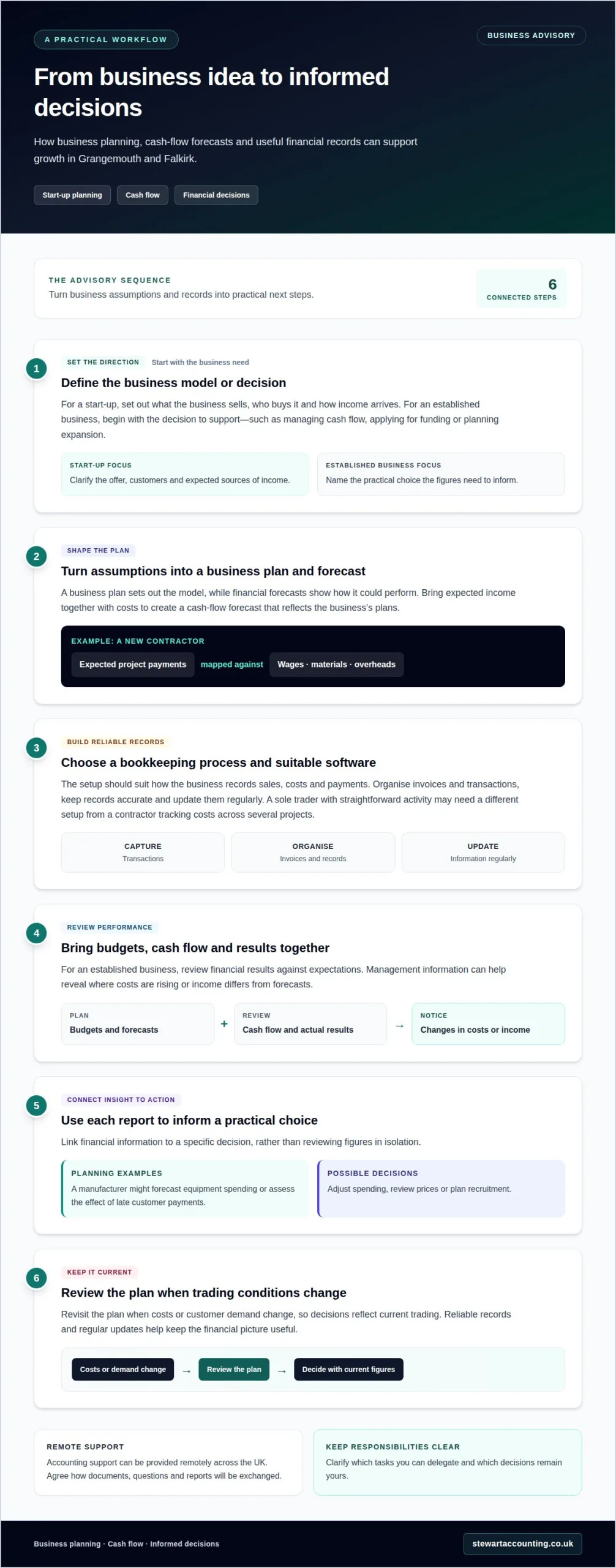
Businesses in Grangemouth and Falkirk can access accounting advice, business planning and help preparing funding information. For a start-up, these needs connect: a clear plan sets out the business model, while financial forecasts show how it could perform.
Start-up support often begins with setting out what the business sells, who buys it and how income arrives. An accountant can help turn those assumptions into a business plan, cashflow forecast and bookkeeping process. This gives a founder a practical way to move from an idea to records that track actual trading. For example, a new contractor can map expected project payments against wages, materials and overheads. Clear forecasts and consistent financial information can also support funding applications. Review the plan when costs or customer demand change, so decisions reflect current trading.
For an established business, advisory work can bring budgets, cash flow and financial results together to inform decisions. A manufacturer in the Grangemouth area might use a forecast to plan equipment spending or understand the effect of late customer payments. Management information can also show where costs are rising or income differs from expectations. Connect each report to a practical decision, such as adjusting spending, reviewing prices or planning recruitment. This turns accounting figures into useful business advice.
Accounting support need not depend on having an office beside your accountant. Remote working makes financial advice and routine accounting support accessible to businesses across the UK, including those in Grangemouth. Businesses with staff or customers in different parts of the country can share records digitally and discuss performance remotely. Agree how you will exchange documents, questions and reports to keep the process orderly. This also clarifies which tasks you can delegate and which decisions remain yours.
Accounting software should suit how your business records sales, costs and payments. Consider whether the platform makes it easy to capture transactions, organise invoices and produce useful reports. A sole trader with straightforward activity may need a different setup from a contractor tracking costs across several projects. Software is only part of the process: reliable bookkeeping depends on accurate records and regular updates. Training can help you use the system consistently, while accounting support can help you interpret the figures.
A practical starting point is to identify the decision you need help with, such as applying for funding, managing cash flow or planning expansion. Then organise the relevant sales, costs and forecasts so the advice can address that decision. If you’re considering growth support, discuss your business plans and the figures behind them.
Businesses in Grangemouth and Falkirk can access accounting advice, business planning support and help preparing funding information. This can include forecasts and financial details to support an application.
Year-end accounts and corporation tax returns
For a limited company, year-end accounts and a Corporation Tax return are connected but serve different purposes. Accounts summarise the company’s financial activity for its accounting period. The tax return reports information used to work out its Corporation Tax position. Keeping these tasks distinct helps you understand what is being prepared and why. A clear process also gives directors a better basis for reviewing performance, rather than treating filing as a last-minute administrative task.
Start by gathering records that explain the figures: sales invoices, purchase receipts, bank transactions, payroll information and details of company assets. An accountant can reconcile records, investigate differences and prepare accounts that reflect the company’s activity. For example, an unpaid customer invoice may affect how income appears in the accounts. Clear records also help explain unusual costs or changes in turnover to directors. The documents needed depend on the company’s transactions and accounting period.
Companies House states that company accounts are due nine months after the year end. That deadline makes it useful to plan backwards from the company’s year-end date, allowing time to assemble records, resolve queries and review draft figures. The accounts process and Corporation Tax return should be coordinated, but one does not replace the other. Directors should understand which documents are being prepared, what information remains outstanding and who is responsible for each filing step.
Corporation Tax planning is most useful when it connects business decisions with accurate financial records. An accountant can review income and allowable business costs, explain how transactions affect taxable profit and prepare the related return. For instance, a Grangemouth manufacturer considering equipment purchases can discuss how those costs fit into its forecasts and tax planning. Tax treatment depends on the transaction and applicable rules, so records should show what was bought, when and for which business purpose.
Keep VAT returns, payroll records and year-end figures organised as separate but related parts of the company’s finances. Changes in sales, staffing or stock can affect several records, so consistent bookkeeping helps make the year-end review more efficient. An industrial contractor, for example, may need to explain project costs and income across different jobs. Clear labels and supporting invoices help an accountant trace figures to the underlying transactions.
Before accounts are finalised, the practical sequence is to reconcile bank records, organise invoices and receipts, identify missing information, then review the draft accounts and tax return. Directors can use that review to ask about significant movements, retained profit and costs that changed during the year. Year-end accounts preparation can bring those records and review steps together, helping you see what the figures say before filing.
Annual accounts and statutory compliance
Annual accounts are only one part of a company’s reporting responsibilities. You also need organised records, tax returns and attention to Companies House filings. Scottish businesses follow the UK-wide company filing framework. Keeping these tasks in one calendar helps directors see what needs preparing and when, while reducing last-minute demands on cash flow and staff time.
For the deadlines covered here, Companies House states that company accounts are due nine months after the year end. HM Revenue & Customs sets 31 January annually for an online Self Assessment return and payment, and the 22nd monthly as the PAYE payment deadline. VAT returns and payment are listed as due on the 7th monthly, one month and seven days after the relevant period.
These dates relate to different duties, so don’t treat them as a single year-end deadline. Record the accounting year end, tax return tasks, VAT periods and payroll payment dates separately. For example, a business with employees and VAT returns needs a calendar covering recurring submissions as well as annual accounts. Assigning someone responsibility for each task makes handovers clearer.
Company records also support statutory compliance. Accountancy firms may help maintain statutory registers and prepare annual confirmation filings with Companies House as part of company secretarial work. Directors should keep company details and key records organised, especially after changes in ownership or company information. Dated records of decisions and updates make it easier to explain the company’s position when preparing accounts or responding to a filing query.
Accurate bookkeeping supports compliance and day-to-day decisions. Reconcile bank transactions against invoices, keep receipts with the relevant purchase records, and separate personal spending from company activity. A Grangemouth contractor, for instance, can label project income and costs so year-end figures show where money came from and went. Clear records also help directors understand cash flow before making commitments.
A Chartered Accountant can help organise preparation and filing, explain what information is needed and identify gaps in records before they cause delays. Agree which tasks the accountant handles and which remain with the directors. That scope matters: preparing annual accounts, submitting tax returns and maintaining company records are related but distinct tasks. A clear division of responsibility keeps each obligation visible.
Use a simple compliance routine: update records as transactions occur, review upcoming dates, resolve missing information, then check prepared documents before submission. If your business operates across Scotland or has changing payroll and VAT activity, revisit the calendar when those arrangements change. This keeps statutory administration connected to the business’s real activity, rather than leaving important records and deadlines until year end.
Choosing an accountant for a business in Grangemouth or Falkirk
The right accountant should fit your business structure, workload and upcoming decisions. For a Grangemouth company, compare the work included, how advice is delivered and whether the firm understands your sector. A nearby address can be useful, but regular communication and clear responsibilities matter just as much.
Start with the tasks you need covered. A sole trader may prioritise income records and tax returns, while a limited company may need accounts and ongoing financial guidance. An industrial contractor might need help understanding project costs and cash flow. Write down your priorities before speaking with firms, so each discussion addresses the same needs.
Compare at least three quotes. Look beyond the total: check which services are included, how extra work is treated, and what records you must provide. An accountant’s fee depends on the services, business structure and complexity of its records, and is given after a quote request. A clear scope helps you compare like with like and avoid paying for support that does not match your requirements.
Assess communication and advice, too. Find out how the accountant explains figures, responds to routine queries and raises issues that may affect your decisions. For example, management information can help you understand a fall in income or plan spending. You should be able to see how the advice applies to your business, rather than receiving figures without context.
Grangemouth and Falkirk are practical starting points, but a firm serving Glasgow or other nearby areas may also work well if its arrangements suit you. Consider whether you prefer in-person meetings, remote support or a mix. Then confirm who handles bookkeeping, filing and queries, so you know where each task sits throughout the year.
Switching accountants in Grangemouth usually involves agreeing the new engagement, authorising the transfer and arranging for records to move between firms. Useful records include prior accounts and tax returns, bookkeeping data, bank information, payroll details, VAT records and correspondence about ongoing matters. A tidy handover helps the new accountant understand the business and identify open tasks.
Before deciding, check that the firm’s experience matches your needs and that responsibilities are written clearly. A chartered accountant may suit a business seeking qualified accountancy advice, while the specific service scope still needs to fit your work. If you’re ready to discuss your requirements, talk through your accounting needs.
Stewart Accounting Services
Stewart Accounting Services can help organise essential accounting work and identify the support that fits your business. Services include Year-End Accounts, Self-Assessment Tax Returns, bookkeeping and payroll. This support may suit you if managing financial records is taking time away from running the business, or if you need help bringing accounts and tax information together.
You can discuss the tasks you want to hand over and the records involved, then consider how accounting support could give you more time, more money, more mind. Contact Stewart Accounting Services to talk about your business’s accounting needs.
Choose support that fits your next step
Your accounting needs can change as your business develops. Rather than trying to solve every finance task at once, decide what would make the biggest difference now: clearer records, help preparing year-end information or support with a tax return. This gives you a practical starting point for discussing the work and agreeing responsibilities.
Stewart Accounting Services provides Year-End Accounts, Self-Assessment Tax Returns and bookkeeping. These services can help you organise records and handle important accounting tasks, leaving you more time to focus on running your business. The right scope depends on what you need help with and how your records are managed.
If you’re considering accountants for businesses in Grangemouth, take the next step by outlining your priorities and the support you want to delegate. A conversation can help you discuss how the work may fit your business. Contact Stewart Accounting Services to talk through your accounting needs and move forward with greater clarity.
Frequently Asked Questions
Need a hand with your finances?
Start by identifying the decision or task causing the most pressure, then discuss it during Stewart Accounting Services’ free initial consultation. You could bring a recent cashflow concern, a question about business records or plans for a change in your business. This gives the conversation a practical focus and helps you explain what support would be useful, without needing to prepare a formal presentation.
Online or local accountant?
Choose the working style that makes it easiest to share information and ask questions. Online support can suit you if you already manage documents digitally and prefer written updates. In-person meetings may help if you find it easier to talk through decisions face to face. Stewart Accounting Services offers free initial consultations in person at its offices or remotely, including by email or Skype.
Which accountancy firms serve businesses in Grangemouth and Falkirk?
Stewart Accounting Services supports businesses in the Grangemouth and Falkirk area, with offices in Alloa, Falkirk and Stirling and remote services across the UK. When assessing whether an accountant fits, consider more than the address: look at the business structures it supports, how it communicates and whether its working arrangements suit you. An initial discussion can clarify your priorities and the kind of ongoing relationship you want.
What services do Grangemouth accountants offer to small businesses and limited companies?
Support can extend beyond preparing figures to helping you use accounting software effectively. Stewart Accounting Services provides Xero implementation, training and support, and integrates Dext for receipt processing. Digital receipt capture can help keep purchase records together with transaction information. Discuss how the software process will fit your existing habits, who will maintain the records and how you’ll use the resulting reports.
Which Grangemouth accountants specialise in particular industries or business sizes?
Some accountancy firms work with businesses across several sectors and structures rather than focusing on one niche. Stewart Accounting Services supports a range of business clients, while your best fit depends on the transactions your organisation handles. A retailer may need clear stock records; a project-based business may need costs tracked by job. Discussing those details helps establish whether an accountant understands the information you rely on.
What should businesses look for when choosing an accountant in Grangemouth?
Check how the accountant will help you understand your figures, not just prepare them. Ask whether reports can support decisions about spending, income or future plans, and how unfamiliar terms will be explained. Stewart Accounting Services agrees fixed fees in advance and never undertakes work without agreeing the fee in advance. A free initial consultation, held in person or remotely, gives you a chance to discuss expectations and find practical support for your business.