

Tax advice for solicitors in Stirling on return declarations

What should you do when a tax return declaration raises questions beyond a straightforward filing? Tax advice for solicitors in Stirling should take account of each client’s circumstances, and specialist tax advice should be recommended when the issue calls for expertise beyond the solicitor’s role. Schedule 24 of the Finance Act 2007 includes legislation that can make it harder to rely on professional advice as a reasonable-care defence in certain cases.
Tax advice for solicitors in Stirling should clarify which tax information belongs in a return and which matters need specialist input. This guide explains how to organise records for employment income, practice income and partnership profits, and how an accountant can support routine accounting and filing work.
It also sets out practical ways to separate personal and practice records, prepare for a return and recognise when a tax question falls beyond routine accounting. That clarity can help you protect time for client work and make informed decisions about the support you need.
Key Takeaways
- Assess each tax declaration in light of the client’s circumstances, and recognise when specialist tax advice is appropriate.
- Understand why solicitors’ firms need to take reasonable steps to prevent the facilitation of tax evasion.
- Identify the accounting support that may help with self-assessment, partnership matters and return preparation.
- See which factors shape the cost of tax advice, without relying on a one-size-fits-all estimate.
- Learn how tax considerations differ for sole practitioners, partners and employed solicitors in Scotland.
Tax return declarations and professional advice
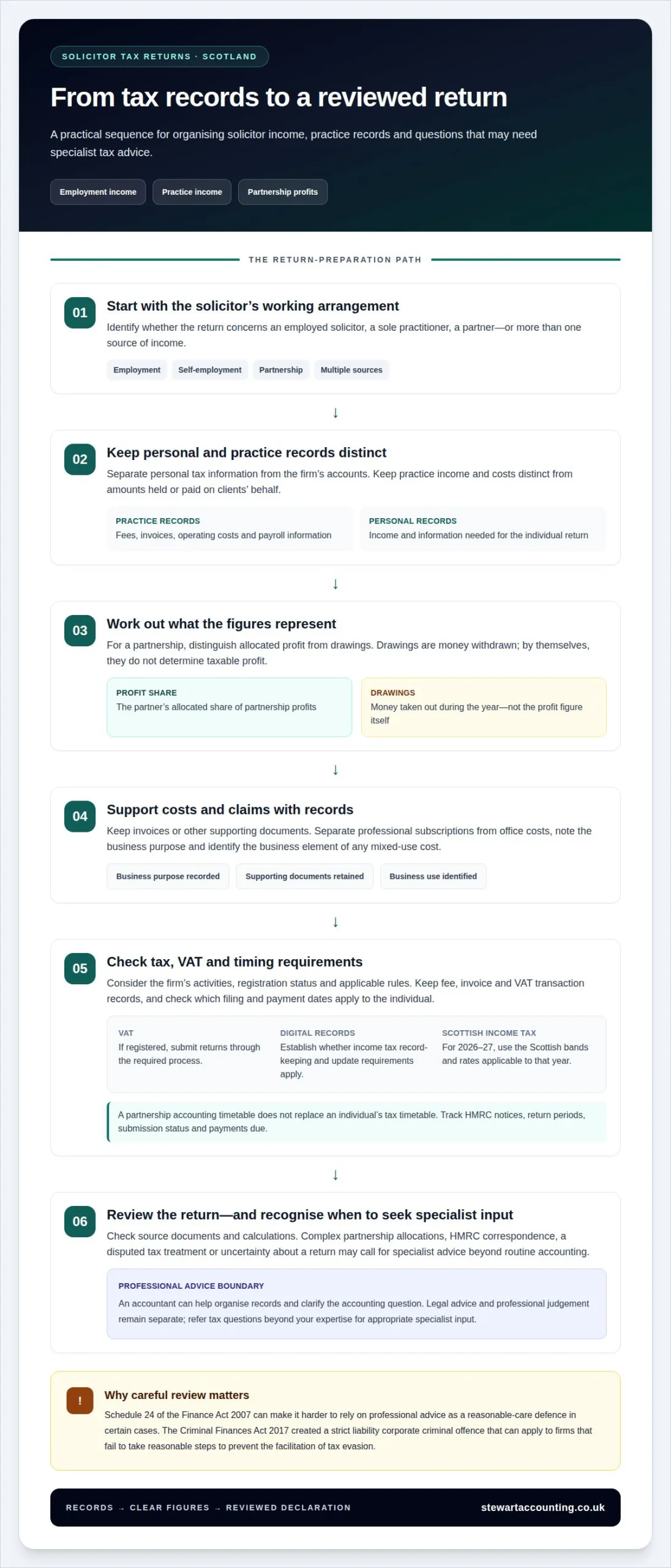
A solicitor’s tax return should reflect their working arrangement, income and supporting records. In Scotland, keep personal tax information distinct from the firm’s accounts. This helps identify whether the return involves employment income, partnership profits, self-employment income or several sources.
For a partnership, distinguish each solicitor’s allocated share of profits from drawings taken during the year. Drawings record money withdrawn; they do not, by themselves, determine taxable profit. Consider capital allowances separately by identifying eligible business assets and their use before assessing their treatment in the return.
VAT treatment and Making Tax Digital requirements depend on the firm’s activities, registration status and applicable rules. Keep records of fees, invoices and VAT transactions, and submit VAT returns through the required process if registered. For income tax, establish whether digital record-keeping and update requirements apply to the taxpayer and income concerned.
Self-employed solicitors and partners should track the filing and payment dates that apply to their tax obligations. Record HMRC notices, return periods, submission status and payments due. A partnership’s accounting timetable does not replace an individual’s tax timetable. Preparing early leaves time to resolve missing records before a deadline.
For solicitors in Scotland, income tax for the 2026-27 tax year uses the Scottish bands and rates applicable to that year. Establish the solicitor’s taxable income and relevant sources, then apply the appropriate band when preparing the declaration. Do not use rates for another UK nation as a substitute for Scottish rates.
To support claims for business expenses and professional fees, separate practice costs from personal spending and retain invoices or other records. For example, record a professional subscription separately from office costs and note its business purpose. If a cost has both personal and business use, identify the business element before including it.
Late, inaccurate or unpaid returns can expose solicitors to financial penalties and further HMRC enquiries. Keep source documents, review calculations and correct errors promptly; the timing and quality of disclosure help establish the circumstances. The Criminal Finances Act 2017 created a strict liability corporate criminal offence that can apply to solicitors’ firms that fail to take reasonable steps to prevent the facilitation of tax evasion, according to The National Archives (legislation.gov.uk).
Professional advice can help lawyers discuss a client’s tax position, identify appropriate options and recognise when a question is beyond their expertise. HMRC correspondence, complex partnership allocations and uncertainty about a return are all reasons to consider specialist input. Clear records and careful review also support accurate reporting to public authorities.
Stirling tax accountants for solicitors and law firms
For a solicitor or law firm in Stirling, choose accounting support that fits the practice’s structure and tax needs. A sole practitioner, a partner and an employed solicitor have different records to organise. Start by listing the work required, such as individual returns, practice accounts or partnership figures, then identify which records and decisions fall within that scope.
An accountant supporting solicitors in Stirling should explain how practice accounts relate to each solicitor’s tax reporting. Partnership accounts and profit allocations, for example, inform a partner’s personal figures, while a sole practitioner’s records focus on practice income and costs. Clarify the steps involved, from providing records to preparation and review, so responsibilities are clear.
Bookkeeping for a law firm may involve fee income, operating expenses, payroll and transactions connected with client matters. Records should distinguish the firm’s income and costs from amounts held or paid on clients’ behalf. Accounting and tax support can clarify what records are needed and how queries are handled. Legal advice and professional judgement remain separate.
Before agreeing work, define the tasks included and the information the practice must provide. A useful scope can identify:
- Which accounts and individual tax returns are required.
- Whether partnership profit figures need preparation or review.
- What bookkeeping records and supporting documents are available.
- How payroll information fits into the accounting work.
- Which HMRC correspondence or tax questions need attention.
For instance, a small partnership may need accounts prepared alongside figures for each partner. An employed solicitor with another income source may need help bringing separate records together for a personal return. These examples show why the right accountant depends on the work required, not the job title alone.
A local meeting in Stirling may suit a practice that prefers to discuss documents in person; digital record-sharing may work better for firms managing accounts remotely. Either way, agree how documents will be transferred, queries answered and outstanding records tracked. These practical steps help keep the work organised.
Tax advice for solicitors in Stirling should clarify when an issue goes beyond routine accounting. A complex transaction or disputed tax treatment may require specialist input. An accountant can define the accounting question and identify relevant records, while the solicitor remains responsible for legal advice and professional duties.
If you want to discuss accounting support for your practice, outline your firm’s requirements and the records involved. A clear starting point helps define the work and information needed.
What tax services do Stirling accountants offer solicitors, including self-assessment and partnership tax?
Tax support for a solicitor may cover personal returns, partnership figures and the accounts behind them. The right scope depends on whether you practise alone, share profits with partners or receive employment income. Start by matching each income source with its supporting records, such as accounts, payslips or partnership schedules.
Self Assessment preparation brings relevant income and expense information together for a personal return. An accountant can organise the figures, review supporting records, identify gaps and prepare the return for your review. For example, a solicitor with employment income and separate practice income needs to identify each source distinctly. Keep HMRC correspondence and previous returns available, as they may clarify earlier reporting.
Partnership tax support connects the firm’s accounts with each partner’s share of taxable profit. An accountant can prepare or review partnership figures, document profit allocations and provide partner-level information for individual returns. Record drawings separately from profit allocations. If a partner joins or leaves during an accounting period, keep the relevant dates and agreed allocation method on record.
Year-end accounts and bookkeeping support tax work by organising transactions before a return is prepared. Records for a law practice may include fee income, payroll costs, office expenses and transactions relating to client matters. Consistent coding helps distinguish income from costs and makes unusual entries easier to query. A bookkeeping review can also identify missing invoices or duplicate transactions before accounts are finalised.
VAT support may include reviewing sales and purchase records, preparing return figures and organising submission information. Clear invoices and transaction records help determine the appropriate treatment of each item. For example, record a fee invoice and a reimbursed client expense with enough detail to explain what each represents. Keep VAT records up to date in the practice bookkeeping rather than assembling them only at filing time.
Payroll support can help a firm organise employee pay information and prepare figures for payroll reporting. A practice with salaried solicitors and support staff should maintain clear records of pay, deductions and changes. Management accounts can also summarise income, costs and cash movements during the year, helping partners understand practice performance before annual accounts are prepared.
Not every tax question belongs in routine return preparation. A proposed restructuring, disputed tax treatment or complicated transaction may need specialist tax input. An accountant can identify the issue, explain which records are relevant and distinguish routine compliance from advice requiring deeper analysis. This helps you direct the question appropriately without delaying ordinary filing work.
Before engaging accounting support, list the returns and accounts required, the partnership structure, the records available and any HMRC deadlines already communicated. This gives the accountant a practical basis for defining the work, identifying missing documents and agreeing how each stage will be reviewed.
How much does tax advice for solicitors cost in Stirling?
There is no single fee that fits every solicitor’s tax work. The price depends on the case and is given after a quote request; the main cost factors are the work required, the practice structure, the quality of available records and the complexity of the tax questions. A straightforward return based on organised information involves a different scope from advice involving partnership accounts and several income sources.
Start by defining the task. Preparing an individual return differs from reviewing partnership figures, preparing accounts or addressing a specific tax question. A sole practitioner may need help with practice income and personal reporting, while a partner may also need figures showing their share of firm profits. Each deliverable affects the work and review involved.
The state of the records also affects the work required. An accountant may need to reconcile invoices, bank transactions, expenses and supporting documents before preparing reliable figures. Incomplete or inconsistent entries can take additional time to resolve. For example, uncategorised payments may need clarification before they can be treated correctly in the accounts or return.
The number and type of income sources matter. A solicitor with employment and practice income may need records from both considered together. A partner’s tax work may require information from the firm as well as personal documents. The accountant needs to understand any income, expenses or profit allocations that require explanation before agreeing the scope.
Timing is another practical consideration. Providing organised records before a filing deadline leaves more time to address questions than sending incomplete information close to the deadline. Urgent work may need a different arrangement, depending on the outstanding tasks and the accountant’s capacity. When requesting a quote, set out any HMRC correspondence, relevant dates and work already completed.
To make a quote request useful, describe the work clearly and provide details such as:
- Whether you are a sole practitioner, partner or employed solicitor.
- Which return, accounts or tax question needs attention.
- Whether partnership figures and supporting schedules are available.
- How your bookkeeping records are maintained and organised.
- Any HMRC letters, prior submissions or deadlines relevant to the work.
A quote should explain the agreed tasks, the information you must provide and how additional work will be handled if new issues arise. Clarify whether the scope includes preparation, review, submission or follow-up correspondence. These are separate steps, so naming them helps you understand what the fixed fee covers.
For a solicitor in Stirling, describe the work you need rather than asking only for a general tax-advice price. This helps the accountant assess the records, complexity and deliverables before proposing a scope and fixed fee.
What tax rules apply to solicitors who are sole practitioners, partners, or employed in Scotland
Your working arrangement determines which income and records need attention. A sole practitioner, partner and employed solicitor should not treat their tax positions as identical. Identify each income source, who receives it and which records support it. A change in role during the tax year may mean more than one arrangement needs consideration.
For a sole practitioner, start with the practice’s income and expenses, supported by clear accounts. Separate business transactions from personal spending and retain invoices, bank records and evidence for costs. For example, payments for legal work belong in the practice’s income records, while personal purchases should not be mixed into its accounts. These records support the figures used for tax reporting.
Partners should distinguish the firm’s overall results from each partner’s allocated share. Partnership accounts provide the starting information, while allocation records show how profit is assigned. Record drawings, which are cash taken from the practice, separately from profit allocations. If the partnership agreement or partner shares change, document the change and provide the relevant dates and accounts information.
An employed solicitor’s records commonly centre on salary information from their employer. Keep payslips, year-end pay documents and details of other income together. For example, a solicitor with practice income or another taxable source should not assume employment records cover the whole return. Identify every income source before preparing a declaration.
Across all three arrangements, tax advice should follow the facts and the solicitor’s level of expertise. The Finance Act 2007 includes Schedule 24, which can make reliance on professional advice harder as a reasonable-care defence in certain cases. A solicitor should consider a client’s circumstances before deciding whether a tax issue needs specialist advice.
A firm also needs to consider its systems for preventing the facilitation of tax evasion. The Criminal Finances Act 2017 created a strict liability corporate criminal offence that can apply to solicitors’ firms failing to take reasonable steps to prevent that facilitation, according to The National Archives (legislation.gov.uk). Firms should identify relevant risks and maintain appropriate prevention steps.
For practical record-keeping, separate documents by role and purpose: practice accounts for a sole practitioner, partnership allocations for a partner, and employment records for a salaried solicitor. Then identify other income, relevant expenses and unresolved questions. This gives an accountant a clearer picture and helps distinguish routine reporting from complex tax questions requiring specialist input.
If you need support organising tax records for your working arrangement, discuss your accounting requirements and the records you already hold.
Partnership accounts provide the starting point, and each partner’s allocated share is recorded using the allocation records. Drawings are cash taken from the practice and should be recorded separately from profit allocations.
Stewart Accounting Services
Stewart Accounting Services can help you organise the accounting information behind tax return declarations and keep routine reporting on track. If you are a solicitor working alone or within a firm, support may include Year End Accounts Preparation, Self Assessment Tax Returns, Bookkeeping Services and Payroll Services, depending on your needs. Clear records make it easier to understand income, expenses and figures used in tax reporting.
Turn to accounting support when return preparation, bookkeeping or payroll is taking time away from client work. Stewart Accounting Services provides tailored accounting, tax, bookkeeping and payroll support to take routine tasks off your hands and give you more time, more money, more mind. For complex tax questions beyond routine accounting, specialist advice may still be appropriate.
Contact Stewart Accounting Services to discuss the accounting support you need.
Make your next tax decision with clarity
Your next step is to turn the tax question into a defined piece of work. Set out whether you need help preparing a declaration, organising practice records or understanding the figures behind a return. This gives your accountant a clear starting point and helps you decide which information to bring together.
For tax advice for solicitors in Stirling, Stewart Accounting Services can support the accounting work through Year-End Accounts, Tax Returns (Self-Assessment) and Bookkeeping. These services help connect organised records with the figures needed for tax reporting, while complex tax questions can be directed to an appropriate specialist.
You do not need to resolve every accounting detail before starting a conversation. Explain your practice arrangement, the work you need and any outstanding questions. Stewart Accounting Services offers a free initial consultation, in person at its offices or remotely. You can discuss a practical scope and fees, agreed in advance, and decide how to proceed.
Frequently Asked Questions
How should solicitors choose between a local Stirling tax adviser, a specialist law-firm accountant, and online tax services?
Choose support to fit your practice structure and needs, whether that means individual returns, practice accounts or partnership figures. Stewart Accounting Services offers free initial consultations in person at its offices in Stirling, Alloa and Falkirk, or remotely. Agree the scope and responsibilities, and seek specialist input for complex tax issues.
How are solicitor partnership profits, drawings, and capital allowances taxed in the UK?
A partner’s taxable profit share is distinct from drawings, which record money withdrawn and do not by themselves determine taxable profit. Consider capital allowances separately by identifying eligible business assets and their use before assessing their treatment in the return.
Recent Posts
07 Nov, 2026