

Accountant for dentists in Alloa: fees and tax support
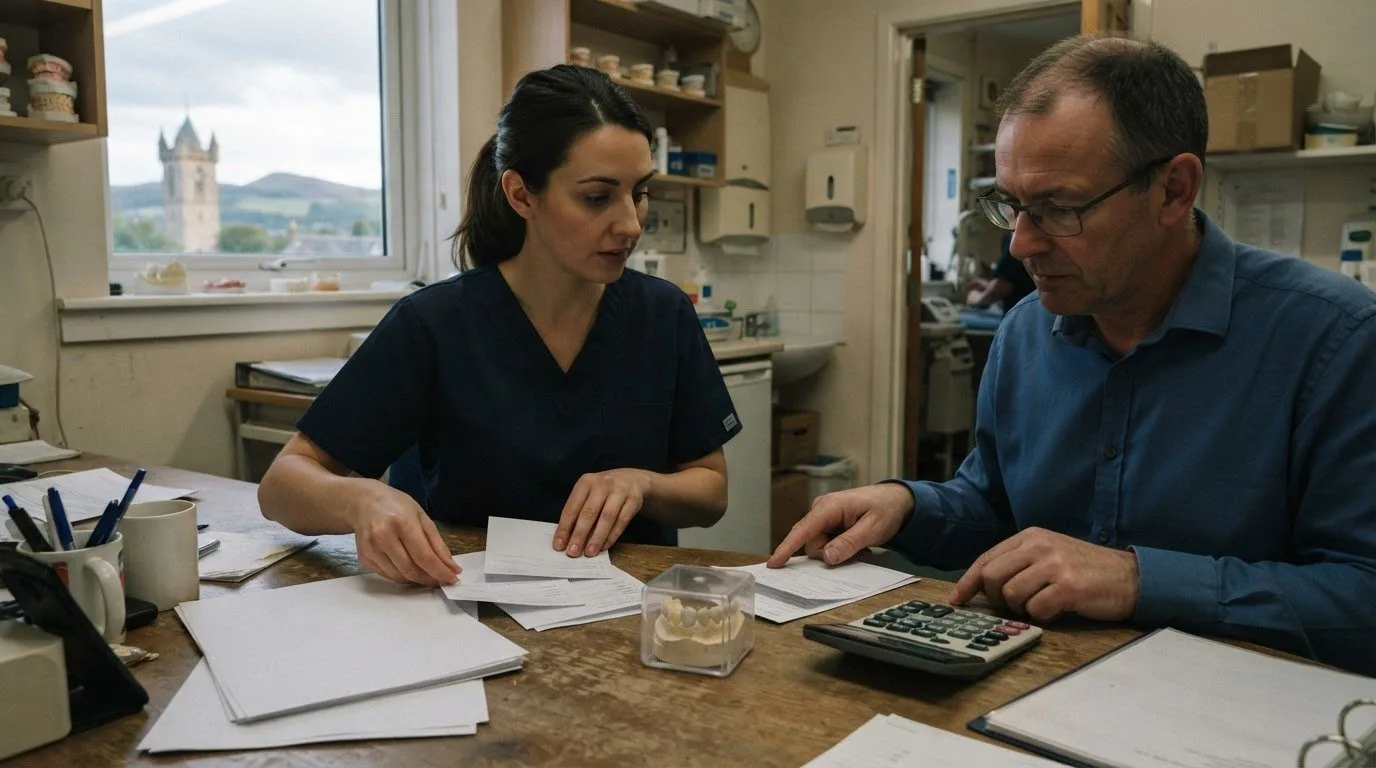
Dentists in Alloa can access specialist accounting support for the financial demands of dental work. An accountant for dentists in Alloa can help you manage tax, bookkeeping and financial planning, with the support shaped around whether you work as an associate or run a practice. Fees depend on the work involved, your business structure and the level of support you need, and are given after a quote request.
It’s sensible to want clear answers before choosing an accountant. Dental income may include NHS schedules and private fees, while associate statements can include deductions, adjustments and laboratory charges that need reconciling. Superannuation can also affect take-home pay and pension planning.
This guide explains what dental accounting support can cover, which tax and finance matters may need attention, and what to consider when choosing an accountant. Services such as year-end accounts, Self Assessment tax returns and bookkeeping can take financial tasks off your hands, helping you gain more time, more money and more peace of mind.
Key Takeaways
- Identify the accounting support a dental practice or start-up may need as it grows, from organising records to preparing year-end accounts.
- HM Revenue & Customs withdrew an element of its previous guidance on associate dentist status from April 2023, so status and tax treatment deserve careful attention.
- Understand the factors that shape accounting fees, including the work involved and the level of support required, without relying on a one-size-fits-all figure.
- Learn what to look for in dental accounting support near Alloa and how bookkeeping, payroll and tax return services can help take routine financial work off your hands.
Do you specialise in accounting for dentists?
Dental accounting support can be relevant to associates, practice owners and start-ups. The right support depends on how you earn income, keep records and make practice decisions. An accountant for dentists in Alloa should discuss your working arrangement, income sources and records before setting out the work involved.
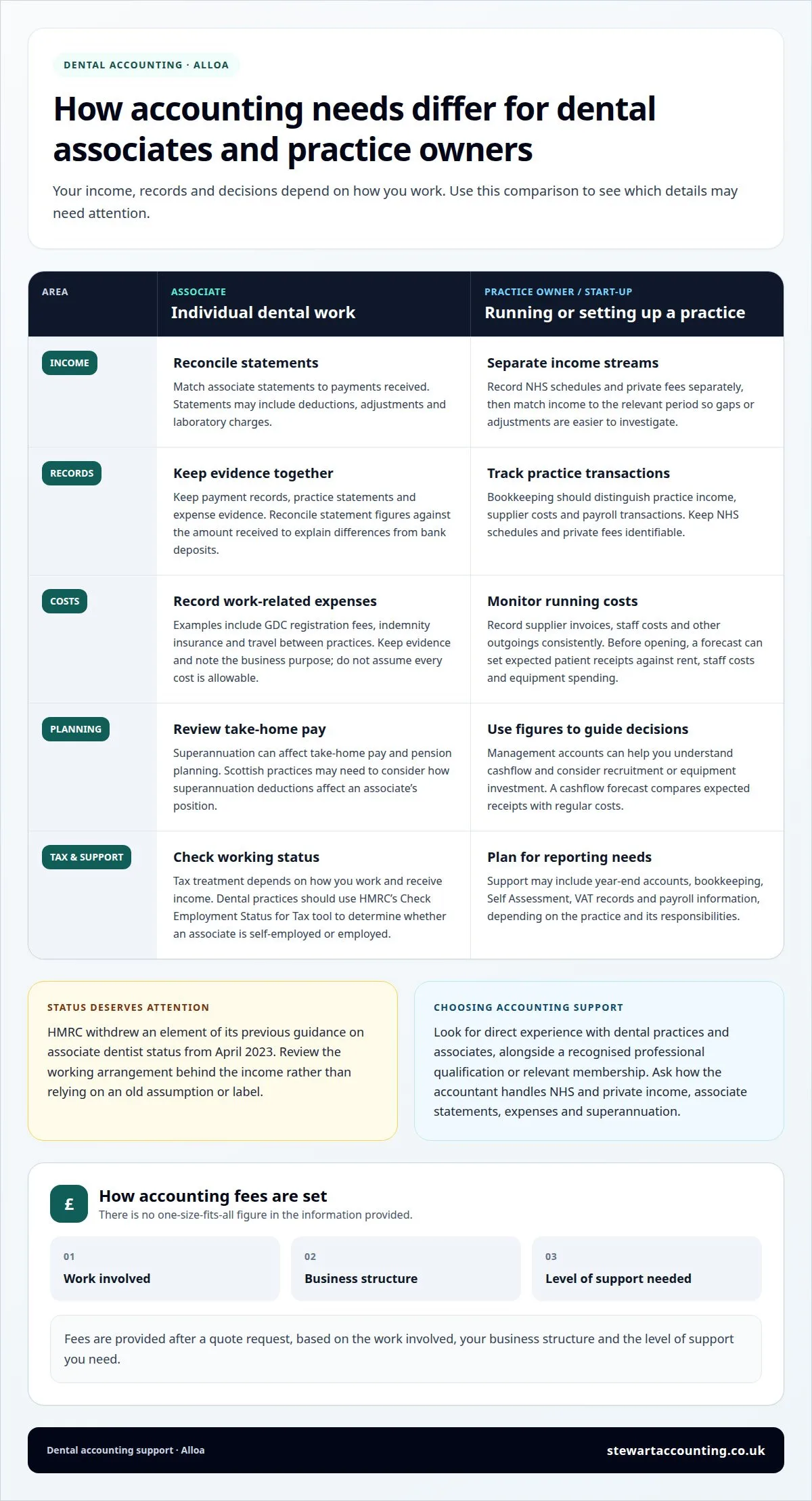
Can Alloa accountants support NHS and private dental income accounting? Yes. Dental records can include NHS schedules as well as private fees, and these income streams may vary through the year. Separating each source and matching it to the relevant period makes gaps or adjustments easier to investigate. For example, an associate’s statement can be reconciled against payments received rather than treated as one unexplained figure.
For associates, expense records should reflect the work performed. Dental associates may claim expenses such as GDC registration fees, indemnity insurance and travel between practices. Keep evidence for each item and record its business purpose, such as travel from one practice to another. An accountant can review these categories when preparing tax returns without assuming that every cost is allowable.
Practice owners and dental start-ups have broader accounting needs. Before opening, a forecast can set expected patient receipts against rent, staff costs, equipment spending and other outgoings. Once trading, bookkeeping should distinguish practice income, supplier costs and payroll transactions. Management accounts can help owners understand cashflow and consider decisions such as recruitment or equipment investment. Scottish practices may also need to consider how superannuation deductions affect take-home pay and pension position.
What experience and qualifications should dentists look for in an accountant? Look for direct experience with dental practices and associates, alongside a recognised professional qualification or relevant membership, such as Chartered Accountant status or ICB membership. Ask how the accountant handles NHS and private income, associate statements, expenses and superannuation; clear examples reveal whether their experience fits your work.
How can a dentist switch accountants in Alloa, and what records are needed? Agree a changeover date, then arrange the transfer of previous accounts, tax returns, bookkeeping files and supporting records. Include bank statements, associate pay statements, expense evidence and payroll information where relevant. A clear handover helps the incoming accountant understand existing figures, identify outstanding tasks and maintain consistent records.
Dental practices should also use HMRC’s Check Employment Status for Tax tool to determine whether an associate is self-employed or employed.
Taxation and finance for healthcare businesses
Tax treatment depends on how you work, how you receive income and which records support it. HM Revenue & Customs withdrew an element of its previous guidance on associate dentist status from April 2023. That makes it useful to review the working arrangement behind an associate’s income, rather than relying on an old assumption or label.
What tax deadlines and rules apply to dentists and dental practices in Scotland? Filing requirements depend on whether you are an associate, sole trader or limited company, and whether you have payroll or VAT responsibilities. Track the applicable HMRC notices and filing periods against your own business records, rather than relying on one calendar for every dental role.
For an associate, bookkeeping should make the figures behind each tax return clear. Keep payment records, practice statements and expense evidence together. For example, reconcile a statement showing deductions, adjustments and laboratory fees against the amount received. This helps explain the difference between gross income and bank deposits, giving accountants a clearer basis for preparing accounts.
Practice owners need a broader view of patient income and running costs. Separate NHS schedules and private fees in the bookkeeping, then record supplier invoices, staff costs and other transactions consistently. Management accounts can organise these figures into a view of income, spending and cashflow, providing a practical basis for decisions such as changing staffing levels or planning equipment purchases.
Can local accountants help dentists with Self Assessment, VAT and payroll? Yes, accountants can support these tasks by preparing tax returns, organising VAT records and processing payroll information. A chartered accountant with healthcare knowledge can also explain how the figures connect, such as how payroll costs appear alongside practice income and operating expenses.
VAT records need particular care when a dental business has different income streams or purchases. The work involves reviewing invoices and transaction records, matching them to the bookkeeping and preparing relevant VAT reporting. Clear records help explain what each payment relates to. Payroll records should likewise connect staff details and pay calculations to the amounts recorded in the accounts.
For a start-up or expanding practice, a cashflow forecast can compare expected receipts with regular costs. Record when income is expected, when suppliers need to be paid and how staffing changes affect available cash. Updating the forecast with actual figures helps identify differences early and supports decisions based on the practice’s financial position.
To get a clearer view of your tax and finance workload, discuss your working structure, income records and reporting needs with a Chartered Accountant. A focused review can identify which bookkeeping, tax return, VAT or payroll tasks need attention first.
Tax treatment depends on the dentist’s working arrangement, income and supporting records, so associate status should be reviewed rather than assumed from an old label. Filing periods also depend on whether the dentist is an associate, sole trader or limited company, and whether payroll or VAT responsibilities apply. Follow the relevant HMRC notices for the business.
Accounting fees for dentists
Accounting fees for dentists depend on the work required, the practice structure and the quality of its records. An associate with a straightforward tax return needs different support from a practice owner managing staff, VAT records and company accounts. Compare fees only when the tasks and responsibilities are also comparable.
Key factors include the services required, transaction volume, payroll needs and condition of your records. For example, organised bookkeeping with clearly labelled practice statements takes a different level of work from accounts with missing invoices or unexplained bank transactions. A practice with employees also needs payroll support that an associate working alone may not require.
An accountant’s fee depends on your circumstances and the agreed scope of work. Factors include your business structure, income sources, records, payroll needs and whether you need ongoing support or year-end work. This helps match the work to your requirements instead of assuming every dentist needs the same package.
Before comparing proposals, list the work you want covered. This might include preparing a tax return, reviewing bookkeeping, producing year-end accounts and handling payroll. A limited company may also need company accounts, while an associate may need support focused on personal income and expense records. Check that each task is described clearly so you understand what is included.
Clarify how additional work is handled. A late batch of receipts, a change in practice ownership or a new partner can alter the records and the work required. Agree how changes affect the scope and how extra tasks will be discussed. Clear terms help prevent misunderstandings as your practice changes during the accounting period.
Organised records help an accountant prepare accurate figures efficiently. Keep bank statements, invoices, associate statements and payroll information arranged by accounting period. If several partners share a practice, clearly separate drawings from business transactions. Well-maintained records make income and expenses easier to trace, help answer questions and reveal missing information before accounts are finalised.
For a practical comparison, assess the service, communication and responsibilities alongside the fee. Does the scope explain who organises records, prepares the tax return and deals with payroll information? Does it cover questions arising from the work? An accountant familiar with dental practices should be able to explain the tasks in plain English and show how each connects to your situation.
Choose support that fits your current workload and likely changes. A new associate may need a different level of help from a practice owner adding staff or bringing in a partner. A clear scope, organised records and defined responsibilities make it easier to judge the value of the work without relying on an unsupported average fee.
Specialist accounting for dentists
Accounting support can help connect dental income, practice finances and personal tax matters. This is relevant when moving from associate work into ownership, bringing in a partner or considering a practice sale. Each decision can change the records needed and the questions your accounts should answer.
The National Association of Specialist Dental Accountants and Lawyers (NASDAL) advises dentists to use a specialist accountant. Its network represents over one fifth of dentists in practice in the UK. NASDAL members also produce quarterly data on dental practice valuations and sales, which may provide context when owners consider a sale or purchase.
That context does not replace an assessment of an individual practice. A valuation discussion may consider income patterns, costs, equipment and financial records. For example, an owner preparing for a sale can use organised accounts to explain the figures behind performance. An accountant can help clarify those figures and identify questions to address before negotiations progress.
Tax planning is another area where specialist knowledge can help you consider decisions before they affect your returns. An associate reviewing a change in working arrangements may need to understand how income, expenses and pension deductions affect their financial position. A practice owner considering new equipment can assess the expected cashflow impact alongside the accounting treatment. The right analysis starts with current records and the decision in front of you.
Superannuation merits attention because deductions affect a dentist’s take-home pay and pension position. Reviewing statements alongside income records helps explain how deductions relate to amounts received. This can support clearer tax planning and informed conversations about future financial needs, while recognising that each dentist’s circumstances differ.
Useful accounting support connects the figures to decisions, rather than simply preparing them after the year ends. For a practice owner, management information can highlight changes in income or costs. For an associate, a well-prepared tax return can reflect recorded income and supported expenses. Clear explanations help you understand what the figures mean and what action may follow.
When assessing specialist expertise, discuss examples relevant to your role. Ask how the accountant approaches practice valuations, associate income, tax planning and pension deductions. A useful conversation should connect each topic to records or decisions, such as reviewing year-end accounts before a sale or understanding the financial effect of a proposed change.
For dentists in Alloa, accounting support can bring practice finances and personal planning into a clearer view. Choose an accountant who can explain the figures, identify the records behind them and help you consider your next decision.
Dental Accountants in or near Alloa
To find dental accounting support near Alloa, look for relevant experience, clear explanations and services that match your role. An associate may need help organising income and expenses for a tax return. A practice owner may need accounts that show how income, staffing costs and cashflow fit together. The right fit depends on the work you need done, not simply the distance to an office.
Specialist dental accountancy networks can offer context about the field. The National Association of Specialist Dental Accountants and Lawyers (NASDAL) represents over one fifth of dentists in practice in the UK. Its members produce quarterly data on dental practice valuations and sales. These resources relate to the profession, but do not replace a conversation about the support your practice needs.
The Association of Independent Specialist Medical Accountants issues newsletters quarterly for medical practices and healthcare professionals. This reflects specialist knowledge shared within healthcare accountancy. For a dentist in Alloa, a practical discussion could cover matters such as reconciling associate statements or preparing financial information for a practice decision.
Use a focused discussion to assess whether an accountant’s experience matches your needs. You could raise these examples:
- How they organise NHS schedules and private fee income in the records.
- How they reconcile associate statements containing deductions, adjustments or laboratory fees.
- How their work differs for an associate, a start-up and an established practice.
- How they explain year-end figures and the information they need from you.
Consider location alongside how you prefer to work. An office near Alloa may suit you if you value in-person meetings, while remote communication can make regular document sharing easier. Either way, agree how records will be transferred, how questions will be handled and how completed work will be explained. A clear process helps keep financial information organised throughout the year.
Professional credentials are useful to consider, but do not by themselves demonstrate dental experience. Discuss your role and ask how the accountant’s services relate to your needs. An associate could ask how income and expenses are reflected in a return, while an owner could discuss the financial information used to assess practice performance.
For your shortlist, compare the accountant’s dental knowledge, the work covered and the clarity of communication. If you want to discuss accounting support for your dental work in Alloa, get in touch about your accounting needs.
Stewart Accounting Services
Stewart Accounting Services can help dentists in Alloa organise financial records and manage accounting work. Whether you work as an associate, run a practice or are setting up a dental business, support can be tailored to your accounts and reporting needs.
Year End Accounts Preparation, Self Assessment Tax Returns, Bookkeeping Services and Payroll Services can help organise income, expenses and staff records. This support is useful when preparing accounts, completing a tax return or keeping payroll information up to date. Clear, consistent records can make it easier to understand your financial position and spend less time on administration.
If you’d like to discuss accounting support for your dental work, contact Stewart Accounting Services.
Take the next step with confidence
Decide which financial tasks you want to manage yourself and which you would prefer to hand over. A focused discussion can connect your dental work, record-keeping needs and plans to a suitable level of accounting support. Choosing an accountant for dentists in Alloa is not only about finding someone nearby, it is about clear conversations on the work and how it fits your practice.
Stewart Accounting Services offers Year End Accounts Preparation, Self Assessment Tax Returns and Bookkeeping Services. These services can help organise your accounts, personal tax reporting and day-to-day records, giving you more time, more money and more peace of mind for work and life outside the practice.
Share what you do, the records you currently keep and the tasks causing the most pressure. That gives you a practical starting point for discussing support that suits your circumstances. Contact Stewart Accounting Services to discuss your accounting needs, and take the next step towards a clearer financial workload.
Frequently Asked Questions
What dental accounting services do accountants near Alloa offer?
Support can cover personal tax and practice finances, depending on whether you are an associate or owner. Stewart Accounting Services can prepare accounts and tax returns, organise bookkeeping and manage payroll. An associate may need personal income records arranged for a tax return, while a practice with employees may need payroll figures kept consistent with its accounts. The work can be tailored to your role and records.
What are the fees for an accountant for a dentist in Alloa?
Fees are fixed for the agreed work and are agreed in advance. The scope may reflect your business structure, record-keeping needs and whether payroll or year-end work is included. Stewart Accounting Services never undertakes work without agreeing the fee in advance. Any additional work and its fee are agreed before it begins.
Which accountants near Alloa advise dental practice owners on tax and business structure?
Stewart Accounting Services is a firm of Chartered Accountants in Alloa offering tax planning, Business Advisory and Company Formation. These services can help an owner consider how a proposed business structure relates to their plans and accounting needs. You can discuss your circumstances in a free initial consultation, in person at an office in Alloa, Falkirk or Stirling, or remotely. It’s a practical starting point for questions about your practice.
Recent Posts
07 Nov, 2026