

Can Businesses Reclaim Input VAT? A Practical Guide
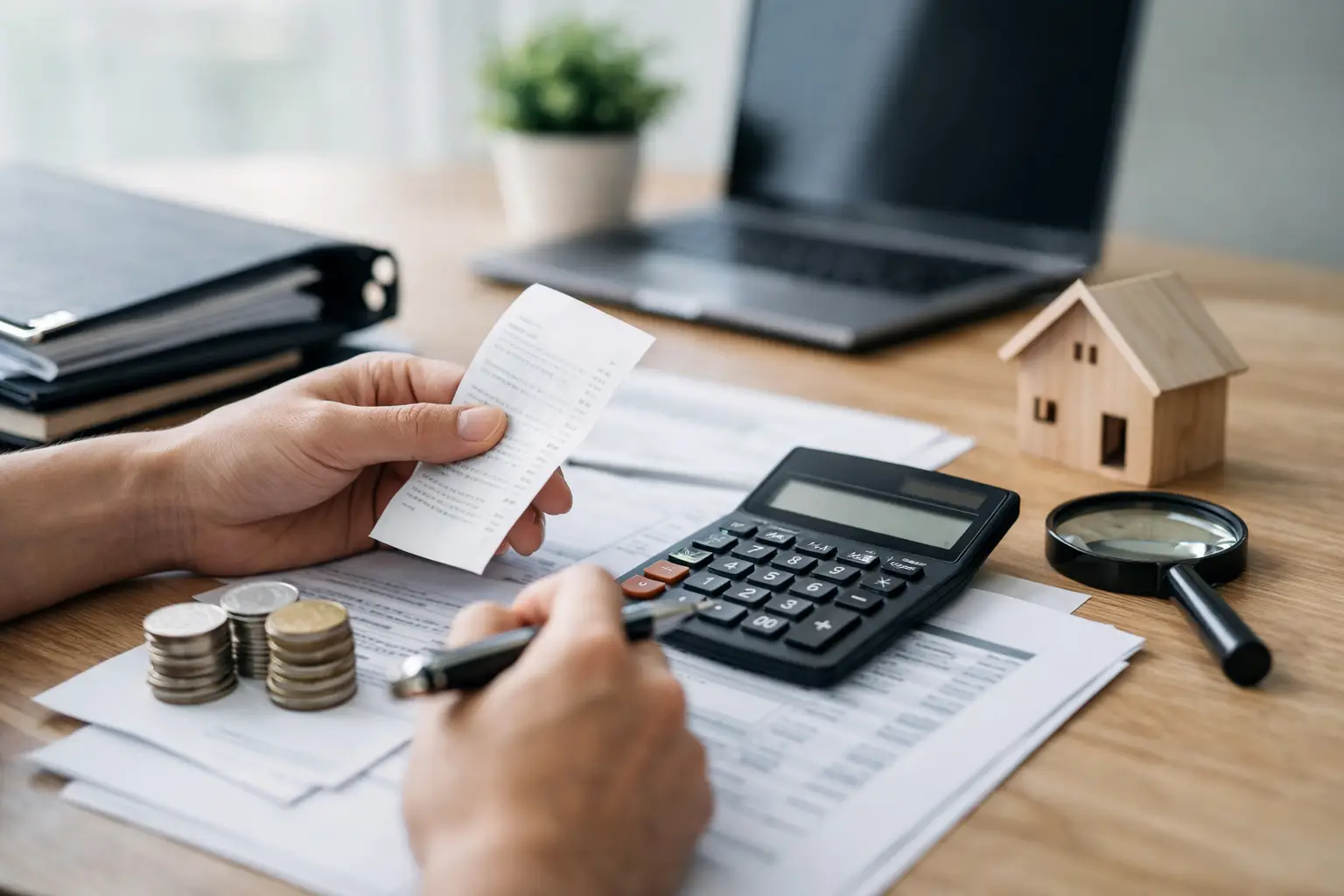
A supplier invoice can contain VAT that your business is entitled to recover, reducing the amount paid to HMRC on its next return. But can businesses reclaim input VAT on every business cost? Not quite. The answer depends on your VAT registration, what you bought, how it is used and whether you hold the right evidence.
For small businesses, getting this right matters beyond compliance. Input VAT recovery can support cash flow, while incorrect claims can lead to assessments, interest and penalties. A clear process gives you more confidence in your numbers and less last-minute pressure at VAT return time.
When can businesses reclaim input VAT?
A VAT-registered business can usually reclaim VAT charged on goods and services purchased for use in making taxable business supplies. This is known as input VAT. You offset it against the VAT you charge customers, known as output VAT, through your VAT return.
Taxable supplies include standard-rated, reduced-rated and zero-rated sales. Zero-rated sales still count as taxable supplies, even though no VAT is added to the customer’s invoice. This means a business that makes zero-rated supplies may still be able to recover VAT on its related costs.
The starting point is simple: the expense must have a genuine business purpose. If a purchase is wholly for business use and it supports your taxable sales, the VAT is normally recoverable. Examples might include accountancy software, office stationery, stock for resale, tools, marketing costs and professional fees.
However, claiming VAT is not simply a matter of spotting VAT on a receipt. You must be registered for VAT at the point you make the claim, and you need appropriate VAT evidence, usually a valid VAT invoice from the supplier.
The evidence you need before making a claim
A valid VAT invoice should show the supplier’s name, address and VAT registration number, the invoice date, a unique invoice number, a description of the goods or services, and the VAT rate and amount charged. For lower-value purchases, a simplified VAT invoice or receipt may be sufficient, provided it contains the required information.
Bank statements show that you paid for something, but they do not by themselves prove how much VAT was charged. Likewise, a receipt without a VAT number may not support a claim. This is a common source of avoidable errors, particularly where staff make small purchases or costs are entered from photographs after the event.
Digital bookkeeping makes this easier. Capture invoices when they arrive, attach them to the transaction in your accounting software and review the VAT treatment regularly. This creates a clearer audit trail and helps identify mistakes before the return is submitted.
Costs where input VAT is commonly recoverable
For most trading businesses, VAT can usually be reclaimed on day-to-day costs that relate directly to running the business. This may include rent on commercial premises where the landlord has opted to tax, equipment, repairs, telephone and internet costs, business travel, advertising, subcontractors and training that is relevant to the trade.
The detail still matters. If your mobile phone, broadband or home office costs are used partly for personal purposes, only the business proportion of VAT can be reclaimed. You need a fair and reasonable method for calculating that split. For example, a sole trader using a home broadband connection for both family and work use should not automatically claim 100% of the VAT.
Mileage and fuel also need care. If the business pays for fuel used in a vehicle that has private use, you may need to account for a fuel scale charge, or restrict the VAT claim to business mileage. The most suitable approach depends on your records and how the vehicle is owned and used.
Expenses that are blocked or restricted
Some costs may look business-related but have specific VAT restrictions. VAT on business entertainment for customers, suppliers or other non-employees is generally not recoverable. Taking a client for a meal may support a commercial relationship, but that does not usually make the VAT deductible.
Staff entertainment is treated differently in many cases. VAT can generally be reclaimed where the event is primarily for employees, although there are limits and special considerations if directors, partners or non-employees attend. The facts matter, especially for small companies where the line between owners and employees can be less clear.
Cars are another regular problem area. VAT on the purchase of a car is normally blocked if there is any private availability or use. There are limited exceptions, such as cars used exclusively for taxi hire, driving instruction or as stock in a motor trade. VAT on leasing charges may be partly recoverable, but a restriction commonly applies where the car is available for private use.
You also cannot reclaim VAT on goods or services bought for private use, on certain exempt business activities, or where VAT has not actually been charged. Insurance, bank interest and most financial services, for instance, are usually exempt from VAT rather than standard-rated.
Partial exemption and mixed business activities
Businesses making only taxable sales can often recover all eligible input VAT. The position changes if you also make exempt supplies. A landlord with residential rental income, for example, may make exempt supplies, while also running a separate VATable business. A business offering financial or education-related services can face similar issues.
This is called partial exemption. VAT directly linked to taxable activities may be recoverable, while VAT directly linked to exempt activities is usually not. VAT on shared overheads must be apportioned using a fair method, often based on the value of taxable and exempt income.
There is a de minimis test that can allow full recovery where exempt input tax is small, but it is technical and should not be applied casually. If your business has mixed income streams, early advice can prevent both underclaiming and an unexpected HMRC adjustment later.
Can you reclaim VAT from before registration?
Newly registered businesses may be able to reclaim VAT on certain pre-registration costs. This can be valuable where you have invested in equipment, stock, professional services or start-up costs before your VAT registration date.
The usual time limits are four years for goods that you still hold, or that have been used to make other goods you still hold, and six months for services. The purchase must relate to the business now making taxable supplies, and you must have valid VAT invoices. Different rules can apply to assets, property and businesses transferred as a going concern.
Do not assume every historic cost qualifies. A laptop bought years ago for personal use, then later used in a business, is unlikely to be straightforward. Review pre-registration VAT before your first return so that you do not miss a legitimate claim or submit one that cannot be supported.
Special schemes can change the answer
Your VAT accounting scheme affects how and when VAT is reported, and in some cases whether normal input VAT claims are available. Under the Cash Accounting Scheme, VAT is generally accounted for when money is paid or received, rather than when invoices are issued. This can help cash flow, but supplier invoices should still be recorded accurately.
The Flat Rate Scheme works differently. Instead of reclaiming VAT on most individual expenses, you pay HMRC a fixed percentage of your VAT-inclusive turnover. The main exception is VAT on certain capital assets costing £2,000 or more, including VAT. Businesses on the scheme should not accidentally claim normal input VAT on routine purchases.
If you use the Margin Scheme, domestic reverse charge or deal with overseas suppliers, the VAT treatment can also differ from an ordinary UK purchase. These areas are manageable, but they require the right coding and documentation from the outset.
How to keep VAT claims accurate
A reliable VAT process should be part of your monthly bookkeeping, not a scramble in the week before submission. Reconcile supplier invoices to bank payments, check that VAT rates are correct and investigate unusual transactions. If a cost is partly personal, entertaining or connected with exempt income, flag it rather than applying the default VAT code.
If you discover an error after submitting a return, it may be possible to correct it on a later return, depending on the size and nature of the error. Larger errors or certain circumstances may need to be reported directly to HMRC. Acting promptly is always better than hoping it will go unnoticed.
Input VAT recovery is a practical opportunity to protect cash flow, but only where the claim reflects the real use of the cost and is backed by proper records. A little care in your bookkeeping now can leave you with cleaner VAT returns, clearer financial information and more time to focus on running the business.
Recent Posts
22 Oct, 2026
1 comment