

How to Choose a Replacement When Your Accountant Retires
What if your accountant’s retirement is an opportunity to improve your financial support? A change can feel unsettling, especially when someone who knows your accounts is stepping away.
If you’re wondering what to do when your accountant is retiring, first confirm the handover date and how the transfer will work. You do not have to accept a proposed successor: you can choose your own accountant. Allow time to compare the support you need and make sure records and deadlines are covered.
This guide explains how to assess a new accountant’s qualifications, experience, services and communication, and how to organise the handover. You’ll also learn what information to share and how to decide whether bookkeeping, payroll, tax returns or business advice suit your needs. With a clear plan, you can make the transition smoothly and find support that gives you more time, more money, more mind.
Key Takeaways
- You can choose whether to accept a proposed successor, so clarify the handover plan before deciding.
- Agree on transition dates and identify outstanding accounts, deadlines and records to pass on.
- Assess a successor’s qualifications, relevant experience, communication style and services against what your business needs.
- Share your financial history and future goals to help your new accountant provide relevant support.
- Use the transition to consider whether bookkeeping, payroll, tax returns or other accounting services could better suit you.
Choosing a replacement accountant or bookkeeper: what to look for in a professional service
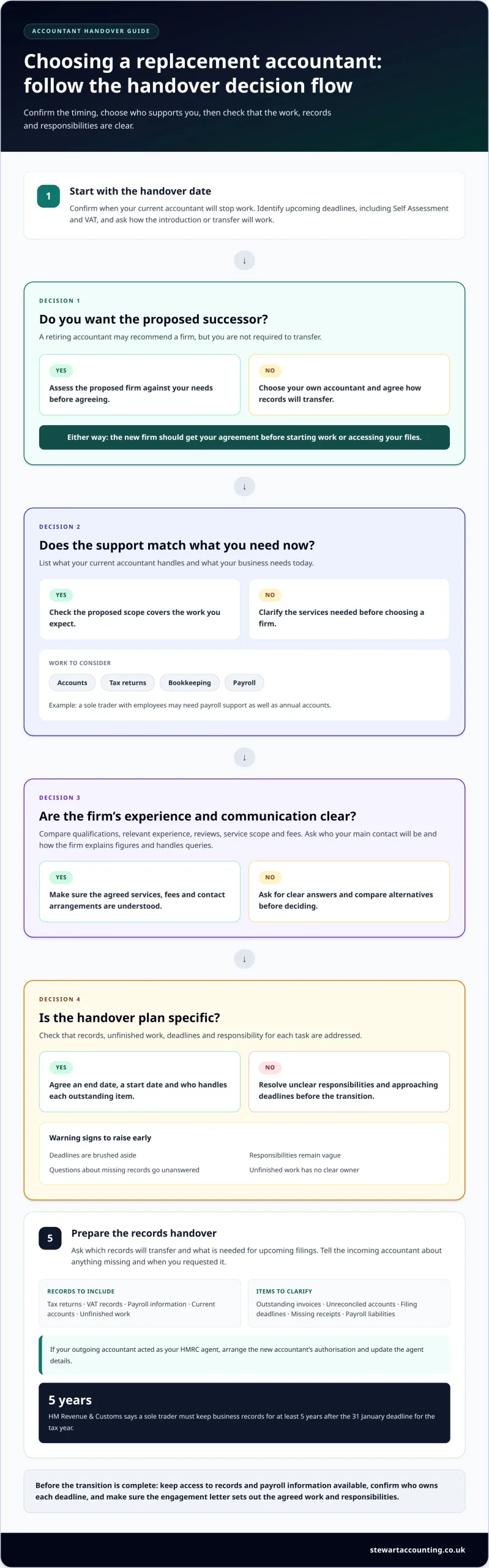
First, establish when your current accountant will stop work and which deadlines are coming up. A new accountant can review your Self Assessment and VAT timetable, identify the documents needed and plan work around upcoming submissions.
Ask how an introduction from the retiring practice will work. You can accept the proposed firm or appoint someone else.
- Clarify what support you need. List the work your current accountant handles, such as accounts, tax returns, bookkeeping or payroll. Note what your business needs now, not just when you first appointed them. For example, a sole trader with employees may need payroll support as well as annual accounts. A professional can help match these tasks to the services you need.
- Assess the proposed introduction before agreeing. A retiring accountant may recommend a firm willing to take on clients, but you are not required to transfer. Ask what work the successor proposes to handle, who your main contact will be and how your records will move. The new firm should get your agreement before starting work or accessing your files.
- Compare relevant experience and communication. Check professional qualifications, experience with businesses like yours, reviews, service scope and fees. Ask how the firm explains figures and keeps you informed. For instance, if you need payroll alongside bookkeeping, establish who coordinates the information and handles queries. Clear answers help you assess whether the working relationship suits you.
- Look for warning signs in the transition plan. Be cautious if deadlines are brushed aside, responsibilities remain vague or questions about missing records go unanswered. Ongoing communication problems, missed deadlines, compliance concerns or little proactive advice may be reasons to change accountants. A successor should explain how they’ll review your position and handle outstanding items, rather than promise a smooth handover without details.
- Protect records and plan for continuity. Ask the incoming accountant to identify the documents needed for upcoming filings and clarify who is responsible for each deadline. HM Revenue & Customs says a sole trader must keep business records for at least 5 years after the 31 January deadline for the tax year. Keep access to records and payroll information available during the change, so essential details aren’t lost between firms.
Retiring accountants and client portfolio transfers
Agree how records, responsibilities and upcoming returns will transfer before the outgoing accountant stops work. A clear handover also gives you an opportunity to review tax planning alongside immediate deadlines.
-
Requesting records and a handover from your retiring accountant: how a new firm can help
Ask your retiring accountant for a handover plan, then agree which records will go to your chosen successor. Include tax returns, VAT records, payroll information, current accounts and details of unfinished work. Your new accountant can identify gaps and arrange professional clearance with the outgoing firm. The outgoing practice should obtain your consent before giving a proposed buyer access to your files.
If records aren’t provided, tell your new accountant what’s missing and when you requested it. They can identify what’s needed for future work and explain the next steps for transferring available files. Ask the retiring accountant to clarify outstanding invoices, unreconciled accounts or filing deadlines. ICAEW considers a disengagement letter best practice when an accountancy relationship ends.
-
Assessing transition risks with help from your new accountant
Give your new accountant a list of upcoming filing dates, including Self Assessment and VAT returns, and identify what’s already been prepared. Changing accountants during a tax year may mean answering questions about earlier transactions and providing supporting documents. Missing records or unclear responsibility for a return can delay preparation, so agree who will handle each outstanding task before the deadline.
Set an end date with the retiring accountant and a start date with the successor. An overlap gives the incoming firm time to review recent figures and identify unfinished work. If the outgoing accountant acted as your HMRC agent, arrange the new accountant’s authorisation and update the agent details. Confirm the new firm’s engagement letter sets out the agreed work and responsibilities.
-
Warning signs to discuss with your new accountant during the transition
Raise missing receipts, unpaid invoices, unreconciled accounts or unclear payroll liabilities early. These issues can affect the accuracy of financial records and the information used to prepare returns. Ask the incoming accountant to separate urgent filing tasks from issues that can be resolved later. Be wary of a handover plan that leaves responsibility for an approaching deadline unclear.
Use the change to review whether your tax planning still reflects your circumstances. For example, discuss changes in business income, property activity or staffing, and ask how they affect the records and advice you need. A new accountant typically reviews prior-year accounts and tax filings during onboarding, which can help identify questions for follow-up. Discuss your transition and next steps if you need support organising the handover.
Assessing whether a successor firm is a good fit
Assess the proposed firm against your business needs, not just the retiring accountant’s recommendation. A useful review covers relevant experience, services, communication and professional safeguards.
-
How to assess a successor firm’s suitability with professional guidance
Ask the proposed firm how it would support your business through the next accounting period. A professional accountant can help you assess the firm’s experience with your business type, its services and the work you need completed. For example, a limited company with staff may need different support from a sole trader with straightforward records.
Describe the reports and advice you relied on before. Then ask how the successor would provide updates, explain results and respond to questions. If you need regular management information to understand cash flow, clarify how often reports are prepared and what decisions they can inform. Don’t assume an introduction means the working arrangements will remain the same.
Use a practical example to see whether the firm understands your priorities. If a filing deadline is approaching, ask how it would establish which documents are available and what work remains. If the business has changed since the last accounts, explain what’s different and ask how that affects the support you need. Clear, relevant answers help you judge whether the relationship could work.
Review the proposed engagement letter before agreeing. It should describe the work the firm will do, the information you must provide and how responsibilities are divided. Compare the scope with your actual needs, such as accounts preparation, tax returns or payroll. Raise unclear wording before signing, rather than relying on assumptions from the previous arrangement.
-
Checking a successor accountant’s qualifications, professional body membership and insurance
Ask who will handle your work, what qualifications they hold and which professional body they belong to. Check that their experience matches the work you need, such as preparing company accounts or handling a sole trader’s tax affairs. Qualifications and membership help you understand their background, but don’t replace checking the proposed services and responsibilities.
Ask the firm to explain its professional indemnity insurance and what cover applies to its work. Don’t assume the retiring accountant’s arrangements transfer with your records. The successor should explain its own arrangements clearly, including how to raise concerns if a problem arises. Keep the relevant contact and process with your engagement documents.
Consider the answers together. A named professional, relevant experience, clear membership information and a straightforward explanation of insurance give you useful points to assess. If the firm avoids direct questions, gives inconsistent details or can’t explain who is responsible for your work, pause before accepting the appointment. Resolve those issues first, then decide based on the written scope and your business priorities.
Building a relationship with a new accountant
A productive relationship starts with shared expectations, useful financial context and regular communication. Agree how you’ll work together before routine accounts and advice begin.
- Share your financial history and future plans. Explain how the business earns income, its main costs and any significant changes. For example, tell the accountant if you plan to hire staff, take on a loan or expand into another market. This context helps them understand the figures and tailor advice to your priorities.
- Agree how you’ll communicate. Decide whether telephone, video-call or in-person appointments suit you, then agree how you’ll usually ask questions and share information. A short call may suit a straightforward query, while a discussion about changing business plans could need more time. Clear communication makes it easier to raise issues before they affect decisions.
- Set expectations for updates and reports. Agree how often you’ll receive financial updates and what they should explain. Regular reporting, such as monthly management information, can help you track income, expenses and cash flow over time. Ask the accountant to explain unfamiliar terms and highlight what has changed since the previous report. This gives you a clearer basis for discussing decisions.
- Prepare for meetings with specific questions. Before an appointment, note the decisions you need to make and the figures you want explained. For instance, if rising costs are reducing profit, ask which costs have changed and how the trend affects your plans. Share relevant documents in advance where possible, so the discussion can focus on what the information means for your business.
- Keep communication regular and purposeful. Don’t wait until year-end accounts are due to tell your accountant about a major change. Let them know if sales fall, you hire employees or your business plans shift. These updates give the accountant a more current picture than annual figures alone and help keep advice relevant as circumstances change.
- Review how the working relationship is developing. After receiving a report or completing a meeting, consider whether you understand the advice, know what action to take and have a clear way to ask follow-up questions. If something remains unclear, ask for an explanation using a specific example from your accounts. Addressing small misunderstandings early can make later discussions more useful.
Services a new accountant may provide
Use the change to review more than who prepares your annual figures. Depending on your needs and the agreed scope, a successor may support routine records, tax returns and forward planning.
- Review year-end accounts and prior filings. Ask the new accountant to review previous accounts and tax returns during onboarding. This can help identify questions about opening figures, past adjustments or documents needed for the next filing. For example, if an expense from a previous year needs explaining, the accountant can clarify its treatment before preparing the next set of accounts.
- Decide who will manage your bookkeeping. Bookkeeping involves regularly recording and organising business transactions. You may need ongoing support if invoices, receipts or bank transactions are falling behind. If your records are up to date, a lighter arrangement focused on periodic checks and information for year-end accounts may be enough. Agree who records transactions and how you’ll provide supporting documents.
- Match tax return support to your circumstances. A new accountant may prepare Self Assessment or company tax returns, depending on your situation and the agreed work. Explain whether you’re a sole trader, company director or landlord, and share relevant income and expense records. Ask how the accountant will gather missing details and discuss questions before submitting the return.
- Consider payroll and VAT responsibilities. If you employ staff, ask whether payroll support covers your needs, such as processing pay information and preparing payroll records. If your business is VAT registered, clarify who prepares VAT returns and which records they need. For example, agree how sales invoices, purchase records and payroll changes will reach the accountant in time.
- Ask what financial reporting can help you decide. Management accounts organise figures into reports that can help you understand income, costs and business performance during the year. A cash-flow concern, rising costs or a planned purchase may prompt you to ask what information would help guide the decision. Find out what reports are available, how often they’re prepared and what they cover.
- Agree the full service scope before work starts. One firm may handle several accounting tasks, while your agreement may cover only selected services. List the work you want done, who provides each part and what information you must supply. This prevents assumptions, such as expecting bookkeeping to be included with accounts preparation. Discuss the accounting support you need as you plan your next steps.
Stewart Accounting Services
Stewart Accounting Services can help you establish a clear accounting arrangement after your accountant retires. Its services include Year End Accounts Preparation, Self Assessment Tax Returns, Bookkeeping Services and Payroll Services, tailored to the work you need.
If you’re arranging a handover, these services can bring key accounting tasks together and take routine financial work off your hands. Discuss what support suits your circumstances and what information will help your new accountant get started, giving you more time, more money, more mind.
Contact Stewart Accounting Services to discuss your next steps.
Make your next accounting relationship work for you
If you’re asking, “What should I do if my accountant is retiring?”, use the change to decide what you want your finances to help you achieve next. A new accountant can be more than a contact for annual deadlines. The relationship can support clearer decisions as your business, responsibilities and plans change.
Before your first review, choose one decision you want better financial information to support. It could be whether to take on a new commitment, adjust spending or plan for a change in workload. A clear priority gives your accountant a practical starting point and helps shape the discussions that follow.
You don’t need to have every detail resolved before taking the first step. A discussion can turn uncertainty about the handover into a clear plan, with responsibilities and next actions agreed. That can leave you with more time, more money, more mind to focus on what matters in your business.
Contact Stewart Accounting Services to discuss your next steps and move forward with confidence.
Frequently Asked Questions
How can a new accountant help you change accountants?
A new accountant can review how your accounting software is set up, including its chart of accounts and workflows. This helps identify whether transactions are categorised consistently and whether the process suits your business. For example, the firm may need to understand how sales invoices, supplier bills and bank transactions are recorded before using the information for accounts or tax work.
What should I do when my accountant retires in the UK?
Use the change to check whether your financial information gives you a clear view of performance. Ask your incoming accountant to explain how the profit and loss statement shows income and expenses, and how the balance sheet presents assets and liabilities. If you can’t see how cash flow or profit is changing, explain which business decisions feel uncertain. This gives the new working relationship a useful focus.
How can you find and choose a new accountant in the UK with professional guidance?
Describe the work you need, then ask a professional to distinguish routine record-keeping from tax advice. A bookkeeper generally manages day-to-day transactions, while a tax adviser focuses on tax strategy. For example, accurate transaction records may call for different support from advice on the tax impact of a planned change.
Can your accountant recommend a successor or transfer your files with your consent?
Yes. An accountant may recommend a successor, but treat an introduction and an appointment as separate decisions. For example, you might permit a proposed firm to receive selected records for an initial review without agreeing to all future services. Make the purpose and scope of any permission clear, so access to information isn’t mistaken for approval of a wider engagement.
How can a new accountant help appoint a tax agent with HMRC?
A new accountant can help arrange agent authorisation and clarify which HMRC matters they’ll handle. Before agreeing, identify whether you want support with tax returns, VAT or HMRC correspondence and enquiries. This aligns the agent arrangement with the work you’ve chosen and clarifies which messages the accountant will manage and which still need your attention.
How can a new accountant help you end your engagement with your current accountant and settle outstanding fees?
Your new accountant can help you understand what work remains, but they won’t settle your former accountant’s bill. Ask for an itemised final invoice separating completed work from any outstanding agreed tasks. If an amount is unclear, raise the specific entry with the outgoing firm and keep its explanation with your records. This keeps billing questions separate from the new engagement.
Recent Posts
25 Nov, 2026