

VAT Error Correction: Practical Steps for UK SMEs

A director discovers that several invoices were posted with the wrong VAT code after the return has already been submitted. The bookkeeping system shows neat, corrected entries, but the original return no longer tells the whole story. The immediate question is whether to adjust the next return, notify HMRC separately, or ask an adviser to review the position before anyone changes more records.
That decision is not just about finding a number. Effective VAT error correction preserves the evidence, identifies the affected accounting periods, explains how the mistake arose, and shows why the chosen correction route is appropriate. For SMEs using Xero, QuickBooks or another cloud platform, the audit trail deserves as much attention as the VAT calculation.
Why VAT Error Correction Is More Than a Calculation
A small business may discover that an employee applied an incorrect VAT code to a group of supplier invoices. Another business may realise that it misunderstood the VAT treatment of an import. In both cases, the director usually wants the same thing: correct the return quickly and move on.
The risk is that someone edits the original invoices, changes the tax codes, and relies on the software to produce a new figure. That may improve the current ledger, but it can weaken the evidence showing what the business originally reported, when the issue was found, and why the correction was made.

The director's real decision
The director needs to establish four points before changing anything:
- What went wrong: Was the issue a miscoded invoice, an omitted transaction, a timing error, or incorrect VAT treatment?
- When it happened: Which VAT accounting period or periods contain the original error?
- When it was discovered: Who identified it, and on what date?
- What is the net VAT effect: Does the business owe HMRC more VAT, or is additional VAT reclaimable?
HMRC requires businesses to retain details of when an error was discovered, how it arose, and the VAT amount involved. That requirement turns a correction into a governance event. The business is creating a record that should allow another person to understand the issue without relying on the memory of the bookkeeper who found it.
Practical rule: Correct the VAT position, but preserve the original evidence before editing the cloud ledger.
A useful VAT compliance checklist can help directors review the surrounding controls, but a checklist alone won't explain an unusual correction. The file should connect the transaction listing, the affected return, the calculation and the management review.
A quick adjustment may be perfectly appropriate for a limited, genuine error. It isn't automatically defensible if the records suggest that the business changed historical entries without documenting the reason. Clear evidence protects the business more effectively than a tidy-looking spreadsheet.
Understanding the Two Correction Routes and Time Limits
The UK framework offers two main routes. A qualifying error can be adjusted on the next VAT return, while a larger, more significant or deliberate error must be notified to HMRC separately. The relevant rules are set out in HMRC's VAT return guidance.
The general time window covers errors in accounting periods ending within the previous four years. Older accounting periods have different treatment, and HMRC guidance identifies a lower £2,000 limit for the older rules. Keep the period date in the working papers rather than assuming every historic mistake follows the current route.
The calculation that determines the route
Start with the net value of the error, not the gross value of the invoices:
- Add the VAT due to HMRC.
- Subtract VAT that should instead be reclaimed.
- Use the resulting net amount to test the correction limits.
A business may use the next-return adjustment route where the net error is £10,000 or less. It may also use that route for an error above £10,000 and up to £50,000, provided the amount doesn't exceed 1% of the total value of sales in box 6 for the VAT return in which the error is discovered.
Box 6 is therefore central to the decision. Use the sales figure from the discovery period, not the value of the invoices involved in the original error. A substantial invoice value may create a comparatively small VAT error, while a smaller group of transactions may produce a material percentage of the relevant sales figure.
Genuine mistake or deliberate inaccuracy
The route also depends on behaviour. A genuine accounting or VAT treatment mistake can potentially qualify for on-return correction if it falls within the applicable limits. A deliberate error must be reported separately, regardless of its monetary value.
That distinction should be addressed in the file. Record the facts known at the time, the control that failed, who identified the issue and the date of discovery. Don't rewrite history to make the error appear accidental, but don't label a straightforward processing mistake as deliberate without evidence either.
When to Adjust Your Next Return Versus Notifying HMRC
The choice is easier when the business tests the facts in a fixed order. First classify the behaviour. Then calculate the net error. Finally compare the amount with the relevant sales figure and threshold.
A practical decision matrix
| Error Size and Type | Correction Method | Key Requirement |
|---|---|---|
| Net error of £10,000 or less and not deliberate | Adjust the next VAT return | Keep the discovery, cause, periods and calculation on file |
| More than £10,000 and up to £50,000, within 1% of box 6 sales | Adjust the next VAT return | Test the amount against box 6 for the discovery period |
| More than £50,000 | Separate notification to HMRC | Provide the prescribed period, treatment and calculation details |
| More than £10,000 and above 1% of box 6 sales | Separate notification to HMRC | Explain the affected periods and total adjustment |
| Deliberate error of any value | Separate notification to HMRC | Treat the behaviour as a disclosure issue, not a routine adjustment |
An on-return adjustment is usually the more straightforward route when the facts are clear and the error falls within the limits. It avoids a separate disclosure, but it doesn't remove the need for supporting records. A later question from HMRC still requires the business to explain the figure.
Separate notification takes more preparation. HMRC requires the business to identify the accounting period, state whether the mistake concerns input or output tax, explain how and why it arose, show the underdeclared or overdeclared VAT for each affected period, explain the calculation and provide the total adjustment. The formal route can therefore be more work, but it gives the business a structured way to disclose a material error.
The quickest route is not always the lowest-risk route. Choose the method that the evidence supports.
Cross-border businesses should also keep their wider trading obligations separate from the UK correction analysis. A practical Post-Brexit reality check for EU traders can provide useful context for businesses dealing with EU transactions, but it doesn't replace the UK-specific HMRC decision process.
Don't submit a separate notification merely because the bookkeeping looks untidy, and don't force a large or deliberate error into the next return because the adjustment feels administratively easier. The method must follow the facts.
How to Calculate the Net Adjustment and Record It
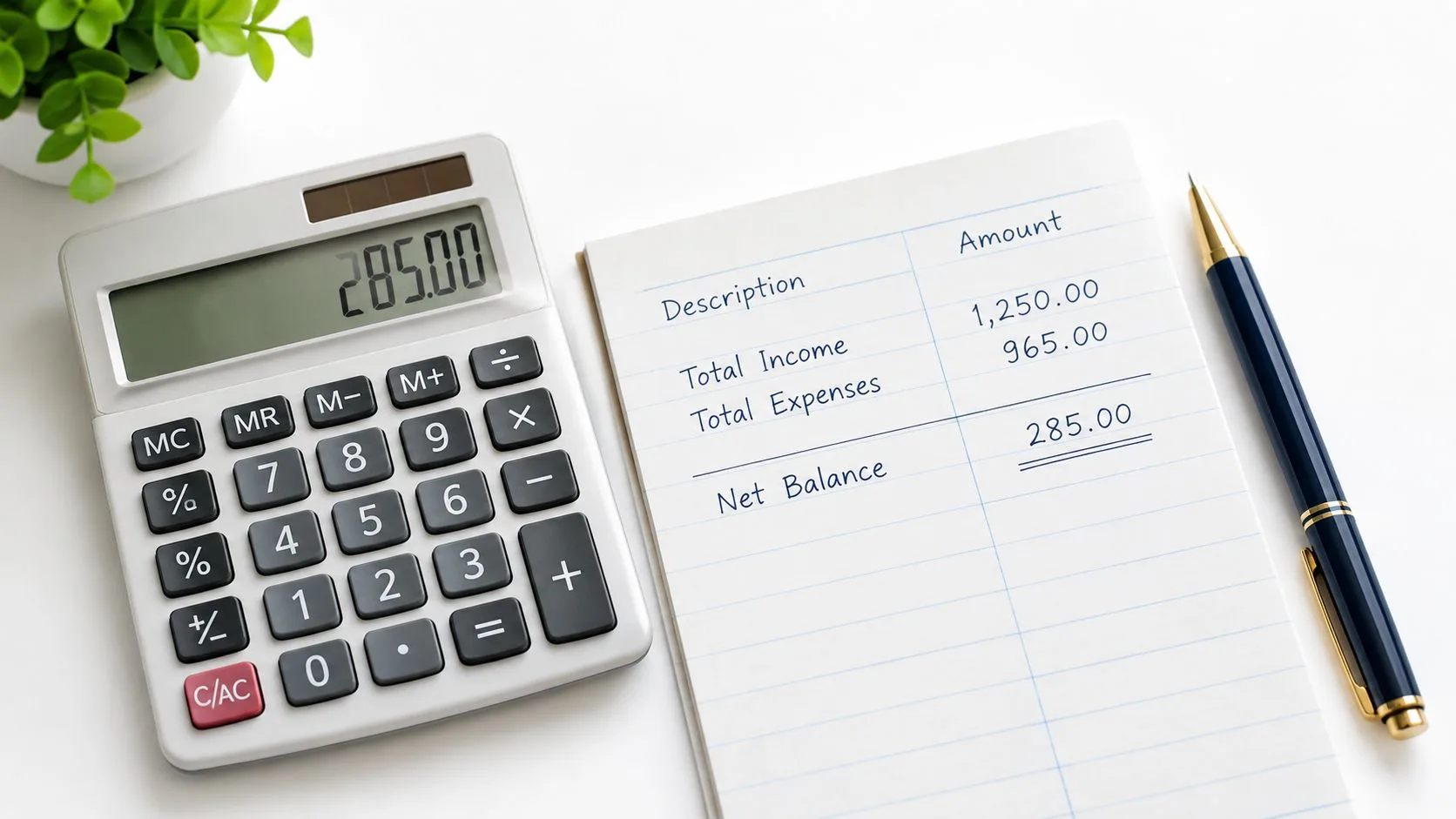
The calculation should begin with a transaction-level schedule. List each affected invoice or adjustment, identify its original VAT treatment, state the correct treatment, and calculate the difference in VAT. Then group the results by affected VAT period and separate additional VAT due from VAT that should be reclaimed.
Build one defensible figure
Use this structure:
- Additional VAT due: Total the output tax or input tax corrections that increase the amount payable to HMRC.
- VAT reclaimable: Total the corrections that reduce the amount payable or create an amount due to the business.
- Net adjustment: Subtract reclaimable VAT from additional VAT due.
- Return entry: Put a positive net amount in box 1. Put an amount owed to the business in box 4.
For example, if a review finds several miscoded purchase invoices and the resulting net error is below £10,000, the business can test whether it qualifies for adjustment on the next return. The working paper should show every invoice, the corrected VAT treatment and the calculation that produces the net figure. The fact that the result is small doesn't justify a single unexplained journal.
A second example may involve a net error between £10,000 and £50,000. The business must compare that amount with 1% of box 6 sales in the discovery period. If the amount remains within the permitted percentage, the next-return route may be available. If it exceeds that percentage, the business must use separate notification instead.
The calculation must distinguish between an invoice value and the VAT error. Don't test the gross sales or purchase value against the limits. Test the net VAT difference and document the box 6 figure used in the decision.
For guidance on the underlying distinction between output VAT and input VAT, use this output and input VAT explanation. It can help a non-specialist director understand why a correction may involve both sides of the VAT account.
After the calculation is checked, post the appropriate adjustment in the accounting records and retain the original return evidence. The ledger, VAT report, schedule and submitted return should tell the same story.
A short visual explanation can be useful when training staff on how the figures flow into the return:
Don't round away differences or combine unrelated issues just to produce one convenient entry. Where several corrections are present, show each item separately before presenting the net total.
Building an Audit-Ready Error Correction File
A correction file should allow a reviewer to reconstruct the event from discovery to submission. It shouldn't be a folder containing an exported VAT report and a journal description that says “VAT correction”.
Create one file for the issue, even where the correction will be entered on the next return. For multiple errors across several returns, use a master schedule with a separate section for each affected period.
The five records to retain
Discovery record. State the date the business found the issue, who found it and how it came to light. A bookkeeping review, supplier query or VAT reconciliation may each lead to discovery, but the file should identify the actual event.
Cause note. Explain what happened in operational terms. For example, a tax code was applied incorrectly during invoice processing, or a transaction was omitted from the VAT review. Include the failed control and any relevant staff or system change without assigning blame unsupported by the evidence.
Period map. List every affected VAT accounting period. If one recurring error affected more than one return, don't compress the periods into a vague statement. Show which transactions belong to which return.
VAT treatment schedule. Record the original treatment, the correct treatment, whether the item affects input or output tax, and the supporting invoice or document. Include the relevant transaction references so a reviewer can trace each line back to the ledger.
Net adjustment calculation. Show additional VAT due, VAT reclaimable, the net result, the box 6 sales figure used for the threshold test and the proposed reporting route. Add evidence of management review and approval before submission.
HMRC requires businesses to retain details of when the error was discovered, how it arose and the VAT amount involved. A clear business records retention guide can help directors think through their broader filing arrangements, but the VAT correction file should remain specific to the tax issue.
Make the narrative consistent
The discovery date in the cover note should agree with the review log. The cause described in the management note should agree with the transaction schedule. The net amount should reconcile to the return entry or separate notification.
A larger disclosed error with complete records may be easier to defend than a smaller adjustment with no explanation. Size matters for the correction route, but documentation determines whether the business can demonstrate reasonable care and answer questions without reconstructing events months later.
Store the original VAT return, ledger export and relevant invoices before applying historical changes. Add the submitted adjustment or notification to the same file, followed by evidence of review. That structure creates a repeatable process for future VAT reviews.
Avoiding Hidden Compliance Risks in Cloud Accounting Systems
Cloud bookkeeping encourages speed, and that speed can become a problem after a VAT return has been submitted. A user can often reopen an invoice, alter its tax code, delete a line or replace a transaction description without appreciating how the change affects the historical evidence.
Changing the ledger isn't automatically wrong. The danger arises when the business changes the original record without preserving what was reported and without explaining why the change was made. A later reviewer may see a clean transaction but struggle to establish what the business knew, when it knew it and how the correction was calculated.
Freeze the evidence first
Before editing Xero, QuickBooks or another platform:
- Export the original reports: Save the VAT return report, relevant sales and purchase ledgers, and transaction detail.
- Preserve source documents: Retain invoices, credit notes, import evidence and correspondence linked to the issue.
- Record discovery: Note who identified the problem and the discovery date before anyone changes the tax coding.
- Reconcile periods: Compare the original return with the corrected transaction schedule.
- Review behaviour: Consider whether the facts indicate reasonable care, carelessness or deliberate action.
HMRC's guidance recognises that the treatment of an error depends on behaviour. An unprompted disclosure of a careless inaccuracy can potentially reduce a penalty to nil where the relevant facts are disclosed, the business cooperates with verification and HMRC accepts the disclosure. That possibility reinforces the value of an honest, contemporaneous record, not a retrospective clean-up.
The Xero setup guidance for small businesses is relevant to the preventive side of the problem. Correct tax-code configuration at the start reduces the need for historical editing later.
Controls that survive staff changes
Use approval for new VAT codes and restrict who can create or amend them. Run exception reports for unusual tax treatments, zero-rated or exempt entries and transactions posted after a return has been filed. Reconcile the VAT control account to the return before submission and investigate differences rather than carrying them forward.
Cloud software doesn't replace judgement. It records activity, but the business still needs a documented process that explains material edits and protects the original return evidence.
Practical Next Steps for SMEs After Spotting a VAT Error
The best response begins with a pause. Don't change the invoice, repost the transaction or submit an adjustment until someone has captured the original position and identified the affected period.
A director can use the following sequence:
- Secure the evidence. Export the original VAT reports and preserve the invoices, ledgers and supporting correspondence.
- Define the issue. Describe the transaction, VAT treatment, accounting period and cause in plain language.
- Calculate the net error. Offset VAT due against VAT that should be reclaimed.
- Test the route. Consider the value, the box 6 comparison, the four-year window and whether the error was deliberate.
- Prepare the file. Add the discovery date, cause, periods, treatment schedule, calculation and management approval.
- Submit carefully. Enter a qualifying positive adjustment in box 1, or an amount owed to the business in box 4. Use separate notification where the rules require it.
- Fix the control. Change the VAT-code approval, reconciliation, training or review process that allowed the issue to arise.
A short director's review
Before signing off, ask:
- Can another person identify every affected transaction?
- Does the calculation reconcile to the proposed adjustment?
- Does the file show when the issue was discovered?
- Does the explanation distinguish a mistake from a deliberate inaccuracy?
- Have historical cloud-system changes been documented?
- Is the same error likely to recur after a staff change or software migration?
These questions turn VAT error correction into part of financial governance. The immediate return adjustment matters, but the recurring control failure matters more for a growing SME. A business that reviews its VAT codes, reconciles regularly and documents exceptions will be better placed to identify and explain problems before they spread across returns.
Stewart Accounting Services is one option for SMEs that want support with VAT return preparation, bookkeeping and cloud-based accounting processes. An adviser can help review the correction route, prepare the supporting schedule and establish controls that fit the business's existing systems.
Take the next practical step today. Export the original VAT evidence, open a dedicated correction file and record the discovery date before editing your bookkeeping system. If the route or behaviour is unclear, ask a qualified UK VAT adviser to review the facts before the next return is submitted.
Recent Posts
06 Oct, 2026