

How to Track Sales and Costs with Bookkeeping for Pubs and Bars Falkirk
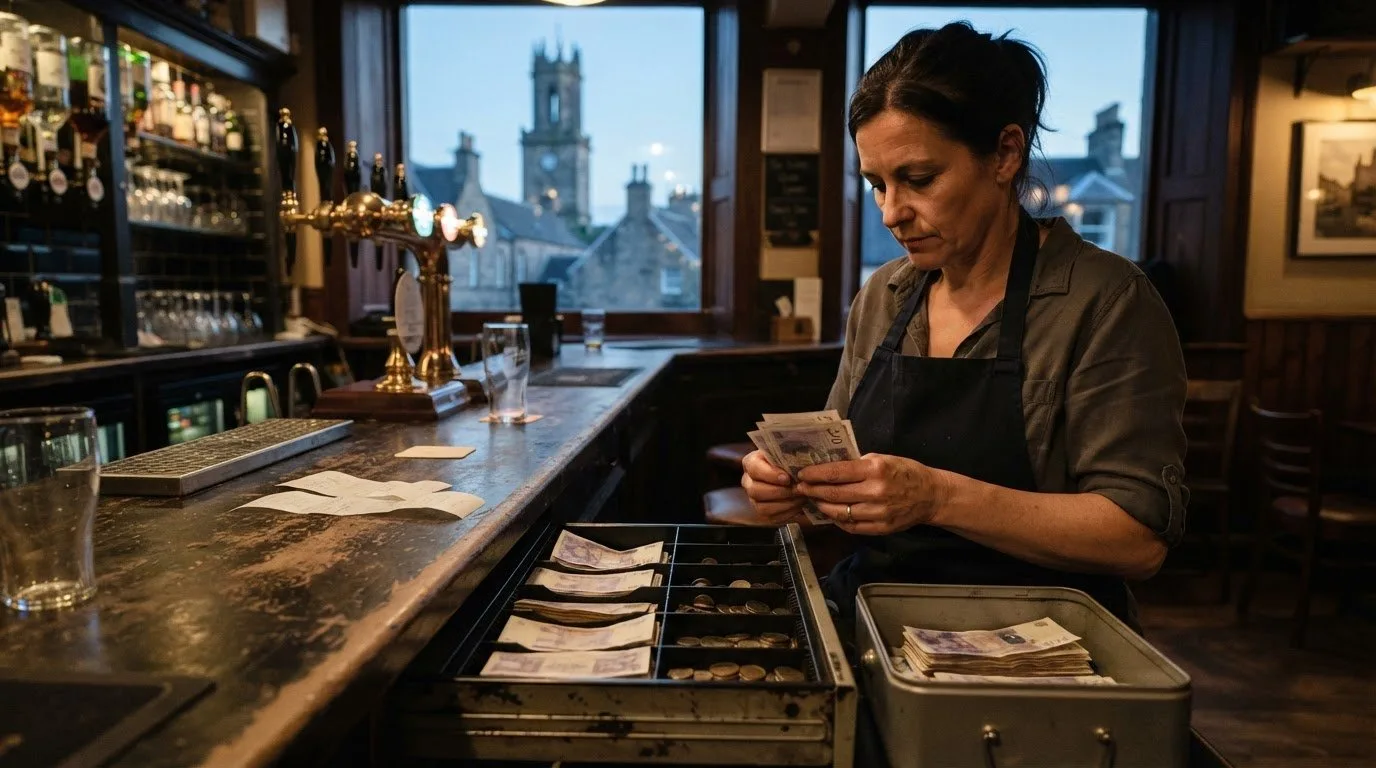
Could your till totals explain where the money went, as well as how much came in? Bookkeeping for pubs and bars in Falkirk works best when daily sales, cash differences and till purchases are recorded clearly and matched against bank statements.
With busy service, card payments and staff costs to track, takings alone may not show the full picture. A consistent bookkeeping process gives you a clearer view of what your pub, bar, hotel or guesthouse earns and spends, and helps you spot discrepancies while they are easier to trace.
This guide explains how to record daily sales, account for cash variances and till purchases, reconcile bank activity, and monitor revenue, wage costs and profit. It also shows how organised records can support practical decisions in a hospitality business, so you can understand your figures with greater confidence and spend less time untangling them.
Key Takeaways
- Use daily till and payment records to organise sales under relevant account headings and build a clearer picture of trading.
- Record cash-up amounts and purchases paid from the till or safe separately, so cash differences are easier to trace.
- Reconcile bank statements regularly against your bookkeeping records to identify missing payments and discrepancies.
- Review revenue, wage costs and profit together to understand how staffing and trading affect your results.
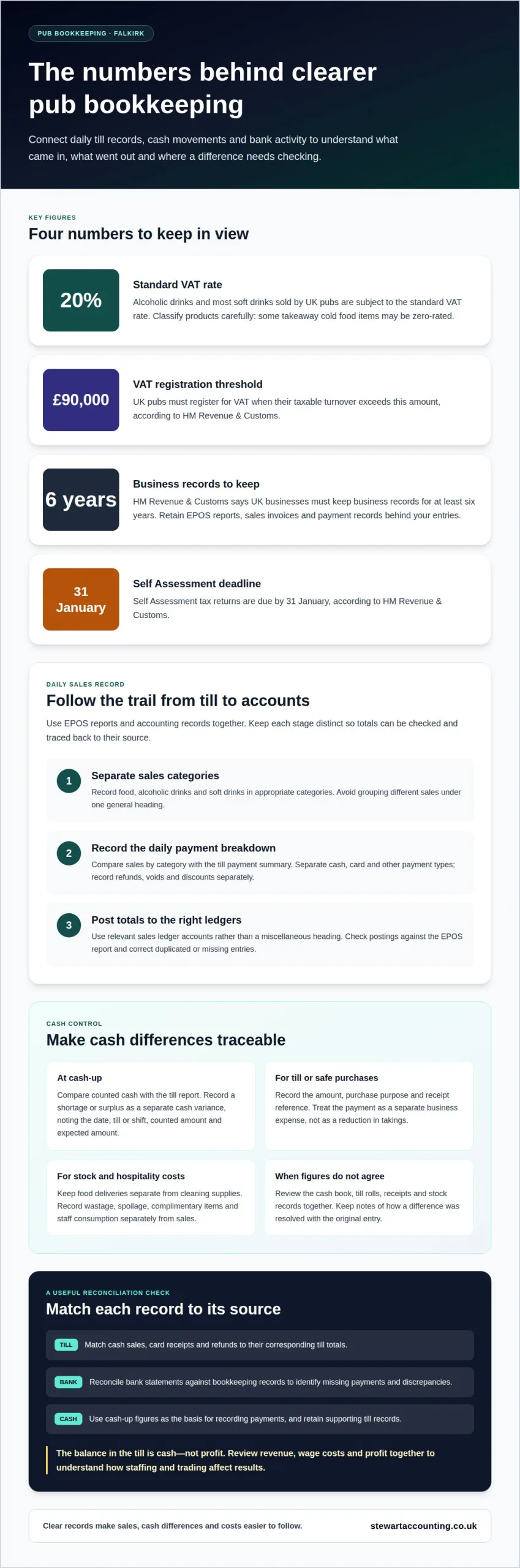
- Know when VAT registration applies: UK pubs must register for VAT when their taxable turnover exceeds £90,000, according to HM Revenue & Customs.
Automating sales and payment records
Use your EPOS and accounting software together to organise sales, payments and VAT records. Separate sales categories and review daily totals so reports reflect actual trading.
-
Separate Wet and Dry Sales
Set up separate sales categories for drinks and food in your EPOS system. Record alcoholic drinks, soft drinks, meals and takeaway items in the appropriate categories. This gives you a clearer view of wet and dry sales and helps you compare their margins. Check that staff select the correct till item, and avoid grouping different sales under one general heading.
-
Track Daily Sales
At the end of each trading day, export or enter the EPOS sales report into your accounting records. Compare sales by category with the till’s payment summary, separating cash, card and other payment types. Record refunds, voids and discounts separately so they do not silently reduce reported takings. A dated daily record gives your accountant a consistent basis for reviewing reports and trends.
-
Post Sales to Ledgers
Post each sales total to the relevant sales ledger account rather than a miscellaneous heading. Use separate accounts for food, alcoholic drinks and soft drinks where your records support that split. A sales ledger shows amounts owed by customers, while purchase ledgers track supplier balances. Review postings against the EPOS report and correct duplicated or missing entries before preparing accounts.
- Connect your EPOS system to cloud accounting software, such as Xero or QuickBooks, if the systems support integration. Arrange for sales data to transfer regularly, ideally each day, then review imported totals rather than assuming every entry is correct. For VAT, alcoholic drinks and most soft drinks sold by UK pubs are subject to the standard VAT rate of 20%. Some takeaway cold food items may be zero-rated, so classify products carefully.
For VAT-registered pubs, Making Tax Digital (MTD) requires compatible software to keep digital VAT records and submit VAT returns digitally. Choose a system that supports MTD and check that sales and VAT data transfer accurately.
- Keep the source documents behind your entries, including EPOS reports, sales invoices and payment records. HM Revenue & Customs says UK businesses must keep business records for at least six years. UK pubs must register for VAT when their taxable turnover exceeds £90,000, according to HM Revenue & Customs. Self Assessment tax returns are due by 31st January, according to HM Revenue & Customs. Organised records help support accurate returns and year-end reporting.
For a Falkirk pub, bookkeeping records should include dated sales summaries, payment breakdowns, VAT information and supporting documents. Organise them so each ledger entry can be traced back to its source.
Recording cash variances and till purchases
- Record the cash counted at each cash-up and compare it with the cash total on the till report. Enter any difference as a separate cash variance rather than changing the sales figure to force a match. Note the date, till or shift, counted amount and expected amount. This creates a clear trail for investigating a shortage or surplus later.
- Keep an accurate cash book and reconcile it against till rolls. Match cash sales, card receipts and refunds to their corresponding till totals, then record each cash movement separately. If cash from a till or safe pays a supplier, enter the amount, purchase purpose and receipt reference. Treat this as a separate business expense, not a reduction in takings.
- Record stock deliveries, supplier invoices and hospitality purchases under relevant expense categories. For example, enter a food delivery separately from cleaning supplies instead of combining them as miscellaneous costs. Record wastage, spoilage, complimentary items and staff consumption separately from sales. Regular stock counts can help explain differences between purchases, recorded waste and items sold.
- Use cash records to understand cash flow, but do not treat the balance in the till as profit. Compare cash received with payments due, including supplier invoices and wages, to see whether funds will be available when bills fall due. A forecast can map expected receipts against planned outgoings. Update it when bookings, trading patterns or payment dates change, so decisions reflect current records.
- Plan for seasonal changes by reviewing past sales patterns and known events in your pub’s calendar. A busy period may bring higher takings, but it can also require larger stock orders and additional staffing. Include those costs and payment dates in your budget. Compare actual cash flow with the forecast, investigate differences and adjust upcoming purchases or spending plans.
- Review the cash book, till rolls, receipts and stock records together when figures don’t agree. For instance, a recorded cash purchase without a receipt reference may explain why the safe balance differs from the expected amount. Keep notes of the resolution with the original entry, so the records remain accurate and understandable. If cash-flow planning needs support, you can discuss a cashflow forecast.
Pub, hotel and restaurant businesses should keep an accurate cash book that reconciles to till rolls. Recording payments based on the amounts received at cash-up can help account for and track cash variances. Use the cash-up figures as the basis for recording each payment, and retain the supporting till records so a difference can be followed through from the cash count to the books. Pubs need rigorous reconciliation practices to manage high volumes of cash and card transactions. Check each type of receipt against its corresponding record, rather than relying on a combined total that could conceal a mismatch.
A pub’s EPOS system may post purchases paid for with cash from tills or a safe into the accounting package. Check that each purchase appears in the books and has a supporting receipt or invoice. Compare the posted purchase with the cash movement recorded at cash-up, and investigate any mismatch before treating the records as complete. Consistent checks help distinguish a genuine till variance from a purchase that has not been entered or matched correctly.
Bank statement reconciliation
- Open each bank statement and compare its transactions with the corresponding entries in your accounting records. Work through the statement line by line rather than checking only the closing balance. Match deposits, card settlements, supplier payments and bank charges to their recorded entries. For pubs and bars in Falkirk, regular bookkeeping reviews can reveal omitted transactions that a matching balance might conceal.
- Match card settlement payments to the corresponding payment provider reports and recorded sales. A provider may pay a combined amount after deducting fees, so check the settlement breakdown rather than expecting each till transaction to appear separately. Record gross sales and fees clearly, then reconcile the net amount received to the bank statement.
- Match supplier payments to invoices by checking the supplier name, payment date and reference. If your accounting software contains the invoice, it may let you reconcile it against a bank statement in one click. Review the suggested match first. A similar amount alone does not prove that the payment belongs to that invoice, especially when one transfer covers several bills.
- Check payroll payments against payroll records and bank entries for the relevant pay run. Compare the payment reference and total with the recorded amount, then identify any separate payments to staff. If the bank shows a payroll payment without a matching record, investigate it before marking the statement line as reconciled.
- Enter bank charges, interest, refunds and transfers shown on statements but not yet recorded in the books. Use a suitable account heading for each item instead of grouping unrelated transactions under miscellaneous costs. For example, record a bank service charge separately from a supplier invoice. This keeps expense reporting clear and makes later reviews easier.
- Investigate unmatched items promptly and note what you find. A delayed card settlement, duplicated entry or payment posted to the wrong account can create an apparent discrepancy. Compare transaction dates, references and supporting documents before correcting the books. Do not delete an unclear entry simply to make the reconciliation balance.
- Reconcile statements regularly and finish each review by confirming that every statement line has a match or an explanation. Save the statement and supporting records together, including supplier invoices and payroll reports. For pubs and bars in Falkirk, reliable bookkeeping documents recurring unmatched payments and addresses their cause, such as missing invoice entries or inconsistent payment references.
Monitoring pub revenue, wage costs and profit
- Separate revenue into useful categories, such as food, alcoholic drinks, soft drinks and room income. Use the same categories in each reporting period to compare trading like for like. For example, if food revenue rises while drink revenue falls, investigate whether the change reflects sales volume, opening patterns or product mix. Category reporting makes performance easier to interpret than a single takings figure.
- Review gross profit by comparing sales revenue with the direct cost of goods sold. For a bar, compare drink sales with the cost of drinks sold. For a pub kitchen, compare food sales with the ingredients used. A lower gross margin can point to price changes, purchasing costs, wastage or stock records that need closer review.
- Track wage costs alongside revenue, not as an isolated total. Record wages against the relevant pay period and compare staffing costs with the trading activity they supported. A quiet shift with the same staffing pattern as a busy service may affect the result. Use the comparison to plan rotas around bookings, service periods and expected demand while keeping payroll records accurate.
- Record tips, tronc payments and other employee benefits clearly in payroll records. Pubs may also manage zero-hours contracts and frequent staff changes, which can make records more involved. Keep each payment type identifiable and match it to the appropriate payroll information. This helps you understand staffing costs and supports accurate reporting when employees join or leave.
- Calculate net profit by including operating costs such as rent, utilities, insurance and repairs alongside gross profit. Review the same account headings in each reporting period. If revenue is steady but net profit falls, compare expenses and wage costs to identify what changed. Higher sales do not necessarily mean higher profit, because the costs of generating those sales matter too.
- Use the figures to guide decisions across the hospitality industry. Compare actual results with your budget, then note the reason for material differences, such as a private event or an unexpected repair. A management report can bring revenue, wage costs, gross margins and net profit together. Review it before making changes to prices, staffing or purchasing, and consider whether those changes support sustainable returns.
Pubs may need to account for tips and tronc schemes, zero-hours contracts and frequent staff changes in payroll management. When reviewing wage costs, consider whether these factors explain movement between reporting periods. Clear payroll information makes staffing costs easier to interpret alongside revenue and profit.
Bookkeeping for pubs, bars, hotels and guesthouses
- Choose accounting software that suits the transactions your hospitality business handles. Useful functions include bank feeds, card-machine connections, VAT calculations and submissions, payroll, stock tracking and mobile access. For a hotel or guesthouse, organise income and costs by activity, such as accommodation, food and bar sales. Separate categories help reports show where revenue comes from and which costs relate to each part of the business.
- Cloud bookkeeping lets you access records through online accounting software, while a local bookkeeper can provide support based on your business records and reporting needs. Either approach can work with compatible systems; the useful comparison is whether transactions are recorded accurately, reconciliations are kept current, and you receive reports you can act on. Cloud software can also connect with other applications, including some EPOS systems.
- Choose a bookkeeper by considering relevant qualifications, hospitality experience and familiarity with your business systems. Check that their process covers sales, supplier purchases, bank reconciliations, VAT records and clear management reporting. For example, a pub with rooms needs records that distinguish accommodation income from bar takings. Agree how records and reports will be handled so you know what information supports your decisions.
- For pubs and bars with staff, payroll records should account for wages, tips and other employee benefits. Employers must operate PAYE and handle income tax and National Insurance contributions. They also have auto-enrolment duties, including assessing eligibility, calculating contributions and submitting pension data. Accurate staff information helps payroll reflect new starters, leavers, variable shifts and tips or tronc payments.
- Set up bookkeeping around the work your pub, bar, hotel or guesthouse does. Core records include sales, supplier invoices, bank transactions, VAT information and payroll. Stock records and regular stocktaking can help monitor sales and support accurate accounts. Reports may bring together VAT returns, payroll and stock information alongside year-end statements. If the business manufactures or imports alcohol, alcohol duty regulations are relevant to its accounting.
- Use regular stocktaking to compare recorded stock with what remains on site. For example, investigate differences between recorded purchases, sales and stock levels, and keep wastage distinct from sold items. A consistent approach supports clearer reporting across a bar and accommodation business, where costs and income arise from different activities. Discuss the bookkeeping support your hospitality operation needs and talk through your requirements.
Stewart Accounting Services: Bookkeeping Services
Stewart Accounting Services can help you keep pub sales, purchases and payments organised through tailored bookkeeping. If cash-ups, supplier records or reconciliations are taking time away from running your venue, Bookkeeping Services can take it off your hands and give you clearer records for decisions.
Support can also include Payroll Services, Year End Accounts Preparation and Self Assessment Tax Returns, as needed for your business. Consistent records can mean less time untangling transactions, giving you more time, more money and more mind.
If you’d like to discuss bookkeeping support for your pub or bar, contact Stewart Accounting Services.
Make your records work for your next decision
Reliable bookkeeping for pubs and bars in Falkirk does more than organise past transactions. It gives you a useful basis for planning staffing, managing cash and assessing changes to your business. Turn consistent records into information you can use instead of leaving the figures until year end.
Stewart Accounting Services provides Bookkeeping Services, Year End Accounts Preparation and Self Assessment Tax Returns to support your business’s financial records and reporting. Discuss the level of help that fits your pub, bar or wider hospitality business, and identify which bookkeeping tasks are taking time away from running it.
Clearer financial processes can give you more time to focus on your team and customers, and more confidence in business decisions. Contact Stewart Accounting Services to discuss your bookkeeping needs and take the next step towards more time, more money, more mind.
Frequently Asked Questions
Can a Specialist Pub Accountant Help You?
Yes. An accountant who understands hospitality can help make financial information useful for decisions, not just year-end paperwork. For example, you could discuss how to interpret a change in food sales alongside drink sales, or plan for a quieter trading period. Stewart Accounting Services works with hospitality businesses and can help you understand which accounting support suits your needs.
Why Are Pub Accounts Important?
Pub accounts help you understand how the business is performing and provide a reliable record of its financial activity. They can support decisions such as reviewing menu prices, planning equipment investment or assessing whether a new service is viable. Clear records also make it easier to explain transactions during tax preparation and year-end accounts work, rather than relying on memory when details are needed.
How should a pub record daily takings, cash and card sales?
Record sales against the date they were made, keeping cash and card totals distinct. A card payment may reach the bank after the trading date, so do not record the later deposit as a second sale. Keep the till report as supporting evidence and note refunds or adjustments separately. This links each day’s trading to the money received without confusing sales timing with settlement timing.
How can pubs reconcile tills, payment providers and bank statements?
Compare the till’s card total with the payment provider’s settlement report, then match the resulting deposit to the bank statement. If the deposit is lower, check whether the provider deducted fees or included transactions from different trading dates. Keep the settlement report with your reconciliation notes. This explains timing or fee differences and helps prevent unmatched amounts from carrying forward unnoticed.
Recent Posts
07 Nov, 2026