

Signs I’ve Outgrown My Accountant: Spot Misaligned Advice and Cashflow Gaps

Could the signs I’ve outgrown my accountant be showing up before a missed filing? Often, the clearest clues are advice that no longer reflects your goals, cashflow information that arrives too late to guide decisions, or difficulty getting clear answers when you need them. Your accounts may be filed correctly while the support around them no longer fits your business.
It’s understandable to hesitate before changing accountants, especially if you’ve worked together for years. A poor fit doesn’t necessarily mean anyone has done something wrong. Your business may simply have changed, bringing new questions and priorities.
This article explains how to spot misaligned advice, weak cashflow insight, limited capacity and communication problems. You’ll also learn how to weigh those signs, raise concerns with your current accountant and decide whether a change makes sense. The aim is to help you find support that gives you clearer financial insight and more confidence in business decisions.
Key Takeaways
- Look for advice that reflects your business goals and personal priorities, not just routine filing.
- Assess whether financial information arrives in time to help you plan for cash needs and make decisions.
- Notice when your business’s growth brings questions or reporting needs your current support can’t keep pace with.
- Before switching, explain what isn’t working and what kind of support would help you move forward.
- Weigh the quality of communication alongside technical work, then consider whether a structured handover would make a change easier.
1. Aligning business advice with personal goals
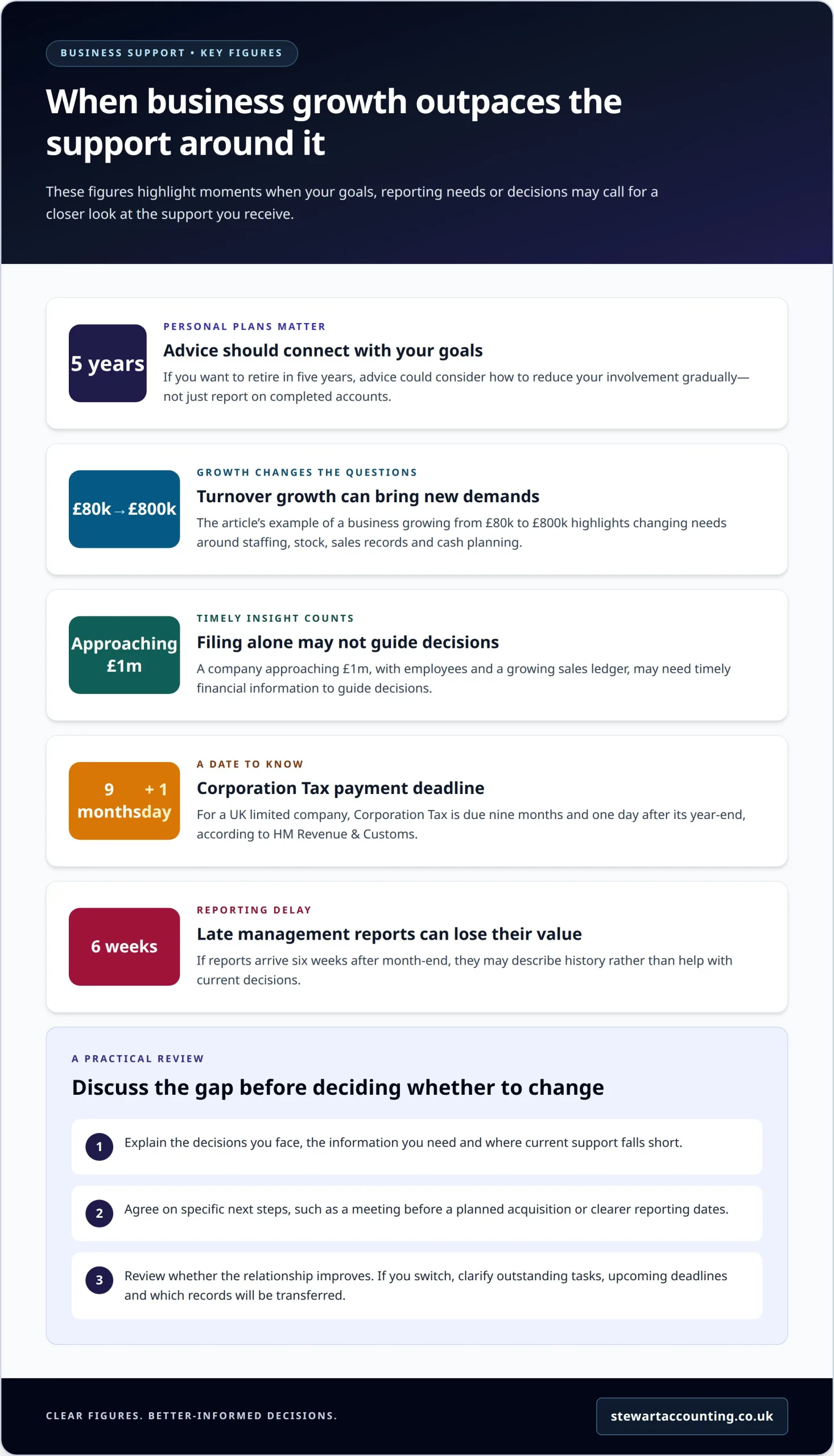
An accountant’s work should fit your business plans and priorities outside work. For example, if you want to retire in five years, advice could consider how to reduce your involvement gradually. If your accountant only discusses completed accounts, their support may no longer match your goals. Ask whether their recommendations reflect the direction you want to take.
Compliance and commercial advice serve different purposes. Compliance covers tasks such as preparing accounts and tax returns; commercial advice helps you assess decisions before committing. Imagine a growing beauty business considering a major equipment purchase. The discussion should cover not only how to record it, but whether the cost, expected income and available cash support the decision. Advice should connect the numbers to your plans.
Fees are only one part of value. Compare the fee with the agreed work, the clarity of advice and the decisions it helps you make. You should understand what the fee covers and what may cost extra.
Should you use an accountant, bookkeeping software or a specialist tax adviser for your business? Software can help organise records, while an accountant can interpret them and support wider business decisions. A specialist tax adviser may suit a specific or complex tax question, while some businesses need both forms of professional input.
To judge whether your accountant is making errors or missing tax deadlines, compare submitted returns and accounts with your records, and note any HMRC corrections or late-filing notices. For a UK limited company, Corporation Tax is due nine months and one day after its year-end, according to HM Revenue & Customs. A missed payment, unexplained discrepancy or repeated correction deserves a prompt, specific explanation.
How do UK accountant engagement letters, notice periods and fees work? The engagement letter sets out the agreed work, charges, payment terms and how either side can end the arrangement. Read its notice and extra-work clauses before deciding. These terms depend on your agreement, so don’t assume every firm uses the same notice period or fee structure.
Proactive advice should reach you before decisions become urgent. If you plan to hire, change prices or invest, ask for an explanation of likely costs, tax effects and cash implications. When advice repeatedly arrives after the decision, or ignores your available time and personal aims, that can be one of the signs you’ve outgrown your accountant. A straightforward conversation about your goals can show whether the relationship can adapt.
2. So, should you change your accountant?
Not necessarily. Start with a direct conversation about what has changed: explain the decisions you face, the information you need and where current support falls short. Agree on specific next steps, such as a meeting before a planned acquisition or clearer reporting dates. Then assess whether the relationship improves. Owners sometimes stay out of familiarity, even when the service no longer matches their needs.
Growth can change the questions an accountant needs to answer. A business rising from £80k to £800k in turnover may face new demands around staffing, stock, sales records and cash planning. A company approaching £1m, with employees and a growing sales ledger, may need timely financial information. Filing accounts and submitting a tax return don’t necessarily provide the insight needed to guide those decisions.
Major changes call for early financial input. Before buying another business, raising finance or bringing in investors, you need to understand the likely effects on cash, costs and the company’s plans. An exit also needs preparation, since timing and structure can affect the financial outcome. If your accountant only hears about these plans after decisions are made, discuss how their support could begin earlier.
A supportive accountant relationship includes clear answers, reasonable response times and follow-up when research is needed. Your accountant should raise possible risks and opportunities before a decision becomes urgent, not simply process figures afterwards. If you ask about a forecast, for example, the answer should explain what the numbers mean for hiring or investment. Repeated generic replies or unexplained delays are useful evidence to raise in a review of the support you receive.
Changing firms can create handover risks if deadlines, records or responsibilities are unclear. A missing document or uncertain filing status could delay work or leave you unsure what remains due. Reduce disruption by agreeing who handles each outstanding task, listing upcoming deadlines, and arranging the transfer of accounts, tax records and relevant correspondence. Keep written confirmation of what has been sent and what the new arrangement covers.
Before deciding, give your current accountant a clear opportunity to address the gaps. Set out the support you need, ask what can change, and agree when you will review progress. If your business is planning an acquisition, fundraising or an exit, ask for the financial input before committing. If a clear discussion still leaves key needs unmet, a structured handover can make switching more straightforward. You can talk through your changing support needs before deciding on the next step.
3. Management information and cashflow forecasting
Annual accounts explain past performance, but may describe a position already more than a year old. That timing makes them a weak guide to this month’s decisions. Management accounts can show income, costs and profit across a recent period, helping you see whether sales growth is translating into worthwhile returns. If reports arrive six weeks after month-end, they may be history rather than useful decision support.
Look beyond the headline profit. Compare actual figures with your budget, then investigate large differences. For example, if staff costs rise while sales stay flat, ask whether extra hours, recruitment or lower productivity explain the change. A clear report should show the figures behind the movement and identify what needs discussion. If you cannot tell what changed or why, your bookkeeping may need closer review.
Cashflow forecasting answers a different question: when will money enter and leave the business? A profitable company can still face a shortfall if customers pay late or large bills fall due together. If a client pays 30 days late, for example, the forecast should show how that delay affects wages, suppliers and available cash. Regular updates help you anticipate cash requirements and consider options before a payment deadline arrives.
A useful forecast sets out expected receipts, regular costs, tax payments and planned purchases. Compare it with actual cash movements each month, then revise assumptions when invoices are delayed or costs change. This turns financial reporting into a working tool for decisions about recruitment, investment and growth. Accurate bookkeeping records help make those reports more meaningful by keeping transactions organised and current.
Management information can also expose costs that deserve investigation. For instance, better reporting might reveal £15,000 in unnecessary staff costs, or show that one service earns less profit than expected. Those figures are examples, not automatic conclusions: check the underlying records, ask what caused the pattern, and decide whether pricing, staffing or spending needs attention. Reports should support practical action, not just present tables.
Contractors should also understand how the Managed Service Company rules may affect their arrangements. In some circumstances, payments to a worker can be subject to deemed employment payment rules, creating PAYE and National Insurance liabilities. If your accountant cannot explain how your working arrangement affects your records and cash planning, ask for a clear explanation before relying on the figures.
If conversations about forecasts repeatedly end without current numbers, useful explanations or agreed next steps, that can signal a gap in support. Ask for reports that connect cash, costs and profit, and agree how often they should be updated. Then use each review to compare forecast with actual results, understand differences and choose the next action. That process makes financial information more useful than year-end figures alone.
4. Business growth outpacing an accounting firm
A growing business can outpace the support that suited it earlier. A sole practitioner may work well when questions are occasional and records are simple. As staff, stock, sales channels or group structures expand, decisions become more frequent and complex. The issue isn’t firm size alone; it’s whether your accountant understands how your business earns, spends and plans. If answers rely on general assumptions, explain what makes your operation different.
Ask for financial reports in plain language. If monthly turnover reaches £50,000 but you can’t explain the profit, the headline sales figure isn’t enough. Profit depends on costs, timing and the work behind each sale. A useful discussion should connect the figures to your business model, identify what has changed and explain what action may help. Business owners shouldn’t have to guess what a report means.
Compare sales growth with cost growth. For example, sales might rise by 15% while staff costs climb by 25%, putting pressure on profit margins. Ask what drove the difference: more hours, new recruitment, overtime or lower output. Then consider whether pricing, staffing or delivery needs attention. Your accountant should help interpret the records, not simply send a report without discussing its implications.
Commercial decisions also become more demanding as a company expands. Advice should test the assumptions behind an investment, not just explain how to record it. Before committing, the right questions can help clarify risks and likely effects on profitability.
Growth can change the financial information you need. Hiring staff, entering a new market or bringing in investors may create different reporting needs. A company with £100,000 turnover may need a different level of support from one reaching £500,000 or £1 million. The useful measure is whether reporting keeps pace with the decisions, transactions and controls your business now faces.
Check whether your accountant can explain how individual services contribute to overall profit. If an area appears busy but produces little return, ask for the revenue and related costs to be separated. Better analysis might identify £20,000 of underpricing, for example. That figure is an illustration, not a conclusion; the important step is tracing the cause through your records and deciding whether prices or costs need review.
Signs your support has fallen behind include unanswered questions about margins, reports you can’t use, and advice that arrives after a decision. Raise these points with specific examples from recent reports or business plans. Ask what analysis can be provided, who will discuss it with you, and how it will support upcoming choices. If your accountant can’t engage with the complexity your business now faces, the relationship may need to change.
5. Accountant communication and availability
If your accountant contacts you only once a year, their communication may no longer suit your business. Some owners send records annually, receive accounts several months later, then hear about a tax bill. That routine may have worked when the business was simpler. As it grows, you may need answers before decisions, not only after the financial year ends.
Timing matters as much as frequency. Year-end accounts can arrive nine months after the financial year ends, or even ten months later. By then, the information may not help you judge a current hiring decision or cash pressure. Ask when updates will arrive, which questions they cover, and who will follow up if your accountant needs more information.
A useful response addresses your actual question. If you ask whether a planned purchase fits your budget, a generic reply about keeping receipts won’t resolve the decision. You need a clear explanation, or a prompt update saying what information is still needed. Same-day replies aren’t the only measure of good communication; a useful answer within a timescale that suits the decision matters more.
Set practical expectations together. Agree how to send urgent questions, what information to include, and how you’ll know a response is pending. For example, label an email with the decision date and attach the relevant figures. If your accountant needs to investigate, ask when they expect to return with an answer. This creates a clear next step without assuming every issue can be resolved immediately.
Repeated delays can create avoidable pressure around deadlines. HMRC correspondence, an upcoming tax payment or an unanswered payroll query can each need timely attention. Keep a simple record of when you raised each issue, the question asked and the response received. That timeline helps distinguish an occasional delay from a pattern that prevents you from running the business confidently.
Consider whether your communication method still works. Emailing spreadsheets back and forth may feel like a workflow from 2007 if you need current figures to manage operations. A shared digital process can make records easier to access, but it still needs clear explanations and agreed responsibility. Technology won’t fix unclear answers or missed follow-ups by itself.
If you’ve worked with the same accountant for years, raise specific examples before deciding what to do. Explain which response or delay affected a business decision, then agree what better communication would look like. If the pattern continues, that may be one of the signs you need a different level of support. Discuss your accounting support needs and the communication that would help you move forward.
Stewart Accounting Services
Stewart Accounting Services can help if your accounts, records or payroll no longer fit the way your business runs. Its services include Bookkeeping Services, Year End Accounts Preparation, Self Assessment Tax Returns and Payroll Services. These can take routine accounting tasks off your hands and give you clearer information to discuss your next steps.
If you’re considering a change, explain what support you need and what isn’t working. Stewart Accounting Services can talk through how its accounting services relate to your situation, so you can decide whether they suit your needs. Contact Stewart Accounting Services to discuss your accounting support.
Choose the support that fits your next chapter
Changing accountants isn’t the only possible next step. A focused conversation may show whether your current relationship can adapt, or whether a different arrangement better fits your business. Consider what you need next: clear records, useful answers and more confidence in important decisions. If you find yourself thinking, “These are signs I’ve outgrown my accountant,” take that feeling seriously, then decide based on the support your business actually needs.
Stewart Accounting Services can help with practical accounting work, including Year End Accounts Preparation, Self Assessment Tax Returns and Bookkeeping Services. These services can give you more time to focus on running your business and clearer information when reviewing its finances. Fees are agreed in advance, and the firm never undertakes work without agreeing the fee in advance. You can arrange a free initial consultation in person at one of its offices or remotely.
Talk with Stewart Accounting Services about your accounting needs. A clearer path forward can help you move ahead with more time, more money, more mind.
Frequently Asked Questions
What are the clearest signs you have outgrown your accountant?
The clearest signs include advice that no longer fits your plans, difficulty getting useful answers, or financial information that doesn’t help you make decisions. Consider a recent business decision: did your accountant help you understand its financial effects before you acted? If you’re unsure, note where support fell short and raise those examples in a specific conversation.
Is it worth switching accountants mid-year?
A mid-year change can make sense if your current support isn’t meeting important needs. Plan the handover around outstanding work, upcoming filing dates and access to your records. Before ending the relationship, review your engagement terms for notice requirements and clarify who will handle work already underway. A clear transfer of documents and responsibilities helps reduce confusion during the change.
My accountant files everything on time, so is there really a problem?
Timely filings are valuable, but they don’t automatically show whether you’re getting the support your business needs. Consider whether you understand your financial position, can discuss upcoming decisions, and receive explanations that make sense to you. For example, accurate accounts may meet a filing requirement while leaving you unsure which services or customers contribute most to your results.
So, should you change your accountant?
Change if you’ve explained what needs to improve and the support still doesn’t fit your business. Before deciding, identify the specific gaps, such as advice arriving too late or reports you can’t use. Ask your current accountant whether the arrangement can change, then assess their response against your needs. A different accountant may be appropriate when the relationship no longer supports your priorities.
What are the signs my UK accountant is no longer meeting my needs?
In the UK, signs can include unclear explanations of your accounts, recurring problems with records, or little discussion of financial decisions beyond filing work. Your business may also have changed while the service still follows the same routine. Write down examples, such as a question left unresolved or a report you couldn’t use, and discuss the pattern directly.
What should a good UK accountant provide beyond filing tax returns?
A good accountant should help you understand the figures behind your tax return and how they relate to your business decisions. Depending on your needs, that could include clear explanations of income and costs, help interpreting financial reports, and discussion of future cash requirements. The support should match your circumstances, with responsibilities and agreed work made clear so you know what to expect.
Recent Posts
27 Nov, 2026