When we talk about business growth, it’s easy to just think "more sales." But that's only scratching the surface. True, sustainable growth is about strategically expanding your company's capacity, its reach in the market, and its overall value. It's a deliberate process, not a happy accident.
Think of it as strengthening every part of your business so that you build something more resilient, more profitable, and ready for the long haul.
Beyond Bigger: What Business Growth Really Means

For a UK SME owner, the word "growth" can be a bit daunting. It often conjures images of frantic hiring and sky-high sales targets, which isn't the whole story.
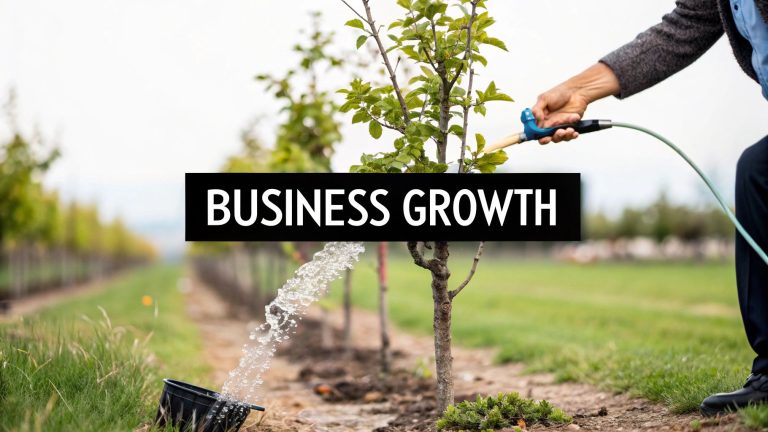
A better analogy is a skilled gardener tending to an orchard. They're not just focused on making one tree shoot up wildly. Instead, they're nurturing the entire system—improving the soil, pruning branches, and ensuring every tree is healthy and productive. The result is a robust orchard that can weather a bad season and produce a fantastic harvest year after year. That’s what real business growth looks like.
A Holistic View of Success
This idea of a healthier business system means looking at growth from several angles, not just how much money is coming in the door. It's about building a stronger company from the inside out.
We often see businesses fall into one of four key categories when they talk about growth. Each one tells a different part of the story, and understanding them helps you build a more balanced strategy.
The Four Core Pillars of Business Growth
The table below breaks down the different facets of growth. It helps to see that progress isn't just about one number going up; it’s about creating strength across the board.
| Pillar of Growth | What It Means for Your Business | Example Metric |
|---|---|---|
| Revenue Growth | This is the most common one—increasing the total income your business generates. It shows you're successfully selling more products or services. | Monthly or Annual Turnover |
| Profit Growth | It's not just what you make, it's what you keep. This means improving your bottom line, often by managing costs better or increasing prices. | Gross Profit Margin or Net Profit |
| Scaling | This is about improving your internal engine—your systems, team, and processes—so you can handle more work without things breaking or quality dropping. | Number of Customers Served per Employee |
| Market Share | This pillar focuses on growing your slice of the pie within your industry, establishing your brand as a key player and winning customers from competitors. | Percentage of Total Market Sales |
Recognising these different types of growth is the first step. The next is connecting all your business activities—from marketing to operations—directly to these goals. Modern strategies like growth marketing are built around this very idea, ensuring every action has a purpose.
The UK business environment is buzzing with this kind of activity. After a few tough years, the total number of private sector businesses climbed to 5.7 million, a 3.5% increase. While this renewed confidence is great news, it also reveals a crucial challenge: small businesses make up 99.2% of all companies but generate only 34% of the turnover. This gap highlights just how vital it is for SMEs to have a solid strategy to grow effectively.
At Stewart Accounting Services, this is exactly where we come in. We help you move beyond just watching your turnover and start building a robust strategy. It’s about turning that six-figure business into a resilient seven-figure operation that's built to last.
What Are the Four Key Types of Business Growth?

Getting to grips with the meaning of business growth is one thing, but the real magic happens when you understand the different forms it can take. Growth isn't a single, straight road. It’s more like a network of paths, and figuring out which one—or which combination—is right for your business is the key to creating a strategy that actually works.
Too many business owners get tunnel vision, chasing one type of growth while neglecting the others. A smarter, more sustainable approach is to see expansion as a multi-faceted goal. Let's break down the four primary ways your business can grow. Each has its own focus and requires a different game plan.
Revenue Growth: Increasing the Top Line
This is the one everyone talks about. Revenue growth is simply about increasing the total amount of money your business brings in from sales before taking out any costs. Think of it as opening the main tap wider to fill your company’s financial tank faster.
For a local builder in Stirling, this might look like winning more contracts, expanding their service area to cover Falkirk, or introducing a new, high-end service at a premium price. It’s a very visible and satisfying measure of success, but it doesn't paint the full picture.
Profit Growth: Improving the Bottom Line
Revenue might be vanity, but profit is sanity. Profit growth is what really keeps the lights on and fuels your business for the long haul. It's the money you have left after paying for everything—materials, wages, rent, and all the rest. Growing your profit makes your business more efficient, resilient, and ultimately, more valuable.
This isn't just about what you make; it’s about what you keep. A business can have sky-high revenues and still go under if it isn’t profitable.
Achieving this could mean negotiating better rates with your suppliers, finding ways to reduce waste on projects, or using technology to handle repetitive admin tasks. It’s all about making every pound you earn work that much harder for you.
Strategic Scaling: Expanding Your Capacity
Strategic scaling is about getting your business ready for a bigger future. It's the process of building the systems, team, and infrastructure needed to handle more work without the quality dropping or things falling apart. You're basically strengthening your company's engine so it can handle a heavier load.
This type of growth is all about your operational capacity. A few key areas include:
- Hiring and Training: Building a skilled team that can manage a bigger workload.
- Systemising Processes: Creating solid, repeatable workflows to keep quality consistent as you expand.
- Investing in Technology: Bringing in tools like Xero to get bookkeeping under control and see your financial position in real-time.
Market Share Growth: Capturing More of the Pie
Finally, there’s market share growth. This is all about increasing your company’s slice of the total sales in your industry or local area. If the total market for building services in your town is worth £10 million and your annual sales are £500,000, you have a 5% market share. Growing that percentage means you're becoming a more dominant player.
You can achieve this by outperforming your competitors, winning over their customers, or finding new groups of customers to serve. A good strategy here cements your brand’s reputation and builds a stronger, more defensible position in the marketplace.
How to Measure What Matters for Sustainable Growth
It’s one thing to talk about the different types of business growth, but how do you actually know if you’re heading in the right direction? The old saying, "if you can't measure it, you can't manage it," has never been more true. Relying on guesswork or getting sidetracked by vanity metrics—like social media likes—is like trying to navigate a ship without a compass.
To build a business that lasts, you need to track the right numbers. These are your Key Performance Indicators (KPIs), the vital signs that show you what’s really going on under the bonnet. They’re the difference between feeling like you're growing and knowing exactly how and where it’s happening.
Moving Beyond Simple Turnover
So many business owners get fixated on turnover. But that number, on its own, doesn't tell you much at all. The real insights come from digging a little deeper into a few core metrics that reveal how efficiently your business is running and how much real value you’re creating.
Let's break down three of the most important KPIs that help a business scale from six to seven figures.
Gross Profit Margin: Think of this as a crucial health check. It's the percentage of revenue you have left after paying for the direct costs of what you sell. A healthy margin proves your core business model is sound and can actually support expansion.
Customer Lifetime Value (CLV): How much is a single customer truly worth to your business over time? Knowing your CLV helps you make much smarter decisions about where to spend your marketing budget and how much to invest in keeping your existing customers happy.
Cash Conversion Cycle (CCC): This one sounds technical, but it’s simple: how quickly do you turn your investment in stock or resources back into cash in the bank? A shorter cycle means money flows back into your business faster, giving you the fuel you need to grow.
Getting to grips with these numbers is fundamental. You can dive deeper into the most important numbers to track when growing your business in our detailed guide.
Using Data to Drive Decisions
Thankfully, keeping track of these KPIs is far easier than it used to be. Modern cloud accounting software like Xero can turn these complex figures into a live, easy-to-read dashboard. This gives you a constant, up-to-the-minute view of your financial position, allowing you to make proactive decisions based on what's happening right now, not what happened months ago.
This approach is essential in the current economic climate. In fact, a recent report showed 90% of UK SMEs reported expansion, with an average growth of 27%. This just goes to show the massive opportunity out there for businesses that are managed with clarity. For the thousands of new businesses starting up—from property landlords to professional services contractors—having clear financial data is what separates those who thrive from those who just about survive.
At Stewart Accounting Services, we get these systems set up and running for you. We transform your financial data from a confusing pile of numbers into a clear, actionable roadmap. That's the clarity you need to steer your business towards sustainable, seven-figure success.
Navigating the Five Stages of the Business Lifecycle
Knowing what business growth is is one thing, but recognising where you are on the journey is something else entirely. Growth isn't a straight line; it's more like a series of distinct stages, each bringing its own unique set of problems to solve and goals to hit. Think of it like a person's life – from infancy through to adulthood, each phase is different.
By pinpointing exactly where your business sits in this lifecycle, you gain a massive advantage. It's like having a map. You can see the road ahead, anticipate the bumps, and make sure you're focusing your time and money where they’ll have the biggest impact.
The Startup Phase
This is ground zero. The launch. Right now, everything is about one thing: proving your idea works. Can you find customers who are willing to pay for what you’re offering?
Cash is almost always tight, and as the owner, you're juggling every role imaginable—salesperson, marketer, bookkeeper, and everything in between. The biggest hurdle is just getting a foothold and surviving. Financially, it’s about the basics: getting a business bank account set up and tracking those early costs, which for a sole trader, is the first step towards their self-assessment.
The Survival and Success Phases
Once you're up and running, you enter the Survival stage. The name says it all. The main goal is to get your cash flow sorted. Your concept is proven, but now you need to bring in enough money, consistently, to cover your outgoings and build a bit of a buffer. It's a critical time; many businesses stumble here simply because the cash runs out before they find their rhythm.
Get past that, and you're in the Success phase. The business is now reliably profitable. At this point, you have a choice: you can keep things steady or you can start planning the next big push. This is usually when the need for proper financial support becomes obvious. It's not just about surviving anymore; it’s about making smart decisions to improve profitability with better bookkeeping and regular financial reports.
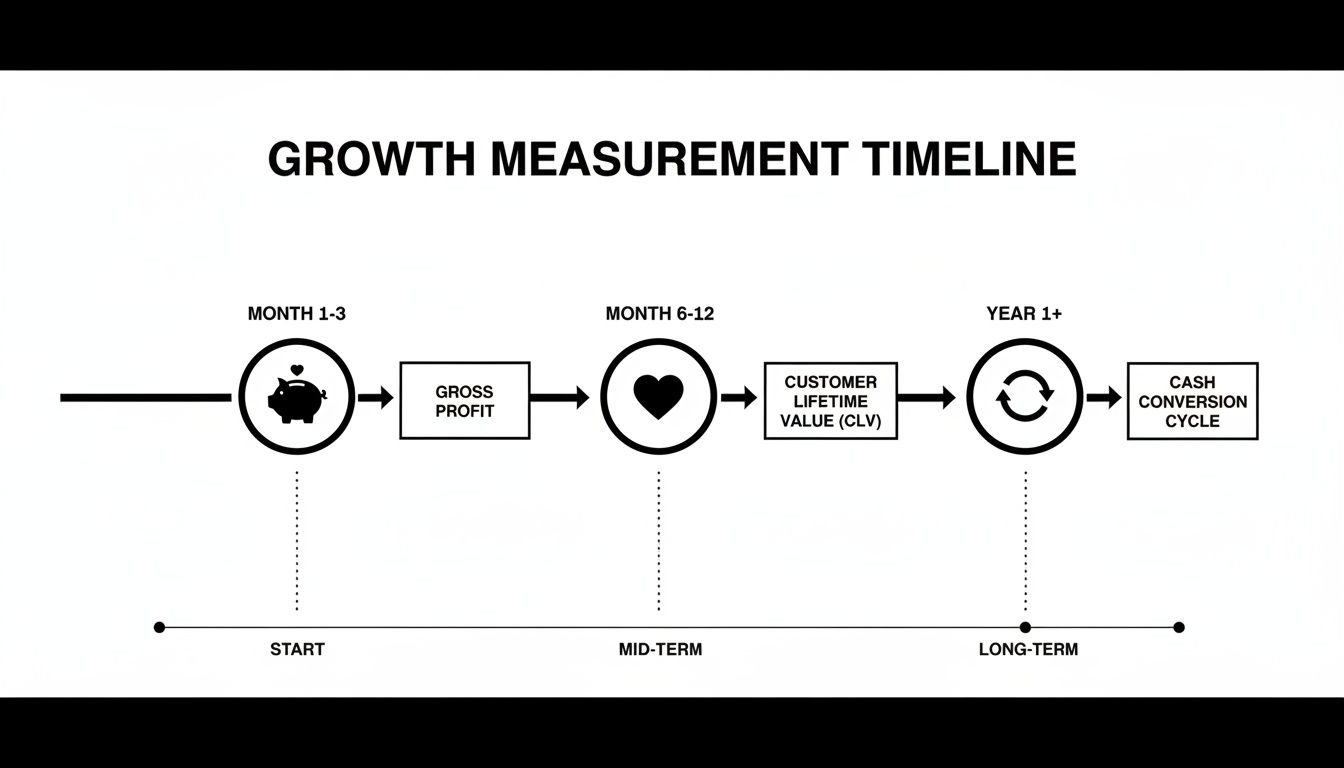
As you progress, keeping an eye on metrics like your gross profit, how much each customer is worth over their lifetime (CLV), and how quickly you turn investment into cash becomes vital for planning your next move.
The Scale-Up and Maturity Phases
The Scale-up phase (sometimes called the take-off stage) is where the real acceleration happens. This is the moment you transition from a small, owner-led operation into a more structured company. It’s a huge step that requires serious investment in your systems, your tech, and, most importantly, your people. As the owner, your role has to change from doing the work to leading the team.
This is often the toughest part of the journey. To get through it, you need solid financial systems, detailed management reports to see what's really going on, and smart tax planning to make sure your expansion doesn't run out of fuel. Professional support stops being a 'nice-to-have' and becomes absolutely essential.
Finally, a business reaches Maturity. At this point, it's an established name in the market, with solid processes and a strong brand. The focus changes from frantic growth to defending market share, driving innovation, and becoming as efficient as possible. The financial needs are more complex, too, involving detailed forecasting, looking at potential acquisitions, and long-term strategy.
To help you place your own business, here's a quick summary of what each stage looks and feels like from a financial perspective.
Challenges and Focus Areas Across Growth Stages
| Growth Stage | Primary Challenge | Key Financial Focus | How an Accountant Helps |
|---|---|---|---|
| Startup | Proving the business concept. | Basic expense tracking and survival cash. | Setting up accounts, self-assessment registration. |
| Survival | Achieving consistent positive cash flow. | Managing cash, breaking even. | Bookkeeping, simple cash flow statements. |
| Success | Maintaining stability and deciding on expansion. | Optimising profitability, building reserves. | Management accounts, initial tax planning. |
| Scale-Up | Managing rapid expansion without breaking. | Funding growth, managing complex finances. | Detailed forecasting, VAT, payroll, tax efficiency. |
| Maturity | Maintaining market share and efficiency. | Strategic financial planning, maximising value. | Advanced tax strategy, succession planning. |
Understanding these stages helps you prepare for what’s next and ensures you get the right support when you need it most. Whether it's the basic setup handled by Stewart Accounting Services in the early days or the strategic planning needed for maturity, having the right partner makes all the difference.
Practical Actions to Fuel Your Business Growth
Knowing the theory of business growth is one thing, but making it happen is another entirely. Real, sustainable growth isn't an accident; it’s the result of smart, consistent actions you take every single day. Think of this less as a to-do list and more as a practical guide to building genuine momentum.
The following steps are all about laying a solid foundation. Get these right, and you can scale your business without suffering the common growing pains that catch so many other owners out.
Master Your Cash Flow
Before you even think about hiring new staff or launching a big marketing campaign, you need to get a handle on your cash flow. It's the lifeblood of your business, and without a steady pulse, growth is impossible. You need to know your numbers inside and out.
Start by putting together a proper cash flow forecast. This isn't just a spreadsheet exercise; it’s about looking into the future to spot potential cash crunches or surpluses. It allows you to be proactive, making decisions from a position of strength rather than constantly putting out fires. A quick win here is to simply tighten up your invoicing and collection processes—you'd be surprised how much of a difference that can make.
Invest in the Right Infrastructure
Smart investment is the engine of growth. This is all about putting your money to work on the tools, systems, and equipment that will boost your efficiency and capacity for the long haul. It could be new machinery, better software, or just streamlining your internal processes.
We're seeing a big shift here. UK business investment recently jumped by 1.5% in a single quarter, driven heavily by spending on technology and intellectual property. This shows that savvy businesses are betting on digital and innovative assets to get ahead. For any limited company aiming to break through that six-to-seven-figure barrier, this kind of strategic investment is what makes scaling possible.
A perfect example is investing in cloud accounting software like Xero. It does more than just automate your bookkeeping; it gives you the real-time data you need to track your KPIs, which is absolutely fundamental to any growth strategy.
Refine Your Marketing and Sales Efforts
You can’t grow if people don’t know you exist. But simply throwing money at advertising isn't the answer. You need a targeted marketing and sales strategy designed to attract and convert the right kind of customers.
- Identify Your Best Customers: Take a hard look at who you're already working with. Who are your most profitable, enjoyable clients? Focus your marketing on finding more of them.
- Track Your Return on Investment (ROI): For every pound you put into a marketing channel, how much are you getting back? Double down on what works and ruthlessly cut what doesn't.
- Build a Sales Funnel: Map out the entire journey a customer takes, from the moment they first hear about you to the final sale. This clarity helps you spot and fix the leaks in your process.
To ensure you have practical actions to fuel your business growth, exploring various small business growth strategies is designed to scale your company sustainably.
Build a High-Performing Team
You can't do it all yourself. As your business grows, your job has to evolve from being the main "doer" to becoming the leader of a great team. This means hiring the right people, giving them clear direction, and then trusting them to get the job done.
Learning to delegate effectively frees you up to focus on the big-picture strategy that only you, as the owner, can drive forward. For a deeper dive into practical approaches, check out our guide on small business growth strategies you can implement today.
How Your Accountant Becomes Your Growth Partner

It’s time to rethink what an accountant is for. Far too many business owners view their accountant as a simple cost of doing business—someone who helps them tick the compliance boxes and file a tax return once a year. But a modern accountant can, and should, be one of your most valuable partners on the path to growth.
Their job isn't just to look back at what you've already done. It's about using solid financial data to help you confidently map out the future. This change in mindset is fundamental to any meaningful business growth definition.
From Compliance To Clarity
The real magic happens when you turn day-to-day financial chores into strategic tools. Services that might seem like basic admin are actually the engine powering your growth plans.
Outsourced Bookkeeping: This is so much more than data entry. It’s about building a clean, real-time financial picture so you always know exactly where your business stands. No guesswork, just facts.
VAT and Payroll: Getting these right lifts a massive weight off your shoulders. It also ensures you’re as tax-efficient as possible, which means more cash stays in the business to fuel your next move.
This steady stream of accurate data is the foundation for making smart decisions. It allows your accountant to stop focusing on historical deadlines and start providing forward-looking advice. For a deeper look at this partnership, you can read our guide on how accountants support growing businesses.
Unlocking Your Three Freedoms
When your numbers are managed by an expert, something powerful shifts. You stop losing sleep over cash flow or worrying about a surprise tax bill landing on your doormat. You're free to focus on what you’re truly good at: leading and growing your company.
This is the goal of a true growth partnership. It’s designed to give you more time to work on your business, generate more profit through smart efficiencies, and deliver the peace of mind that comes from knowing your finances are completely under control.
This kind of support, which combines powerful tools like Xero with expert guidance, transforms your accountant from a supplier into a crucial ally. They become an essential part of the team building a resilient, profitable seven-figure business.
Common Questions About Business Growth
Navigating the path to expansion can feel like trying to read a map in the dark. It often brings up more questions than answers. Getting clear, straightforward responses to these common queries can help you focus your efforts and build a more robust strategy for lasting growth.
Let’s tackle some of the most frequent questions we hear from SME owners just like you.
How Quickly Should My Small Business Be Growing?
Honestly, there's no single magic number. A healthy growth rate depends entirely on your industry, how long you've been in business, and what you’re trying to achieve. A tech startup might be chasing explosive, triple-digit expansion, while an established local service business could be perfectly healthy aiming for a steady 10-15% year on year.
The real goal isn't just speed; it's sustainable growth. A great accountant can help you benchmark your performance against others in your sector and set realistic targets based on your actual financial data. This ensures you don't grow so fast that you run out of cash – a surprisingly common pitfall.
Should I Focus on Revenue or Profit Growth?
It’s a classic balancing act. Early on, it’s completely normal to chase revenue. You're trying to win customers, gain market share, and simply establish a foothold. But ultimately, profit is what keeps the lights on and fuels long-term survival. If your revenue is climbing but your profit margins are getting thinner, that’s a major red flag.
Think of your financial reports as your guide. They’ll show you the full story, signalling when it’s time to shift your focus from just making sales to improving efficiency, getting a better handle on your costs, or rethinking your pricing.
When Should I Hire an Accountant for Growth?
The best time is probably before you think you desperately need one. Too many business owners wait until their finances are in a tangle or a tax deadline is breathing down their neck. A proactive approach is so much more powerful.
Bringing an accountant on board early, even when you're just starting out, helps build a rock-solid financial foundation from day one. As you scale up from six to seven figures, their role evolves from simply managing the books to becoming a strategic advisor. They’ll be instrumental in forecasting, securing funding, and smart tax planning—all absolutely critical for successful growth.
Ready to partner with an accountant who truly understands your growth ambitions? Stewart Accounting Services can provide the clarity and strategic support you need to scale with confidence. Get in touch with us today to start building your financial roadmap.