

Company secretarial duties are all about managing a UK company's administrative and legal obligations. It’s a role that ensures the business stays on the right side of the Companies Act and follows good corporate governance. But it's so much more than simple admin work; think of it as the conscience and central nervous system of the business, protecting its legal status and keeping everything running smoothly.
What Are Modern Company Secretarial Duties?

If you picture a company secretary as someone just taking notes and filing paperwork, that image is a bit out of date. Today, the role has grown into a strategic position that's absolutely vital for legal compliance, strong corporate governance, and the overall stability of a UK business.
A good way to think of the company secretary is as a guardian. Their main job is to make sure the company follows the rules laid out in the Companies Act 2006. This is more than just a box-ticking exercise; it’s about proactively shielding the business from legal trouble and protecting its reputation.
The Evolution from Clerk to Strategic Advisor
Historically, the role was very much a clerical one. But with today’s complex business environment and tighter regulations, it has completely transformed. Company secretaries are now looked upon to offer strategic advice to the board, manage corporate risk, and ensure the leadership team operates both effectively and ethically.
The company secretary role in the UK has journeyed from mainly administrative tasks to a cornerstone of corporate governance. The Companies Act 1985 was a key moment, formally setting out many of their responsibilities. Since then, duties like managing statutory registers, filing annual accounts, and advising the board have become standard.
Fast forward to 2025, and the position has expanded even more. UK company secretaries are now deeply involved in risk management and strategic governance. They play an essential part during major corporate events like mergers, making sure every legal requirement under the Companies Act 2006—which governs over 4 million registered companies in the UK—is followed to the letter. You can learn more about the top responsibilities that impact business success from the experts at CPT Corporate.
A modern company secretary acts as the key advisor to the board on all matters of governance and compliance. Their expertise is not just a support function but a core component of the company's strategic leadership.
Key Pillars of the Modern Role
This evolved role is now built on several key pillars that highlight its importance in any UK company, big or small. These responsibilities aren't just about paperwork; they're about shaping the company’s long-term health and success.
Key strategic functions include:
- Corporate Governance: Ensuring the board follows best practices, sticks to its own governing documents, and makes well-informed decisions.
- Compliance Management: Keeping the company on track with all filing deadlines for Companies House and other regulatory bodies.
- Board Support: Organising board meetings, handling director inductions, and ensuring high-quality information flows seamlessly between management and the board.
- Risk Mitigation: Spotting potential legal or procedural risks before they escalate, which in turn helps protect directors from personal liability.
Ultimately, having effective company secretarial support is non-negotiable for any ambitious UK company. It provides the stable, compliant foundation needed to build sustainable growth.
Your Core Statutory and Administrative Responsibilities

While the company secretarial role certainly has a strategic side, its foundation is built on a set of non-negotiable statutory and administrative tasks. Think of these as the essential engine maintenance for your business. Neglecting them isn't just bad practice; it's a breach of the Companies Act 2006, putting your company, its directors, and shareholders at risk.
These duties are the very bedrock of good corporate governance. They create a clear, official paper trail of your company's structure, major decisions, and financial standing. Getting them right is how you demonstrate that your business is well-run and compliant with UK law.
Maintaining Your Company’s Core Records
At the heart of your administrative responsibilities lies the management of statutory registers. These aren't just for your internal records; they are the official legal documents your company is required to keep by law. They tell the complete story of your company's ownership and leadership.
The most important registers include:
- Register of Members: A definitive list of all shareholders, showing exactly who owns the company and the number of shares they hold.
- Register of Directors: This contains the professional details of all your company's directors, both current and past.
- Register of Directors' Residential Addresses: A separate, confidential record of where your directors live.
- Register of People with Significant Control (PSC): A more recent requirement designed to increase transparency by identifying the individuals who ultimately own or control the company.
Keeping these registers perfectly accurate and up-to-date is a fundamental company secretarial duty. Any change, like appointing a new director or transferring shares, must be documented right away.
Key Insight: Think of your statutory registers as the official storybook of your company. They prove who owns it, who runs it, and that you're operating transparently under the law. Failure to maintain them can lead to serious legal consequences.
Filing and Reporting to Companies House
Your internal records are only one side of the coin. The other is ensuring key information is shared with Companies House, the UK’s official registrar of companies. This process makes your company’s details part of the public record, accessible to potential lenders, investors, and anyone else who needs to see it.
Two of the most critical annual filings are the confirmation statement and the annual accounts. The confirmation statement is a simple snapshot confirming that the details Companies House holds about your company are correct on a specific date. You have to file one at least once every 12 months.
Filing your annual accounts, however, gives a much more detailed picture of your company's financial health. Missing these deadlines is a major misstep. Companies House enforces automatic and escalating penalties for late submissions. If you want to see how quickly those fines can add up, our guide on the Companies House late filing penalty system breaks down all the costs and risks involved.
To help you keep track, here is a summary of the most important deadlines every UK company faces.
Key UK Company Secretarial Deadlines and Filings
| Filing / Duty | Governing Legislation | Typical Deadline | Consequence of Non-Compliance |
|---|---|---|---|
| Confirmation Statement | Companies Act 2006 | Within 14 days of the anniversary of incorporation (or last statement date) | Offence by company and officers; potential striking-off |
| Annual Accounts | Companies Act 2006 | 9 months after accounting reference date (for private companies) | Automatic civil penalties; potential striking-off and director disqualification |
| Changes to Officers | Companies Act 2006 | Within 14 days of the change | Offence by company and officers |
| PSC Register Updates | Companies Act 2006 | Within 14 days of the change | Offence by company and officers |
Staying on top of this schedule is absolutely crucial for maintaining your company's good standing.
Organising Meetings and Recording Decisions
Good decision-making needs a solid framework and proper documentation. A core administrative duty is managing board and shareholder meetings, which ensures that resolutions are passed correctly and are legally binding.
The process isn't just about booking a room; it involves several critical steps:
- Preparing and Circulating Agendas: A clear agenda tells everyone what will be discussed, allowing directors to come prepared and keeping the meeting on track.
- Sending Proper Notice: All attendees must be formally notified of the meeting within the timeframe laid out in the company’s articles of association.
- Taking Accurate Minutes: This is perhaps the most important part. The minutes serve as the official legal record of what was discussed and, crucially, what was decided.
For meticulous record-keeping, mastering meeting minutes best practices is vital. These documents are your proof that directors have met their legal duties and that the company is being managed properly. These core company secretarial duties create the essential administrative backbone of any well-run UK company.
Guiding Your Board with Strong Corporate Governance

Far beyond the world of statutory filings and administrative paperwork lies one of the most vital company secretarial duties today: serving as a trusted advisor to the board. This isn't just about scheduling meetings. It's about being the architect of the company’s ethical and legal framework from the inside.
Think of a good company secretary as the board's navigator. They steer the directors through the often-choppy waters of their legal responsibilities, flag potential conflicts of interest before they become a problem, and keep everyone up-to-date on changes in corporate law. This advisory role elevates the position from a simple administrator to a strategic guardian of the company's integrity.
This kind of proactive support is absolutely essential. It helps prevent governance failures that could otherwise lead to hefty financial penalties and long-term damage to the company's reputation. By ensuring the board operates effectively and ethically, the company secretary plays a direct hand in building long-term stability and success.
Cultivating an Effective Board Environment
A huge part of guiding the board is making sure it has the right people and processes in place. This starts from day one. An effective company secretary will oversee a thorough director induction programme, making sure every new appointee has a crystal-clear understanding of their duties, the company's unique market, and its internal governance policies.
But the support doesn't stop there. Managing board performance evaluations is another crucial task. These aren't just box-ticking exercises; they're powerful tools for spotting skill gaps, honing the decision-making process, and keeping the board aligned with the company's overarching goals.
At the heart of all this is the flow of information. The company secretary is the central channel between the board and senior management, ensuring directors get timely, accurate, and clear information. This is what empowers them to make sound decisions and provide meaningful oversight.
The Advisor on Law and Ethics
When a director needs guidance on their legal and ethical duties, the company secretary is their first port of call. They need to be an expert on the Companies Act 2006 and the UK Corporate Governance Code, translating dense legal text into practical advice the board can actually use.
Let's say the board is weighing up a major deal that might personally benefit one of the directors. It's the company secretary who steps in. They'll advise on the proper way to declare that interest and ensure the director is removed from the decision, protecting both the individual from liability and the company from a compromised choice.
A key aspect of ensuring robust corporate governance involves meticulously documenting board proceedings. The minutes are not just a record of what was said, but evidence that directors have properly discharged their duties. For more on this, refer to a comprehensive guide to board meeting minutes which offers modern perspectives on this essential task.
This role demands constant learning. The company secretary must stay on top of ever-changing legislation and best practices, acting as the board's early-warning system for regulatory shifts. They ensure policies are updated and that directors get the training they need to stay compliant.
Ultimately, this advisory function is all about building a culture of integrity. By embedding sound governance into every board-level discussion, the company secretary helps create a resilient business that earns the trust of shareholders, employees, and customers—solidifying its reputation for the long haul.
The Smart Move: Why Outsourcing These Duties Makes Sense
Trying to juggle all the legal and administrative tasks of running a company can feel like a full-time job in itself. For many business owners, the question isn’t if these company secretarial duties need doing, but who should be doing them. And more and more, the answer lies outside the four walls of the business.
Outsourcing isn't just about saving a bit of cash. It's a proper strategic decision. It gives you instant access to specialist expertise, makes your compliance rock-solid, and frees up your own team to focus on what they're truly good at—growing the business.
Think of it like renovating a house. You might fancy doing the painting yourself, but you'd bring in a qualified electrician for the wiring and a certified plumber for the pipes. The risk of getting those specialised jobs wrong is just too great. It’s the exact same logic for your company's legal and administrative backbone.
Get Expert Knowledge, Instantly
The world of corporate governance doesn't stand still. Laws change, regulations get updated, and best practices are always evolving. Expecting a director or office manager to stay on top of all that, on top of their actual job, is a huge ask.
When you outsource your company secretarial duties, you're essentially plugging a team of genuine experts straight into your business. These are people who deal with the Companies Act day in, day out. They understand all the fiddly details of compliance and have handled everything from complex share restructures to tricky director conflicts of interest. This expertise is your best defence against the common slip-ups that can lead to fines, legal headaches, and a damaged reputation.
Key Takeaway: Outsourcing gives you a direct line to a wealth of knowledge. Instead of losing hours trying to figure out some obscure rule, you can get a straight answer from an expert in minutes. That’s real peace of mind.
This immediate access to specialist know-how is a massive advantage, especially for smaller businesses (SMEs) that can't justify the salary of a full-time, in-house company secretary.
The Financial Sense of Outsourcing
Hiring a dedicated, experienced company secretary doesn't come cheap. It’s a major financial commitment, and recent industry data shows that both demand and salaries are on the up. For instance, the average salary for a company secretary in a private limited company can be anywhere from £40,000 to £70,000 a year. For FTSE-listed companies, that figure can easily top £100,000. These numbers show just how critical the role has become, especially with regulations getting more complex. For a closer look at the figures, you can check out the latest UK company secretarial salary guide.
Outsourcing provides a much more budget-friendly alternative. Instead of a full-time salary plus all the extras—National Insurance, pension contributions, holidays—you pay a clear, fixed fee for the exact services you need. This turns a hefty fixed cost into a manageable and predictable operating expense. The financial logic is undeniable, much like it is for businesses that see the benefits of outsourcing payroll and letting specialists handle complex tasks more efficiently.
Free Up Your Team to Focus on Growth
Maybe the best reason of all to outsource is that it gives you back your most valuable asset: your team's time and attention. Every single hour a director or senior manager spends buried in admin is an hour they aren't spending on strategy, innovation, or looking after customers.
By handing these duties over to a partner you trust, you give your leadership the space to focus on the things that actually drive growth. This simple shift can have a direct, positive impact on your bottom line.
Outsourcing your company secretarial duties helps you to:
- Sharpen Focus: Your team can put all their energy into their core jobs and strategic goals.
- Boost Efficiency: Experts get compliance tasks done faster and more accurately, cutting down on administrative drag.
- Scale with Ease: As your company grows and its legal needs get more complicated, your outsourced partner simply scales their support with you. No need to go through a whole new hiring process.
Ultimately, choosing to outsource is about strengthening your company's foundations for the future. It guarantees your compliance is handled perfectly by people who know what they’re doing, keeps your costs in check, and—most importantly—lets you and your team get on with building a brilliant business.
How to Choose the Right Secretarial Service Provider
Once you've decided that outsourcing your company's administrative and compliance duties is the right move, you face another critical decision: choosing the right partner. This isn't just about offloading tasks; it's about finding a genuine expert who can safeguard your business's legal health.
Think of it like hiring a specialist for a crucial project. You wouldn't simply go for the cheapest quote. You'd want to see their track record, understand their expertise, and feel confident they can handle whatever comes their way. The same principle applies here. You're entrusting a core part of your company's integrity to an external team.
A truly great provider does more than just tick boxes. They act as a proactive shield, helping you steer clear of the pitfalls in UK company law and keeping your business in pristine condition with Companies House.
Assess Their Expertise and Qualifications
Your first port of call should be the provider's credentials. Are their people professionally qualified? You'll want to see evidence of membership in respected industry bodies, particularly The Chartered Governance Institute UK & Ireland (CGI). This qualification is essentially the gold standard, demonstrating a deep, proven understanding of corporate governance.
But qualifications are only part of the story. You also need to look at their hands-on experience. A provider who has already worked with businesses in your sector—be it technology, retail, or professional services—will hit the ground running. They’ll already be tuned into the specific regulatory quirks and commercial pressures you face, making their advice far more relevant and valuable.
As you weigh your options, you'll naturally consider costs. It’s helpful to get a feel for how different services are priced. For a useful comparison, it's worth understanding virtual assistant rates, as many of the principles around pricing models and value apply here too.
Comparing Company Secretarial Service Levels
Not all secretarial services are built the same. They range from basic, "no-frills" compliance to fully-managed strategic support. This table breaks down what you can typically expect at different service levels.
| Feature / Service | Basic Compliance Package | Comprehensive Governance Service |
|---|---|---|
| Confirmation Statement | Annual filing handled | Proactive management and filing |
| Annual Accounts | Filing reminder and submission | Co-ordination with accountants, review, and filing |
| Statutory Registers | Basic setup and updates on request | Full management of all 7 registers |
| Board Support | Not included | Minute taking, board pack creation, meeting scheduling |
| Director Changes | Form filing only (CH01/TM01) | Guidance on process, drafting resolutions, filing |
| Share Allotments/Transfers | Form filing only (SH01) | Advice on procedure, drafting docs, updating registers |
| Strategic Advice | None | Proactive advice on governance, risk, and compliance |
| Point of Contact | Often a generic helpdesk | Dedicated account manager or governance professional |
Ultimately, choosing between these tiers depends on your needs. A basic package might suffice for a dormant company, but a growing, active business will gain far more value and protection from a comprehensive service.
Look Beyond the Basic Filing Service
Many providers will tempt you with a low-cost service that covers just the bare essentials, like filing your confirmation statement. While the price tag is appealing, this "filing-only" approach is purely reactive. It solves a problem that's already on your desk but does nothing to prevent future issues from cropping up.
In contrast, a comprehensive governance partner offers strategic foresight. They’ll help you refine your board procedures, ensure your statutory registers are always accurate, seamlessly manage director appointments, and provide clear guidance on more complex events like issuing new shares or restructuring the company.
Key Consideration: When you're talking to potential providers, ask them how they would handle a non-routine event, like a shareholder dispute or a request for a company reorganisation. Their answer will quickly tell you whether you’re talking to a simple filing agent or a true governance advisor.
The infographic below puts some of these compliance pressures into perspective, showing how different regulatory factors play out in practice.
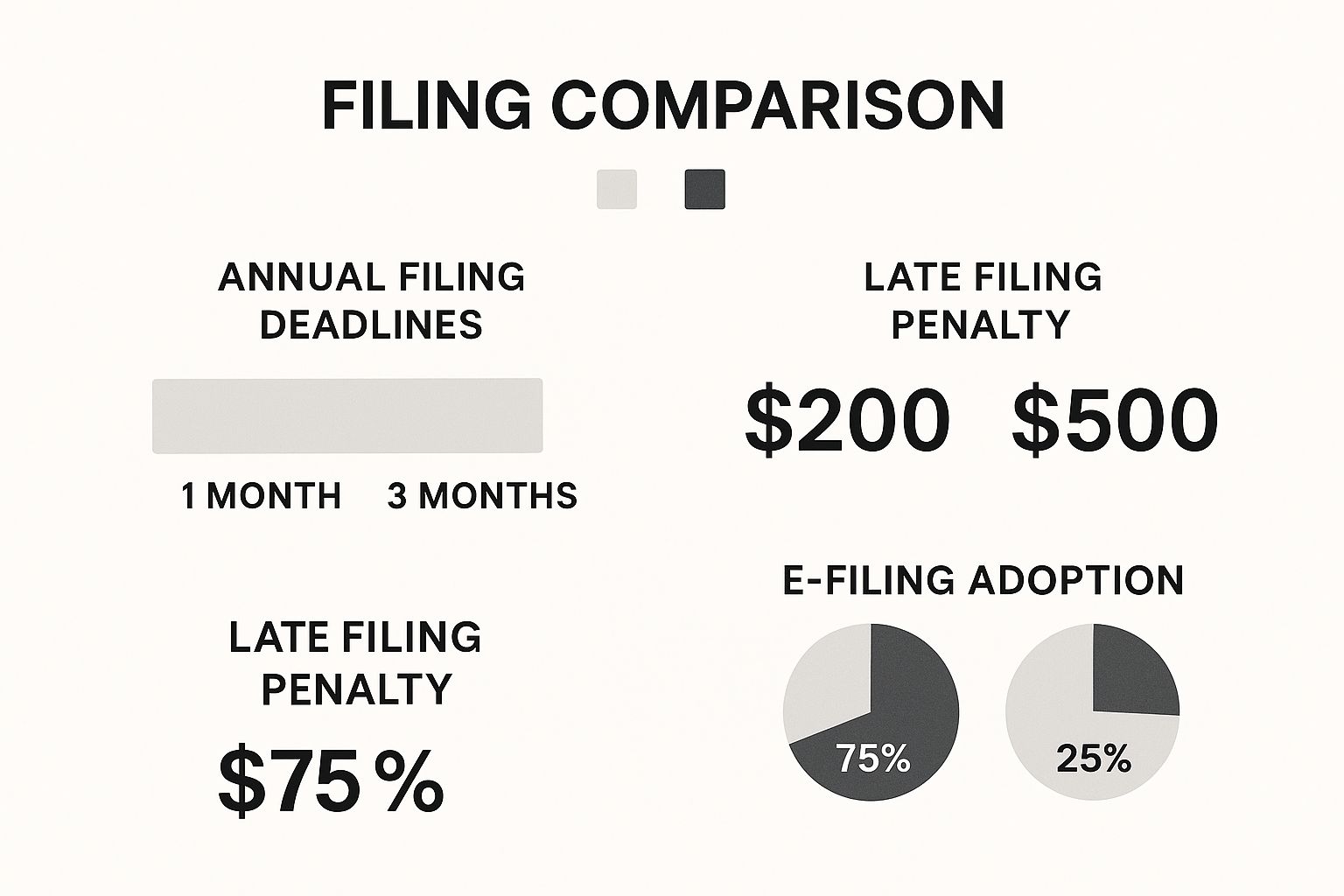
As you can see, factors like filing deadlines and the adoption of modern practices directly impact how efficiently a business can stay compliant.
Evaluate Reputation and Service Flexibility
Finally, do some digging into the provider's reputation. Look for genuine client testimonials, read through their case studies, and check online reviews. A confident provider will also be happy for you to speak directly with some of their existing clients, so don't be afraid to ask for references.
The way they communicate is just as important. Do you get a single point of contact who knows your business, or are you just another ticket in a queue? The right partner should feel like an extension of your team—approachable, responsive, and always one step ahead.
Remember, your business isn't static, and your support needs won't be either. A rigid, one-size-fits-all service might seem fine today, but it could become a real bottleneck as you grow. Look for a provider who offers a flexible service that can scale with you, ensuring you always have the right level of expert support at every stage of your journey.
Common Questions About Company Secretarial Duties
When you're running a business, the world of company secretarial duties can feel like a minefield of jargon and legal tripwires. It’s completely normal to have questions. Getting these responsibilities right is fundamental to good governance, so let’s clear up a few of the most common points of confusion.
Think of it as the essential admin that keeps your company in good standing with the law. Getting a firm grip on these obligations is one of the most important things you can do to protect your business.
Is a Company Secretary Legally Required in the UK?
This is easily the most frequent question we hear, and the answer isn't a simple yes or no—it depends on your company's structure.
If you run a public limited company (PLC), the law is crystal clear: you absolutely must appoint a suitably qualified company secretary. There’s no ambiguity here.
For private limited companies (Ltd), things changed with the Companies Act 2008. The legal obligation to have someone with the official title of 'company secretary' was removed. But here’s the crucial part: the duties themselves didn't vanish. All those responsibilities, from keeping statutory registers in order to filing documents on time, still need to be done.
Key Insight: For private companies, the real question isn't if the duties exist, but who is responsible for them. With no formal secretary, that legal responsibility falls squarely on the directors' shoulders.
What Happens if We Fail to Perform These Duties?
Putting these tasks on the back burner is a risky strategy. These aren't just 'nice-to-have' administrative jobs; they are legal requirements, and the consequences for getting them wrong can be severe for both the company and its directors.
The most immediate risks you face are:
- Financial Penalties: Companies House has an automated system that issues fines for late filing of annual accounts and confirmation statements, and these penalties escalate over time.
- Company Strike-Off: If you persistently fail to file the necessary documents, your company can be struck from the official register. At that point, it legally ceases to exist.
- Director Liability: In serious cases of non-compliance with the Companies Act, directors can face personal prosecution and even be disqualified from acting as a director in the future.
Beyond the legal headaches, poor compliance can wreck your company's reputation. It signals a lack of professionalism that can make it much harder to secure loans, attract investors, or build trust with suppliers.
Can a Director Also Be the Company Secretary?
In a private limited company, yes, a director can certainly take on the secretarial workload. Many startups and small businesses go this route, with a director managing the paperwork to keep costs down.
However, it's a decision that comes with a few big 'buts'. The time needed can be surprisingly substantial, and without specialist knowledge, the risk of making an expensive mistake is high. There's also one very important exception: a sole director cannot also be the company secretary. The law demands that these two roles be filled by two separate people.
For many, understanding the distinction between financial tasks handled by a bookkeeper and the compliance work of an accountant or secretarial service is key. You can explore this further in our guide on the differences between an accountant vs a bookkeeper.
What Is the People with Significant Control Register?
The People with Significant Control (PSC) register is a vital piece of your compliance puzzle. Introduced to improve corporate transparency, it's simply a formal record of the people who ultimately own or control your company.
A person is considered to have 'significant control' if they meet one or more specific criteria, such as:
- Holding more than 25% of the company's shares.
- Controlling more than 25% of the company's voting rights.
- Having the power to appoint or remove the majority of the board of directors.
It is your company's legal duty to figure out who its PSCs are, record their details on your internal PSC register, and make sure that information is filed and kept current with Companies House. Failing to do so is an offence and goes against the modern standard of transparency expected of every UK business.
Juggling these duties is a serious responsibility. At Stewart Accounting Services, we offer expert guidance and practical support to make sure your business stays compliant, freeing you up to focus on what you do best. Contact us today to see how we can give you complete peace of mind.