
The UK tax year runs from 6 April to 5 April. If you’re self-employed or have untaxed income, you must submit and pay by 31 January. Below is your fully visual, easy-scan guide linked to the Stewart Accounting website.
Submitting without paying (or vice-versa) still triggers penalties and interest.
Your earnings between 6 April and 5 April form one tax year. For 2023–24, file and pay by 31 January 2025. Unsure whether you must file? See who must send in a return.
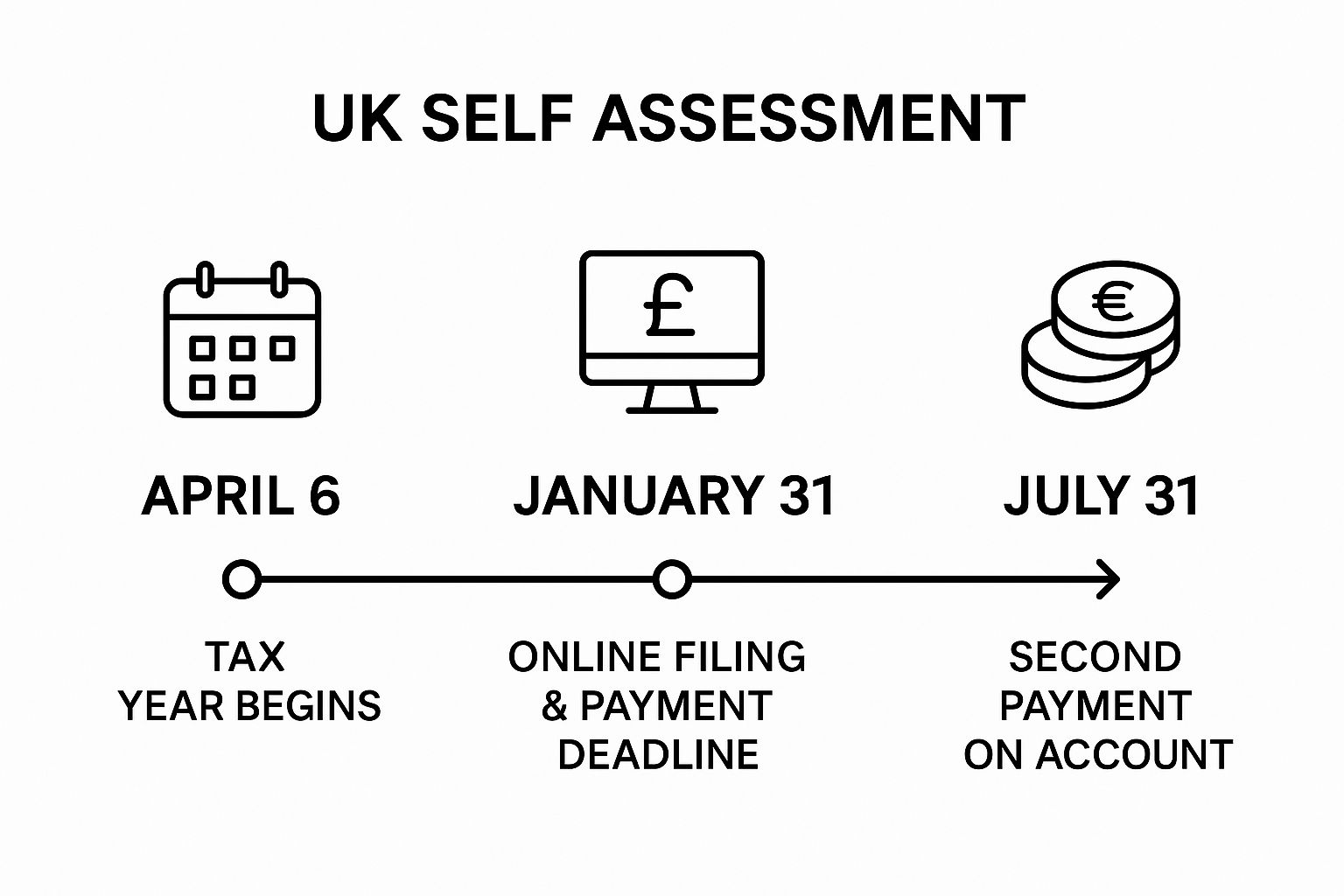



Bookmark this: your quick-reference guide.
| Task | Deadline | Notes |
|---|---|---|
| Tax year ends | 5 April 2024 | End of reporting period. |
| Register for Self Assessment | 5 October 2024 | Crucial for first-time filers. |
| Paper tax return | 31 October 2024 | Applies if filing on paper. |
| Online tax return | 31 January 2025 | Main deadline for most people. |
| Pay your tax bill | 31 January 2025 | Payment due same day as submission. |
| 2nd Payment on Account (if due) | 31 July 2025 | Typically 50% of previous year’s bill. |
If your bill was over £1,000 and less than 80% collected via PAYE, HMRC usually requires two advance Payments on Account—on 31 January and 31 July—each about 50% of last year’s bill.
File, pay balance, and make first POA.
Second POA keeps January manageable.
If income falls, apply to reduce POA via Stewart Accounting.