

Thinking of going it alone? Registering as a sole trader in the UK is refreshingly simple. All you really need to do is tell HMRC that you're self-employed, which you can do by signing up for Self Assessment. The best part? The whole online process is completely free, quick to do, and gets you set up to legally trade and pay the right tax on your earnings.
Is Becoming a Sole Trader Right for You?
Before you jump into the registration process, it’s worth taking a beat to make sure the sole trader route is genuinely the best path for you and your business idea. For most freelancers, tradespeople, consultants, and first-time entrepreneurs, it’s an absolute no-brainer. This structure is known for being incredibly straightforward to set up and run, which is why it’s consistently the go-to choice for new businesses all over the UK.
The numbers really speak for themselves. With nearly 2.9 million sole proprietorships registered, it's by far the most common business structure in the country. A big reason for this popularity is the lack of red tape. Unlike setting up a limited company, you don’t have to deal with Companies House. Your one and only legal obligation is to let HMRC know you’re in business. You can get a fuller picture by exploring some of the latest UK business statistics.
Key Considerations Before You Register
The single biggest difference between being a sole trader and setting up a limited company is liability. When you're a sole trader, there’s no legal distinction between you and your business—you are one and the same. This means you are personally on the hook for any debts the business racks up.
On the one hand, this direct link is what makes everything so simple:
- Full Control: You’re the boss. You make every decision without answering to shareholders or a board of directors.
- Simple Accounting: Your bookkeeping and tax obligations are far less complicated than they are for a limited company.
- Profit Retention: Once you've paid your tax, all the profits are yours. No faffing about with dividends.
But that unlimited liability is a serious point to consider. If your business idea involves big financial risks, taking out large loans, or dealing with high-value assets, creating a limited company might be a smarter move to protect your personal finances.
To help you decide, here’s a quick comparison to see if the sole trader structure is the right fit for your venture.
Sole Trader vs Limited Company Key Differences
| Feature | Sole Trader | Limited Company |
|---|---|---|
| Legal Status | You and the business are one legal entity. | The business is a separate legal entity. |
| Liability | Unlimited personal liability for business debts. | Liability is limited to your investment/shares. |
| Setup Process | Simple registration with HMRC for Self Assessment. | More complex: must register with Companies House and HMRC. |
| Privacy | Your details are kept private. | Director and company details are on public record. |
| Accounting | Simpler bookkeeping and one Self Assessment tax return. | Stricter requirements, including annual accounts and a Company Tax Return. |
| Profit | You keep all profits after tax. | Profits are taken as salary (PAYE) and/or dividends. |
Ultimately, choosing the right structure comes down to your personal circumstances and the nature of your business.
Key Takeaway: The sole trader path offers maximum simplicity and control, making it ideal for low-risk ventures, freelancers, and small service-based businesses. The trade-off is personal liability for business debts.
This guide will walk you through exactly how to register as a sole trader, covering everything from what info you'll need to what your responsibilities are down the line. Let's make sure you get your new venture started on the right foot.
Getting Your Ducks in a Row: What You'll Need for HMRC Registration
Let’s be honest, nobody enjoys filling out forms. But a little bit of prep work now can save you a massive headache later. Before you even think about heading over to the HMRC website, spend ten minutes pulling together the information you'll need. Think of it as your pre-flight checklist before launching your business.
The information HMRC requires is pretty standard, but having it all in one place makes the actual registration process a breeze. The absolute cornerstone of your application is your National Insurance (NI) number. You simply cannot register without it, so find it and have it ready.
Your Personal and Business Details
Alongside your NI number, you’ll need the usual personal details: your full name, date of birth, address, and a contact number. It sounds obvious, but it’s amazing how a simple typo can cause problems down the line, so it's worth a quick double-check.
Next, you'll need to provide some basic facts about your new business. The two most critical pieces of information are:
- When did you start trading? This is your official business start date. It's not the day you register; it's the day you actually started your business activities. For a graphic designer, that might be the day you completed your first paid project. For a tradesperson, it could be the day you bought your first tools for a job.
- What does your business do? You'll need a simple description of your services. Keep it clear and straightforward. Something like "freelance copywriter," "domestic plumbing services," or "online shop for handmade jewellery" is perfect.
Getting that start date right is really important. There's a legal deadline for registration: you must register with HMRC by 5 October following the end of the tax year you started trading in. So, if you kicked things off in February 2024 (which falls in the 2023-2024 tax year), your deadline to register is 5 October 2024.
A Quick Tip From Experience: Don't overthink your start date. Common sense is your best guide here. Just use the date of your first invoice or the day you bought essential kit to get started.
Choosing Your Business Name
You can absolutely trade under your own name (like "John Smith, Plumber"), but many people prefer something a bit more professional-sounding ("JS Plumbing Solutions"). If you do go for a specific trading name, just be aware of a few ground rules.
Your name can't:
- Be offensive.
- Include sensitive words like 'Accredited' or 'Royal' unless you have official permission.
- Imply a connection with government bodies.
- Be identical to an existing trademark.
It’s also a good idea to do a quick search to make sure your chosen name isn't already taken. This will help you avoid any customer confusion or potential legal issues.
Once you have all this info collected, you're ready to tackle the online registration itself. If you're already thinking ahead about managing your finances, it might be useful to see how professionals like Stewart Accounting Services can help sole traders stay on top of their books from day one.
Here’s a look at the HMRC login page where your registration journey will start.

This page is the gateway to all of HMRC's online services, including your Self Assessment registration. You'll either sign in with a Government Gateway ID if you already have one, or create a new one to get started.
Getting Registered on the HMRC Portal
Right, you’ve got all your information lined up. Now for the main event: getting yourself registered online. The whole process of telling HMRC you’re self-employed happens through the Government Gateway, which is the central hub for all your UK tax matters. It sounds a bit formal, but honestly, it’s a pretty well-designed system that walks you through everything step by step.
The first place you need to head is the official GOV.UK page to register for Self Assessment. If you've dealt with tax online before, you might already have a Government Gateway user ID – in which case, you can just sign in.
If you’re new to this, your first job is to create an account. This is important, as this ID is your key to everything from filing your tax returns to checking your National Insurance contributions down the line.
First Things First: Your Government Gateway ID
Creating a new user ID is painless. You'll pop in your email address, and they’ll send you a code to confirm it. Then it's the usual password creation and setting up some recovery questions.
The next bit is an identity check to make sure you are who you say you are. This is a crucial security step. HMRC will ask for details from documents like your UK passport, a recent payslip, or your driving licence. Have these ready to go, as it makes the whole thing much faster.
Once you’re verified, you'll be issued with your 12-digit user ID. My advice? Don't just leave it in an email. Note it down somewhere safe and memorable, because you'll need it every single time you log in.
Having your paperwork organised, just like in the image below, is the secret to a stress-free registration.
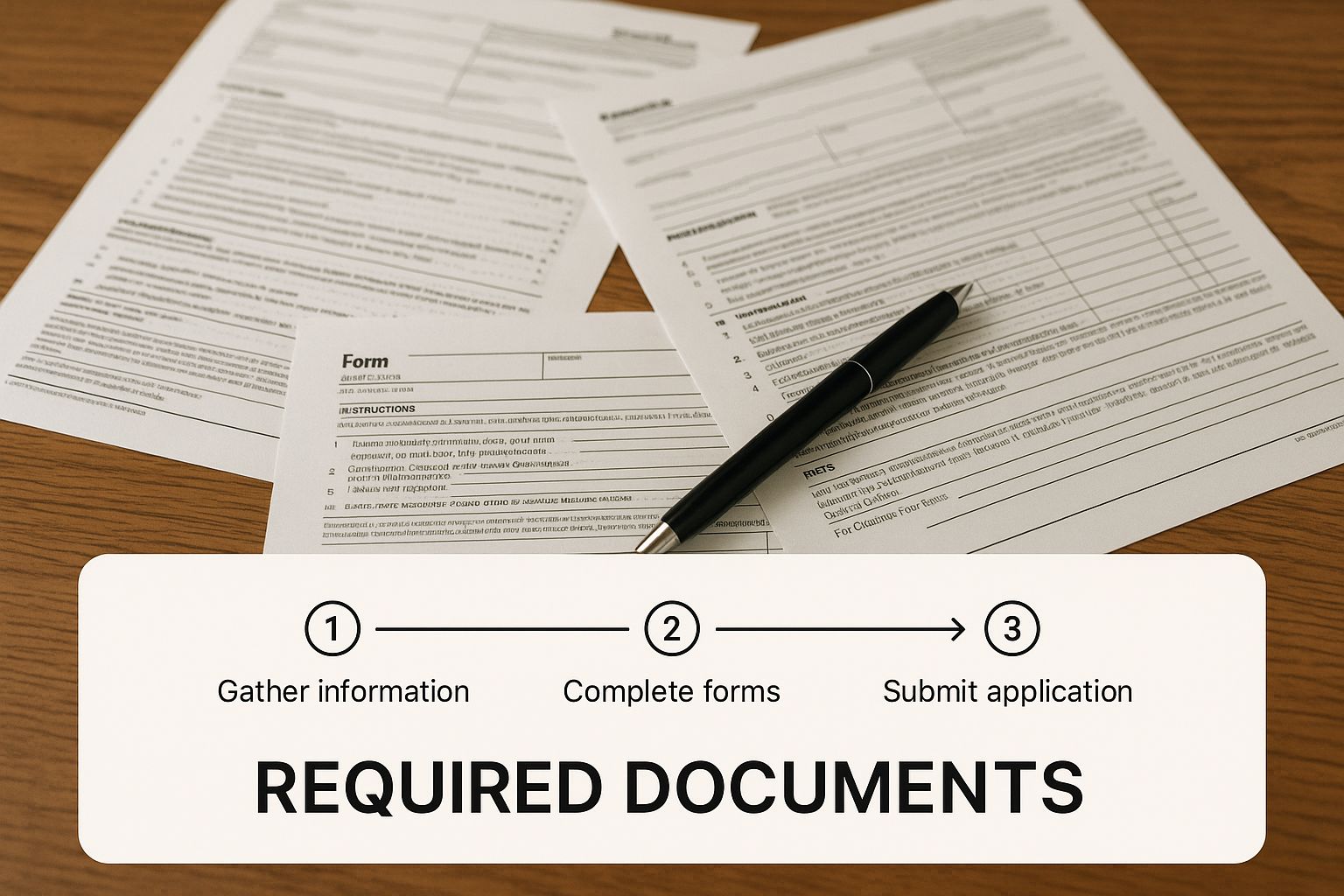
It really just comes down to good preparation. Get this bit right, and the rest is a breeze.
Filling Out the Self-Employment Form
Once you’re logged into the Government Gateway, you can finally start the actual self-employment registration. The form is neatly divided into sections, asking for the exact information you've already gathered. Think of it as just copying over your notes.
You'll be guided through a few key screens:
- About You: This part is for your personal details – full name, address, and your National Insurance number. I can't stress this enough: triple-check your NI number. A simple typo here is one of the most common mistakes and can cause a world of hassle and delays.
- About Your Business: Here’s where you’ll put your business name (if you have one), the business address (which is often just your home address), and the date you officially started trading. You’ll also need that short, simple description of what your business actually does.
A Quick Tip from Experience: That 'start date' field catches a lot of people out. It's the date your business activity actually began – maybe the day you made your first sale or started providing your service – not the date you're filling in the form. This date is really important as it determines which tax year your first Self Assessment return falls into.
The whole online registration is designed to be done in one go and genuinely only takes about 15-20 minutes if you have everything to hand. Just take your time, read each prompt, and work from your notes.
Once you hit submit, you'll get an immediate on-screen confirmation and an email from HMRC. You've done it! This is the final step in making your sole trader status official. Many new business owners find it reassuring to know that professional support is available for managing their accounts, like the services offered by Stewart Accounting Services, as they move forward.

Your First Steps After Becoming a Sole Trader
Congratulations! You’ve done it. You've officially told HMRC you’re in business, and that’s a huge milestone. While the confirmation email feels like the finish line, it’s really the start of building a solid foundation for your new venture. Getting things right now will save you a world of pain later.

Right now, HMRC is processing your registration. Soon, a pretty important letter will land on your doormat containing your Unique Taxpayer Reference (UTR) number.
This 10-digit number is your official ID for everything tax-related. You'll need it for filing your tax return and any time you communicate with HMRC, so keep it safe. It usually turns up within 10-15 working days, so be sure to check the post.
Getting Your Financial House in Order
You don't have to sit on your hands waiting for the UTR to arrive. This is the perfect time to get organised.
The single best thing you can do for your sanity is to open a separate bank account for your business. It's not legally required for sole traders, but trust me on this one – trying to untangle your business transactions from your personal spending at the end of the tax year is a nightmare.
A dedicated business account makes everything clearer. You can see what's coming in, what's going out, and your profit is right there in black and white.
Pro Tip: A separate business bank account isn't just good practice; it's a lifeline. It creates a clean, simple financial trail that makes filling out your Self Assessment tax return faster, easier, and far more accurate.
Once you have an account, the next piece of the puzzle is basic record-keeping. You don’t need fancy accounting software just yet (though it helps later). A simple spreadsheet or even a dedicated notebook can work wonders in the beginning.
Just make sure you’re consistently tracking:
- Your Invoices: Keep a digital or physical copy of every single invoice you issue.
- Your Receipts: Hold onto every receipt for business-related purchases. Coffee with a client? That's an expense. New laptop? Expense. It all adds up.
- Bank Statements: Check them regularly to make sure your records match what’s actually happening in your account.
You’re now part of a massive, dynamic part of the UK economy. In a recent 12-month period, a staggering 890,500 new businesses were launched, which is an 11.2% jump from the year before. And the vast majority – over 93%, in fact – are one-person operations just like yours.
As you get into the swing of things, you’ll start exploring different services and tools, like those designed for startups and SMBs. Sorting out these fundamentals from day one really does set you up for a much smoother journey as your business grows.
Managing Your Ongoing Sole Trader Responsibilities
Getting registered with HMRC is just crossing the starting line. The real work—and the key to long-term success—is in how you manage your day-to-day responsibilities from here on out. You're the boss now, which means you're also in charge of your own compliance. Staying on top of your finances and tax duties isn't just about avoiding penalties; it's about building a solid foundation for your business to grow on.
Your main new task is the annual Self Assessment tax return. This is your yearly report to HMRC, detailing your income and expenses so they know how much tax you need to pay. It’s a pretty straightforward process, but those deadlines are set in stone.
Navigating Self Assessment and Tax Payments
As a sole trader, filing a Self Assessment tax return every year is non-negotiable. The UK tax year runs from 6 April to 5 April, and you’ll need to report everything you earned through your business during that time. Think of it as your annual financial check-in with the taxman.
There are a couple of dates you absolutely must have burned into your memory:
- 31 January: The final deadline for filing your online tax return and paying the tax you owe from the previous tax year.
- 31 July: The deadline for your second 'payment on account'. This is basically an advance payment towards your next tax bill, splitting the load.
Missing these dates means automatic penalties, so it pays to be organised well ahead of time. Getting a visual grasp of these cycles can really help, and you can see examples of how accountants lay this out.

To figure out what you owe, you first need to calculate your profit. It’s a simple formula: your total business income minus your allowable business expenses. This is why keeping meticulous records is so crucial. The more legitimate expenses you can claim, the lower your taxable profit will be. That final profit figure is what you’ll pay Income Tax and National Insurance (Class 2 and Class 4) on.
A Pro Tip: Don't treat record-keeping as a chore you put off until January. See it for what it is: a powerful tool. Every receipt for a legitimate business cost, from a software subscription to mileage for a client meeting, directly and legally reduces the amount of tax you have to pay.
Beyond the Tax Return: Other Key Duties
Your responsibilities don't end with Self Assessment. As your business grows, other obligations will pop up. The big one for many is Value Added Tax (VAT). You are legally required to register for VAT as soon as your taxable turnover hits the £90,000 threshold within any rolling 12-month period. It’s not based on the tax year, so you need to keep a running total.
The UK's self-employed workforce is a huge part of the economy. After peaking at over 5 million before the pandemic, the numbers have settled at around 4.4 million. This is a massive, thriving community built on people staying organised and compliant.
It’s also smart to be aware of other legal duties. For instance, understanding data protection is essential if you handle any customer information. Brushing up on things like GDPR compliance for UK businesses is a must. Juggling these ongoing tasks is what separates a hobby from a professional, sustainable sole trader business.
Got Questions? Here Are Some Common Sole Trader Queries
Once the dust settles on your registration, you'll probably find a few more questions cropping up. That's completely normal. Let's walk through some of the things new sole traders often ask, so you can move forward with confidence.
Can I Still Be Employed and a Sole Trader?
Yes, absolutely. A huge number of people start their business as a 'side hustle' while still holding down a full-time job. There’s no rule against being both employed and self-employed.
All you need to do is register as a sole trader with HMRC. When it’s time to file your annual Self Assessment tax return, you’ll report your self-employment income alongside the salary you earn from your job (which your employer typically handles through PAYE). Your tax-free Personal Allowance covers your total income from all sources.
What if I’ve Missed the Registration Deadline?
The official deadline to register is 5 October following the end of the tax year you started your business in. If that date has already passed, don't panic, but don't ignore it either. The worst thing you can do is bury your head in the sand.
Get in touch with HMRC as soon as you realise the oversight, explain the situation, and get registered. Being proactive shows you're trying to do the right thing, which can often go a long way in reducing or avoiding penalties.
Our Advice: The legal deadline is important, but getting registered is what matters most. If you're late, tackle it head-on with HMRC. You’ll get your tax affairs sorted and minimise any potential fines.
Do I Really Need a Separate Business Bank Account?
While it’s not a strict legal requirement for sole traders, opening a separate bank account for your business is one of the smartest moves you can make. From experience, I can tell you it's highly recommended.
Having a dedicated account makes tracking your income and expenses incredibly straightforward, which is a lifesaver when it's time to do your tax return. It also just looks more professional when clients are paying you.
When Do I Have to Register for VAT?
You are legally required to register for VAT as soon as your turnover hits the threshold in any rolling 12-month period. As of April 2024, that threshold is £90,000.
It's crucial to keep a close eye on your turnover, as this isn't based on the standard tax year but any consecutive 12 months. You can also choose to register for VAT voluntarily before you hit the threshold. This can be a smart move, especially if most of your clients are other VAT-registered businesses who can claim the VAT back anyway.
Getting your head around these early questions is a big part of setting your business up for long-term success. If you need a helping hand with your Self Assessment or any other financial obligations, the team at Stewart Accounting Services is here to make sure you get it right from the start. You can learn more at https://stewartaccounting.co.uk.