
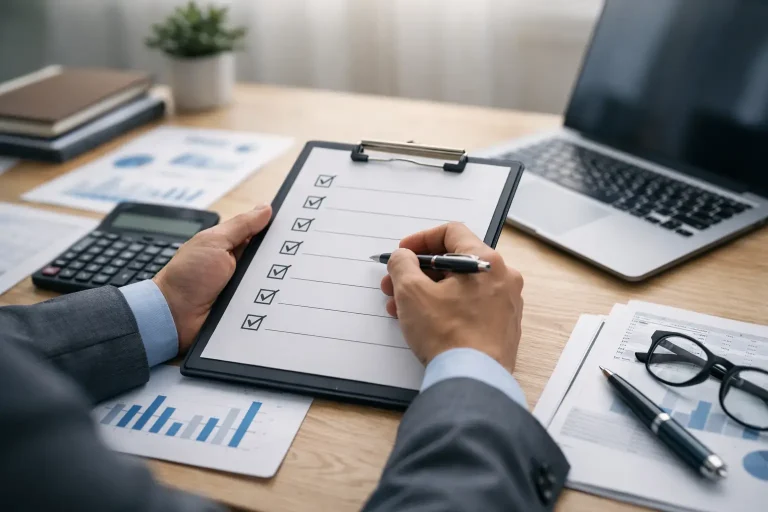
Year-end accounts tend to become urgent all at once. One week you are focused on customers, stock or staffing, and the next you are searching for missing invoices and wondering whether the bank balance actually agrees to your records. A solid prepare annual accounts checklist helps you stay in control, avoid last-minute surprises and make the process quicker for both you and your accountant.
For small business owners, the real issue is rarely the accounts themselves. It is the time lost chasing paperwork, the uncertainty over what is still outstanding, and the worry that something important has been missed. A clear checklist brings structure to that pressure. It also improves the quality of your figures, which matters not just for compliance, but for tax planning, borrowing, and better decision-making.
Why a prepare annual accounts checklist matters
Annual accounts are more than a filing exercise. They show how your business has performed over the financial year and form the basis for tax calculations, reporting obligations and, in many cases, future planning. If the records behind them are incomplete or inaccurate, the consequences can range from delays and extra accountancy costs to poor tax outcomes and avoidable HMRC questions.
The exact information required depends on your business structure. A sole trader will usually need less formal documentation than a limited company, while landlords, partnerships and contractors may each have their own areas of complexity. Even so, the underlying principle is the same. Good accounts start with complete, well-organised records.
Prepare annual accounts checklist: what to gather first
Start with the basics. Your accountant will usually need your bookkeeping records for the year, including your profit and loss report, balance sheet and general ledger if you use accounting software. If your records are manual or spreadsheet-based, they will still need to show the same information clearly.
Bank statements for all business accounts are essential. The same goes for credit card statements, loan statements and finance agreements. If there are gaps, year-end work slows down very quickly because every missing transaction has to be identified and explained.
You should also pull together sales invoices, purchase invoices, receipts and details of any cash transactions. If your business has multiple income streams, separate them properly. That makes it much easier to see whether turnover has been recorded in the right period and whether anything has been duplicated or omitted.
For businesses registered for VAT, make sure your VAT records match your bookkeeping. If there are differences between returns submitted and the figures in your accounts software, those need to be resolved before the annual accounts are prepared.
Reconcile before you hand anything over
One of the most useful steps in any year-end process is reconciliation. In simple terms, that means checking your internal records against independent evidence such as bank statements, supplier balances and tax accounts.
Bank reconciliation is the obvious starting point. Your year-end bank balance in the accounts should agree to the actual bank statement, adjusted only for legitimate timing differences. If it does not, that is often a sign that income, spending or transfers have not been recorded properly.
Then look at trade debtors and trade creditors. If customers owe you money at year end, your sales ledger should support the figure. If you owe suppliers, your purchase ledger should do the same. Old balances should be reviewed carefully. Some may be genuine, but some may simply be errors that have been sitting there for months.
This is also the point to review director’s loan accounts if you run a limited company. If the company has paid personal costs or you have introduced personal funds, those entries need to be recorded correctly. Getting this wrong can create tax issues that are avoidable with proper review.
Check income and costs are in the right year
This is where year-end accounts become more than bookkeeping. Not every payment made during the year belongs fully in that year, and not every amount owed has necessarily been recorded yet. The aim is to reflect the business position accurately at the accounting date.
Look at sales raised close to year end and confirm they belong in the correct accounting period. The same applies to supplier costs. If an invoice relates to the current year but arrives later, it may still need to be accrued. If you have paid for something in advance, such as insurance or software subscriptions, part of that cost may need to be carried forward.
These adjustments are easy to overlook when a business owner is trying to keep things moving day to day. They can also make a meaningful difference to reported profit. That is why a year-end review should never be treated as a simple exercise in totalling up cash in and cash out.
Don’t forget assets, stock and finance commitments
If your business owns equipment, vehicles, tools, computers or other fixed assets, prepare a list of what was bought, sold or scrapped during the year. Include dates and amounts where possible. Your accountant will use this to calculate depreciation and consider any capital allowances available.
Stock should be counted as close to the year end as practical if your business holds goods for resale or materials for production. A rough estimate is better than no figure at all, but a proper count gives far more reliable accounts. If some stock is damaged, obsolete or slow-moving, that should be noted as well. Stock values that are overstated can make profits look healthier than they really are.
Loans, hire purchase arrangements and leases also need attention. Provide the latest statements and confirm the purpose of each agreement. This helps separate capital repayments from interest and ensures liabilities are shown correctly.
Payroll, taxes and other balances to confirm
If you employ staff, your payroll records should tie in with the wages shown in the accounts. This includes salary, bonuses, pension contributions and any PAYE or National Insurance liabilities outstanding at year end. Even a small mismatch can create confusion later when tax returns and accounts are compared.
It is also sensible to review corporation tax, VAT and PAYE accounts for limited companies, or self assessment records for sole traders and partners. Sometimes payments are made but not posted correctly. Other times, liabilities are sitting in the books that have already been settled.
For landlords and property businesses, year-end preparation should also include mortgage interest statements, letting agent summaries, repair costs and details of any capital improvements. The distinction between repairs and improvements can affect tax treatment, so it is worth flagging anything unusual.
What limited companies should pay extra attention to
A limited company generally has more formal year-end obligations than a sole trader or partnership. In addition to the financial records, you may need dividend paperwork, details of shares issued, confirmation statements of any major changes, and evidence supporting director remuneration decisions.
If dividends have been taken, make sure they were declared properly and backed by available profits. If not, what looked like a straightforward withdrawal can become a director’s loan issue instead. That does not always create a problem, but it does need handled correctly.
You should also review any personal expenses paid through the company. Some can be reclassified, some may need to go through a loan account, and some may have benefit-in-kind implications. Leaving these questions until after the accounts are drafted tends to create unnecessary delay.
Common mistakes that slow the process down
The biggest problem is usually incomplete records rather than complicated accounting. Missing bank accounts, uncategorised transactions, duplicate postings and unreconciled VAT are common. So are personal and business spending being mixed together.
Another issue is assuming software means everything is correct. Cloud accounting systems are helpful, but only if they are being used properly. Bank feeds can import data quickly, yet they do not know whether a payment was for stock, a loan repayment or the owner’s personal broadband.
Timing matters too. If you wait until filing deadlines are close, your options narrow. There is less time to ask questions, fix errors or consider tax planning opportunities. Good preparation gives you room to make informed decisions rather than rushed ones.
A simple way to make next year easier
The best checklist is one you use throughout the year, not just after it ends. Keep your bookkeeping up to date, store invoices digitally, separate personal and business costs, and review your figures regularly. That reduces stress at year end and gives you better visibility over profit and cash flow while the year is still in progress.
For many business owners, outsourcing part of this process is the turning point. When bookkeeping, VAT, payroll and year-end accounts are connected properly, the annual accounts stop feeling like a scramble and become a much more predictable part of running the business. Stewart Accounting Services works with businesses across Central Scotland and the wider UK to do exactly that.
If you are preparing for your next year end, start earlier than feels necessary. A prepare annual accounts checklist is not just about getting documents ready for compliance. It is about giving yourself clearer figures, fewer surprises and more time to focus on the work that actually grows the business.