

A Self Assessment payment plan is simply a formal agreement you can make with HMRC to pay off your tax bill in monthly chunks. Officially, it's called a 'Time to Pay' arrangement, and it's designed to give you a structured way to clear your tax debt if you can't pay it all in one go by the deadline.
It’s a lifesaver, really. Setting one up helps you sidestep those nasty late payment penalties while you get your finances back on track.
Feeling Crushed by Your Tax Bill? There Is a Way Forward
Let's be honest, the moment your Self Assessment tax bill hits your inbox can be a gut-wrenching experience. It's easy to feel completely overwhelmed, but it's a feeling shared by millions of self-employed people across the UK every single year. You are definitely not alone.

Think of that daunting tax bill as a mountain you've been told to climb in one go. A Self Assessment payment plan is like being given a clear, well-marked path with manageable stages. Instead of one gigantic, impossible leap, you get to make smaller, affordable monthly payments. This gives you vital breathing room to manage your cash flow without the constant pressure. It's an essential tool for many, especially when struggling to fund your July tax payment.
This guide is here to walk you through everything, step-by-step, turning that tax anxiety into a clear, actionable plan. We'll cover all the essentials:
- What exactly is a 'Time to Pay' arrangement?
- Who is actually eligible for a payment plan?
- How to apply for one, whether online or over the phone.
- What costs and interest you should expect.
Arming yourself with this knowledge will give you the confidence to take control of your tax obligations without completely derailing your finances. And remember, if it all feels like too much, getting professional support for handling small business and personal taxes can offer some much-needed guidance and peace of mind.
A payment plan is not a sign of failure; it’s a proactive financial tool offered by HMRC to help taxpayers manage their debts responsibly and avoid the escalating cycle of late payment penalties.
By getting a grip on how this system works, you can turn that moment of panic into a structured, manageable solution. The absolute key is to act quickly rather than burying your head in the sand. Let's get started.
So, What Exactly Is an HMRC Payment Plan?
Staring down a Self Assessment tax bill can be daunting, especially when the total amount feels overwhelming. But there's a tool designed for this exact situation: a Self Assessment payment plan.
Think of it less as a complex financial instrument and more as a formal agreement with HMRC. It simply lets you break down that big, scary lump sum into a series of more manageable monthly instalments. It's not a penalty or a mark of failure; it’s a structured, sensible safety net for when you need it.
This setup, officially called a ‘Time to Pay’ plan, is specifically for tax you already owe but can't quite clear by the deadline. It's a way to get on the front foot with your tax debt, usually allowing you to spread the payments over 12 months. Taking this step shows HMRC you're being responsible and helps you sidestep the hefty penalties that come with late payments.
Is This the Same as Payments on Account?
This is a really common point of confusion, but it's vital to get it straight: a Time to Pay plan is not the same as ‘Payments on Account’. They serve completely different purposes.
Payments on Account are all about paying in advance. It's a system to help you spread the cost of next year's tax bill before it's even calculated. Most self-employed people will be familiar with this – making two payments a year, on 31 January and 31 July, with each one usually being half of your previous year's bill. For more details, HMRC announced new services for customers that are worth checking out.
A Self Assessment payment plan, on the other hand, deals with tax that is already due. It's a solution for when you've hit a financial hurdle and can't pay the current bill on time. Payments on Account are a proactive budgeting tool; a payment plan is a reactive measure for when life happens.
Think of It as Your Financial Support System
The best way to look at a payment plan is as a support system. HMRC actually offers a whole range of ways for people to pay their tax, as you can see on their official guidance page.
This screenshot shows all the different routes you can take, from paying online to setting up a Direct Debit. The 'Time to Pay' arrangement is a crucial part of this toolkit, specifically designed for those who can't use the standard methods before the deadline. It's an official pathway to stop people from falling into serious debt.
When you set up a Time to Pay arrangement, you’re telling HMRC, "I acknowledge this debt, and here's my plan to clear it." In their eyes, this is infinitely better than just ignoring the bill, which will automatically trigger a series of escalating penalties.
Ultimately, a payment plan turns a potential financial crisis into a manageable task. It gives you the breathing space to sort out your cash flow while staying on the right side of your tax obligations, ensuring one tough year doesn't completely throw your finances off track.
Do You Qualify for a Time to Pay Arrangement?
Before you jump into an application, it’s worth taking a moment to see if you actually qualify for a Self Assessment payment plan online. HMRC has a specific set of rules, and a quick eligibility check now can save you a whole lot of hassle later.
Think of it like this: HMRC's online service is the express checkout lane. It’s designed for straightforward cases, so you need to have all your items in order to use it. The good news? The requirements are very clear.
This online route is incredibly popular. For the 2023/24 tax year, over 15,000 taxpayers had already set one up by early 2025. It just goes to show how many people find it a useful way to manage their tax bill. If you're interested in the numbers, you can explore the latest HMRC taxpayer data for a better picture.
The Online Eligibility Checklist
To use HMRC’s slick online service, you need to tick three main boxes. These rules are in place to make sure the automated system can handle your request without needing a person to step in.
So, what do you need?
- You must have filed your latest tax return. You can’t set up a plan for a tax bill that HMRC doesn’t officially know about yet.
- You must have no other outstanding tax debts. This arrangement is purely for your Self Assessment bill, so any other tax payments (like VAT) need to be up to date.
- The amount you owe must be £30,000 or less. This is the ceiling for the automated online tool.
If you meet these criteria, you're clear to use the self-service portal. It's by far the quickest and simplest way to get a payment plan sorted, often taking just a few minutes.
To make it even easier, here’s a quick table you can use to check if the online route is for you.
Online Time to Pay Eligibility Checklist
Use this table to quickly check if you meet the criteria to set up a Self Assessment payment plan online.
| Eligibility Criterion | Requirement | What It Means for You |
|---|---|---|
| Tax Debt Amount | You must owe £30,000 or less. | The online system is automated for debts below this threshold. If you owe more, you'll need to call. |
| Filing Status | Your latest tax return must be filed. | HMRC can only agree to a payment plan for a confirmed tax liability, which comes from your return. |
| Other Tax Payments | You must be up-to-date with all other HMRC payments. | The plan is only for your Self Assessment bill. Other tax debts must be settled separately first. |
| Timeframe | You must set it up within 60 days of the payment deadline. | This service is designed to help with recent tax bills, not long-overdue debts. |
If you can tick all these boxes, fantastic! You can head online and get your plan set up.
What if You Don't Meet the Online Criteria?
Don't worry if you don't fit neatly into the boxes above. Not qualifying for the online tool does not mean a payment plan is off the table. It just means your situation needs a bit more of a personal touch.
For instance, if your tax bill is over £30,000 or you think you’ll need more than the standard 12 months to pay it back, you’ll need to speak to someone at HMRC directly.
The next step is to call their Self Assessment payment helpline. An advisor will chat through your finances with you to understand your situation and work out a more tailored arrangement. The most important thing is to be proactive—get in touch with them as soon as you realise paying on time will be a struggle.
How to Set Up Your Payment Plan Step by Step
Let’s be honest, dealing with the HMRC online system can feel a bit daunting. The good news is that setting up a self assessment payment plan is actually one of the more straightforward things you can do on there. I’ll walk you through it, so you can get it sorted without the usual tax-time stress.
The secret to getting this done quickly is to have everything you need before you start. It’s a bit like cooking – you wouldn’t start a recipe without getting all your ingredients out first. A little prep work here saves a lot of frantic searching later.
Before You Begin Your Application
To make the online application a breeze, you'll want to have a few key details right in front of you.
- Your Government Gateway User ID and Password: This is your digital key to all things HMRC.
- Your Unique Taxpayer Reference (UTR): That’s the 10-digit number you'll find on any letters or previous tax returns from HMRC.
- Your UK Bank Account Details: You’ll need these to set up the monthly Direct Debit for the payments.
It’s also really smart to have a clear picture of your budget. Work out what you can genuinely afford to pay each month. The online tool is quite helpful here; it shows you how different payment amounts change the total interest you'll pay, helping you find a balance that works for you. If you need some help figuring this out, our guide on spreading your January Self Assessment payment has some practical tips.
Setting Up Your Plan Online
Got all your info ready? Great. Let's get this plan set up.
- Log In to Your HMRC Account: First things first, head over to the GOV.UK website and sign in with your Government Gateway details.
- Find Your Self Assessment: Once you're in, navigate to the Self Assessment section. You should be able to see your current tax bill there.
- Choose the Payment Plan Option: Look for a link or button that says something like 'Set up a Time to Pay arrangement'. Give that a click.
- Propose Your Payment Schedule: The system will then ask what you can pay upfront (if anything) and how much you can afford for your monthly instalments.
- Review and Confirm: You’ll get a full summary of the plan you’ve proposed. It’ll show the total amount, how many months you’ll be paying for, and any interest added on top.
- Agree and Set Up Direct Debit: If it all looks good, you can agree to the terms and pop in your bank details to get the Direct Debit finalised.
This handy visual breaks down the main eligibility checks the system runs before letting you proceed online.
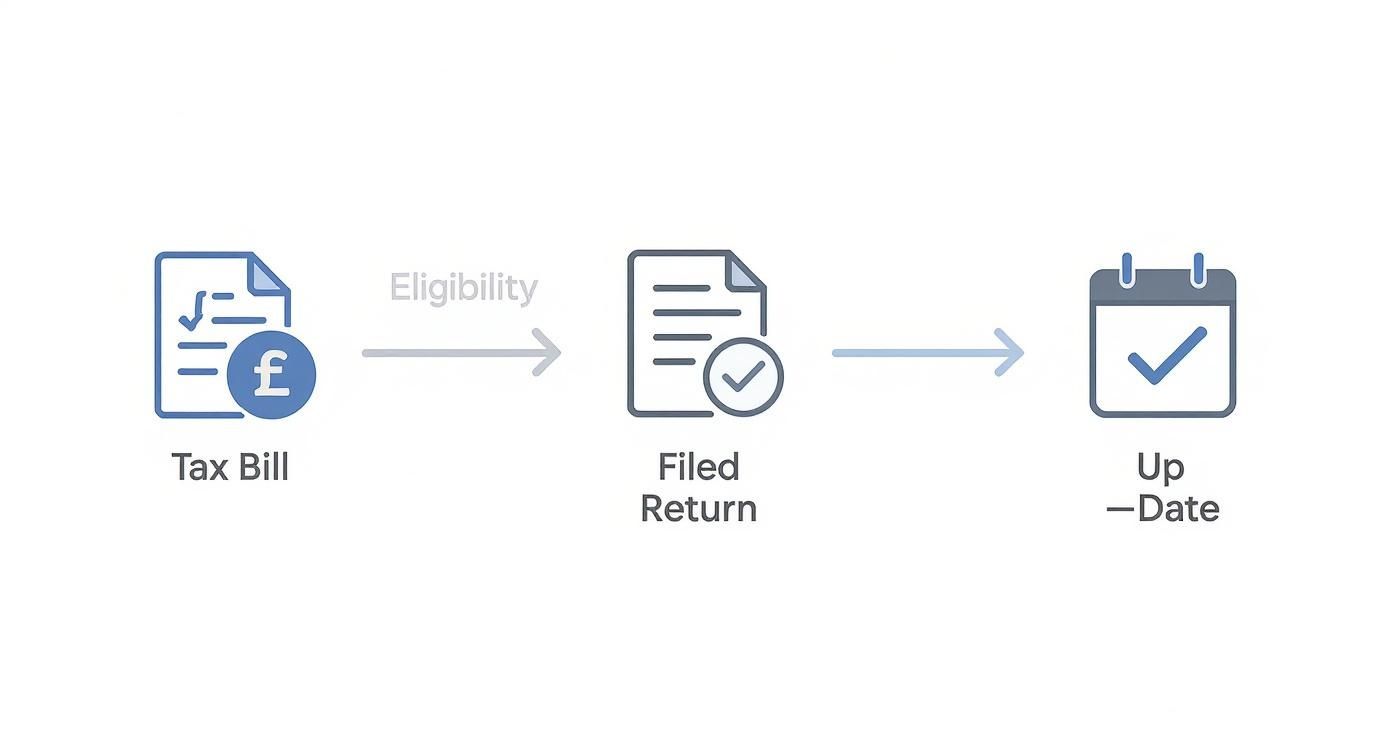
As you can see, the size of your tax bill, whether your returns are up to date, and your payment history are the first things HMRC looks at.
When You Need to Apply by Phone
Sometimes the online route just isn't an option. If you owe more than £30,000, or if you know you’ll need longer than 12 months to clear the balance, you'll need to pick up the phone.
Give HMRC's Self Assessment payment helpline a call. You’ll speak to an adviser who can go through your finances in more detail and help build a payment plan that fits your specific situation.
What Does a Payment Plan Actually Cost You?
A self-assessment payment plan is a brilliant way to get on top of your tax bill, but it's important to go in with your eyes open. It’s not simply a free extension; think of it more like a formal credit arrangement with HMRC. The main thing you need to factor in is the interest they charge.
As soon as your tax payment deadline passes, HMRC starts adding interest to whatever you owe. This interest keeps building up every single day—even while you're diligently making your monthly payments—until the full amount is paid off.
Getting to Grips with HMRC Interest
It helps to think of it like a bank overdraft. Your bank lets you go into the red, but they charge you interest for that privilege. An HMRC payment plan is much the same; you're essentially borrowing time to pay your tax, and the interest is the price of that flexibility.
The interest rate isn't fixed forever; HMRC can and does change it, so it's always worth checking the current rate. While it’s usually more favourable than a high-street loan, it will still add a noticeable chunk to your final bill over the course of a year.
A Quick Look at How Interest Adds Up
Imagine you owe £5,000 in tax and you set up a 12-month payment plan. If the HMRC interest rate is 7.75%, they’ll calculate the interest daily on the remaining balance. By the time you've made your final payment, you could have paid around an extra £210 on top of your original tax debt.
This interest is the main "cost" of the plan, but there’s a much bigger financial risk to be aware of.
The Danger of Missing a Payment
When you agree to a payment plan, you're entering a formal contract, and HMRC expects you to stick to it. The money collected this way is a huge part of the UK's finances—provisional estimates suggest self-assessed Income Tax and Capital Gains Tax receipts hit £36.2 billion for January 2025 alone. You can read the full HMRC performance report to see just how seriously they manage these revenues.
If you miss even one monthly payment, the consequences can be swift and harsh. HMRC can:
- Cancel the entire arrangement immediately. This makes your full remaining tax bill due right away.
- Bring back the late payment penalties. The protection you had from penalties is instantly gone.
- Start formal debt collection. This could mean involving debt collectors or, in more serious cases, taking court action.
It's absolutely essential to treat your payment plan with the same priority as your mortgage or rent. It’s a fantastic safety net, but defaulting on the agreement can leave you in a much tougher spot than where you started.
Exploring Other Options for Paying Your Tax Bill
While setting up an official HMRC self assessment payment plan is a fantastic safety net, it's not always the only—or even the best—way to handle a tax bill you can't pay in one go. It’s always a good idea to look at all the avenues available, as some alternatives might end up being cheaper in the long run.
Before you lock yourself into a 'Time to Pay' arrangement, let's explore a few other financial strategies. Each has its own pros and cons, so you’ll need to weigh them up carefully against your own circumstances.
Evaluating Your Personal Finances
The most straightforward alternative? Using your own savings. If you have an emergency fund or other cash set aside, using it to clear the tax debt means you can sidestep interest charges and avoid taking on new credit altogether.
Of course, this only works if it doesn't leave you high and dry. Wiping out your entire financial safety net for the taxman could leave you vulnerable to other unexpected costs down the line.
Another route is looking into personal borrowing. The main goal here is to find a form of credit with an interest rate that’s lower than what HMRC charges on late payments.
- Low-Interest Personal Loan: A standard loan from your bank or a building society might come with a more favourable interest rate, saving you a bit of cash over the 12-month repayment period.
- 0% Purchase Credit Card: If you've got a good credit rating, you might qualify for a credit card offering a 0% interest period on new purchases. You could pay your tax bill with the card and then pay off the balance over several months, interest-free. Just be absolutely sure you can clear it before the promotional period ends.
It’s crucial to remember that these options mean taking on commercial debt. Unlike an arrangement with HMRC, missing payments on a bank loan or credit card will almost certainly damage your credit score, making future borrowing more difficult and expensive.
Seeking Professional Guidance
Trying to figure all this out can feel a bit overwhelming, and a wrong move could be costly. This is where getting some professional advice can be a real game-changer.
If you're finding it hard to decide on the best path forward, you might want to seek help with outstanding tax bills from an accountant. They can look at your specific financial picture and give you tailored advice.
Don't forget about free debt advice charities, either. Organisations like StepChange or National Debtline offer brilliant, impartial guidance. They can help you work through your budget, understand your rights, and make an informed decision without any added financial pressure.
Your Payment Plan Questions, Answered
When you're sorting out a self assessment payment plan, a few common questions always seem to pop up. Getting straight answers is key to feeling in control, especially with a tax deadline looming. Let's walk through some of the most frequent queries.
Can I Set Up a Plan After the Deadline Has Passed?
Yes, you can. HMRC keeps the online service for setting up a payment plan open for 60 days after the 31st January deadline. This gives you a bit of breathing room to get things organised, even if you've missed the big day.
It's really important to act within this window, though. It signals to HMRC that you're taking responsibility for the debt and can help you steer clear of the more serious late payment penalties, which start to kick in 30 days after the deadline.
What if My Financial Situation Changes Mid-Plan?
Life happens, and financial circumstances can shift unexpectedly. If you realise you can't keep up with your agreed monthly payments, the absolute worst thing to do is ignore it. Sticking your head in the sand will probably just lead to HMRC cancelling the arrangement altogether.
The best move is to get in touch with them straight away. Give the Self Assessment payment helpline a call and explain what's changed. HMRC's advisors are often able to work with you to find a new arrangement, maybe by reducing your monthly payments to something more affordable. Being upfront and acting quickly makes all the difference.
It's a common myth that setting up a payment plan with HMRC automatically wrecks your credit score. It doesn't. HMRC won't report your Time to Pay arrangement to credit reference agencies like Experian or Equifax.
But—and this is a big but—there's a serious catch. If you simply don't pay your tax and ignore HMRC's attempts to contact you, they can take legal action. If a court issues a County Court Judgement (CCJ) against you, that will show up on your credit file and can make it incredibly difficult to get credit for years.
So, while the plan itself is private, letting the debt spiral out of control is not.