

Self Employed Bookkeeping Made Simple and Compliant

You're self-employed, the work is getting done, clients are paying, and the receipts are accumulating somewhere near the laptop. Then January arrives, and a shoebox of invoices, fuel receipts, bank transactions and personal purchases becomes a tax problem. The difficulty usually isn't the arithmetic. It's remembering what each transaction was for, finding evidence for it and deciding how it should be treated before the Self Assessment deadline.
Good self employed bookkeeping removes that annual panic. It gives you a current view of income, costs, profit and cash, while creating the digital record needed for the UK's changing tax system. The practical standard is simple: capture transactions promptly, categorise them consistently, reconcile the bank every month and keep the supporting documents.
Why Self Employed Bookkeeping Matters More Than Ever
A sole trader who leaves everything until January often discovers several problems at once. An invoice may have been issued but not paid, a subscription may have been charged to a personal card, and a fuel receipt may no longer show which vehicle or journey it related to. Reconstructing the year from memory creates avoidable uncertainty, particularly when business and property income sit in the same household.
The wider market makes this a common operating model rather than an unusual one. ONS data places the UK self-employed workforce in the millions, with related published summaries putting it at about 4.39 million people, or roughly 13.1% of the workforce. The same ONS occupation table records about 376,000 self-employed workers within the category “Book-keepers, payroll managers and wages clerks”, out of 428,000 people in that occupation. These figures come from the ONS self-employment reference tables.
That matters because many bookkeepers and their clients operate as sole traders or small practices. A contractor, landlord, tradesperson or consultant needs records that support recurring decisions, not a one-off exercise at year end.
HMRC needs evidence, not a rough estimate
HMRC expects self-employed people to keep records of business income and expenses for Self Assessment. If you're VAT registered, your VAT records also matter. If you employ staff, PAYE records become part of the bookkeeping system.
This isn't just about submitting a return. Reliable records help you identify unpaid invoices, understand whether a service is profitable and spot unusual bank activity while it's still easy to investigate.
Practical rule: If you can't explain a transaction from the description, document or supplier record, it doesn't belong in a “sort later” pile. Give it a clear note while you still remember it.
Making Tax Digital changes the rhythm. For qualifying unincorporated businesses and landlords with income above £50,000, MTD for Income Tax applies from 6 April 2026, with digital records and compatible software required, as set out in HMRC's self-employed records guidance. The direction is clear. Bookkeeping is becoming a live reporting process rather than year-end tidying.
A calm system saves more than filing time. It reduces the chance of missed costs, unexplained balances and rushed decisions about tax. The next step is to define the records that system must produce.
What Good Records Look Like and How Long to Keep Them
Good records tell a complete story. They show what the business earned, what it spent, when money moved and why each transaction belongs in a particular category. A bank statement alone isn't enough if it doesn't explain the purpose of a payment or connect it to an invoice or receipt.
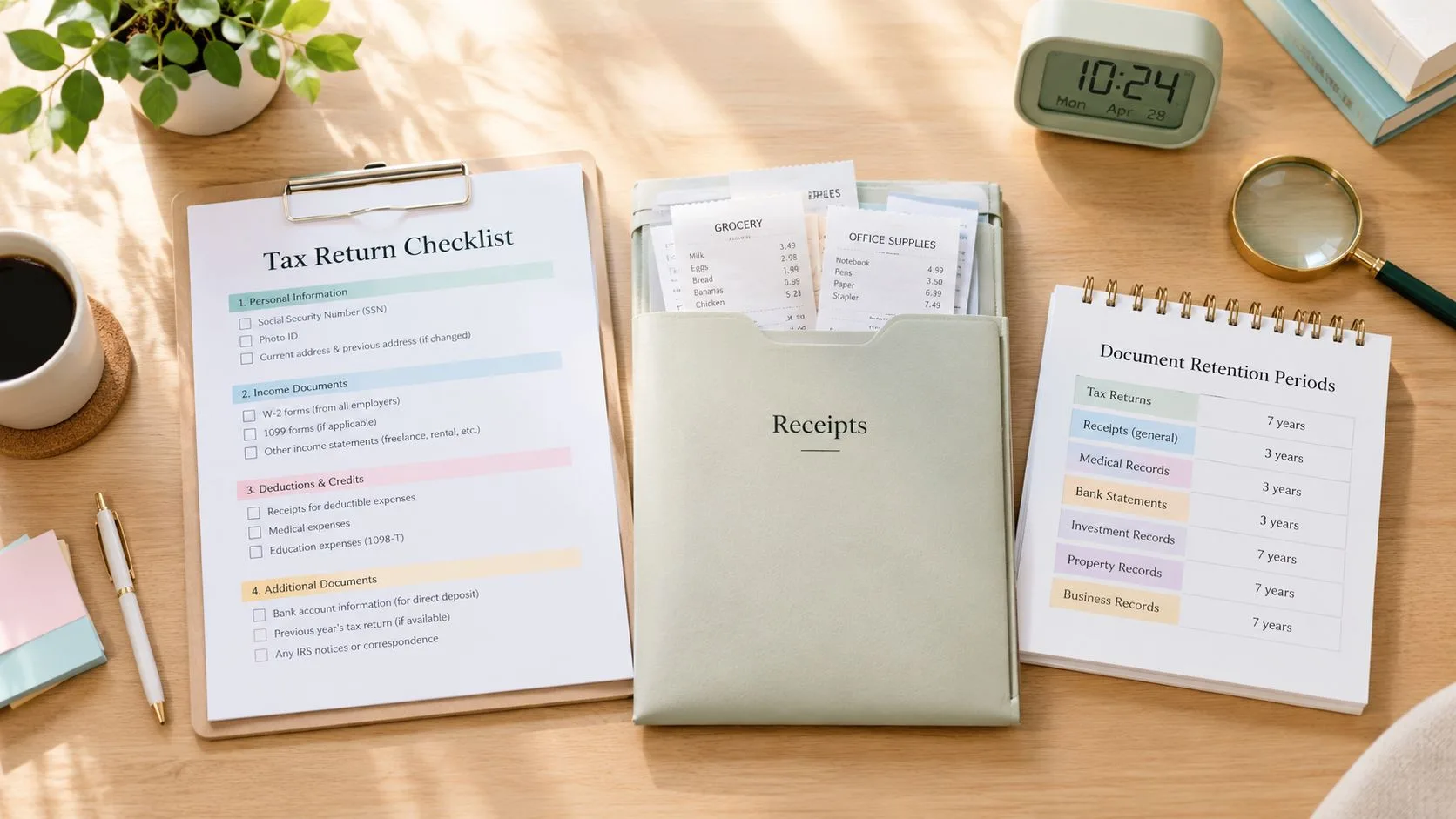
The records to retain
For a sole trader or partnership, the working file should normally include:
- Business income: Sales invoices, payment-platform reports, till records and evidence of money received.
- Business expenses: Supplier invoices, receipts, recurring bills and notes explaining mixed-use purchases.
- Bank evidence: Business bank statements, card statements and records for transfers between business and personal accounts.
- VAT information: VAT invoices, VAT account records and evidence supporting the figures, if the business is VAT registered.
- PAYE information: Payroll records and related documents if the business employs staff.
- Asset information: Purchase documents and details for equipment, vehicles or other assets used in the business.
- Property records: Rental income, agent statements, repairs, insurance, finance costs and property-specific documentation where relevant.
HMRC's guidance requires records of business income and expenses to support Self Assessment. It also indicates that records should be retained for at least five years after the 31 January filing deadline. Check the records to keep for Self Assessment before archiving anything, especially where property, VAT or payroll records overlap.
Capture, categorise and reconcile
The most dependable workflow has three stages.
Capture each transaction as it happens. Photograph a receipt in Xero, forward an invoice to the document inbox or save a supplier PDF in a structured folder.
Categorise it using the same account each time. A software subscription shouldn't appear under office supplies one month and professional fees the next unless there's a clear reason.
Reconcile the records to the bank every month. Match payments, investigate differences and clear suspense items before they multiply. Monthly bookkeeping is more than a convenient habit. It keeps the profit figure current and makes quarterly reporting far less disruptive.
Separate business and personal banking wherever possible. If a personal account must be used, record the business element promptly and retain the evidence. Mixing transactions doesn't automatically make them invalid, but it makes the review slower and increases the chance of omission or misclassification.
Setting Up a Simple Cloud System That Stays Compliant
A cloud system works when it reflects how money moves through the business. Start with the bank account, payment platforms and document flow, then configure the software around those sources. Don't begin by creating dozens of categories that you'll never use.
Build the system around the work
A freelancer may need service income, software, professional subscriptions, travel, training and home-working costs. A tradesperson may need materials, tools, vehicle costs, subcontractors and CIS-related records. A landlord needs rental income separated by property, along with repairs, insurance, agent charges and finance-related entries. The chart of accounts should make those distinctions visible without becoming so detailed that every transaction becomes a puzzle.
In Xero, connect the business bank feed and any relevant card or payment platform. Set bank rules only for transactions that are predictable. A recurring software supplier can usually be automated, but a general retailer should be reviewed because the same supplier may provide both business and personal items.
Use receipt capture for paper and email documents. Attach the receipt to the transaction, add a short explanation where the category isn't obvious and retain the original invoice for larger purchases. That attachment creates an audit trail, rather than leaving you dependent on memory.
Reconcile before reviewing performance
Bank reconciliation should be a monthly control, not a task reserved for the Self Assessment season. Check that the opening balance agrees, match cleared payments and receipts, investigate duplicates and identify transfers or owner drawings correctly. Then review the profit and loss report and compare it with what you expected to happen.
A spreadsheet can work for a very small, uncomplicated business, but it becomes fragile when income comes from several channels or transactions are frequent. Xero offers automation and reporting, but poor setup makes incorrect categorisation faster. The trade-off is clear: software reduces repetitive entry only after the chart of accounts, bank rules and review responsibilities have been designed properly.
For a broader view of planning a software change, the system upgrade guide for SMBs is useful because migration involves processes and controls, not just selecting an application.
Stewart Accounting Services works with Xero and supporting apps to help sole traders and SMEs keep day-to-day control while improving capture, categorisation and bank reconciliation. The cloud accounting service for small businesses explains how that type of setup can be implemented and managed.
The bookkeeping profession has grown alongside the broader self-employed economy. A South West LEP profile reported that self-employment reached its highest recorded level since records began in 1971 in 2015, representing 15% of the total workforce, with an increase of 800,000 since 2008. It also recorded UK online bookkeeper listings rising from around 9,500 in July 2012 to about 14,000 by May 2017, as reported in the South West LEP bookkeeper profile/bookkeeper-1506.pdf?sfvrsn=bab1c653_4). The practical implication is that a structured cloud workflow is now a normal way to run the service, not an optional extra.
Tracking Income Allowable Expenses and VAT Without Guesswork
The best bookkeeping decisions happen when the transaction is entered, not months later. Record the full income received, identify the customer or property involved and preserve the invoice or platform statement. If money arrives through Stripe, PayPal or another platform, reconcile the gross sale, fees and net bank deposit so the accounts don't understate turnover.
Expenses need the same discipline. The question isn't whether a purchase “feels business-related”. The question is whether you can explain its business purpose, identify the private element and support the treatment with evidence. Mixed-use costs need a reasonable, documented allocation rather than a guess made at year end.
Use categories that answer real questions
Your categories should help you answer: What does this business spend money on? Which costs relate to a particular service or property? Which items need review before the tax return? Overly broad categories hide information, while excessive detail creates inconsistent entries.
| Category | What to record | Common pitfall to avoid |
|---|---|---|
| Travel and mileage | Business journeys, mileage evidence, fares and parking | Treating ordinary private travel as business travel |
| Home working | The business-use basis, relevant household costs and supporting notes | Claiming the entire household bill when personal use continues |
| Equipment | The invoice, date, business purpose and private use | Treating a mixed-use asset as wholly business without reviewing the private element |
| Professional services | Accountant, solicitor, consultant and specialist invoices | Posting personal advice or unrelated services as business costs |
| Stock and materials | Supplier invoice, item description and business purpose | Recording private purchases or personal items as materials |
| VAT transactions | Net amount, VAT amount, VAT rate and valid VAT evidence | Assuming VAT can be reclaimed without checking the invoice and registration position |
A landlord should keep property income and costs distinct from a separate sole-trader activity. That separation makes the eventual tax treatment easier to review and highlights whether a property is generating cash or absorbing it.
Mixed income makes MTD planning more important
HMRC's phased MTD rules create a particular challenge for people with both self-employment and property income. Sole traders and landlords with qualifying income above £50,000 must use MTD for Income Tax from 6 April 2026, with quarterly digital updates required. The threshold falls to £30,000 from 6 April 2027, according to HMRC's MTD for Income Tax collection.
The important point is that qualifying income must be assessed across the relevant activities, not casually judged from one bank account. Keep separate income streams identifiable, monitor the combined position and avoid waiting for the annual return to reveal that digital reporting may apply.
VAT is a separate decision from MTD. Consider customer type, pricing, input VAT, administration and whether registration supports or complicates the commercial model. Don't register because software makes it easy, and don't ignore VAT records because the business is below a threshold. The correct workflow depends on the facts and should be reviewed before filing.
For a practical review of costs, use this guide to allowable expenses for the self-employed. It's safer than relying on a generic category list, particularly for vehicles, home working and mixed-use purchases.
Common Mistakes That Cost Time Money and Peace of Mind
The most expensive bookkeeping mistake is often not an obviously dishonest entry. It's an incomplete process. HMRC research cited in a summary of HMRC's tax-gap analysis links the largest share of lost tax to failure to take reasonable care, 31%, followed by error, 15%. Those findings point towards controls and habits rather than suspicion as the practical answer.

The shortcuts that create rework
Leaving reconciliation until January makes every unexplained balance harder to investigate. A missing receipt from last week can be found. A missing receipt from months ago may require contacting a supplier, searching email or deciding whether to exclude the cost.
Mixing personal and business spending creates ambiguity. Owner drawings, capital introduced and business expenses can end up in the same feed, which distorts reports and leaves the accountant with a large clean-up exercise.
Using one generic expense category hides the decisions that matter. “General expenses” may make the bank balance look tidy, but it doesn't tell you whether the entry was travel, equipment, insurance or a private purchase.
Relying on bank descriptions is another weak control. A payment marked “Amazon” or “transfer” doesn't prove what was bought or why it was paid. Attach the invoice and add a note.
Ignoring income from side channels produces incomplete turnover. Cash, online platforms, rental receipts and card payments all need a place in the records, even when they don't flow through the main business account.
Replace each mistake with a control
| Risk | Control that works |
|---|---|
| Missing receipts | Capture documents immediately and attach them to transactions |
| Personal spending in the business account | Use separate accounts and a clear owner-drawing code |
| Unexplained bank differences | Reconcile monthly and investigate exceptions promptly |
| Threshold uncertainty | Review qualifying income across activities during the year |
| Inconsistent categories | Maintain a short chart-of-accounts guide with examples |
| Last-minute tax preparation | Review reports quarterly and preserve source documents continuously |
Controls don't need to be complicated. A recurring calendar appointment, a properly configured Xero bank feed and a monthly list of uncategorised items can prevent a substantial amount of remedial work.
The useful test: Could another informed person understand the transaction without asking you what happened? If not, improve the note, attachment or category now.
Staying Ready for Self Assessment and Knowing When to Get Help
Self Assessment should be the output of an organised year, not a separate annual project. Each month, capture documents, reconcile the bank, review uncategorised transactions and look at income and expenses by activity. Each quarter, consider whether profit, cash and qualifying income still match your expectations.
People with mixed self-employment and rental income need an extra review. HMRC's rules use qualifying income, and the phased MTD start dates mean that the same person may move into or out of the regime as income changes from year to year. HMRC's guidance on when MTD applies should be checked alongside a combined view of the relevant income streams.
A sensible year-round rhythm
Before the return or quarterly update, check:
- Income completeness: Match invoices, payment platforms, cash receipts and rental statements to the accounts.
- Expense evidence: Attach receipts and investigate entries that lack a clear business purpose.
- Bank accuracy: Confirm every account and card is reconciled, including accounts used for business transactions.
- Mixed-use treatment: Review private elements in vehicles, equipment, home working and property costs.
- Threshold position: Assess qualifying income across self-employment and property activities.
- Tax readiness: Keep records available for the applicable retention period and resolve queries before filing.
DIY works when the transactions are straightforward, the owner understands the categories and the monthly routine happens. It stops working when reconciliations are repeatedly delayed, income streams become mixed, VAT or payroll is added, property activity expands or threshold questions remain unanswered.
At that point, outsourcing isn't about surrendering control. A bookkeeper can maintain the routine while you retain approval over payments, categories and reports. If you're considering flexible staffing for repetitive finance administration, the option to hire a remote bookkeeper may help you compare support models, while a Chartered Accountancy firm can add tax review, VAT, payroll and planning.
The right system gives you more than a tidy ledger. It gives you current information, defensible records and fewer unpleasant surprises. Start this month by separating business and personal transactions, connecting or reviewing your Xero feed, capturing outstanding documents and completing one full bank reconciliation. If that exercise exposes a backlog, ask for professional help before the next reporting deadline rather than carrying the problem forward.
If your bookkeeping is behind, your income comes from both self-employment and property, or you want a practical Xero workflow that stays ready for HMRC reporting, contact Stewart Accounting Services to arrange a review of your records, software and monthly process. Get the system organised now, before the next Self Assessment or MTD obligation turns unfinished bookkeeping into an urgent problem.
Recent Posts
14 Oct, 2026
12 Oct, 2026
1 comment