

Companies House Filing Annual Accounts: A Guide for SMEs

You're sitting in your office in Alloa, the summer work is finally easing off, and you check the Companies House record for your limited company. The accounts are due before the end of November. You thought your accountant had another few months, or perhaps you mixed the date up with the company tax return. Either way, the deadline is now close enough to make the coffee taste stronger.
Companies House filing annual accounts is not an administrative task to leave until the final week. The filing date is calculated from your company's accounting reference date, and Companies House records the day it receives acceptable accounts, not the day you send them. A rejected submission can therefore turn a seemingly punctual filing into a late one. The practical answer is simple: close the books early, confirm the accounts category, and agree responsibility for submission before the deadline is breathing down your neck.
Why Annual Accounts Catch UK Directors Off Guard
A director who spots the deadline in late August may assume there is time to spare. For a private company, annual accounts are generally due within nine months of the accounting reference date. Public companies usually have six months, as set out in the Companies House guidance on the life of a company. First accounts follow a different timetable, with a first filing window of up to 21 months from incorporation for a private company or 18 months for a public company, subject to the applicable rule.
The accounting reference date controls the filing cycle. It appears in the company's incorporation information, but it is not automatically the same as the end of the Corporation Tax accounting period or the date on the confirmation statement. Two businesses may describe their year end as 31 March yet have different Companies House deadlines because their statutory periods or accounting reference dates differ.
The three assumptions that cause most trouble
The first is assuming the accountant handles submission without checking the engagement. One firm may prepare the accounts and leave approval and filing to the director. Another may manage the complete process. Get the responsibility confirmed in writing, including who checks acceptance after submission.
The second is confusing the confirmation statement with annual accounts. A confirmation statement updates company information. Annual accounts report the company's financial position and performance. They are separate filings with separate deadlines.
The third is using the HMRC CT600 deadline as the Companies House timetable. For most private companies, the accounts filing date arrives first. Waiting for the tax return deadline can leave the public filing overdue.
Practical rule: Put the Companies House deadline in the diary as a fixed compliance date, then work backwards from it.
Late accounts can trigger an automatic penalty and an overdue marker on the public register. Treat the filing as a formal compliance job, not an informal task that will prompt a quiet reminder. For an owner-managed business, set a written timetable, name the person responsible, and leave time to correct a rejected submission. The guide to what year-end accounts mean for a small business also explains the year-end process. In 2026, that preparation matters even more as businesses adjust to the move away from the free Companies House WebFiling service and toward commercial filing software.
Choosing the Right Accounts Type for Your Company
The accounts regime depends on the company's size, measured against turnover, balance sheet total and average employee numbers. You generally need to meet at least two of the relevant size tests, and the accounting period matters because thresholds can change for later periods. Don't select a format because it worked last year. Confirm the category for the period you're filing.
| Company Size | Turnover | Balance Sheet Total | Employees | Accounts Format |
|---|---|---|---|---|
| Micro-entity | Not more than £632,000 | Not more than £316,000 | Average not more than 10 | Simplified micro-entity accounts, with the applicable reduced disclosures |
| Small company | Not more than £10.2 million | Not more than £5.1 million | Average not more than 50 | Small-company accounts, with reduced disclosure options where eligible |
| Medium-sized company | Not more than £36 million | Not more than £18 million | Average not more than 250 | More extensive accounts and disclosures, with fewer exemptions |
| Large company | Above the medium thresholds | Above the medium thresholds | Above the medium thresholds | Full accounts, with audit and public-interest rules where applicable |
For most owner-managed firms with one or two directors, turnover below £1 million and only a handful of employees, the micro-entity category is the natural starting point. That doesn't mean you can skip the accounting work. It means the public filing can use a simpler framework if the company qualifies and the accounts are prepared correctly. The company may be able to file a reduced balance sheet and take advantage of permitted exemptions.
A small company has more room before reaching the thresholds, but the accounts still need to follow the correct accounting standard and disclosure requirements. An eligible small company may use abridged accounts or other reduced public disclosures, depending on the period and filing route. Medium-sized companies face a broader reporting burden and lose some of the simplifications available to smaller businesses.
Why the category matters
Choosing the wrong category can make the submission invalid or leave out information that should have been filed. It can also create a mismatch between the accounts prepared for Companies House and the fuller accounts supplied to HMRC. Your accountant should document the size assessment, not just select the shortest form available.
Micro-entity rules are useful for small businesses, but they aren't a shortcut around reconciliations, director approval or statutory records. If you want a practical explanation of the small-company route, use this guide to micro-entity accounts alongside advice for your specific accounting period.
Preparing the Numbers Before You File
A clean submission starts months before anyone opens the filing software. The accountant can only produce reliable statutory accounts from reliable records. If the bookkeeping is incomplete, the final week becomes a hunt for missing invoices, unexplained bank entries and director withdrawals.

Close the bookkeeping properly
Start with the bank. Reconcile every account to the period-end statement, investigate old unreconciled items and clear the suspense account. Post sales invoices, purchase invoices, receipts and expenses up to the accounting reference date. A tidy trial balance gives your accountant a usable base. A trial balance carrying unexplained balances gives them a problem to solve under pressure.
Then review the balance sheet rather than focusing only on profit. Count stock and support the valuation. Review trade debtors and provide for known bad debts where appropriate. Accrue for goods and services received before year end even if the supplier's invoice hasn't arrived. Identify prepaid costs that relate to a later period.
Check the owner-related balances
The director's loan account deserves particular attention. Reconcile money the director has taken from or paid into the company, separate genuine expenses from personal spending, and identify any overdrawn balance that may create tax or benefit-in-kind consequences. Related-party and inter-company loans also need review and, where required, disclosure.
Keep the evidence together:
- Payroll records: Retain payroll reports and year-end summaries so wages, benefits and employer costs agree to the ledger.
- VAT support: Match VAT returns and control accounts to the figures in the accounts.
- Fixed asset records: Update the fixed asset register for additions, disposals and depreciation.
- Corporate decisions: Keep minutes supporting dividend declarations, share issues, share transfers and other material transactions.
Property businesses and firms with specialist administrative records may also need supporting schedules outside the main bookkeeping file. For example, owner statements for property managers can help organise information that feeds into the year-end review.
The annual accounts preparation checklist should be treated as a handover document, not a box-ticking exercise. Before approval, compare the draft accounts with the trial balance, tax computations, VAT records, payroll data and prior-year figures. This control is the best defence against a rejection notice because it catches errors while there's still time to correct them.
A filing deadline is the final point for submission, not the point at which the accounting work should begin.
Filing Annual Accounts Through Commercial Software
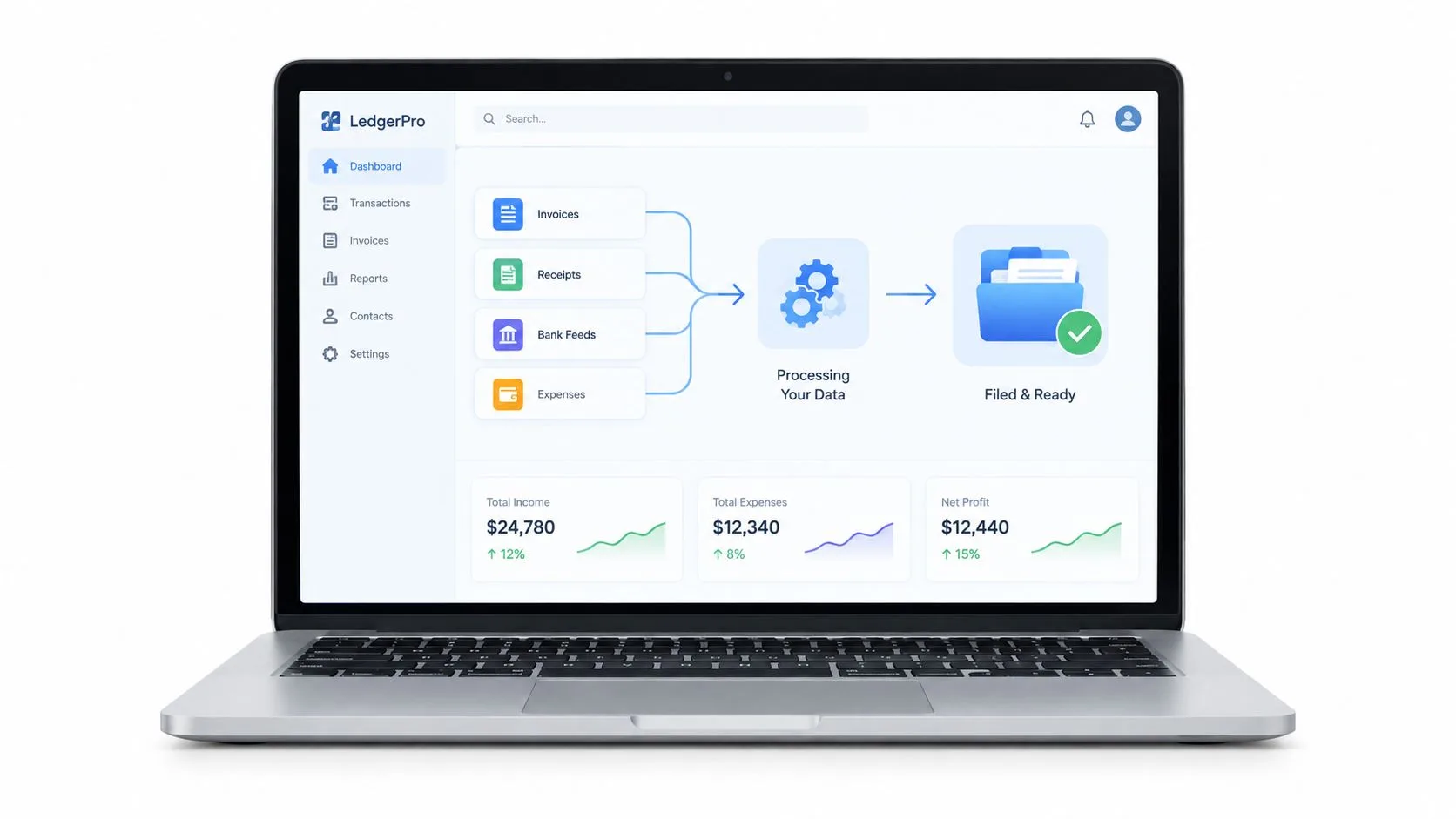
The filing workflow is becoming more software-led, and owner-managed companies need to understand what happens inside the package. The usual process starts with an export from bookkeeping software such as Xero or QuickBooks. The accountant posts year-end adjustments, prepares the statutory accounts, checks the disclosures and generates the electronic filing output.
What the submission actually contains
Commercial accounts packages, including options such as Xero, QuickBooks, TaxCalc, VT Software and Inflo, can prepare the relevant format and transmit it through an approved filing route. The accounts data must be structured so the primary statements and relevant notes are tagged in iXBRL, which allows the information to be read by people and processed by systems. A PDF created for reading is not the same as a compliant electronic filing file.
Before submission, check the company record against the draft accounts:
- Confirm the registered office address.
- Check the SIC code.
- Verify the names and details of the directors.
- Confirm the accounting reference date.
- Review the accounts category and accounting standard.
- Check the balance sheet approval and director information.
- Validate the iXBRL tags and required disclosures.
- Submit through the software and retain the acceptance evidence.
A mismatch in the company details can stop a filing even when the figures are correct. The software may also identify missing tags, invalid combinations or incomplete sections. Don't treat the validation screen as a nuisance. It's the final technical check before Companies House receives the accounts.
The free online service for filing accounts and the Company Tax Return closed on 31 March 2026, according to the government's filing accounts guidance. Future accounts filings will use commercial software. In practice, directors should either purchase suitable software and learn the workflow or appoint an accountant that already has an accepted filing system. Budget for that change rather than assuming the old free route will remain available.
Some firms will continue to prepare accounts in one package and submit them through another. That's fine if the final file is valid and the submitted version is retained. Save the acceptance message, submission reference, final accounts and approval record in the company's permanent compliance folder.
A short visual walkthrough can help directors see how the filing process fits together:
Deadlines, Penalties and HMRC Tax Return Links
A director can finish the accounts on time and still receive a late-filing penalty if the submission is rejected. Set your own deadline before the statutory one and leave time to correct errors. A private company generally files within nine months of its accounting reference date. A public company generally has six months. Companies House records the filing date when acceptable accounts arrive, calculated to the exact day.
The late-filing penalty bands are:
| Length of Delay | Penalty, Private Co. | Penalty, Public Co. |
|---|---|---|
| Up to 1 month | £150 | £750 |
| More than 1 month but not more than 3 months | £375 | £1,500 |
| More than 3 months but not more than 6 months | £750 | £3,000 |
| More than 6 months | £1,500 | £7,500 |
These penalties doubled for relevant accounting periods beginning on or after 1 January 2022, as recorded in the Companies House annual report and accounts. The practical lesson is simple: an early upload is no protection if Companies House rejects the file.
The Independent Adjudicators' report records that 4% of appeals involved accounts submitted before the deadline but later rejected, while 20% involved an accountant issue and 18% involved a director error or misunderstanding. Check the file status, not just the submission timestamp, and keep the acceptance evidence with the company records.
Keep the two tax clocks separate
The CT600 Corporation Tax return normally follows a later HMRC timetable, usually 12 months after the end of the Corporation Tax accounting period. That deadline does not extend the Companies House filing date. A late Companies House filing does not create extra CT600 time, and submitting the CT600 does not complete the annual accounts filing.
The systems remain separate. HMRC may receive tagged accounts with the tax return, but that submission does not satisfy Companies House. Your accountant should reconcile the figures, then treat each filing as a separate compliance event with its own deadline and confirmation.
Companies House accepted 14.7 million filings in 2024 to 2025, and its annual accounts filing rate was 98.5% as at 31 March 2025, according to the annual report. Most owner-managed companies can meet the rules by controlling three things: the dates, the records and the validation process. Put the work in the diary early, rather than relying on an accountant's last available slot or a last-minute email.
What Changes in 2026 and Beyond
The immediate 2026 change is practical rather than theoretical. The free online route for filing accounts and the Company Tax Return closed on 31 March 2026, and the government says accounts will in future be fileable only through commercial software. Small firms that relied on a simple online form now need a software route or an accountant with one.
The next issue is who can submit on the company's behalf. ICAEW reports that restrictions on who can file are expected no earlier than November 2026, with identity verification or use of an authorised corporate service provider likely to form part of the process, as explained in its update on Companies House filing changes. Treat that timing as subject to confirmation by Companies House rather than as a promise that every detail will go live on one fixed day.
What owner-managers should do
Don't wait for the new process to force a rushed decision. Ask your accountant or software provider:
- Can you file accounts through the required commercial software?
- Who will complete any identity verification?
- Is the submitting firm authorised to file for the company?
- How will rejected submissions be corrected and resubmitted?
- What evidence will you receive after acceptance?
For most owner-managed businesses, the sensible model will be outsourced preparation and submission, with the director retaining approval responsibility. That gives the business one controlled workflow instead of asking a busy director to learn statutory accounts production, iXBRL tagging and new authorisation requirements at the same time.
A Repeatable Annual Workflow for SME Owners
The best filing system is boring. It starts with the accounting reference date, works backwards and gives the owner, bookkeeper and accountant different jobs. Don't build the process around the date you usually remember. Build it around the date Companies House enforces.
A workable annual rhythm
Around month six after the period end, the owner should review bookkeeping quality, old debtors, stock records and the director's loan account. The bookkeeper should reconcile the ledgers, chase missing documents and flag unusual balances. This is early enough to fix problems without holding up the accounts.
By month eight, lock the bookkeeping file for the accountant's handover. Provide payroll reports, VAT records, bank statements, the fixed asset register, stock evidence and details of dividends, share transactions and related-party balances. The accountant should then complete adjustments, prepare the correct accounts format and send a draft for director approval.
Month nine is the hard private-company Companies House deadline in the normal cycle. Don't use it as the target submission date. Aim to approve and file before it, leaving room for validation errors or a rejected submission. Around month twelve, manage the separate HMRC Corporation Tax return cycle and confirm that the tax accounts reconcile with the statutory accounts.
The handover checklist
Give this list to a new bookkeeper and keep a copy in the company's compliance folder:
- Accounting reference date: Confirm the exact Companies House deadline.
- Bookkeeping close: Reconcile every bank account and clear suspense balances.
- Stock: Complete the count and retain valuation support.
- Debtors and creditors: Review bad debts, accruals and prepayments.
- Director loans: Reconcile balances and identify disclosures or tax issues.
- Fixed assets: Record additions, disposals and depreciation.
- Related parties: Provide details of inter-company and connected-party transactions.
- Company category: Confirm micro, small, medium or large status.
- Audit exemption: Decide whether the company qualifies and document the basis.
- Public disclosures: Agree whether abridged or reduced accounts are appropriate.
- iXBRL review: Check tagging, required notes and validation messages.
- Director approval: Obtain approval before submission.
- Identity verification: Confirm the director and submitting party meet the applicable Companies House requirements.
Stewart Accounting Services is one option for owners who want year-end accounts, Companies House submissions and related tax work managed within an outsourced compliance process. Whether you use an accountant, TaxCalc, Xero or another commercial package, assign responsibility clearly and keep the acceptance record.
If your company's accounts are due soon, check the accounting reference date today, request the bookkeeping handover list and confirm who will submit the final file. Speak to Stewart Accounting Services about preparing and filing your limited company accounts before the records become urgent, using the firm's support for SMEs across Alloa, Stirling, Falkirk and the wider UK.
Recent Posts
22 Oct, 2026
21 Oct, 2026